
Comfortmat Spider anti-vibration material
More about the product
- You can return the goods to us within 14 days
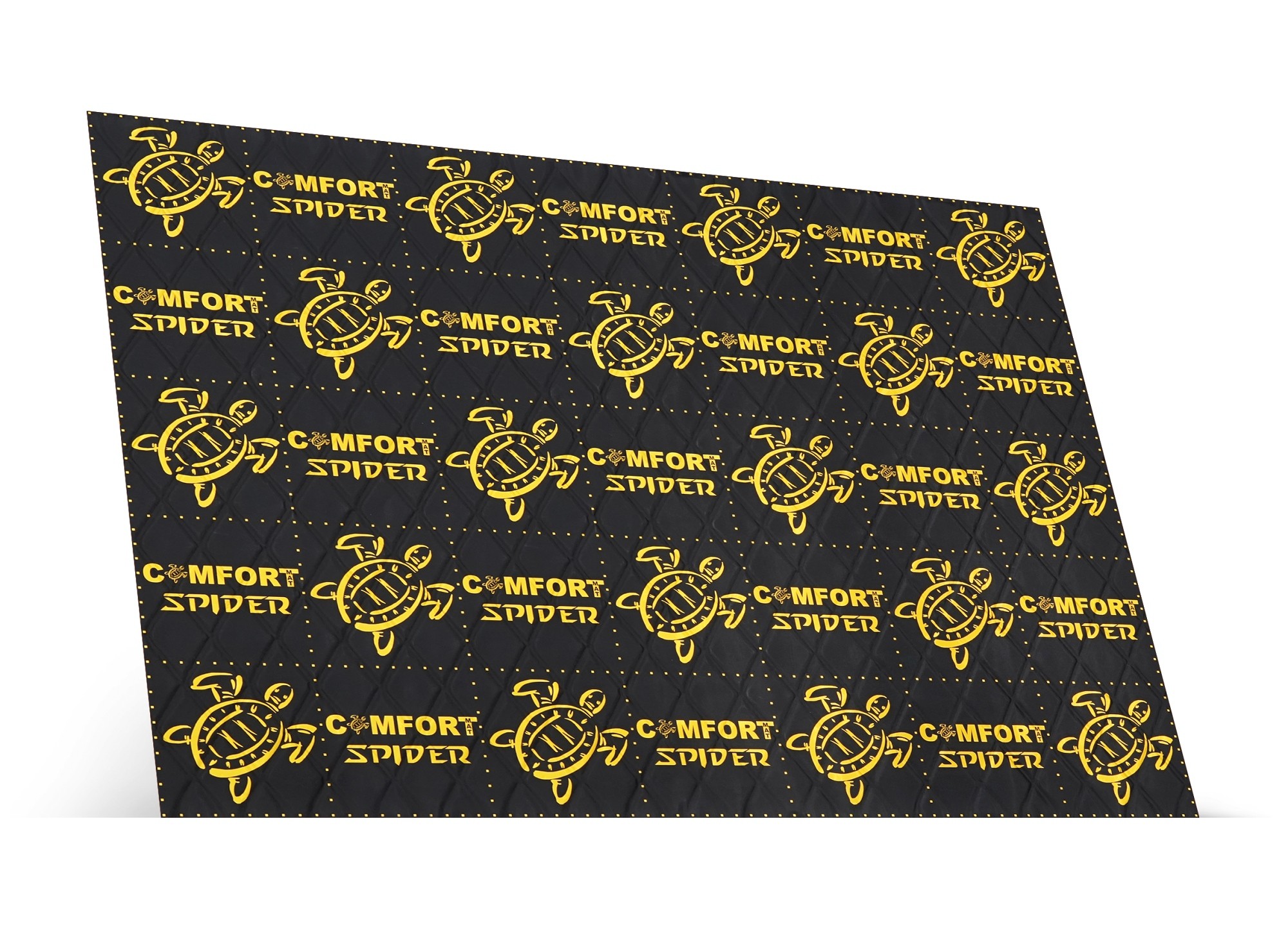
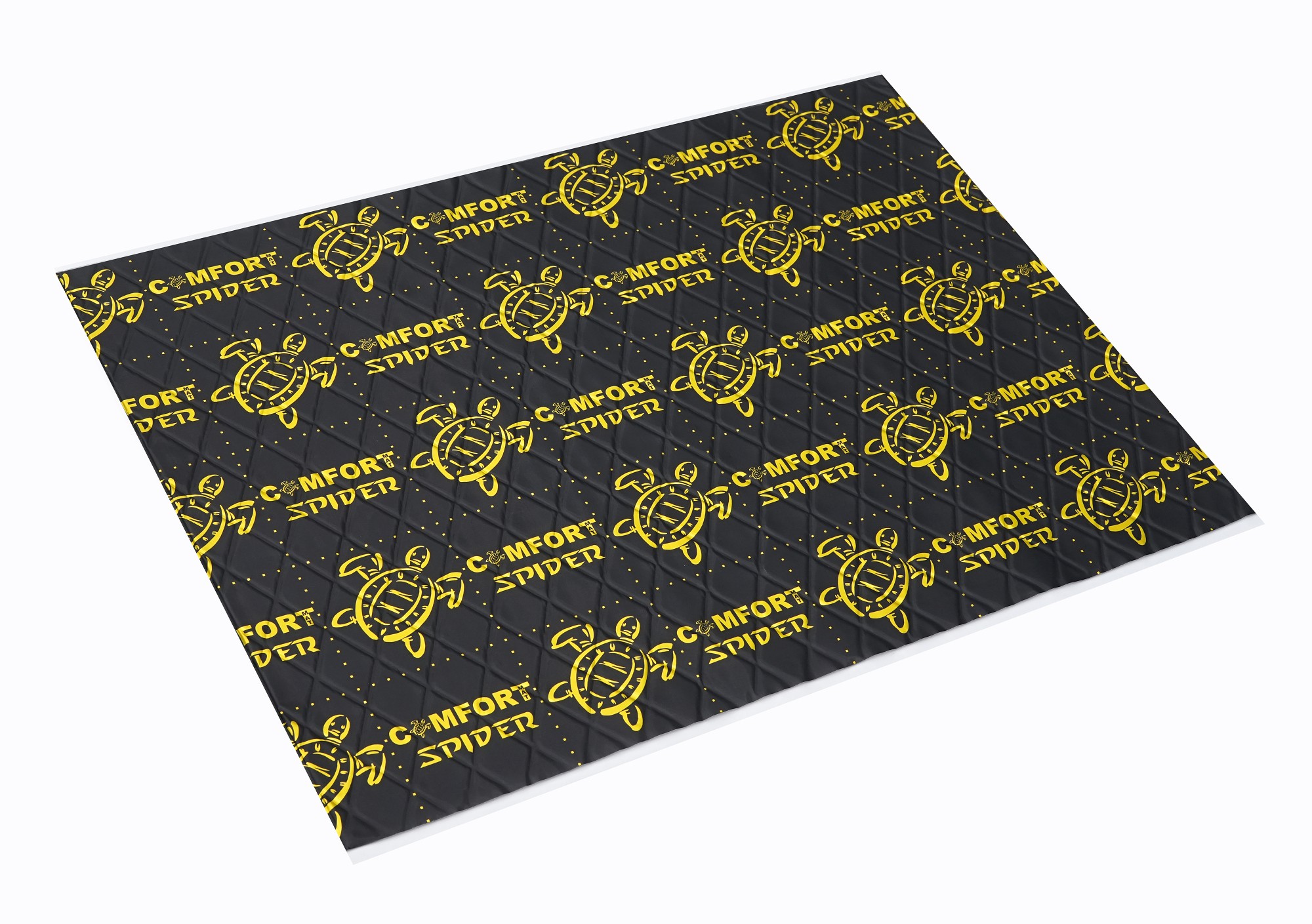
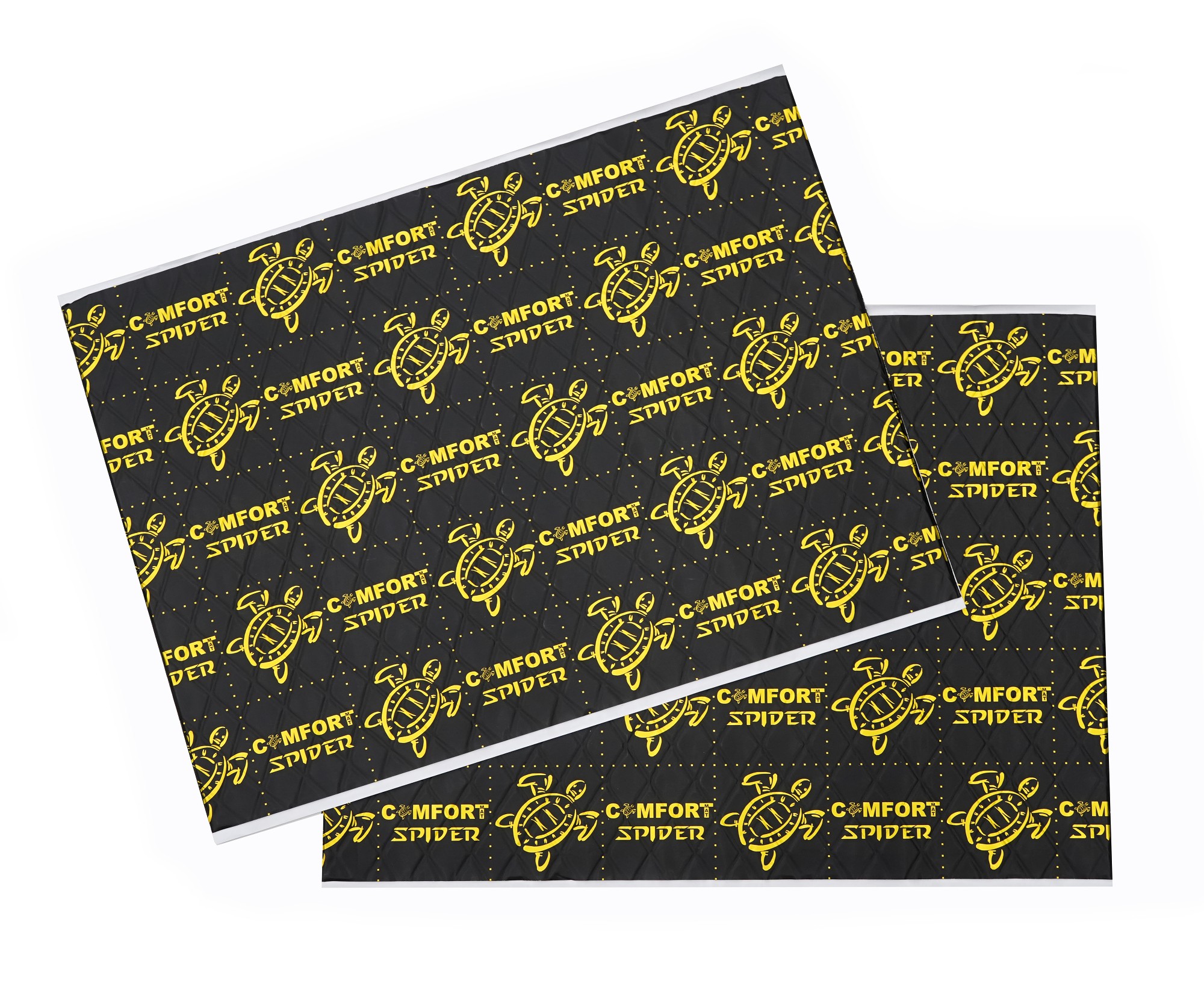
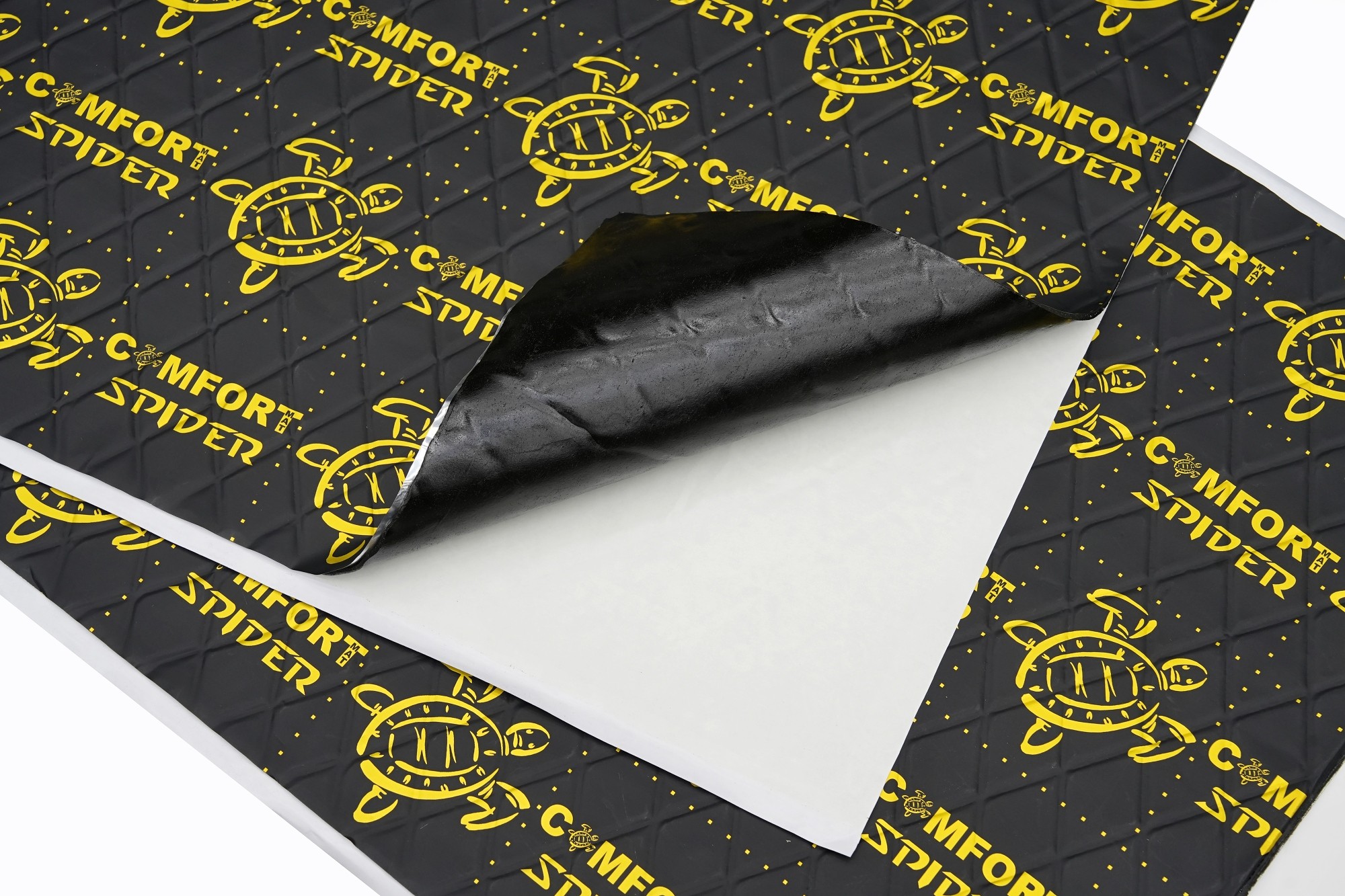
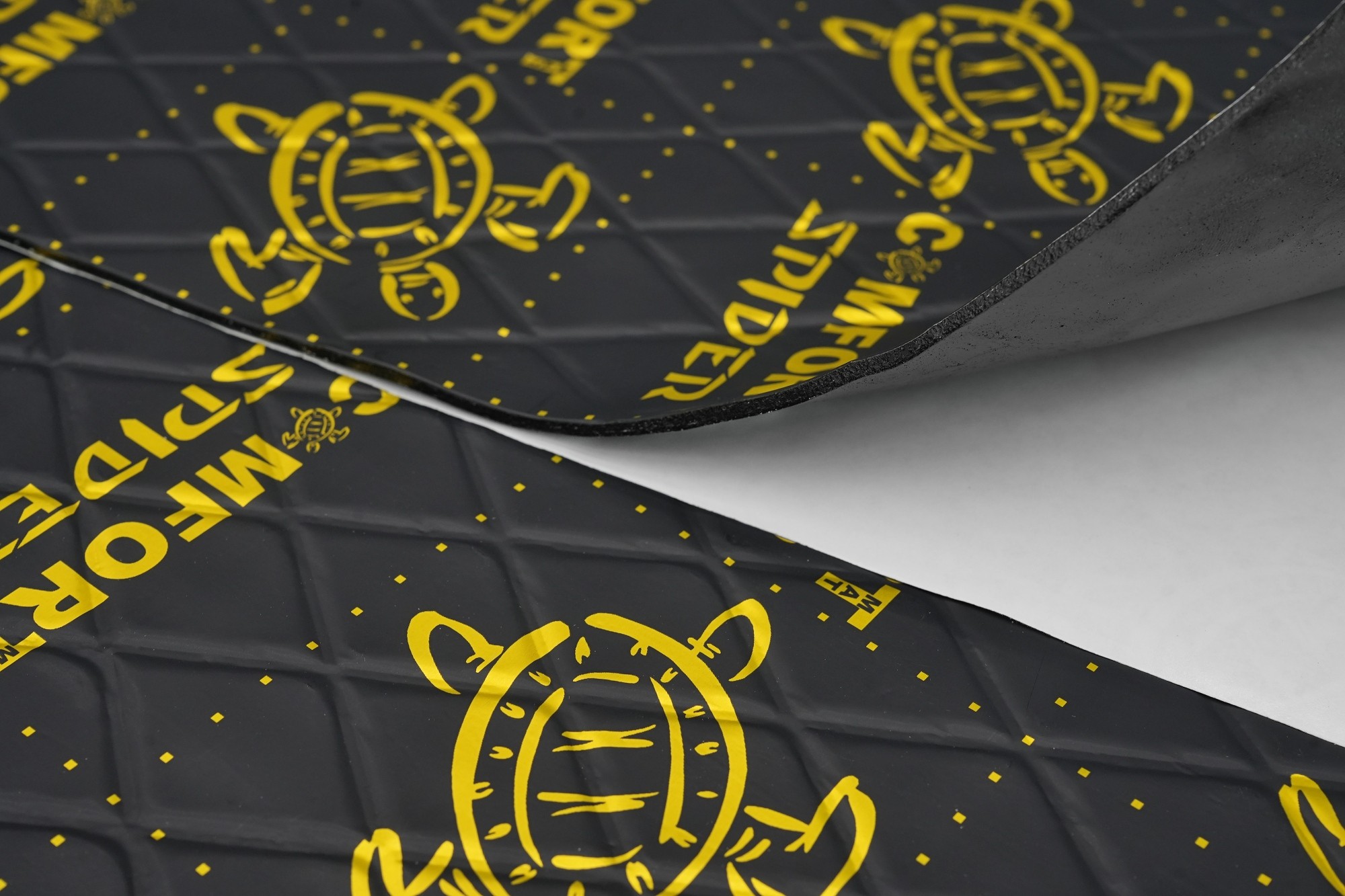
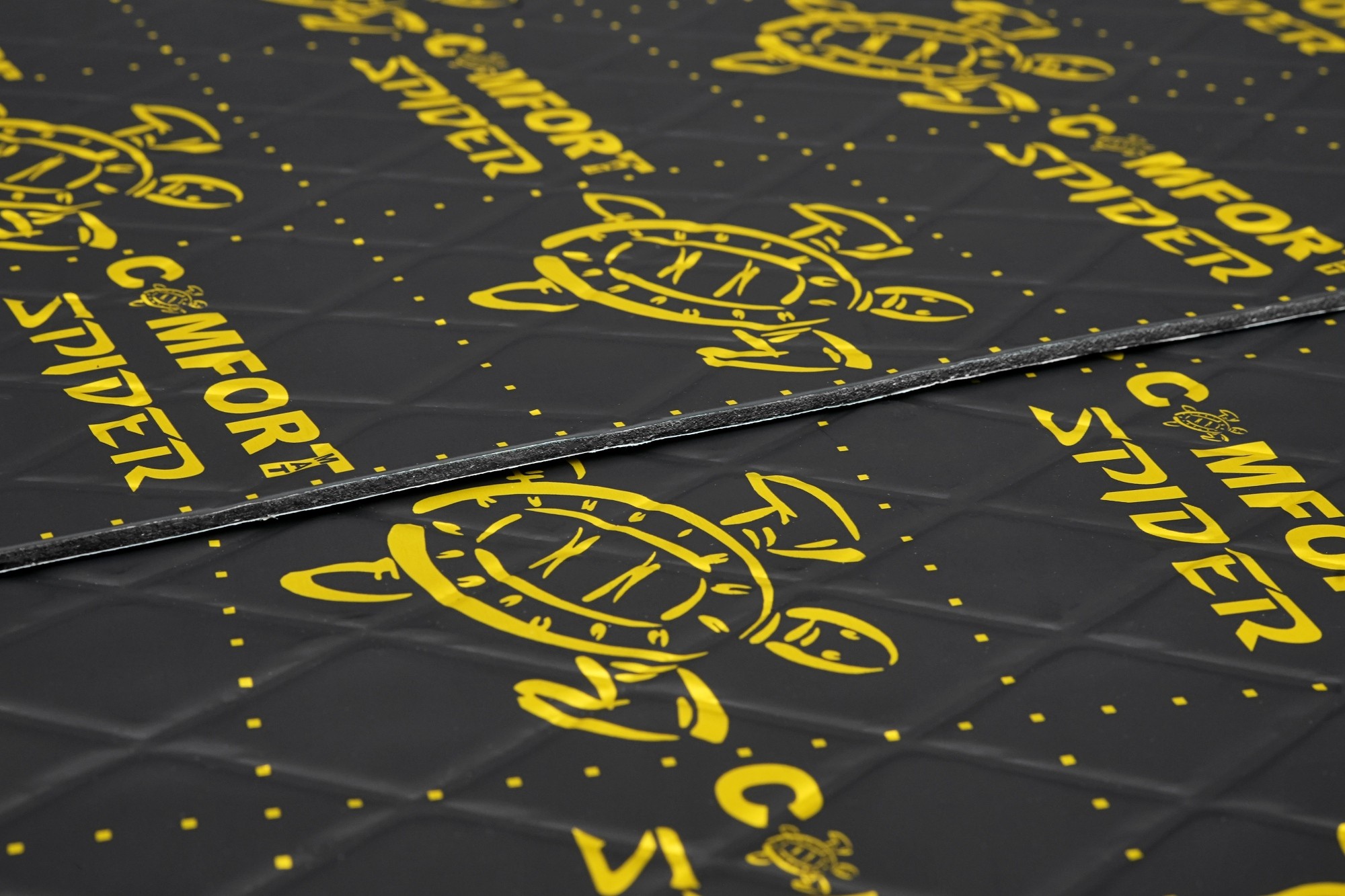
Comfortmat Spider antivibration material
Comfortmat Spider is a new generation of antivibration material that replaces the popular G-Line series (G3 and G4) and brings a significant technological advancement in all respects. With a thickness of 3.5 mm and an acoustic loss factor MLF = 0.45, it ranks among the most effective antivibration materials for areas with medium and high vibration loads. The base of Spider is the new-generation Poison mastic, made from a blend of special polymers, which provides excellent adhesion to metal surfaces, high mechanical strength and resistance to external influences. The Scale One aluminum foil from a new alloy has a matte surface that improves adhesion with the next soundproofing layer and at the same time gives the material an exceptional design. Comfortmat Spider is fully waterproof, has anti-corrosion properties and retains stable properties even in extreme temperatures. Excellent adhesion (16 N/cm) ensures a strong bond with the body and long-term effectiveness.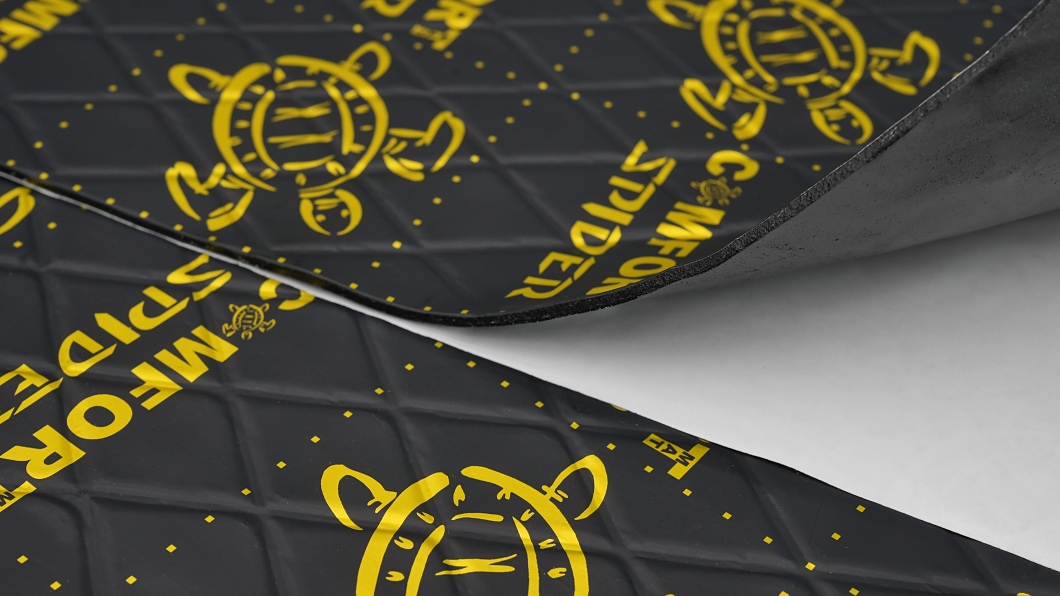
Main features
- Antivibration material with a thickness of 3.5 mm.
- Acoustic loss factor (MLF) 0.45 for areas with medium and high vibration loads.
- New Poison mastic with increased adhesion and high mechanical strength.
- Scale One aluminum foil with a matte surface for better adhesion with the second soundproofing layer.
- High resistance to water, moisture, oils and temperature extremes.
- Sealing and anti-corrosion properties that protect the body from degradation.
- Retention of stable properties in winter and summer.
- Easy application without the need for heating.
- Modern design with a matte foil and diamond pattern.
How to apply
Comfortmat Spider is intended for body areas with high vibrational loads. Thanks to its thickness and effectiveness it is ideal for the floor, trunk floor, wheel arches and engine bulkhead, where it provides maximum vibration damping and long service life. It is also used on doors or the dashboard if above-standard effectiveness is required. For proper function it is essential to use the pressure roller during application and ensure perfect contact with the surface. Recommended use:- Floor
- Trunk floor
- Inner and outer wheel arches
- Engine bulkhead
- Dashboard
- Doors
About Comfortmat damping materials
The company Comfortmat has been operating on the market since 2010 and during that time has quickly established itself as a leading global manufacturer of anti-vibration and sound-insulating materials. Comfortmat has introduced new technologies to the automotive industry enabling maximum efficiency, lower material weight, consistent performance even in extreme temperatures and, last but not least, very easy application. In recent years Comfortmat has been setting the direction in vehicle soundproofing and regularly brings materials to market with record effectiveness and excellent properties that were previously unattainable. All this is possible only through many years of research in Comfortmat laboratories, the highest quality control at every stage of production, modernization of production machinery with the involvement of leading global experts in automation of production lines and the creation of a research center equipped with the most modern facilities. Highly qualified Comfortmat specialists have extensive scientific and manufacturing experience, regularly perform necessary physical and mechanical tests and possess expert knowledge in the field of automotive vibroacoustic properties. Thanks to this, Comfortmat products can meet the most demanding requirements of today's automotive market.| Catalog number | COM SPIDER |
| Brand | Comfortmat |
| Material type | Anti-vibration |
| Thickness | 3.5 mm |
| Dimension | 700 x 500 mm (0.35 m²) |
| Weight 1 piece | 1.86 Kg |
| Basis weight | 5.31 Kg / m² |
| Acoustic Loss Factor (MLF)The acoustic loss factor (in English, mechanical loss factor) expresses the ability of the material to absorb propagating sound and change the energy of vibrations created by the sound into thermal energy. The theoretical maximum loss factor is 1, which means no vibration. For example, non-sound-proof steel with a thickness of 1 mm has a loss factor of approx. 0.001 at 200 Hz. Therefore, the higher the loss factor, the better. By combining damping materials, it is possible to significantly increase the loss factor to values approaching 1. | 0.45 |
| Adhesion | 16 N / cm |
| Aluminium foil | 100 μm |
| Water resistance | Yes |
| Recommended application | –45 °C to +110 °C |
| Color | Black with gold print |
| Price for | 1 piece |
| Layer order | 1st layer |
Evaluation
Product assembly
 Skoda Octavia 4
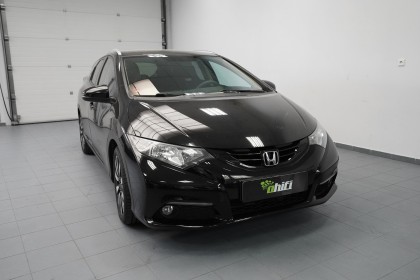 Honda Civic 9G
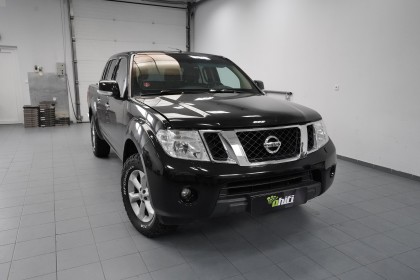 Nissan Navara
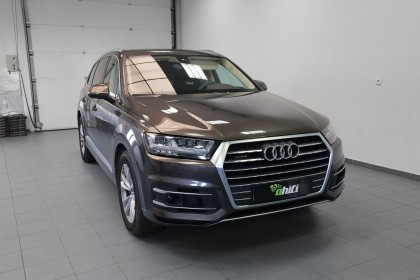 Audi Q7
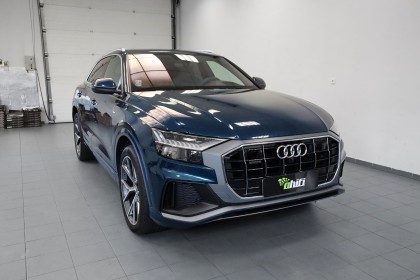 Audi Q8
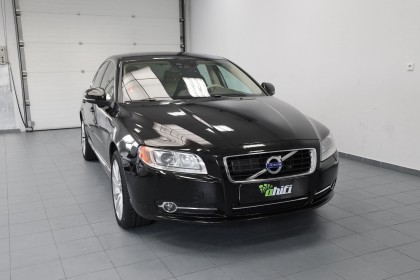 Volvo S80
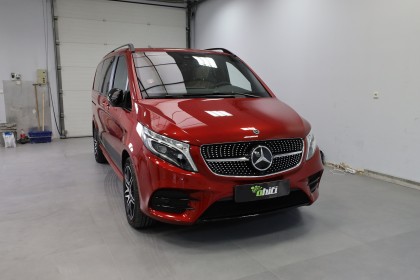 Mercedes-Benz V-Class
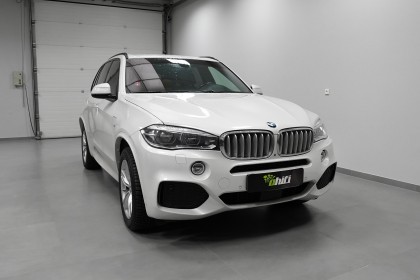 BMW X5 (F15)
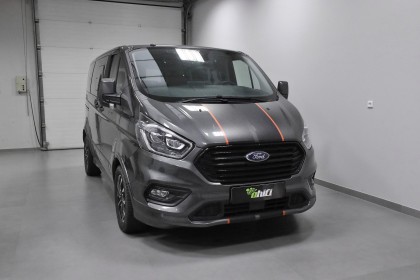 Ford Tourneo Custom
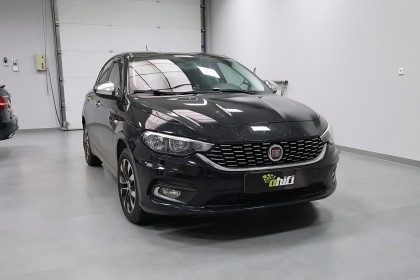 Fiat Tipo
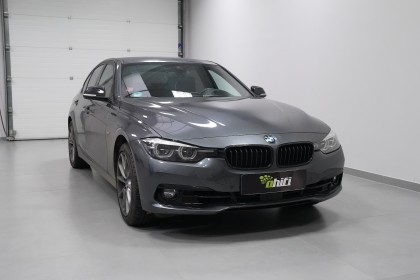 BMW 3 (F30)
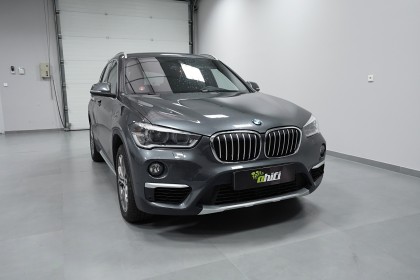 BMW X1 (F48)
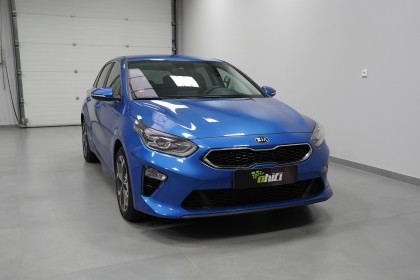 Kia Ceed
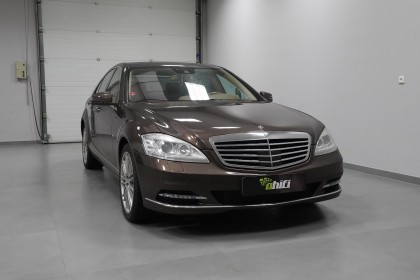 Mercedes S-Class
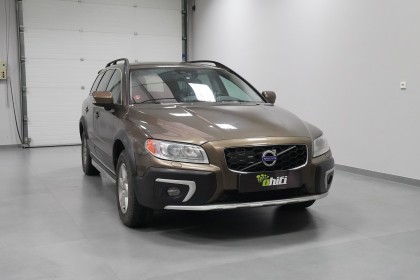 Volvo XC70
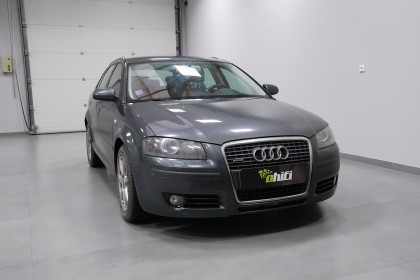 Audi A3
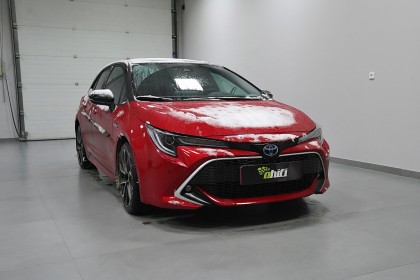 Toyota Corolla
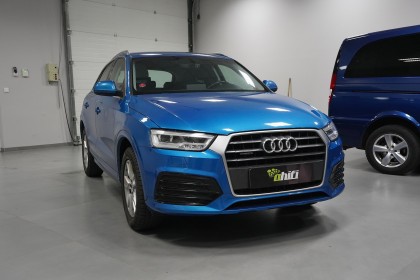 Audi Q3
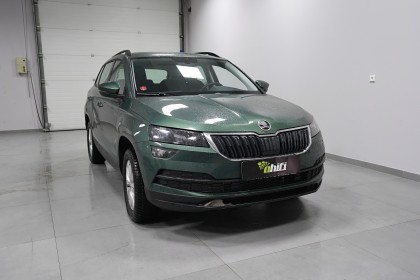 Too bad Karoq
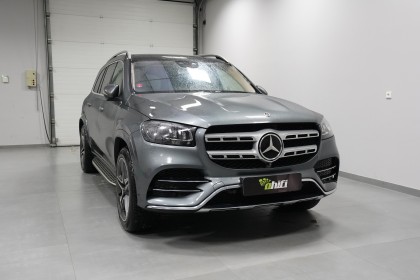 Mercedes-Benz GLS
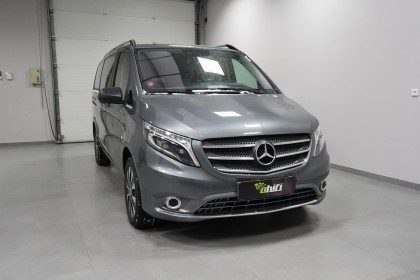 Mercedes Vito - soundproofing
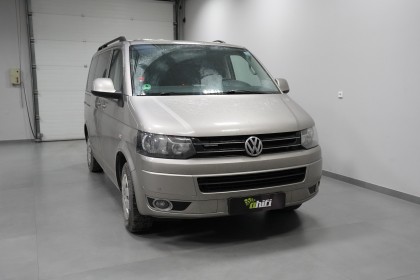 VW T5
VW T5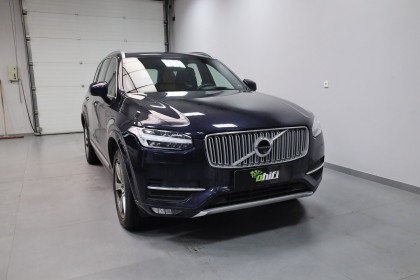 Volvo XC90
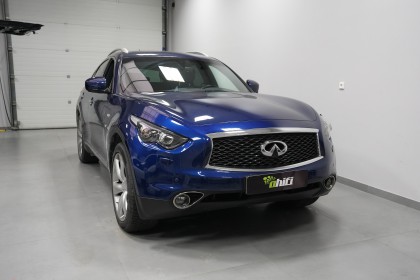 Infinity QX70
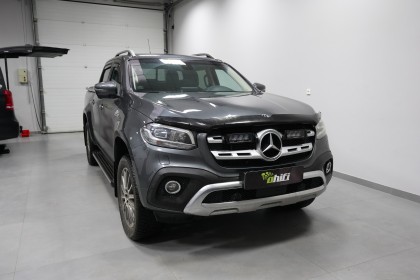 Mercedes-Benz X-Class (X350d)
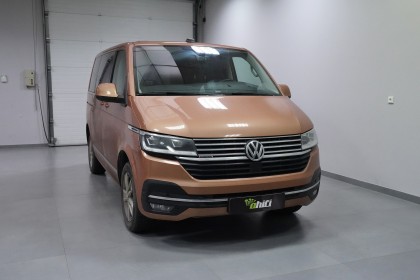 VW Multivan T6.1
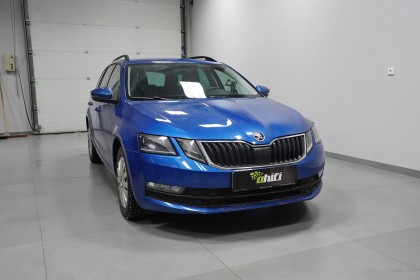 Skoda Octavia 3
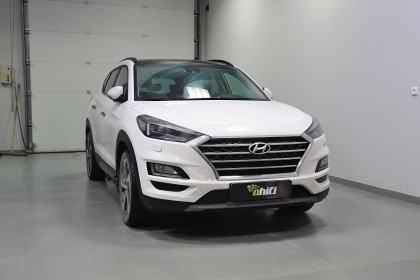 Hyundai Tucson
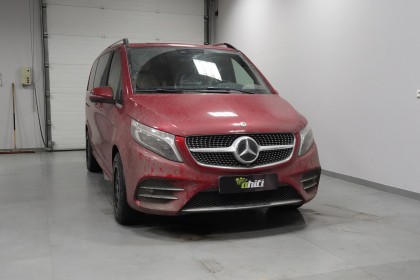 Mercedes V-Class
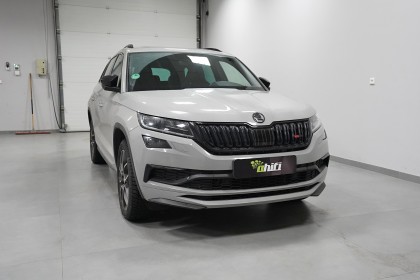 Skoda Kodiaq RS
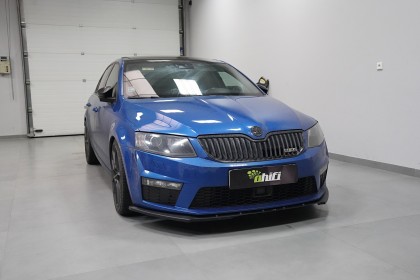 Skoda Octavia 3 RS
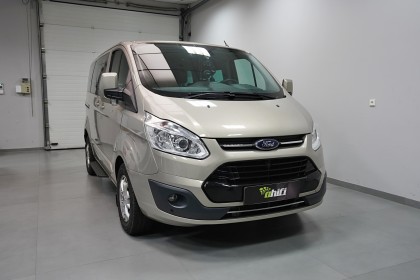 Ford Tourneo Custom
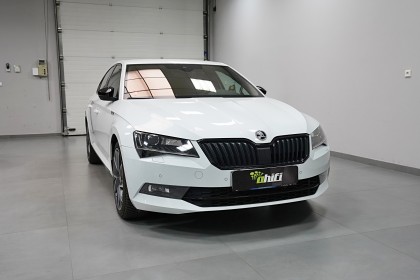 Skoda Superb 3
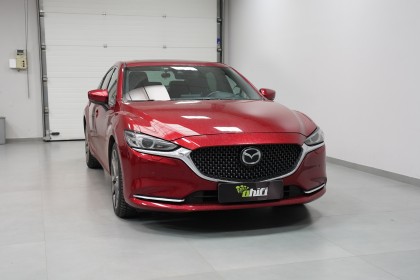 Mazda 6 (GJ)
 Shame about Scala
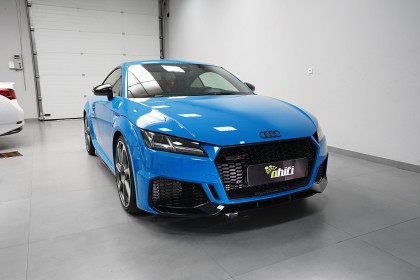 Audi TT RS
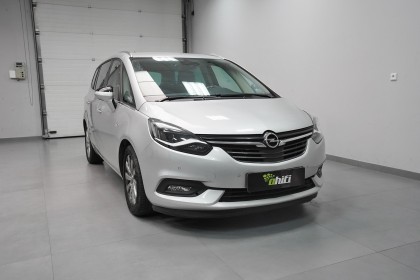 Opel Zafira
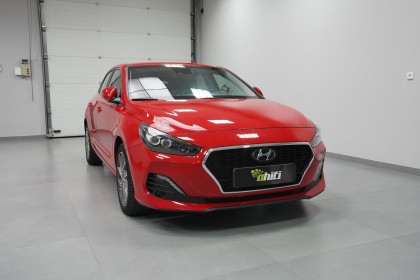 Hyundai i30 Fastback
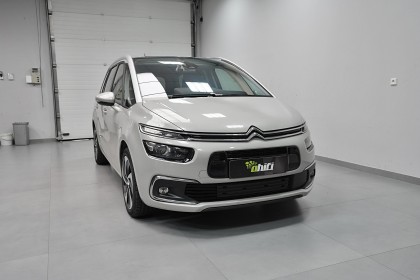 Citroen C4 Spacetourer
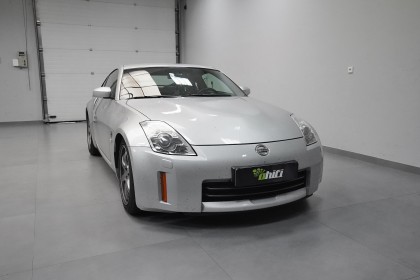 Nissan 350z
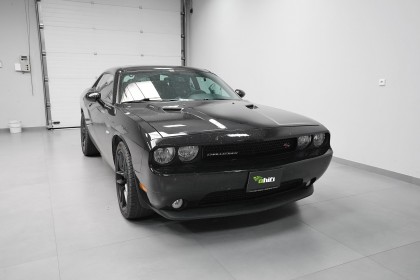 Dodge Challenger
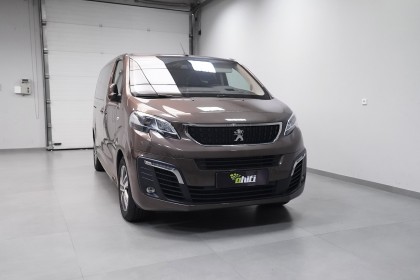 Peugeot Traveller
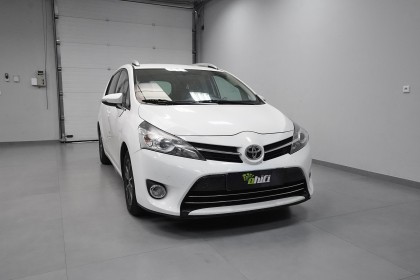 Toyota Corolla Verso
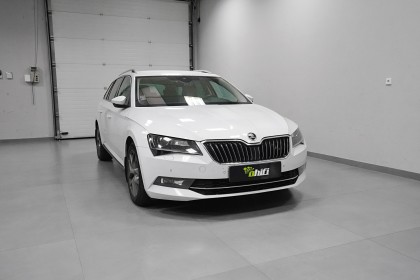 Skoda Superb 3
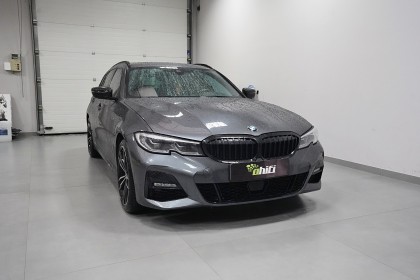 BMW 3 (G21)
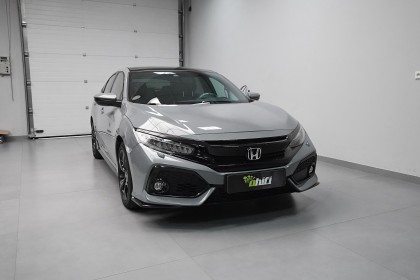 Honda Civic 10g
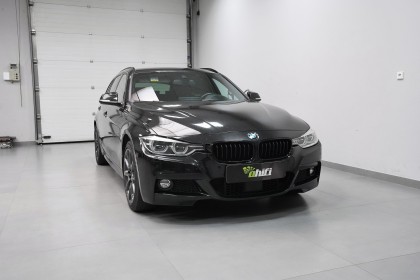 BMW 3 (F31)
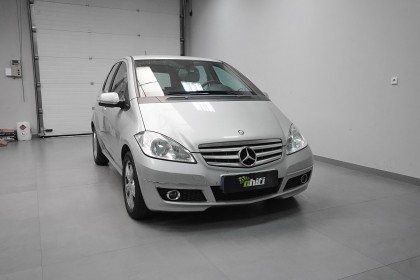 Mercedes-Benz A-Class (W169)
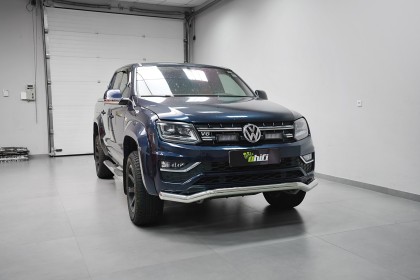 Volkswagen Amarok
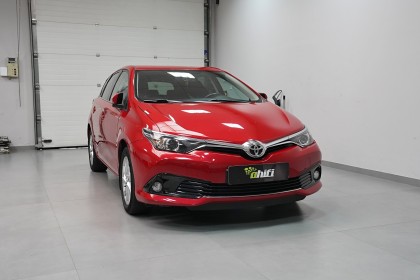 Toyota Auris
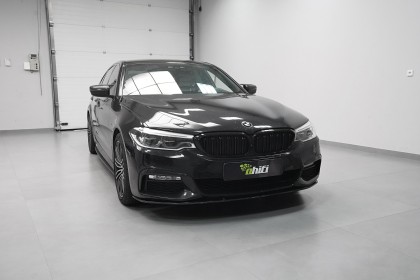 BMW 5 (G30)
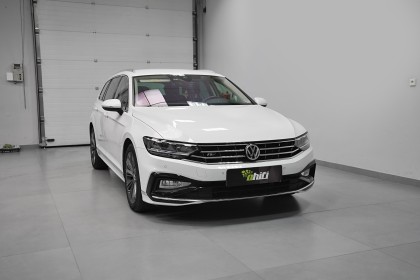 VW Passat B8
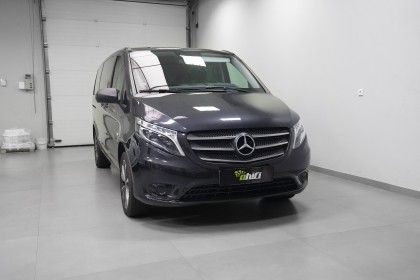 Mercedes-Benz Vito
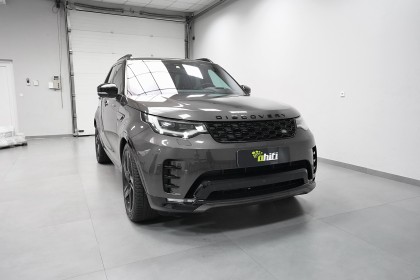 Land Rover Discovery
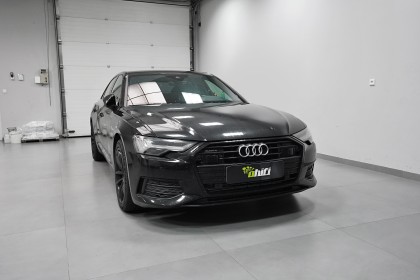 Audi A6 (C8)
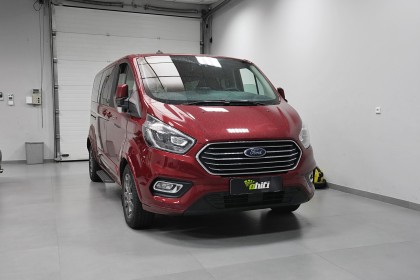 Ford Tourneo Custom
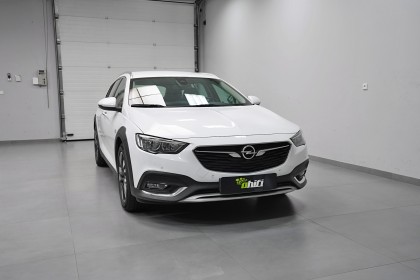 Opel Insignia
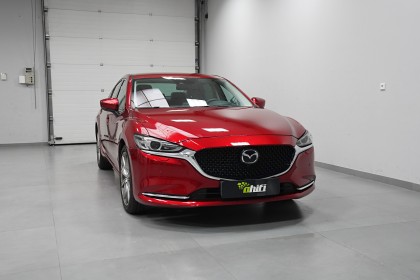 Mazda6
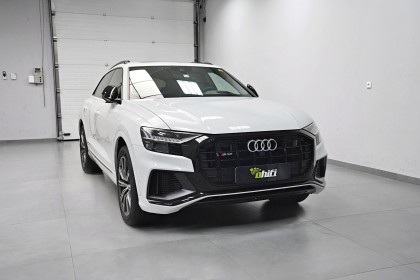 Audi SQ8
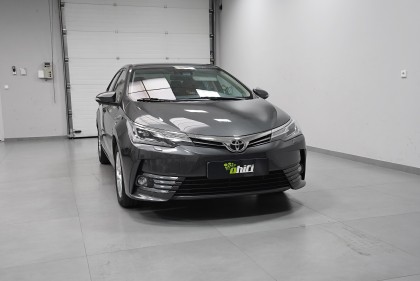 Toyota Corolla
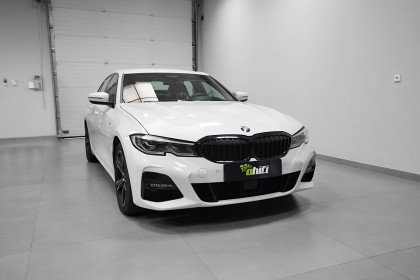 BMW 3 (G21)
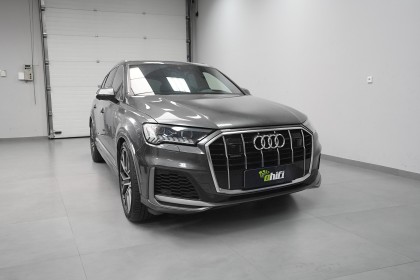 Audi Q7
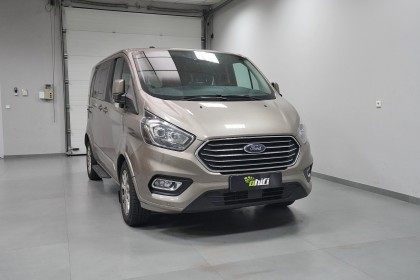 Ford Tourneo Custom
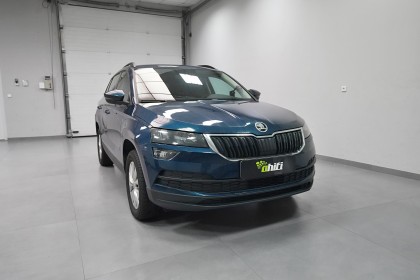 Too bad Karoq
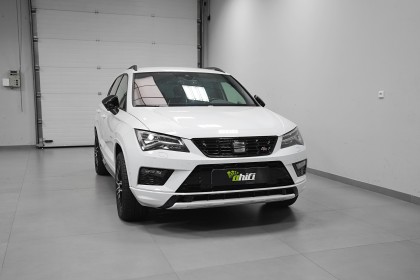 Seat Ateca FR
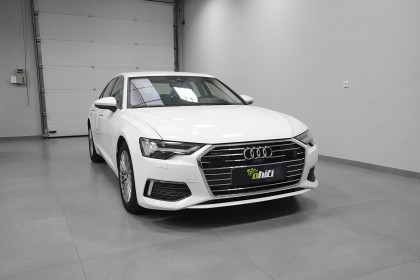 Audi A6 (C8)
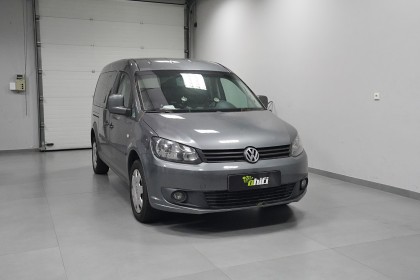 VW Caddy
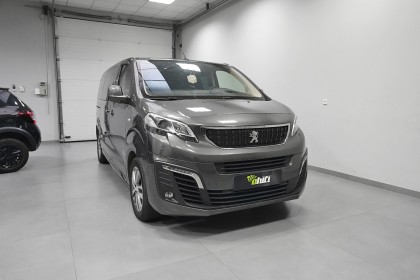 Peugeot Traveller
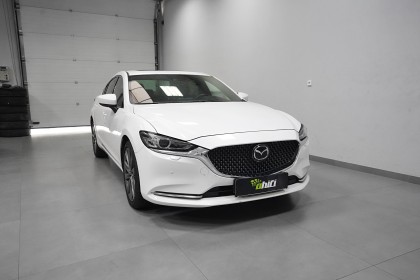 Mazda6
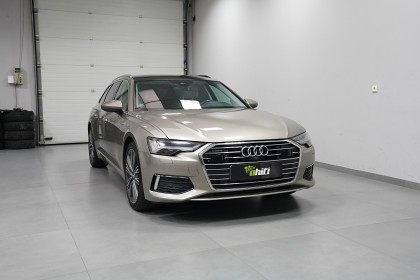 Audi A6 (C8)
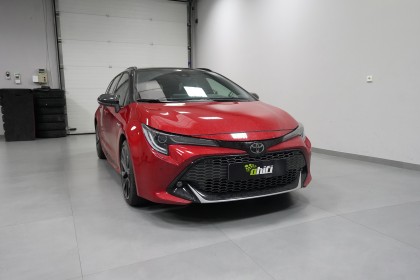 Toyota Corolla
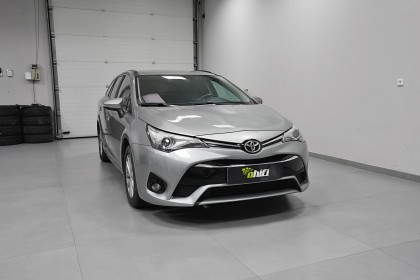 Toyota Avensis (T27)
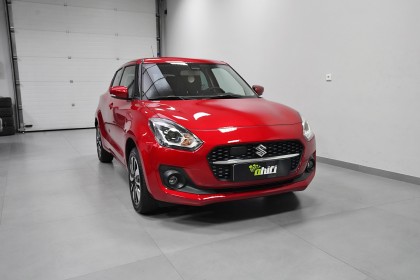 Suzuki Swift
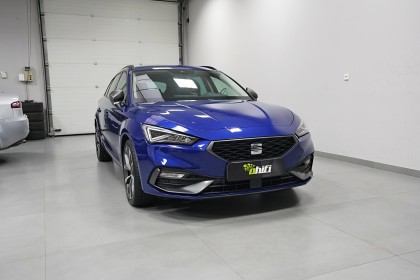 Seat Leon IV
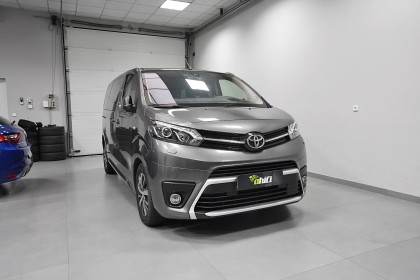 Toyota Proace Verso
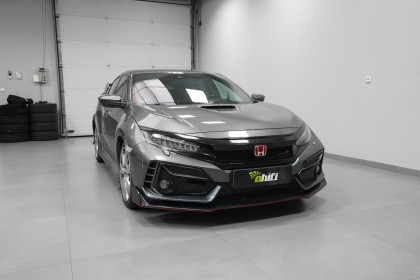 Honda Civic Type R
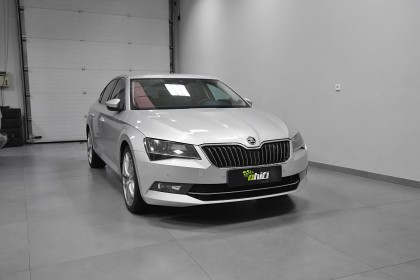 Skoda Superb 3
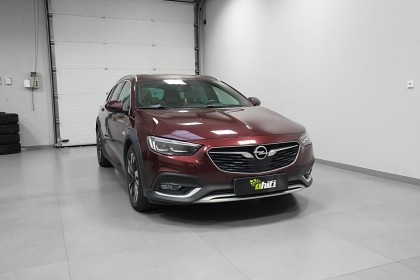 Opel Insignia
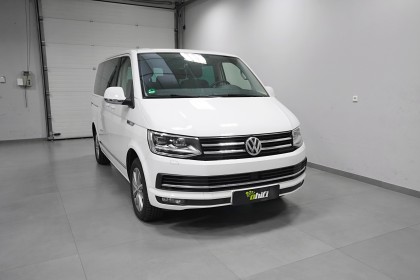 Volkswagen T6
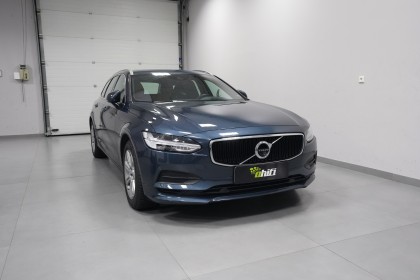 Volvo V90
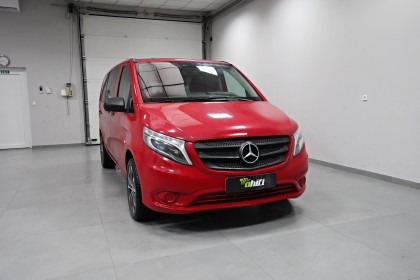 Mercedes-Benz Vito
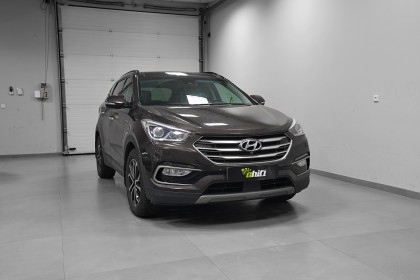 Hyundai Santa Fe
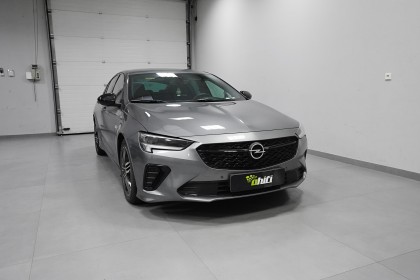 Opel Insignia
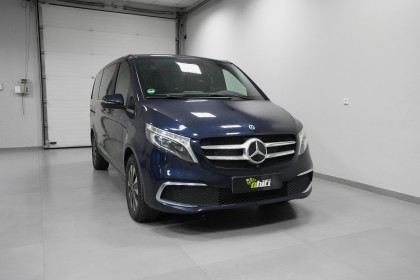 Mercedes-Benz V-Class
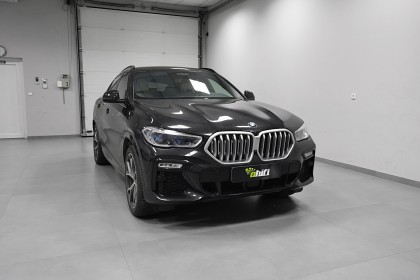 BMW X6 (G06)
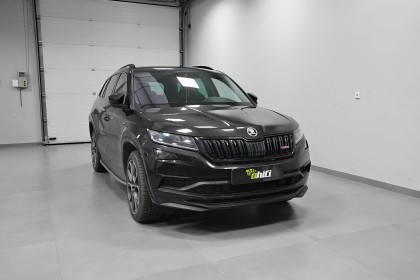 Skoda Kodiaq RS
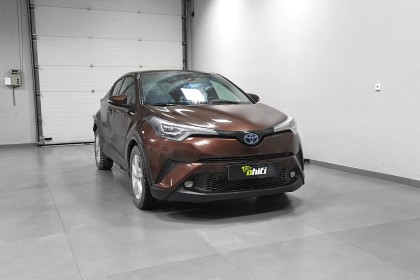 Toyota CHR Hybrid
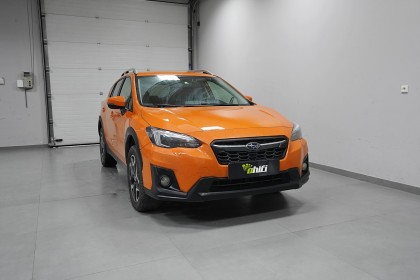 Subaru XV
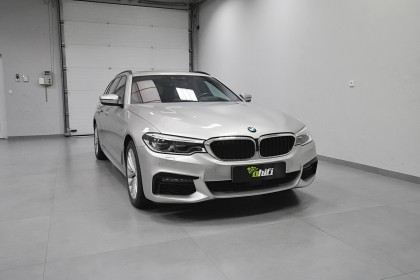 BMW 5 (G31)
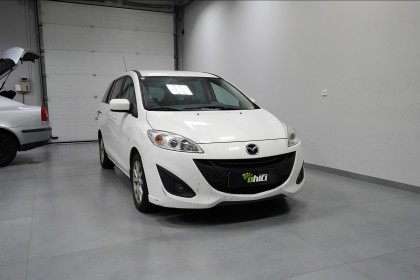 Mazda 5
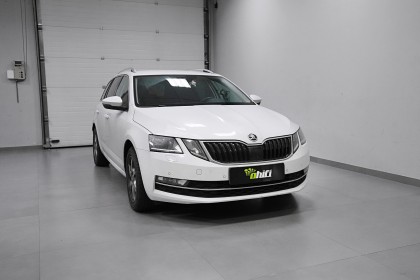 Skoda Octavia 3
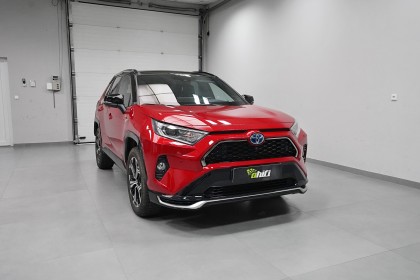 Toyota RAV4 Hybrid
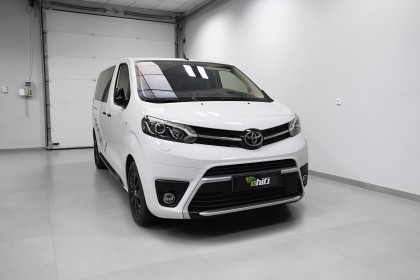 Toyota Proace Verso
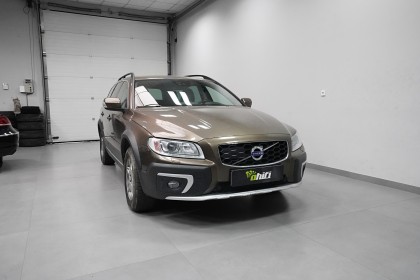 Volvo XC70
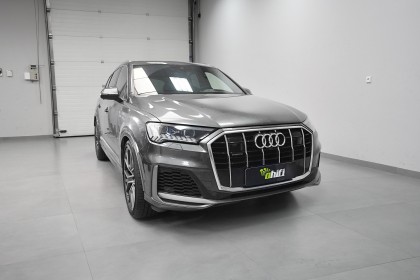 Audi Q7
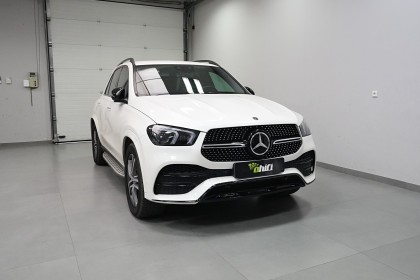 Mercedes-Benz GLE
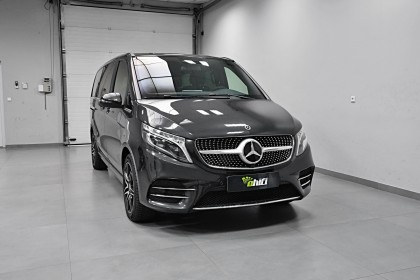 Mercedes-Benz V-Class
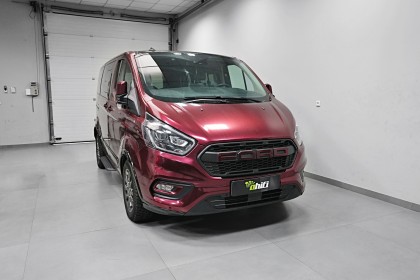 Ford Tourneo Custom
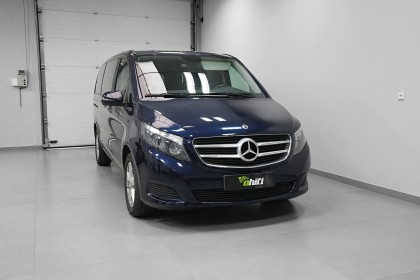 Mercedes-Benz V-Class
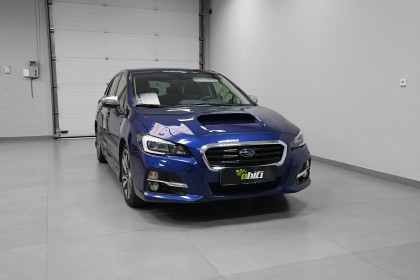 Subaru Levorg
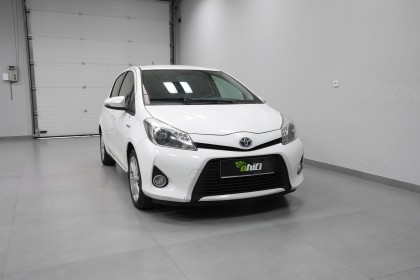 Toyota Yaris
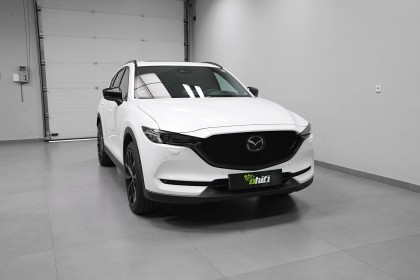 Mazda CX-5
You might also be interested
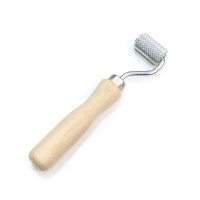 TipQuick previewpressing metal roller with wooden handle9,96 EURIn stockComfortmat Vespa
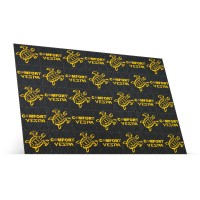 -22 %TipPromotionsQuick previewanti-vibration material, 700 x 500 mm, thickness 2.3 mm, MLF 0.33, weight 3.06 kg/m²8,22 EUR
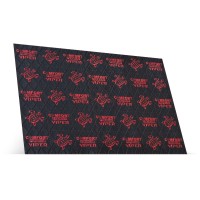 TipQuick previewanti-vibration material, 700 x 500 mm, thickness 3 mm, MLF 0.49, weight (3.65 Kg / m²)14,49 EURIn stockSGM Dual Prime
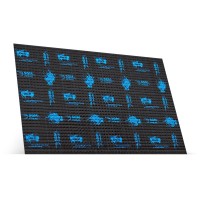 TipQuick previewanti-vibration material, 800 x 500 mm, thickness 4 mm, MLF 0.66, weight 5.85 kg/m²17,96 EURTemporarily unavailableComfortmat Blockshot Gen2
 TipQuick previewsound insulation material, 700 x 500 mm, thickness 7 mm, insulation 36 dB, weight 6,37 kg/m²16,49 EURIn stockComfortmat Titan
 Quick previewsound insulation material, 700 x 500 mm, thickness 8 mm, insulation 38 dB, weight 7.8 Kg / m²22,99 EURIn stockSGM Barrier Mix Prime
 TipQuick previewsound insulation material, 800 x 500 mm, thickness 6 mm, insulation 35 dB, weight 4.37 kg/m²14,36 EURIn stockSGM Barrier Ultra Prime
 TipQuick previewsound insulation material, 800 x 500 mm, thickness 6 mm, insulation 33 dB, weight 4.47 kg/m²13,16 EURTemporarily unavailable