
Morel Elate Carbon Neo Pro 63 speakers
More about the product
 Morel Elate Carbon Neo Pro 631 to 4 weeks 3 719,60 EUR
 Morel Elate Carbon Neo Pro 63A1 to 4 weeks 3 519,60 EUR
- You can return the goods to us within 14 days
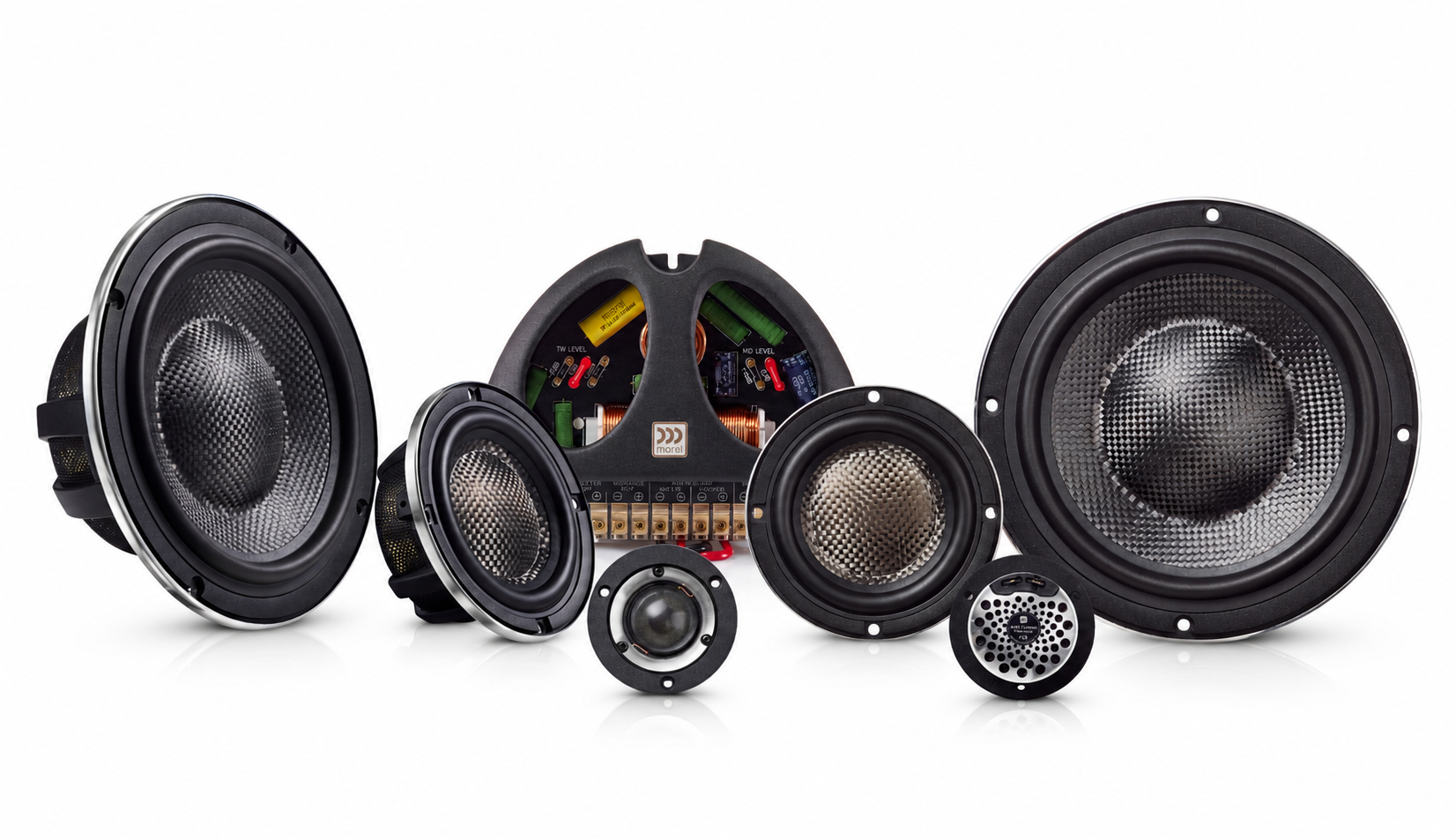



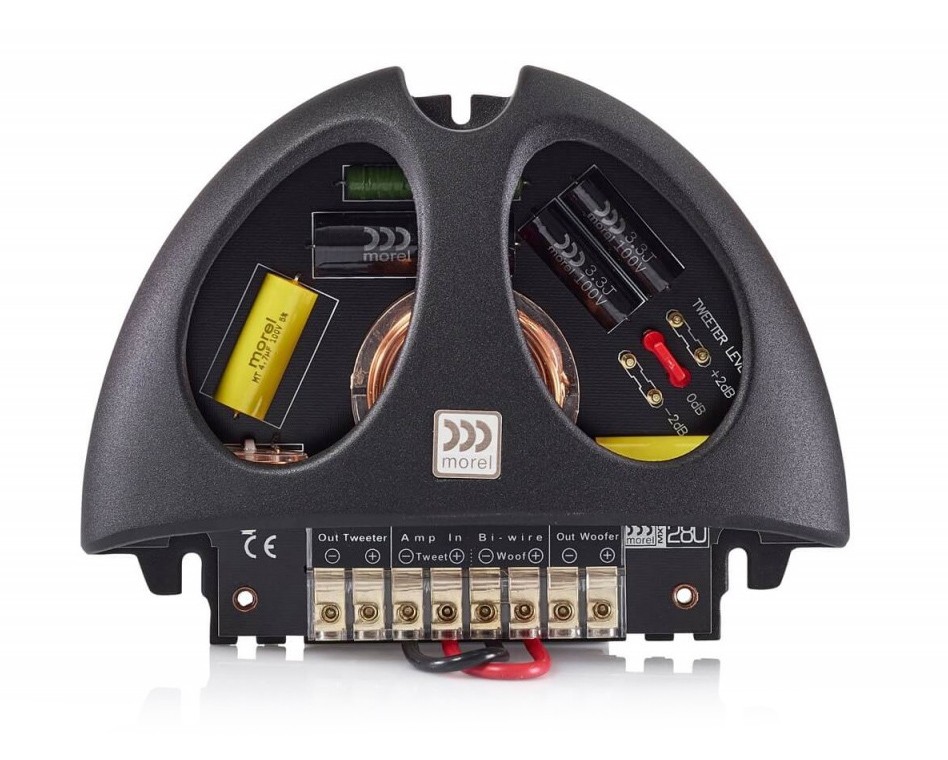
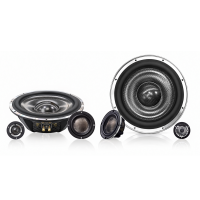
3-way Component Speakers Morel Elate Carbon Neo Pro 63
The Morel Elate Carbon Neo Pro 63 represents the pinnacle of the new Elate Carbon generation and is one of the highest-tier component sets in Morel's lineup. The Elate Carbon range sits just below the reference Supremo in the manufacturer's hierarchy and has long been one of the brand's most important high-end platforms. The Neo Pro version pushes this concept further toward maximum resolution, spaciousness and dynamic authority. The series is characterized by light and exceptionally stiff TLC cones made from carbon fiber and Rohacell, large voice coils, powerful motor systems and the characteristically natural and musical Morel sound. Neo Pro adds an even more sophisticated Alto Neo tweeter with a more powerful neodymium drive and a new ASW™ rear chamber that further reduces resonances and distortion, contributing to greater openness and more precise spatial rendering.
The Elate Carbon Neo Pro 63 system combines a 165 mm MW6 mid-bass, an 89 mm MM3 midrange, the top-tier Alto Neo tweeter and a precisely designed 3-way passive crossover MXT380C into a complete high-end solution for the most demanding SQ installations. The MW6 delivers fast, firm and precisely controlled mid-bass, the MM3 handles the crucial midrange with high clarity and naturalness, and the Alto Neo follows with an exceptionally open, detailed and spatially accurate high-frequency rendition. The result is a coherent system with high resolution, impressive dynamics and a very convincing three-dimensional soundstage, capable of marrying technical precision with the musicality typical of Morel's best speakers.
TLC MW6 mid-bass made of carbon fiber and Rohacell
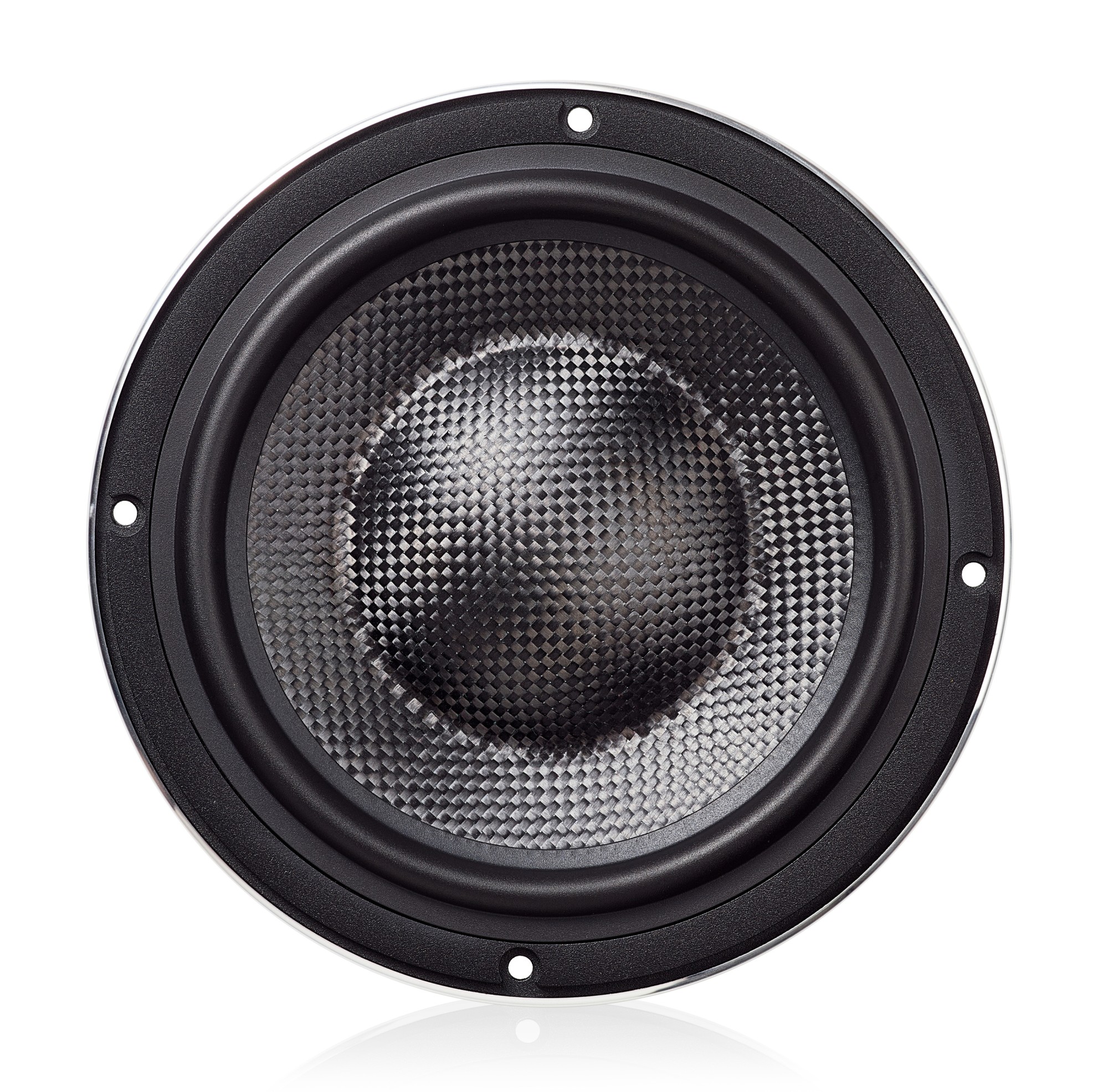
At the heart of the system is the 165 mm MW6 mid-bass with a TLC (Triple-Layer Composite) cone that combines two layers of carbon fiber with a lightweight Rohacell core. This sandwich construction offers an outstanding ratio of low mass to high stiffness, allowing the cone to follow signal changes very accurately while resisting unwanted deformation at higher excursions. The result is a fast, firm and concrete mid-bass with very good definition, a natural instrument texture and the ability to maintain control even in demanding dynamic passages. The combination of carbon and Rohacell has long been one of the most distinctive elements of the Elate Carbon series.
76 mm voice coil and powerful neodymium motor
The MW6 uses an exceptionally large 76 mm external voice coil, unusually large for a 165 mm driver and typical of Morel's high-end transducer construction. The large coil area enables efficient heat dissipation, high power handling and precise control of cone movement. The redesigned motor system uses a strong neodymium magnet that provides a high magnetic flux density and the necessary force to precisely control the cone in a very compact form factor. The optimized suspension also improves linearity and reduces distortion, so the MW6 can move from delicate details to pronounced dynamic peaks without loss of control or a sense of compression.
MM3 midrange for the crucial musical band
The mid frequencies are handled by the compact 89 mm MM3, which uses the same TLC carbon fiber and Rohacell cone as the larger mid-bass drivers in the series. This ensures the same core tonal character and allows a very smooth transition between bands. An exceptionally large 54 mm voice coil, neodymium drive and revised mechanics provide high linearity, fast response and very low distortion. As a result, the MM3 reproduces vocals, acoustic instruments and other critical midrange elements with exceptional purity, naturalness and the ability to preserve subtle spatial and dynamic nuances.
Alto Neo with ASW™ technology
The high frequencies are handled by the top-tier Alto Neo, which is a fundamental step up from the standard Elate Carbon Neo range. It features a 28 mm soft dome with a hand-applied Acuflex™ coating, a more powerful neodymium drive and a newly developed ASW™ (Anti-Standing Wave) rear chamber. This chamber limits the formation of standing waves, internal resonances and distortion behind the dome, allowing the tweeter to deliver even greater purity, openness and more accurate spatial rendering. Alto Neo also offers higher sensitivity and greater power reserve than the MT-550, enabling it to retain refinement, resolution and dynamics even at very high volume levels.
MXT380C 3-way crossover
The system includes a precisely designed 3-way passive crossover MXT380C that ensures correct band distribution between the MW6, MM3 and Alto Neo and helps preserve their shared sonic character. It offers bi-wire / bi-amp capability and level adjustments, allowing the final sound to be tailored to a specific installation and vehicle acoustics. This makes the Elate Carbon Neo Pro 63 usable as a full passive high-end system without the need for active division, while maintaining a high level of control, resolution and spatial performance.
For maximum spatiality and resolution
It is the Alto Neo that elevates the Neo Pro version in terms of spatial rendering and fine detail. The new rear chamber, reduced distortion and high sensitivity help reproduce subtle cues about instrument position, room reverberation and the natural presence of vocals. Combined with the MM3 and MW6, this creates a very wide, deep and convincingly three-dimensional soundstage that can detach from the drivers themselves. The ability to combine great dynamics with fine spatial detail is one of the main reasons Morel positions Neo Pro as the highest expression of the entire Elate Carbon platform.
Main features
- Pinnacle 3-way component system from the Elate Carbon Neo Pro series.
- 165 mm MW6 mid-bass driver.
- 89 mm MM3 midrange driver.
- Top-tier Alto Neo tweeter.
- TLC triple-layer cones made of carbon fiber and Rohacell.
- Exceptionally large 76 mm external mid-bass voice coil.
- Large 54 mm midrange voice coil.
- Powerful neodymium motor systems.
- 28 mm Alto Neo soft dome with hand-applied Acuflex™ coating.
- New ASW™ rear chamber to reduce resonances and distortion.
- Higher sensitivity and power reserve of the tweeter compared to the MT-550.
- 3-way passive crossover MXT380C.
- Bi-wire / bi-amp capability and level adjustment options.
About the brand
Morel is one of the manufacturers that has developed an unmistakable signature over decades. Since 1975 it has followed Meir Mordechai’s idea that a good speaker should not only reproduce music accurately but, above all, preserve its emotion, naturalness and atmosphere. That is why Morel products have such a distinctive character – they can be detailed, dynamic and technically exceptionally precise while never losing the musicality and ability to draw the listener into the recording. Each product is hand-assembled in Israel and created using in-house development, long-standing know-how and a range of proprietary technologies and patented solutions that significantly influence both design and the final sound of the speakers. Morel owes much of its success to its domestic high-end audio work, where the brand develops its own drivers and loudspeaker systems and then adapts many of those technologies for automotive use. Combined with exceptional craftsmanship, timeless design and an extraordinary attention to detail, this results in products for people who want not only to hear music but truly experience it.
| Catalog number | ELATE CARBON NEO PRO 63 |
| Brand | Morel |
| Links | Official web presentation |
| Speaker typeCoaxial speakers: Coaxial speakers are characterized by a so-called all-in-one design. The tweeter and mid-bass speaker are in one basket. The advantage is simpler assembly, but thanks to the connection or proximity of the bands in one speaker, the sound quality will usually be reduced. As a rule, in the middle of the mid-bass speaker, there is a tweeter whose voice coil works in the second air gap of the common magnetic circuit. The three-way coaxial speaker consists of a mid-bass speaker, a center speaker and a separate tweeter in the front on a special beam. Component Speakers: Component speakers are characterized by a division into individual frequency bands, treble + mid-bass + or. bass band. The individual speakers can be placed completely separately, which results in a better sound and acoustic performance. In the vast majority of cases of component speakers, an external crossover is also supplied, which divides the treble, middle / mid-bass, and into the three-band the bass band or allows setting the decibel level of the tweeter (e.g. +2 dB, 0 dB, -2 dB), steepness (e.g. 6dB/Oct. 12dB/Oct.) or active or bi-amp connection. | 3-way component |
| RMS powerRMS speaker power is the constant power of the entire system, not just one speaker or one side. This is also the performance of continuous use of the speakers. If the RMS power is exceeded for a long time, the speakers may be irreversibly damaged! | 180 W |
| Max. (maximum performancePeak performance , which the speaker can play for a moment (approx. 0.5 s), for example when hitting drums in a song. If the max power is exceeded, the speakers will usually be damaged! | 1000 W |
| Sensitivity (SPL 2.83V/1m)Sensitivity, sensitivity or efficiency of the speaker. Speaker sensitivity is given in decibels (dB) and simply put, the higher the value, the lower the demands on the amplifier's power. This is a defacto rating of how a speaker converts watts to sound. Sensitivity ratings are in noise level measured at 1 meter from the speaker using 1 W (watt of power) or using 2.83 volts at the source at 1 meter. A higher decibel level means the speaker is louder with less power. For every 3 dB increase in sensitivity, the speaker requires half the power to reproduce the same volume. For example, if an 88 dB speaker needs 100 Watts to produce a certain volume, then a speaker with a sensitivity of 91 dB needs only 50 Watts to reach the same volume. | 87 dB |
| ImpedanceImpedance - measurement of electrical resistance. When buying speakers, it is important to make sure that the impedance matches the amplifier or car stereo you are using. Example: A 2 Ohm speaker cannot be connected to an amplifier that is only stable up to 4 Ohms! A 4 Ohm speaker can easily be used with an amplifier that is stable up to 2 Ohms. The most common speaker impedance today is 3 - 4 Ohm. | 4 Ω |
| Frequency rangeThe ability of the speakers to play a signal from the lowest frequency to the highest, or the speaker's ability to faithfully reproduce sound in a specific frequency band. Professionally: In the frequency range from 40 to 16,000 Hz, the vast majority of fundamental and overtones (harmonics) of all musical instruments are found. We are interested in the course of the radiated sound pressure in this range of frequencies when the loudspeaker system is supplied with constant power. We call this course the frequency characteristic, which tells us the level of radiated sound pressure in decibels (dB) depending on the frequency. The frequency characteristic of a speaker or speaker system can be expressed most succinctly with a graph. Mostly, however, the frequency characteristic is indicated by indicating the maximum tolerance of the sound pressure in the given frequency range, e.g. 50 to 15,000 Hz -+ 6 dB. Since the frequency characteristics of loudspeakers and systems in general are quite uneven, some manufacturers do not even specify this maximum tolerance of sound pressure in decibels in their catalogs for reasons of prestige. Data impoverished in this way is unfortunately worthless. What is valid is that the manufacturer offers a speaker system with a frequency range of 30 to 20,000 Hz, if he is worried about stating the maximum unevenness of the sound pressure in this range, because he can have a tolerance of, for example, +- 20 dB. The unevenness or undulation of the frequency curve in good speaker systems for high-quality music performance should not exceed +-3 dB in the 80 to 12,000 Hz band and +-6 dB in the 40 to 16,000 Hz band. Greater unevenness already depletes or emphasizes certain tonal areas, which can cause audible or even disturbing distortion. The proportion between fundamental tones and higher harmonics also changes, thereby changing the color of the sound, and individual musical instruments as well as the entire musical image sound unnatural. | 30 – 25000 Hz |
| The diameter of the mid-bass speakerWe state the diameter of the speaker as the diameter of the entire speaker, not including the mounts, when smaller speakers (87, 100, 130 mm) have extra mounts. Some speakers are oval and there the dimension is given in inches, always the shortest side to the longest side. One inch is approx. 2.5 cm. | 165 mm |
| Installation depth of the mid-bass speakerThe installation depth of the speaker is measured from the bottom edge of the magnet to the bottom edge of the tin, plastic or cast speaker basket, or speaker bearing surfaces. | 61 mm |
| Mid-woofer diaphragm materialThe material that was used for the speaker diaphragm. Don't be afraid of the paper, it surprisingly has a very natural and high-quality sound and, thanks to the surface treatment, it can withstand moisture without any problems. | Carbon fiber composite |
| Resonant frequency of the mid-bass speaker | 45 Hz |
| Voice coil diameter of the mid-bass speaker | 75 mm (3") |
| Magnet | Neodymium |
| Center speaker diameterThe diameter of the center speaker is given as the diameter of a round speaker, not including the mount, where the mounts protrude even more on smaller speakers. | 89 mm |
| Center speaker diaphragm materialDiaphragm material that was used in the manufacture of the center speakers. | Carbon fiber composite |
| Overall tweeter diameterThe total diameter of the tweeter is given as the diameter of the individual tweeter without the installation houses. | 62.5 mm |
| Tweeter dome diameterThe net diameter of the dome (diaphragm) of the tweeter. | 28 mm |
| The overall depth of the tweeterThe total depth of the tweeter itself without the installation houses. | 21 mm |
| Tweeter dome materialThe shell material that was used in the manufacture of the tweeter. | Silk with hand-applied Acuflex™ coating |
| The resonant frequency of the tweeter | 800 Hz |
| Frequency crossover included in the packageThe crossover is an important part of defacto all loudspeakers. A crossover usually contains different resistor values, coil sizes, and capacitor types that fundamentally modify the sound. We describe below what the turnouts are for. Component Speakers: A crossover is part of every quality component speaker system. Its task is to ensure the distribution of frequencies that the amplifier produces in the entire acoustic spectrum of frequencies so that each of the speakers receives only that part of the band that it can optimally play in terms of efficiency and minimal distortion. Coaxial speakers: In most cases, coaxial loudspeakers have a simple crossover (6dB/Oct.) formed by a capacitor at the tweeter. | Yes |
| Options for setting the frequency crossoverThe unwritten rule is that the more expensive the speakers, the more options the crossover has for adjusting the sound. The most common way to adjust the crossover is attenuation on the tweeter. More advanced crossovers also offer the option of setting the steepness on the mid-bass and tweeter or adjusting the frequency range. | Yes |
| Cover grids included in the packageOriginal cover grilles in speaker packaging. | Yes |
| Price forIf the price is for a pair, the package always includes 2 pieces of everything, e.g. 2x mid-bass, 2x tweeter and 2x crossover. | Pair |
Evaluation
You might also be interested
 NewQuick previewcomponent speakers, Ø 165 / 28 mm, 180 W RMS, 4 Ω, 87 dB (2.83V/1m), cone: carbon fiber / silk2.199,60 EUR1 to 4 weeksMorel Elate Carbon Neo 62A Free transport
 NewTipQuick previewcomponent speakers, Ø 165 / 28 mm, 180 W RMS, 4 Ω, 87 dB (2.83V/1m), cone: carbon fiber / silk, active system without crossover1.999,60 EUR1 to 4 weeksMorel Elate Carbon Neo 63 Free transport
 NewQuick preview3-way component speakers, Ø 165 / 89 / 28 mm, 180 W RMS, 4 Ω, 87 dB (2.83V/1m), diaphragm: carbon fiber / silk3.199,60 EUR1 to 4 weeksMorel Elate Carbon Neo 63A Free transport
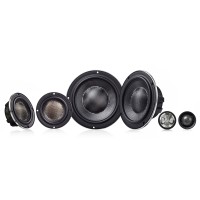 NewQuick preview3-way component speakers, Ø 165 / 89 / 28 mm, 180 W RMS, 4 Ω, 87 dB (2.83V/1m), diaphragm: carbon fiber / silk, without crossover2.999,60 EUR1 to 4 weeksMorel Elate Carbon Neo 93A Free transport
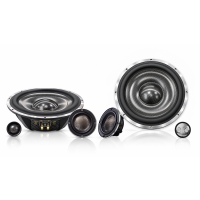 NewQuick preview3-way component speakers, Ø 165 / 89 / 28 mm, 200 W RMS, 4 Ω, 89 dB (2.83V/1m), diaphragm: carbon fiber / silk, without crossover3.199,60 EUR1 to 4 weeksMorel Elate Carbon Neo Alto Free transport
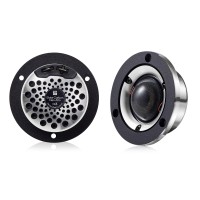 NewTipQuick previewtweeters, Ø dome 28 mm, 180 W RMS, 4 Ω, 91.5 dB (2.83V/1m), silk dome with Acuflex™1.319,60 EURIn stockMorel Elate Carbon Neo MM3 Free transport
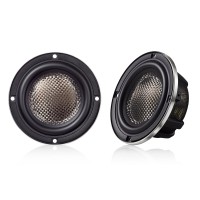 NewTipQuick previewmidrange speakers, Ø 89 mm, 120 W RMS, 4 Ω, 87 dB (2.83V/1m), diaphragm: carbon fiber / Rohacell1.119,60 EUR1 to 4 weeksMorel Elate Carbon Neo MW6 Free transport
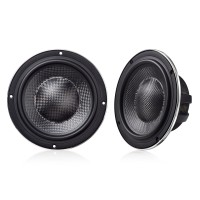 NewQuick previewmidbass speakers, Ø 165 mm, 180 W RMS, 4 Ω, 87 dB (2.83V/1m), diaphragm: carbon fiber / Rohacell1.399,60 EUR1 to 4 weeksMorel Elate Carbon Neo MW9 Free transport
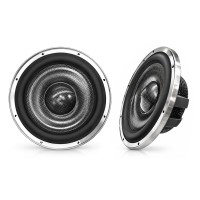 NewQuick previewmidbass speakers, Ø 220 mm, 200 W RMS, 4 Ω, 89 dB (2.83V/1m), diaphragm: carbon fiber / Rohacell1.639,60 EURIn stockMorel Elate Carbon Neo Pro 62 Free transport
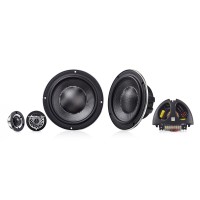 NewQuick previewcomponent speakers, Ø 165 / 28 mm, 180 W RMS, 4 Ω, 87 dB (2.83V/1m), diaphragm: carbon fiber / silk, 2-way crossover2.759,60 EUR1 to 4 weeksMorel Elate Carbon Neo Pro 62A Free transport
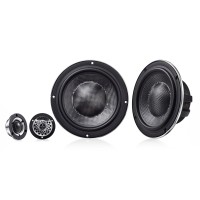 NewQuick previewcomponent speakers, Ø 165 / 28 mm, 180 W RMS, 4 Ω, 87 dB (2.83V/1m), diaphragm: carbon fiber / silk, without crossover2.559,60 EUR1 to 4 weeksMorel Elate Carbon Neo Pro 63A Free transportNewQuick preview3-way component speakers, Ø 165 / 89 / 28 mm, 200 W RMS, 4 Ω, 87 dB (2.83V/1m), cone: carbon fiber / silk, without crossover3.519,60 EUR1 to 4 weeksMorel Elate Carbon Neo Pro 93A Free transport
 NewQuick preview3-way component speakers, Ø 220 / 89 / 28 mm, 200 W RMS, 4 Ω, 89 dB (2.83V/1m), cone: carbon fiber / silk, without crossover3.679,60 EUR1 to 4 weeks