
Morel Elate Carbon Neo MW6 mid-bass speakers
More about the product
- You can return the goods to us within 14 days
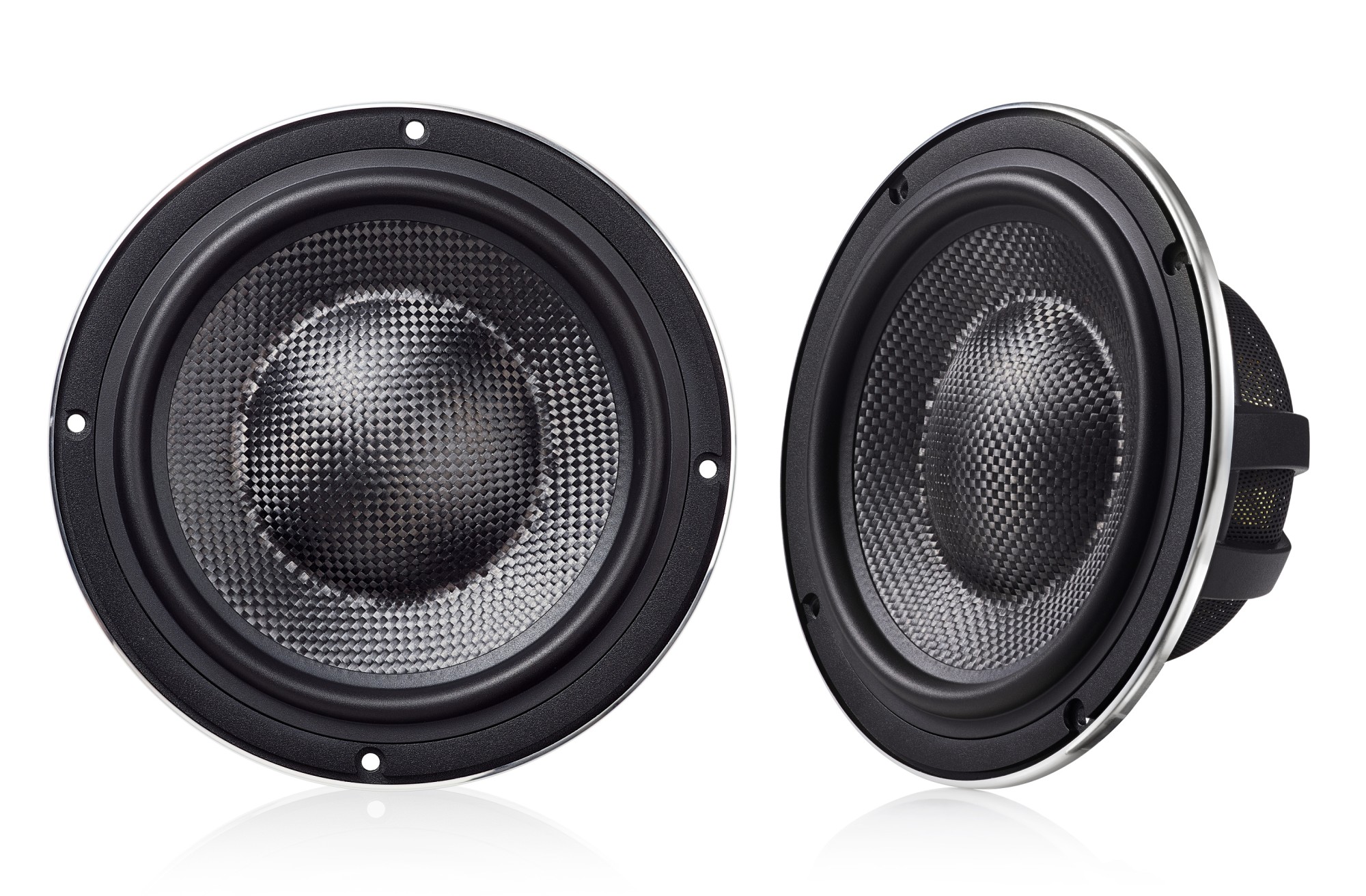

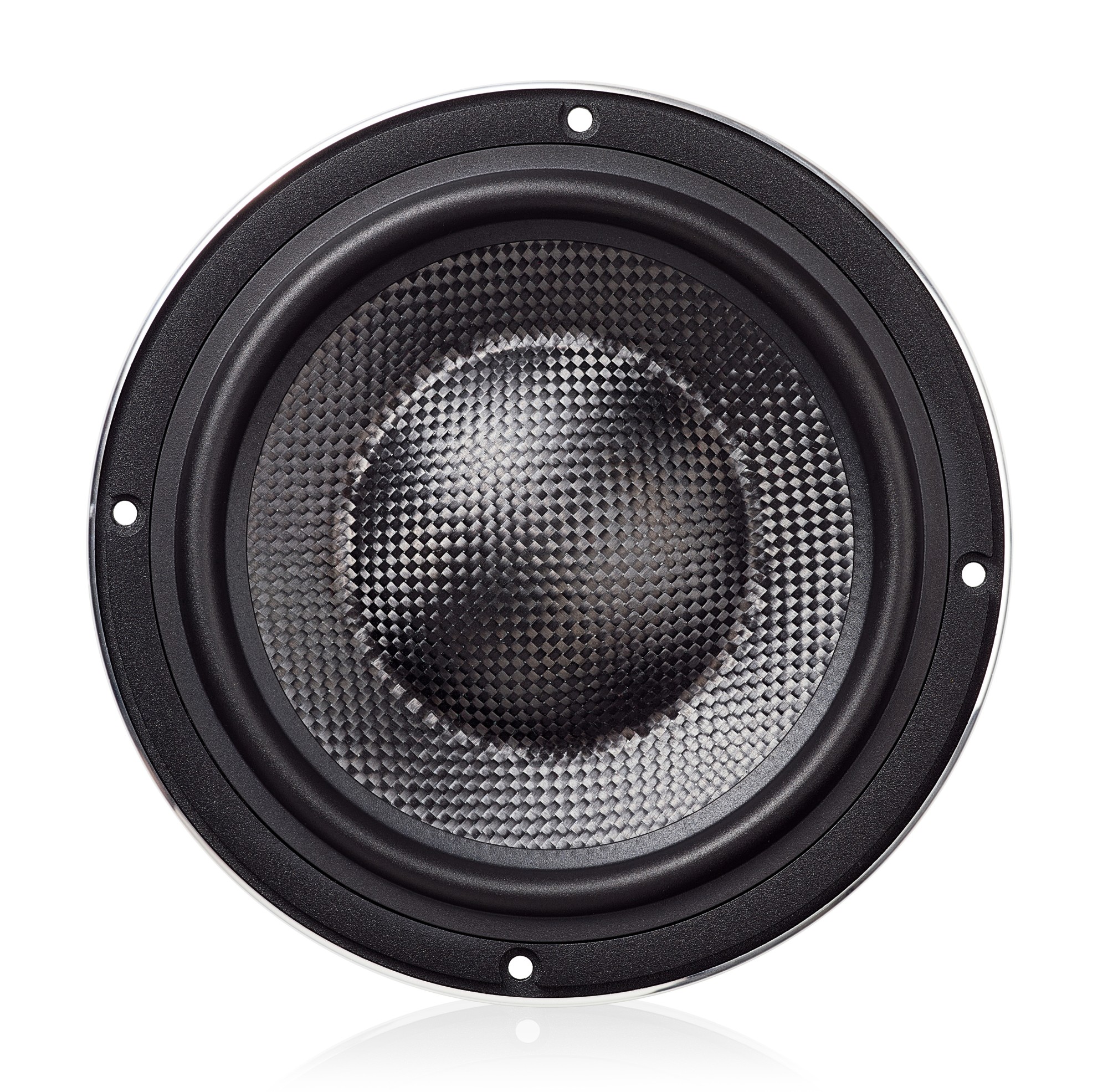
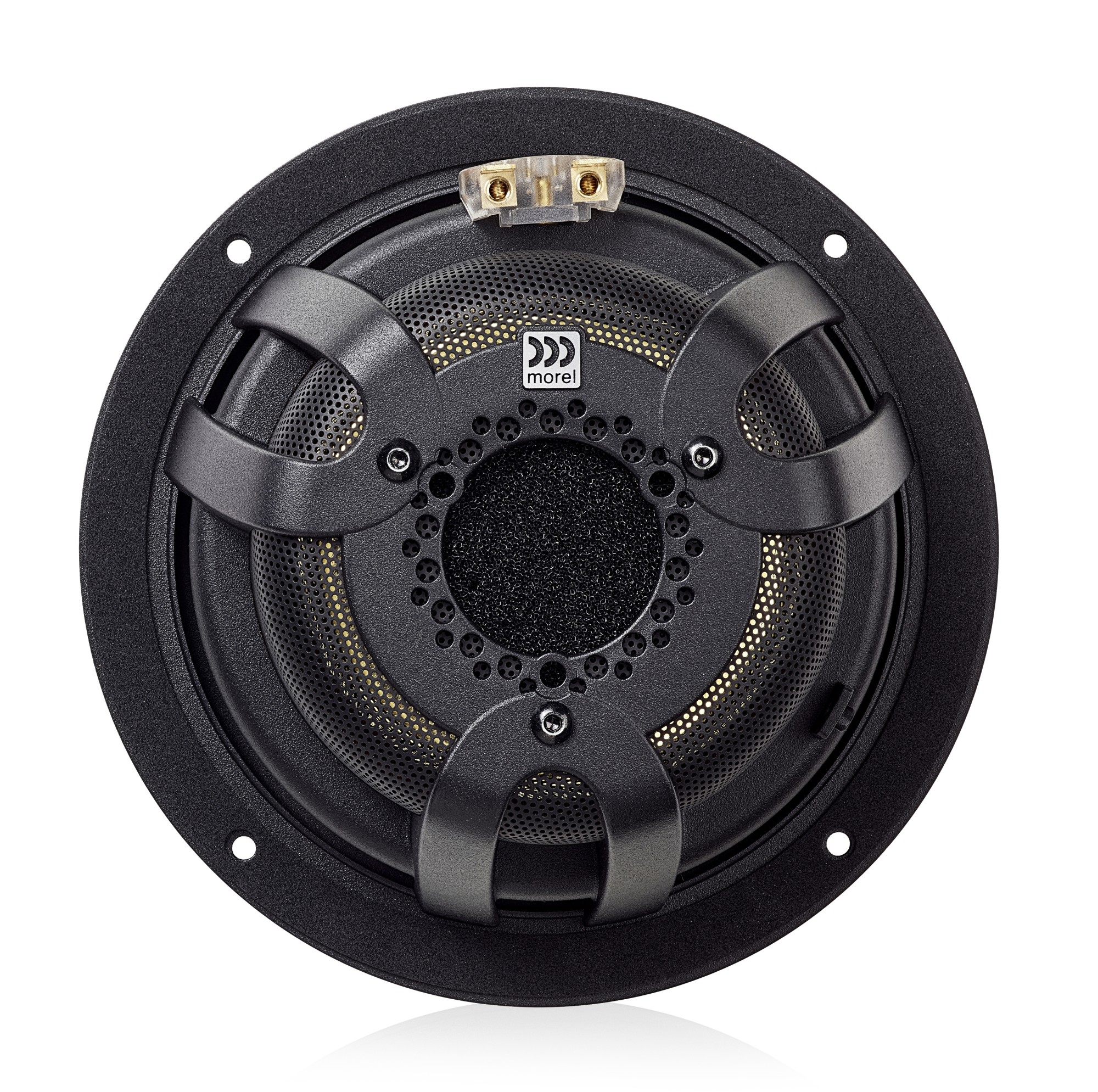

Morel Elate Carbon Neo MW6 Midbass Speakers
The Morel Elate Carbon Neo MW6 represents a new generation of 165 mm midbass drivers from one of Morel’s most respected and long-standing lines. In the company hierarchy, Elate Carbon sits just below the reference Supremo and for years has been a key high-end platform that combines top-model technologies with greater installation flexibility for automotive applications. The series is characterized by lightweight and exceptionally stiff TLC diaphragms made from carbon fiber and Rohacell, large voice coils, powerful motor systems and Morel’s characteristically natural and musical sound. The new Neo generation advances this concept with redesigned mechanics, improved linearity, faster response and a notably more premium design with precisely machined aluminum details.
TLC carbon fiber and Rohacell diaphragm
At the core of the MW6 is the TLC (Triple-Layer Composite) diaphragm, which combines two layers of carbon fiber with a lightweight Rohacell core. This sandwich construction offers an exceptionally favorable ratio of low mass to high stiffness, allowing the diaphragm to accurately follow signal changes while resisting unwanted deformation at higher excursions. The result is a fast and well-defined midbass with excellent texture, natural instrument structure and the ability to maintain control even in demanding dynamic passages. The combination of carbon and Rohacell has long been one of the most characteristic construction features of the Elate Carbon series.
Exceptionally large 76 mm voice coil
One of the most distinctive design elements of the MW6 is the 76 mm voice coil, unusually large for a 165 mm driver. Morel has long employed this architecture, and the large external coil is a hallmark of its top models. The greater coil area enables more efficient heat dissipation, high power handling and very precise control of diaphragm movement. As a result, the MW6 handles 180 W RMS and retains dynamic authority, clarity and a stable character even at high volumes where typical midbass drivers may lose control.
Redesigned motor and suspension for improved linearity
The new Elate Carbon Neo generation introduces a revised motor system using a strong neodymium magnet that provides substantially higher magnetic flux density than common ferrite solutions while maintaining compact dimensions. Combined with the exceptionally large 75 mm voice coil, this yields a motor with high force, precision and control over diaphragm movement. The optimized suspension further improves linearity across the operating range, reduces distortion at small and large excursions and contributes to faster transient response. MW6 therefore reacts very quickly to signal changes and moves from delicate detail to pronounced dynamic peaks without losing control or sounding compressed.
Fast, precise and authoritative midbass
MW6 combines high dynamics and punch with the accuracy required for demanding SQ systems. The light and stiff TLC diaphragm together with the powerful motor enable very fast attack and stop, so bass remains tight, defined and well-controlled even at higher levels. At the same time, the driver preserves naturalness and fine detail in the upper part of its band, allowing smooth integration with other system drivers. The combination of authority, speed, clarity and musicality is a defining trait of the Elate Carbon series.
Main features
- High-end 165 mm midbass driver of the Elate Carbon Neo series.
- TLC triple-layer diaphragm of carbon fiber and Rohacell.
- Exceptionally large 76 mm voice coil.
- Large external voice coil for high power and precise diaphragm control.
- Redesigned motor and suspension for improved linearity.
- Low distortion and fast transient response.
- Tight, fast and very accurate bass performance.
- High dynamic reserve and stable sound even at high volumes.
- Revised cast aluminum basket.
- Premium details with precisely machined brushed aluminum.
- Suitable for both two-way and three-way Elate Carbon Neo and Neo Pro systems.
- Ideal for demanding active SQ installations with a DSP processor.
About the brand
Morel is among the manufacturers that have developed an unmistakable signature over decades. Since 1975 the company has followed Meir Mordechai’s idea that a good loudspeaker should not only reproduce music accurately but above all preserve its emotion, naturalness and atmosphere. That is why Morel products have such a distinctive character—they can be highly detailed, dynamic and technically precise while never losing musicality or the ability to draw the listener into the recording. Each product is hand-assembled in Israel and created using in-house development, long-standing know-how and a range of original technologies and patented solutions that significantly influence both construction and sound. Morel owes much of its success to its home high-end audio work, where the brand develops its own drivers and loudspeaker systems and then adapts many technologies for automotive use. Combined with exceptional workmanship, timeless design and an extraordinary sense for detail, this produces products for people who want not just to hear music but to truly experience it.
| Catalog number | ELATE CARBON NEO MW6 |
| Brand | Morel |
| Links | Official web presentation |
| Speaker typeCoaxial speakers: Coaxial speakers are characterized by a so-called all-in-one design. The tweeter and mid-bass speaker are in one basket. The advantage is simpler assembly, but thanks to the connection or proximity of the bands in one speaker, the sound quality will usually be reduced. As a rule, in the middle of the mid-bass speaker, there is a tweeter whose voice coil works in the second air gap of the common magnetic circuit. The three-way coaxial speaker consists of a mid-bass speaker, a center speaker and a separate tweeter in the front on a special beam. Component Speakers: Component speakers are characterized by a division into individual frequency bands, treble + mid-bass + or. bass band. The individual speakers can be placed completely separately, which results in a better sound and acoustic performance. In the vast majority of cases of component speakers, an external crossover is also supplied, which divides the treble, middle / mid-bass, and into the three-band the bass band or allows setting the decibel level of the tweeter (e.g. +2 dB, 0 dB, -2 dB), steepness (e.g. 6dB/Oct. 12dB/Oct.) or active or bi-amp connection. | Mid-bass |
| RMS powerRMS speaker power is the constant power of the entire system, not just one speaker or one side. This is also the performance of continuous use of the speakers. If the RMS power is exceeded for a long time, the speakers may be irreversibly damaged! | 180 W |
| Max. (maximum performancePeak performance , which the speaker can play for a moment (approx. 0.5 s), for example when hitting drums in a song. If the max power is exceeded, the speakers will usually be damaged! | 1000 W |
| Sensitivity (SPL 2.83V/1m)Sensitivity, sensitivity or efficiency of the speaker. Speaker sensitivity is given in decibels (dB) and simply put, the higher the value, the lower the demands on the amplifier's power. This is a defacto rating of how a speaker converts watts to sound. Sensitivity ratings are in noise level measured at 1 meter from the speaker using 1 W (watt of power) or using 2.83 volts at the source at 1 meter. A higher decibel level means the speaker is louder with less power. For every 3 dB increase in sensitivity, the speaker requires half the power to reproduce the same volume. For example, if an 88 dB speaker needs 100 Watts to produce a certain volume, then a speaker with a sensitivity of 91 dB needs only 50 Watts to reach the same volume. | 87 dB |
| ImpedanceImpedance - measurement of electrical resistance. When buying speakers, it is important to make sure that the impedance matches the amplifier or car stereo you are using. Example: A 2 Ohm speaker cannot be connected to an amplifier that is only stable up to 4 Ohms! A 4 Ohm speaker can easily be used with an amplifier that is stable up to 2 Ohms. The most common speaker impedance today is 3 - 4 Ohm. | 4 Ω |
| Frequency rangeThe ability of the speakers to play a signal from the lowest frequency to the highest, or the speaker's ability to faithfully reproduce sound in a specific frequency band. Professionally: In the frequency range from 40 to 16,000 Hz, the vast majority of fundamental and overtones (harmonics) of all musical instruments are found. We are interested in the course of the radiated sound pressure in this range of frequencies when the loudspeaker system is supplied with constant power. We call this course the frequency characteristic, which tells us the level of radiated sound pressure in decibels (dB) depending on the frequency. The frequency characteristic of a speaker or speaker system can be expressed most succinctly with a graph. Mostly, however, the frequency characteristic is indicated by indicating the maximum tolerance of the sound pressure in the given frequency range, e.g. 50 to 15,000 Hz -+ 6 dB. Since the frequency characteristics of loudspeakers and systems in general are quite uneven, some manufacturers do not even specify this maximum tolerance of sound pressure in decibels in their catalogs for reasons of prestige. Data impoverished in this way is unfortunately worthless. What is valid is that the manufacturer offers a speaker system with a frequency range of 30 to 20,000 Hz, if he is worried about stating the maximum unevenness of the sound pressure in this range, because he can have a tolerance of, for example, +- 20 dB. The unevenness or undulation of the frequency curve in good speaker systems for high-quality music performance should not exceed +-3 dB in the 80 to 12,000 Hz band and +-6 dB in the 40 to 16,000 Hz band. Greater unevenness already depletes or emphasizes certain tonal areas, which can cause audible or even disturbing distortion. The proportion between fundamental tones and higher harmonics also changes, thereby changing the color of the sound, and individual musical instruments as well as the entire musical image sound unnatural. | 30 – 4000 Hz |
| The diameter of the mid-bass speakerWe state the diameter of the speaker as the diameter of the entire speaker, not including the mounts, when smaller speakers (87, 100, 130 mm) have extra mounts. Some speakers are oval and there the dimension is given in inches, always the shortest side to the longest side. One inch is approx. 2.5 cm. | 165 mm |
| Installation depth of the mid-bass speakerThe installation depth of the speaker is measured from the bottom edge of the magnet to the bottom edge of the tin, plastic or cast speaker basket, or speaker bearing surfaces. | 61 mm |
| Mid-woofer diaphragm materialThe material that was used for the speaker diaphragm. Don't be afraid of the paper, it surprisingly has a very natural and high-quality sound and, thanks to the surface treatment, it can withstand moisture without any problems. | Carbon fiber composite |
| Resonant frequency of the mid-bass speaker | 45 Hz |
| Voice coil diameter of the mid-bass speaker | 75 mm (3\") |
| Magnet | Neodymium |
| Price forIf the price is for a pair, the package always includes 2 pieces of everything, e.g. 2x mid-bass, 2x tweeter and 2x crossover. | Pair |
Evaluation
You might also be interested
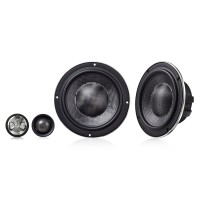
 NewQuick previewcomponent speakers, Ø 165 / 28 mm, 180 W RMS, 4 Ω, 87 dB (2.83V/1m), cone: carbon fiber / silk2.199,60 EUR1 to 4 weeksMorel Elate Carbon Neo 62A Free transport
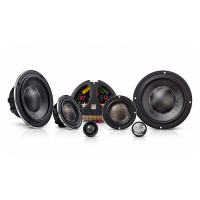
 NewTipQuick previewcomponent speakers, Ø 165 / 28 mm, 180 W RMS, 4 Ω, 87 dB (2.83V/1m), cone: carbon fiber / silk, active system without crossover1.999,60 EUR1 to 4 weeksMorel Elate Carbon Neo 63 Free transport
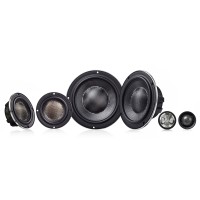
 NewQuick preview3-way component speakers, Ø 165 / 89 / 28 mm, 180 W RMS, 4 Ω, 87 dB (2.83V/1m), diaphragm: carbon fiber / silk3.199,60 EUR1 to 4 weeksMorel Elate Carbon Neo 63A Free transport
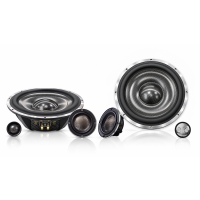
 NewQuick preview3-way component speakers, Ø 165 / 89 / 28 mm, 180 W RMS, 4 Ω, 87 dB (2.83V/1m), diaphragm: carbon fiber / silk, without crossover2.999,60 EUR1 to 4 weeksMorel Elate Carbon Neo 93A Free transport
 NewQuick preview3-way component speakers, Ø 165 / 89 / 28 mm, 200 W RMS, 4 Ω, 89 dB (2.83V/1m), diaphragm: carbon fiber / silk, without crossover3.199,60 EUR1 to 4 weeksMorel Elate Carbon Neo Alto Free transport
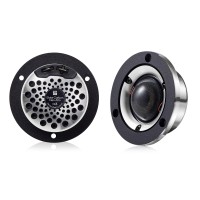 NewTipQuick previewtweeters, Ø dome 28 mm, 180 W RMS, 4 Ω, 91.5 dB (2.83V/1m), silk dome with Acuflex™1.319,60 EURIn stockMorel Elate Carbon Neo MM3 Free transport
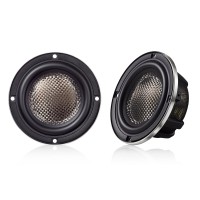 NewTipQuick previewmidrange speakers, Ø 89 mm, 120 W RMS, 4 Ω, 87 dB (2.83V/1m), diaphragm: carbon fiber / Rohacell1.119,60 EUR1 to 4 weeksMorel Elate Carbon Neo MW9 Free transport
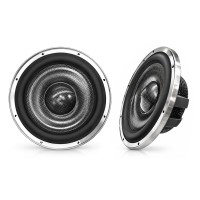 NewQuick previewmidbass speakers, Ø 220 mm, 200 W RMS, 4 Ω, 89 dB (2.83V/1m), diaphragm: carbon fiber / Rohacell1.639,60 EURIn stockMorel Elate Carbon Neo Pro 62 Free transport
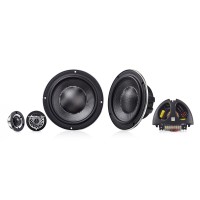 NewQuick previewcomponent speakers, Ø 165 / 28 mm, 180 W RMS, 4 Ω, 87 dB (2.83V/1m), diaphragm: carbon fiber / silk, 2-way crossover2.759,60 EUR1 to 4 weeksMorel Elate Carbon Neo Pro 62A Free transport
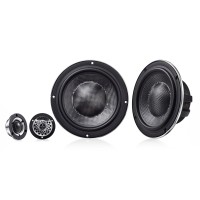 NewQuick previewcomponent speakers, Ø 165 / 28 mm, 180 W RMS, 4 Ω, 87 dB (2.83V/1m), diaphragm: carbon fiber / silk, without crossover2.559,60 EUR1 to 4 weeksMorel Elate Carbon Neo Pro 63 Free transport
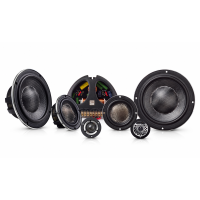 NewQuick preview3-way component speakers, Ø 165 / 89 / 28 mm, 200 W RMS, 4 Ω, 87 dB (2.83V/1m), cone: carbon fiber / silk, 3-way crossover3.719,60 EUR1 to 4 weeksMorel Elate Carbon Neo Pro 63A Free transport
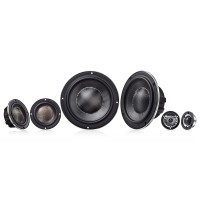 NewQuick preview3-way component speakers, Ø 165 / 89 / 28 mm, 200 W RMS, 4 Ω, 87 dB (2.83V/1m), cone: carbon fiber / silk, without crossover3.519,60 EUR1 to 4 weeksMorel Elate Carbon Neo Pro 93A Free transport
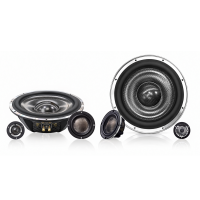 NewQuick preview3-way component speakers, Ø 220 / 89 / 28 mm, 200 W RMS, 4 Ω, 89 dB (2.83V/1m), cone: carbon fiber / silk, without crossover3.679,60 EUR1 to 4 weeks