
Morel Elate Carbon Neo Pro 62A speakers
More about the product
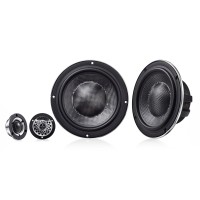 Morel Elate Carbon Neo Pro 62A1 to 4 weeks 2 559,60 EUR
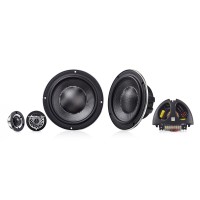 Morel Elate Carbon Neo Pro 621 to 4 weeks 2 759,60 EUR
- You can return the goods to us within 14 days


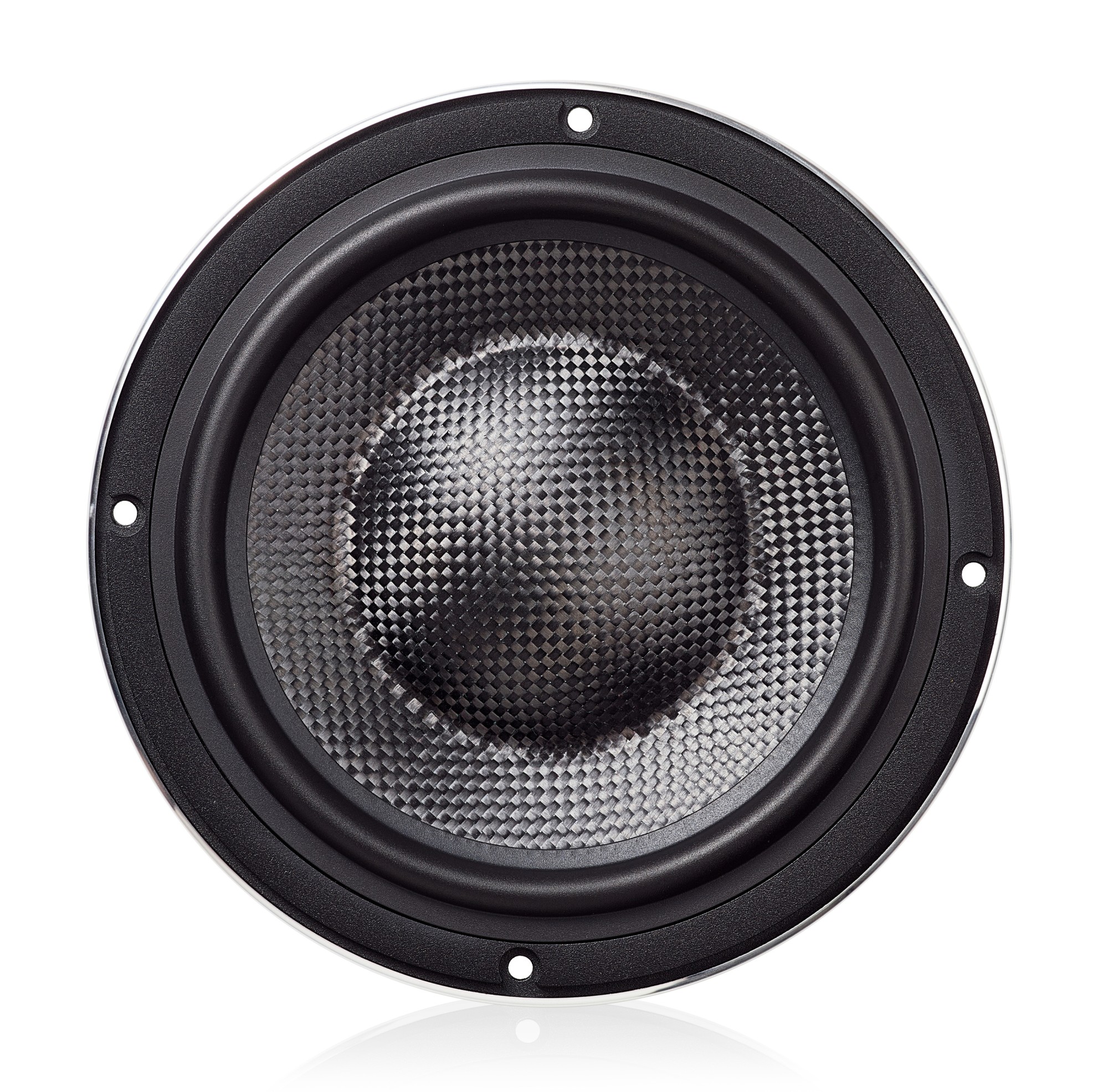


Morel Elate Carbon Neo Pro 62A Component Speakers
The Morel Elate Carbon Neo Pro 62A represents the pinnacle 2-way implementation of the new Elate Carbon generation and is one of the highest-ranking component sets in Morel’s lineup. The Elate Carbon series sits just below the reference Supremo in the manufacturer’s hierarchy and has long been one of the brand’s most important high-end platforms. The Neo Pro version pushes this concept further toward maximum resolution, spatiality, and dynamic authority. The series is characterised by lightweight, exceptionally stiff TLC diaphragms made from carbon fiber and Rohacell, large voice coils, powerful motor systems, and Morel’s characteristically natural and musical sound. Neo Pro adds the more sophisticated Alto Neo tweeter with a more powerful neodymium drive and a new ASW™ rear chamber that further reduces resonances and distortion, contributing to greater openness and more precise spatial rendering.
The Elate Carbon Neo Pro 62A pairs the 165 mm MW6 midwoofer with the top-tier Alto Neo tweeter into a fully active 2-way solution for the most demanding SQ installations. The MW6 offers a fast, firm, and precisely controlled mid-bass, while the Alto Neo follows with an exceptionally open, detailed, and spatially accurate high-frequency presentation. Active configuration allows precise adjustment of crossover frequency, time alignment, individual driver levels, and the overall tonal balance according to the specific vehicle and mounting positions. The result is a very cohesive 2-way system with high resolution, impressive dynamics, and a convincingly three-dimensional soundstage.
TLC MW6 midwoofer of carbon fiber and Rohacell
At the heart of the system is the 165 mm MW6 midwoofer with a TLC (Triple-Layer Composite) diaphragm that combines two layers of carbon fiber with a lightweight Rohacell core. This sandwich construction offers an exceptionally favourable ratio of low mass to high stiffness, so the diaphragm can track signal changes very precisely while resisting unwanted deformation at larger excursions. The result is a fast, firm, and concrete mid-bass with excellent definition, natural instrument texture, and the ability to maintain control even in demanding dynamic passages.
76 mm voice coil and powerful neodymium motor
The MW6 uses an unusually large 76 mm external voice coil for a 165 mm driver, a typical construction feature of Morel’s high-end drivers. The large coil area enables efficient heat dissipation, high power handling, and precise control of diaphragm motion. The reworked motor system employs a strong neodymium magnet that, despite very compact dimensions, provides high magnetic flux density and the necessary force to control the diaphragm accurately. An optimized suspension also improves linearity and reduces distortion, allowing the midwoofer to move from subtle detail to pronounced dynamic peaks without loss of control or a sense of compression.
Alto Neo with ASW™ technology
High frequencies are handled by the top-tier Alto Neo, which marks a significant difference over the standard Elate Carbon Neo series. It features a 28 mm tall soft dome with a hand-applied Acuflex™ layer, a more powerful neodymium drive, and a newly developed ASW™ (Anti-Standing Wave) rear chamber. The ASW™ limits standing waves, internal resonances, and distortion behind the diaphragm, allowing the tweeter to deliver even greater purity, openness, and more accurate spatial rendering. The Alto Neo also offers higher sensitivity and more power reserve than the MT-550, enabling it to maintain finesse, resolution, and dynamics even at very high volume levels.
Designed for top active systems
The 62A variant does not include a passive crossover and is intended for fully active 2-way systems with a DSP processor, where each driver has its own amplifier channel. This gives the installer maximum control over crossover frequency, time alignment, individual driver levels, and the system’s overall frequency response. With the combination of the MW6 and Alto Neo, a properly designed active setup can fully exploit their resolution, dynamics, and spatial capabilities to create a 2-way system on the level of truly high-end automotive audio.
Main features
- Pinnacle 2-way component system from the Elate Carbon Neo Pro series.
- Active variant without a passive crossover.
- 165 mm MW6 midwoofer.
- Top-tier Alto Neo tweeter.
- TLC triple-layer diaphragm of carbon fiber and Rohacell.
- Exceptionally large 76 mm external voice coil on the midwoofer.
- Powerful neodymium motor system.
- 28 mm Alto Neo soft dome with hand-applied Acuflex™ layer.
- New ASW™ rear chamber to reduce resonances and distortion.
- Higher sensitivity and power reserve of the tweeter compared to the MT-550.
- Exceptional resolution and a convincingly spatial soundstage.
- Designed for fully active 2-way systems with a DSP processor.
About the brand
Morel is one of the manufacturers that has developed an unmistakable signature over decades. Since 1975 it has built on Meir Mordechai’s idea that a good speaker should not only reproduce music accurately but above all preserve its emotion, naturalness, and atmosphere. That is why Morel products have such a distinctive character – they can be detailed, dynamic, and technically exceptionally precise, yet never lose musicality or the ability to draw the listener into the recording. Each product is hand-assembled in Israel and created using in-house development, long-standing know-how, and a range of original technologies and patented solutions that strongly influence both construction and final sound. Morel owes much of its success to domestic high-end audio, where the brand has long developed its own drivers and loudspeaker systems and from which it transfers and adapts many technologies for automotive use. Combined with exceptional craftsmanship, timeless design, and an extraordinary attention to detail, this produces products for people who want to not just hear music, but truly experience it.
| Catalog number | ELATE CARBON NEO PRO 62A |
| Brand | Morel |
| Links | Official web presentation |
| Speaker typeCoaxial speakers: Coaxial speakers are characterized by a so-called all-in-one design. The tweeter and mid-bass speaker are in one basket. The advantage is simpler assembly, but thanks to the connection or proximity of the bands in one speaker, the sound quality will usually be reduced. As a rule, in the middle of the mid-bass speaker, there is a tweeter whose voice coil works in the second air gap of the common magnetic circuit. The three-way coaxial speaker consists of a mid-bass speaker, a center speaker and a separate tweeter in the front on a special beam. Component Speakers: Component speakers are characterized by a division into individual frequency bands, treble + mid-bass + or. bass band. The individual speakers can be placed completely separately, which results in a better sound and acoustic performance. In the vast majority of cases of component speakers, an external crossover is also supplied, which divides the treble, middle / mid-bass, and into the three-band the bass band or allows setting the decibel level of the tweeter (e.g. +2 dB, 0 dB, -2 dB), steepness (e.g. 6dB/Oct. 12dB/Oct.) or active or bi-amp connection. | 2-way component |
| RMS powerRMS speaker power is the constant power of the entire system, not just one speaker or one side. This is also the performance of continuous use of the speakers. If the RMS power is exceeded for a long time, the speakers may be irreversibly damaged! | 180 W |
| Max. (maximum performancePeak performance , which the speaker can play for a moment (approx. 0.5 s), for example when hitting drums in a song. If the max power is exceeded, the speakers will usually be damaged! | 1000 W |
| Sensitivity (SPL 2.83V/1m)Sensitivity, sensitivity or efficiency of the speaker. Speaker sensitivity is given in decibels (dB) and simply put, the higher the value, the lower the demands on the amplifier's power. This is a defacto rating of how a speaker converts watts to sound. Sensitivity ratings are in noise level measured at 1 meter from the speaker using 1 W (watt of power) or using 2.83 volts at the source at 1 meter. A higher decibel level means the speaker is louder with less power. For every 3 dB increase in sensitivity, the speaker requires half the power to reproduce the same volume. For example, if an 88 dB speaker needs 100 Watts to produce a certain volume, then a speaker with a sensitivity of 91 dB needs only 50 Watts to reach the same volume. | 87 dB |
| ImpedanceImpedance - measurement of electrical resistance. When buying speakers, it is important to make sure that the impedance matches the amplifier or car stereo you are using. Example: A 2 Ohm speaker cannot be connected to an amplifier that is only stable up to 4 Ohms! A 4 Ohm speaker can easily be used with an amplifier that is stable up to 2 Ohms. The most common speaker impedance today is 3 - 4 Ohm. | 4 Ω |
| Frequency rangeThe ability of the speakers to play a signal from the lowest frequency to the highest, or the speaker's ability to faithfully reproduce sound in a specific frequency band. Professionally: In the frequency range from 40 to 16,000 Hz, the vast majority of fundamental and overtones (harmonics) of all musical instruments are found. We are interested in the course of the radiated sound pressure in this range of frequencies when the loudspeaker system is supplied with constant power. We call this course the frequency characteristic, which tells us the level of radiated sound pressure in decibels (dB) depending on the frequency. The frequency characteristic of a speaker or speaker system can be expressed most succinctly with a graph. Mostly, however, the frequency characteristic is indicated by indicating the maximum tolerance of the sound pressure in the given frequency range, e.g. 50 to 15,000 Hz -+ 6 dB. Since the frequency characteristics of loudspeakers and systems in general are quite uneven, some manufacturers do not even specify this maximum tolerance of sound pressure in decibels in their catalogs for reasons of prestige. Data impoverished in this way is unfortunately worthless. What is valid is that the manufacturer offers a speaker system with a frequency range of 30 to 20,000 Hz, if he is worried about stating the maximum unevenness of the sound pressure in this range, because he can have a tolerance of, for example, +- 20 dB. The unevenness or undulation of the frequency curve in good speaker systems for high-quality music performance should not exceed +-3 dB in the 80 to 12,000 Hz band and +-6 dB in the 40 to 16,000 Hz band. Greater unevenness already depletes or emphasizes certain tonal areas, which can cause audible or even disturbing distortion. The proportion between fundamental tones and higher harmonics also changes, thereby changing the color of the sound, and individual musical instruments as well as the entire musical image sound unnatural. | 30 – 25000 Hz |
| The diameter of the mid-bass speakerWe state the diameter of the speaker as the diameter of the entire speaker, not including the mounts, when smaller speakers (87, 100, 130 mm) have extra mounts. Some speakers are oval and there the dimension is given in inches, always the shortest side to the longest side. One inch is approx. 2.5 cm. | 165 mm |
| Installation depth of the mid-bass speakerThe installation depth of the speaker is measured from the bottom edge of the magnet to the bottom edge of the tin, plastic or cast speaker basket, or speaker bearing surfaces. | 61 mm |
| Mid-woofer diaphragm materialThe material that was used for the speaker diaphragm. Don't be afraid of the paper, it surprisingly has a very natural and high-quality sound and, thanks to the surface treatment, it can withstand moisture without any problems. | Carbon fiber composite |
| Resonant frequency of the mid-bass speaker | 45 Hz |
| Voice coil diameter of the mid-bass speaker | 75 mm (3") |
| Magnet | Neodymium |
| Overall tweeter diameterThe total diameter of the tweeter is given as the diameter of the individual tweeter without the installation houses. | 62.5 mm |
| Tweeter dome diameterThe net diameter of the dome (diaphragm) of the tweeter. | 28 mm |
| The overall depth of the tweeterThe total depth of the tweeter itself without the installation houses. | 21 mm |
| Tweeter dome materialThe shell material that was used in the manufacture of the tweeter. | Silk with hand-applied Acuflex™ coating |
| The resonant frequency of the tweeter | 800 Hz |
| Frequency crossover included in the packageThe crossover is an important part of defacto all loudspeakers. A crossover usually contains different resistor values, coil sizes, and capacitor types that fundamentally modify the sound. We describe below what the turnouts are for. Component Speakers: A crossover is part of every quality component speaker system. Its task is to ensure the distribution of frequencies that the amplifier produces in the entire acoustic spectrum of frequencies so that each of the speakers receives only that part of the band that it can optimally play in terms of efficiency and minimal distortion. Coaxial speakers: In most cases, coaxial loudspeakers have a simple crossover (6dB/Oct.) formed by a capacitor at the tweeter. | No |
| Cover grids included in the packageOriginal cover grilles in speaker packaging. | Yes |
| Price forIf the price is for a pair, the package always includes 2 pieces of everything, e.g. 2x mid-bass, 2x tweeter and 2x crossover. | Pair |
Evaluation
You might also be interested
 NewQuick previewcomponent speakers, Ø 165 / 28 mm, 180 W RMS, 4 Ω, 87 dB (2.83V/1m), cone: carbon fiber / silk2.199,60 EUR1 to 4 weeksMorel Elate Carbon Neo 62A Free transport
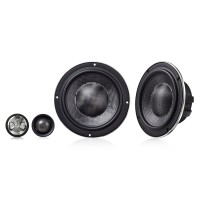 NewTipQuick previewcomponent speakers, Ø 165 / 28 mm, 180 W RMS, 4 Ω, 87 dB (2.83V/1m), cone: carbon fiber / silk, active system without crossover1.999,60 EUR1 to 4 weeksMorel Elate Carbon Neo 63 Free transport
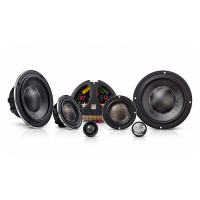 NewQuick preview3-way component speakers, Ø 165 / 89 / 28 mm, 180 W RMS, 4 Ω, 87 dB (2.83V/1m), diaphragm: carbon fiber / silk3.199,60 EUR1 to 4 weeksMorel Elate Carbon Neo 63A Free transport
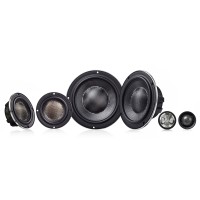 NewQuick preview3-way component speakers, Ø 165 / 89 / 28 mm, 180 W RMS, 4 Ω, 87 dB (2.83V/1m), diaphragm: carbon fiber / silk, without crossover2.999,60 EUR1 to 4 weeksMorel Elate Carbon Neo 93A Free transport
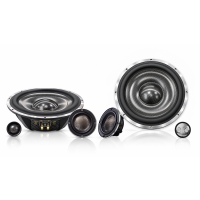 NewQuick preview3-way component speakers, Ø 165 / 89 / 28 mm, 200 W RMS, 4 Ω, 89 dB (2.83V/1m), diaphragm: carbon fiber / silk, without crossover3.199,60 EUR1 to 4 weeksMorel Elate Carbon Neo Alto Free transport
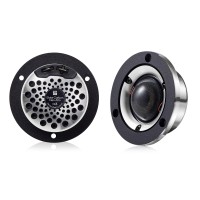 NewTipQuick previewtweeters, Ø dome 28 mm, 180 W RMS, 4 Ω, 91.5 dB (2.83V/1m), silk dome with Acuflex™1.319,60 EURIn stockMorel Elate Carbon Neo MM3 Free transport
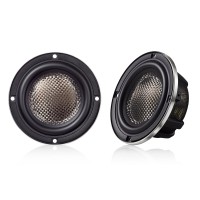 NewTipQuick previewmidrange speakers, Ø 89 mm, 120 W RMS, 4 Ω, 87 dB (2.83V/1m), diaphragm: carbon fiber / Rohacell1.119,60 EUR1 to 4 weeksMorel Elate Carbon Neo MW6 Free transport
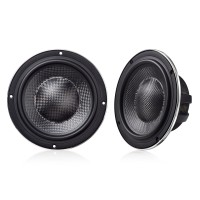 NewQuick previewmidbass speakers, Ø 165 mm, 180 W RMS, 4 Ω, 87 dB (2.83V/1m), diaphragm: carbon fiber / Rohacell1.399,60 EUR1 to 4 weeksMorel Elate Carbon Neo MW9 Free transport
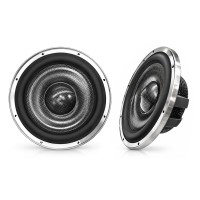 NewQuick previewmidbass speakers, Ø 220 mm, 200 W RMS, 4 Ω, 89 dB (2.83V/1m), diaphragm: carbon fiber / Rohacell1.639,60 EURIn stockMorel Elate Carbon Neo Pro 62 Free transportNewQuick previewcomponent speakers, Ø 165 / 28 mm, 180 W RMS, 4 Ω, 87 dB (2.83V/1m), diaphragm: carbon fiber / silk, 2-way crossover2.759,60 EUR1 to 4 weeksMorel Elate Carbon Neo Pro 63 Free transport
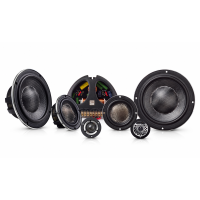 NewQuick preview3-way component speakers, Ø 165 / 89 / 28 mm, 200 W RMS, 4 Ω, 87 dB (2.83V/1m), cone: carbon fiber / silk, 3-way crossover3.719,60 EUR1 to 4 weeksMorel Elate Carbon Neo Pro 63A Free transport
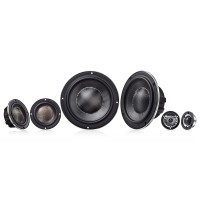 NewQuick preview3-way component speakers, Ø 165 / 89 / 28 mm, 200 W RMS, 4 Ω, 87 dB (2.83V/1m), cone: carbon fiber / silk, without crossover3.519,60 EUR1 to 4 weeksMorel Elate Carbon Neo Pro 93A Free transport
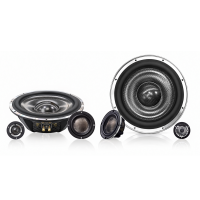 NewQuick preview3-way component speakers, Ø 220 / 89 / 28 mm, 200 W RMS, 4 Ω, 89 dB (2.83V/1m), cone: carbon fiber / silk, without crossover3.679,60 EUR1 to 4 weeks