
Vibroacoustic material Comfortmat Zenith
More about the product
- You can return the goods to us within 14 days
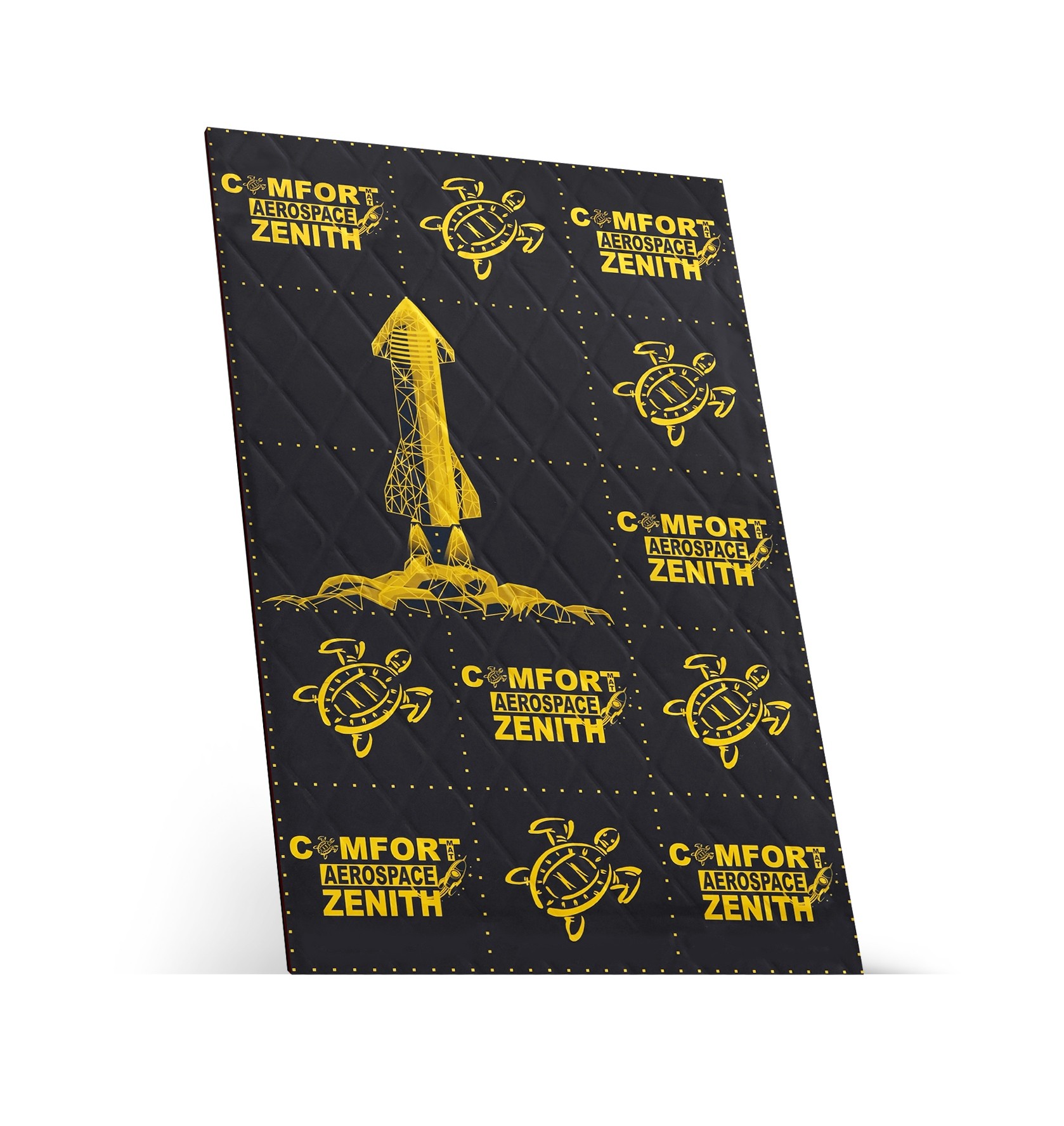
Vibro-acoustic material Comfortmat Zenith
Comfortmat Zenith is the most effective material in the Aerospace line of vibro-acoustic products, combining advanced anti-vibration and sound-insulating properties in a single layer. Thanks to its robust multi-layer construction optimized for maximum vibration and noise attenuation, Zenith is designed for the most heavily loaded areas of vehicle bodies where the aim is to achieve top acoustic comfort without compromise. The overall thickness of 9 mm, including a 3 mm heavy sound-insulating membrane, enables effective vibration absorption while significantly reducing the transmission of airborne noise. The material achieves an acoustic loss factor (MLF) of up to 0.62, surpassing most conventional anti-vibration materials. In addition, it is equipped with a rigid 100-micron Scale One aluminum foil that ensures dimensional stability, resistance to mechanical damage and improves the transfer of damping energy into the vehicle structure. Zenith is therefore especially suitable for floors, wheel arch areas, engine bay bulkheads, center tunnels or the rear of the vehicle where significant attenuation is required in a single application. The result is exceptionally high effectiveness while maintaining a reasonable surface weight not exceeding 9 kg/m². This represents an average weight saving of 35–40 % compared to common two-layer applications, which is crucial especially when soundproofing electric vehicles, sports cars and anywhere the low weight of materials is a priority.
About Comfortmat Aerospace technology
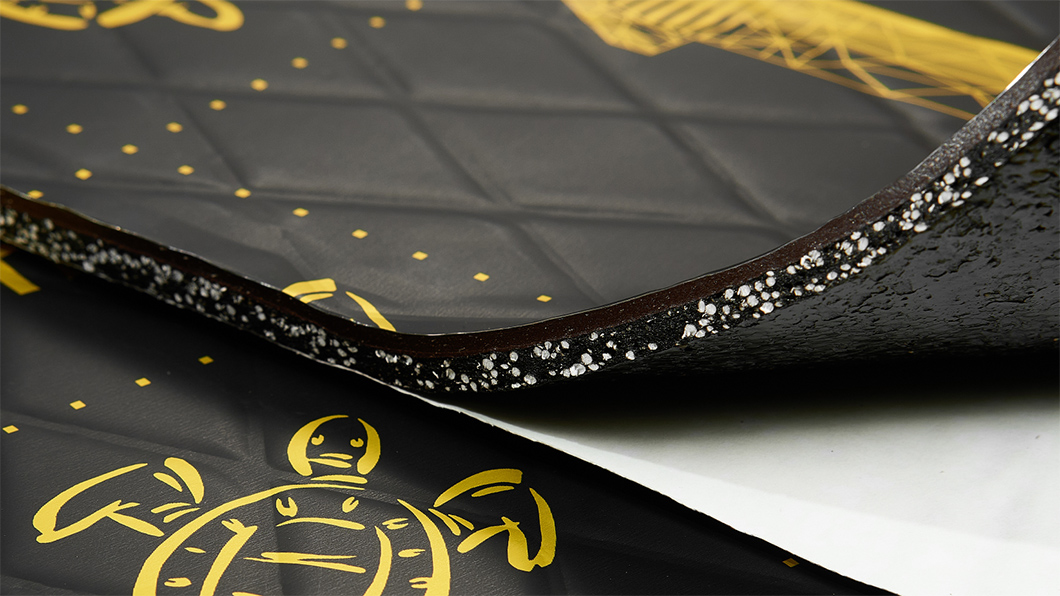
The Aerospace range materials represent a new generation of vibro-acoustic solutions that combine anti-vibration and sound-insulating functions in a single step. Unlike traditional damping layers that often focus only on suppressing vibrations or require multi-stage application, Aerospace uses an advanced sandwich structure capable of effectively absorbing vibrations while significantly reducing sound transmission through body panels.
The core of the technology is a vibro-acoustic layer with foamed granules – lightweight elastic particles with a bulk density of approximately 0.02 g/cm³, evenly dispersed in a polymer matrix with a density of 1.25 g/cm³. The resulting mix has a final bulk density of 0.58 g/cm³, which allows achieving a high level of damping without a significant increase in weight. The combination of two different acoustic environments – a heavy matrix and light, resilient granules – increases the ability to absorb and scatter vibrations across a wide frequency spectrum. This structure also helps improve sound insulation, including in the critical low-frequency range.
The Aerospace technology thus offers an exceptional performance-to-weight ratio, which is a key parameter particularly for electric vehicles, sports cars and professional soundproofing where every extra kilogram is undesirable. The materials exhibit an acoustic loss factor (MLF) of up to 0.62 (for Comfortmat Zenith) in the range -10 to +40 °C, which is at or above the level of the most effective anti-vibration materials on the market. High adhesive strength in the range of 11 to 16 N/cm (depending on the material type) ensures perfect bonding even on vertical or curved surfaces without risk of detachment.
Beyond acoustic parameters, Aerospace materials also have a significant impact on body stiffness. Flexural strength tests show that, for example, the Galaxy and Zenith models increase resistance to sheet deformation even more than conventional anti-vibration materials – thus contributing to the mechanical stability and durability of the whole part. Low water absorption (under 0.7 %) and resistance across a wide temperature range – both in extreme heat and cold – are standard.
Key features
- Combines anti-vibration and sound-insulating effects in a single two-layer construction.
- With a thickness of 9 mm and a surface weight of 8.98 kg/m² it is ideal for areas with high vibration and noise loads.
- The vibro-acoustic layer with foamed granule technology absorbs vibrations across a wide frequency spectrum.
- The heavy sound-insulating membrane (3 mm) significantly reduces airborne noise transmission through the bodywork.
- Acoustic loss factor (MLF) reaches up to 0.62 – one of the highest values among self-adhesive materials.
- Significantly reduces sheet metal resonances and increases their stiffness.
- Scale One surface foil (100 µm) ensures dimensional stability, protects against damage and increases the transfer of damping energy.
- High adhesive strength above 13 N/cm ensures trouble-free application even on vertical surfaces.
- Water absorption under 0.7 % for long-term moisture resistance.
- Non-flammable composition meets strict safety requirements – suitable even for electric vehicle interiors.
- Resists long-term and short-term thermal stress (-40 to 90 °C), stable even in extreme conditions.
- Non-flammable composition meets enhanced safety requirements for interior and engine bay applications.
- Weight savings up to 40 % compared to common two-layer applications – ideal for sports and electric vehicles.
Material composition
Comfortmat Zenith uses a multi-layer sandwich construction designed to achieve maximum vibration and noise attenuation in a single application. The layers are optimized to work together – while the vibro-acoustic core eliminates structural vibrations, the heavy membrane attenuates airborne noise transmission. The result is a material with extreme efficiency and excellent mechanical properties.
Vibro-acoustic layer (6 mm)
A polymer matrix with foamed low-density elastic granules effectively absorbs vibrations over a wide frequency range.Sound-insulating membrane (3 mm)
A heavy elastic component applied to the surface of the core that significantly limits noise transmission through body parts.Scale One aluminum foil (100 µm)
A surface layer with a matte non-slip finish that increases dimensional stability, the transfer of damping energy and protects the material from mechanical damage.
How to apply
Comfortmat Zenith is applied in a single layer directly to a cleaned and degreased metal surface. Due to its high adhesive strength, the use of a pressure roller is not necessary; thorough manual pressing over the entire area is sufficient. For a perfect result, however, rolling is recommended, especially on more complex or vertical surfaces. Considering the 9 mm thickness, the presence of a heavy insulating membrane and MLF 0.62, the material is suitable for the most heavily loaded areas of the body where maximum attenuation is required:
- floor
- rear wheel arches
- center tunnel
- engine bay bulkhead
About Comfortmat materials
The company Comfortmat has been operating on the market since 2010 and during that time it has quickly established itself as a leading global manufacturer of anti-vibration and sound-insulating materials. Comfortmat has introduced new technologies to the automotive industry enabling maximum efficiency, lower material weight, consistent performance even at extreme temperatures and, last but not least, very easy application. In recent years Comfortmat has been setting the direction in vehicle soundproofing and regularly brings to market materials with record efficiency and excellent properties that were previously unattainable. All of this is possible only through years of research in Comfortmat laboratories, the highest quality control at every stage of production, modernization of production equipment with the involvement of leading world experts in production line automation and the creation of a research center equipped with the most modern devices. Highly qualified Comfortmat specialists have extensive scientific and production experience, regularly conduct the necessary physical and mechanical tests and possess expert knowledge in vehicle vibro-acoustic properties. Thanks to this, Comfortmat products can meet the most demanding requirements of the current automotive market.| Catalog number | COM ZENITH |
| Brand | Comfortmat |
| Material type | Vibroacoustic |
| Thickness | 9 mm |
| Dimension | 480 x 320 mm (0.15 m²) |
| Weight 1 piece | 1.38 kg |
| Basis weight | 8.98 kg/m² |
| Acoustic Loss Factor (MLF)The acoustic loss factor (in English, mechanical loss factor) expresses the ability of the material to absorb propagating sound and change the energy of vibrations created by the sound into thermal energy. The theoretical maximum loss factor is 1, which means no vibration. For example, non-sound-proof steel with a thickness of 1 mm has a loss factor of approx. 0.001 at 200 Hz. Therefore, the higher the loss factor, the better. By combining damping materials, it is possible to significantly increase the loss factor to values approaching 1. | 0.62 |
| Adhesion | > 13 N / cm |
| Aluminium foil | Scale One 100 μm |
| Water resistance | Yes (water absorption below 0.7%) |
| Heat insulation | Yes |
| Color | Matte black with gold print |
| Price for | 1 piece |
Evaluation
Product assembly

You might also be interested
 TipQuick previewvibroacoustic material, 700 x 500 mm, thickness 2.5 mm, MLF 0.36, weight 2.26 kg/m²13,96 EURIn stockComfortmat Pulsar
 TipQuick previewvibroacoustic material, 500 x 320 mm, thickness 5 mm, MLF 0.45, weight 4.06 kg/m²9,96 EURIn stockComfortmat Galaxy
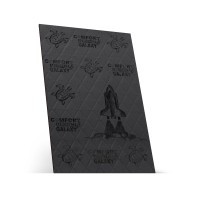 TipQuick previewvibroacoustic material, 480 x 320 mm, thickness 7 mm, MLF 0.56, weight 6.9 kg/m²13,96 EURIn stockComfortmat Soft Wave Expert XL
 TipQuick previewsound absorbing material, 1000 x 700 mm, thickness 15 mm27,96 EURIn stockComfortmat Roller
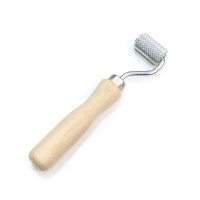 TipQuick previewpressing metal roller with wooden handle9,96 EURIn stock
Recently viewed products
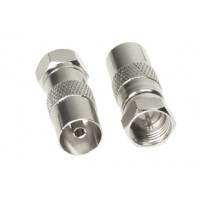 Quick previewTV antenna adapter F-connector - TV-connector (female)2,36 EURIn stockHertz DBX 30.3 Free transport
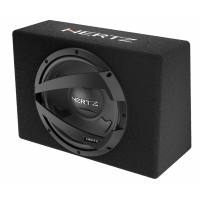 UpdatedQuick previewsubwoofer in box, Ø 12" (300 mm), 250 W RMS, 91 dB (SPL 2.83V/1m), 4 Ω199,00 EURIn stockMusway NX275.2 Free transport
 NewQuick preview2-channel amplifier, 2 × 160 / 275 W RMS (4 / 2 Ω), 1 × 550 W RMS bridged, class D, RCA and high-level inputs with EPS, automatic turn-on, adjustable high and low pass filters, bass boost, IFT technology, compact dimensions.219,00 EURRestocking within 1 weekRigum car mats for Honda CR-V (2013 -)
 Quick previewrubber car mats for Honda CR-V (13->) through the tunnel40,90 EURIn stockSoft99 Cutting Compound (300 ml)
 -20 %Quick previewstrong polishing paste, 300 ml18,39 EUR
 Quick previewtextile car mats for Man TGE (17->)21,90 EURRestocking within 1 weekKenwood CAW-KIMUN1
 Quick previewCAN-BUS interface for Seat, Škoda, VW119,99 EURRestocking within 1 weekBlaupunkt BPA 3022 M Free transport
 Quick previewMultimedia audio module for motorhomes and caravans199,90 EURIn stock