
Vibroacoustic material Comfortmat Pulsar
More about the product
- You can return the goods to us within 14 days
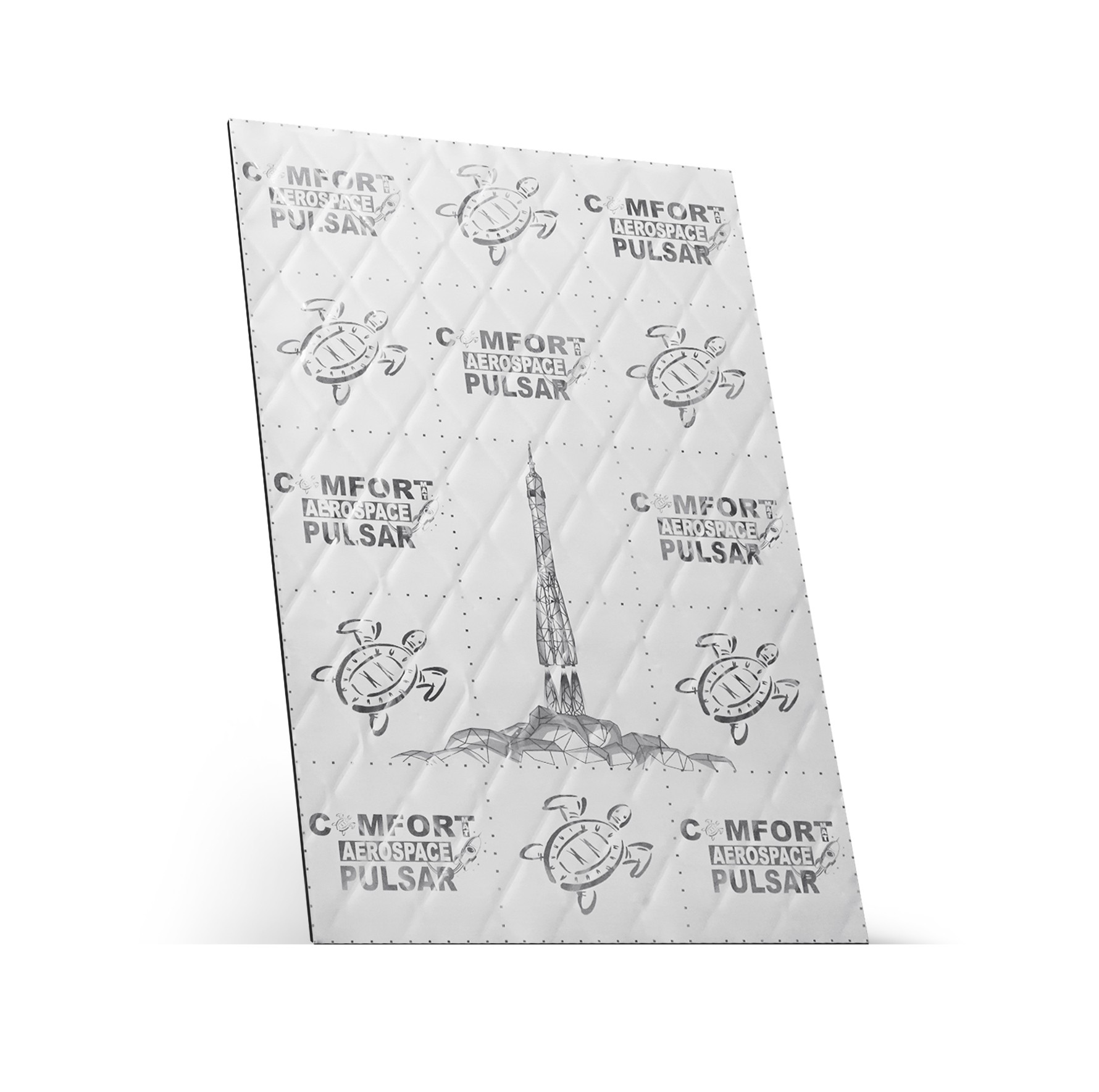
Comfortmat Pulsar vibroacoustic material
Comfortmat Pulsar is a universal vibroacoustic material from the new Aerospace series, which combines effective anti-vibration properties with advanced sound insulation capability. This combination in a single layer significantly simplifies application and delivers high effect with minimal added weight. Pulsar has a thickness of 5 mm and achieves an acoustic loss factor (MLF) of 0.45, which corresponds to top anti-vibration materials. The use of an advanced vibroacoustic layer with foamed granules provides high efficiency without massively loading the body, making it an ideal solution for areas with medium to higher vibration and noise loads – typically doors, roof, trunk floor or fenders. Pulsar also significantly reduces panel resonances and, thanks to a high adhesive strength around 15 N/cm, remains firmly bonded even in demanding conditions. The Scale One aluminum foil surface ensures dimensional stability, protects against damage and increases transfer of damping energy. A surface weight of 4 kg/m² makes it, together with other materials in the Aerospace range, an ideal choice for electric vehicles, sports cars or any applications where low weight is both a requirement and an advantage.
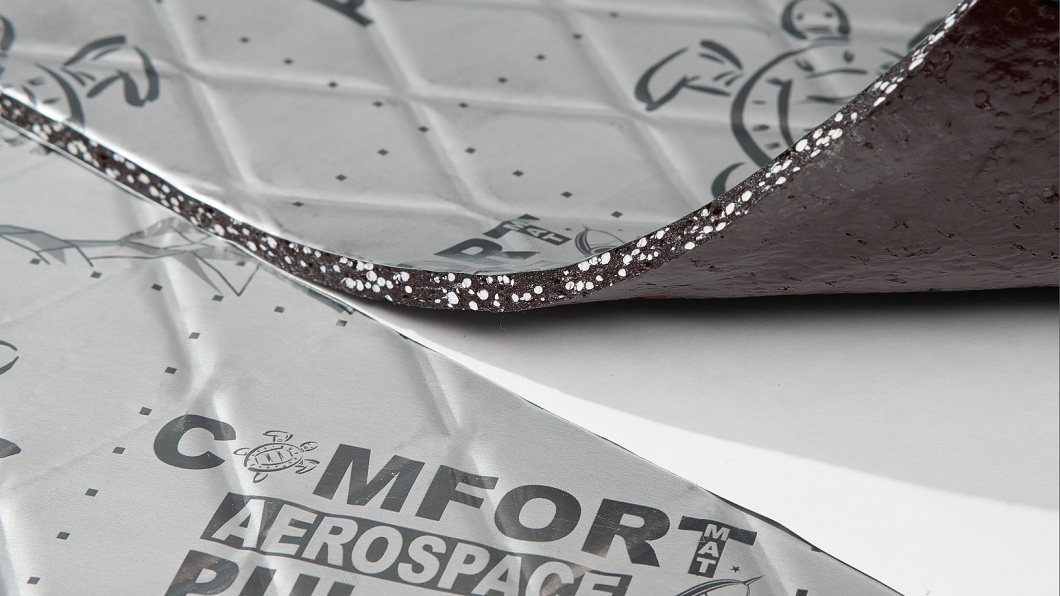
About Comfortmat Aerospace technology
Materials in the Aerospace series represent a new generation of vibroacoustic solutions that combine anti-vibration and sound-insulating functions in a single step. Unlike traditional damping layers that often focus only on suppressing vibrations or require multi-step application, Aerospace uses an advanced sandwich structure capable of effectively absorbing vibrations while significantly reducing the transmission of sound through body panels.
The core of the technology is a vibroacoustic layer with foamed granules – light elastic particles with a bulk density of approximately 0.02 g/cm³, evenly dispersed in a polymer matrix with a density of 1.25 g/cm³. The resulting compound has a final bulk density of 0.58 g/cm³, which allows achieving a high level of damping without a significant increase in weight. The combination of two different acoustic environments – a heavy matrix and light, resilient granules – increases the ability to absorb and scatter vibrations across a wide frequency spectrum. This structure also contributes to improved sound insulation, including in the key low-frequency range.
The Aerospace technology thus offers an exceptional performance-to-weight ratio, which is a main parameter especially for electric vehicles, sports cars and professional soundproofing where every extra kilogram is undesirable. The materials exhibit an acoustic loss factor (MLF) up to 0.62 (for Comfortmat Zenith) in the -10 to +40 °C range, which is at or above the level of the most effective anti-vibration materials on the market. High adhesive strength in the range of 11 to 16 N/cm (depending on the material type) ensures perfect bonding even on vertical or curved surfaces without the risk of detachment.
In addition to acoustic parameters, Aerospace materials also have a significant impact on body stiffness. Bend strength tests show that, for example, the Galaxy and Zenith models increase resistance to panel deformation even more than common anti-vibration materials – thus contributing to the mechanical stability and durability of the entire part. Of course, they also feature low water absorption (below 0.7%) and resistance across a wide temperature range – both in extreme heat and cold.
Main features
- Combines anti-vibration and sound-insulating effects in a single layer, without the need to combine multiple materials.
- With a thickness of 5 mm and a surface weight of 4.06 kg/m² it is ideal for applications focused on low weight and higher effectiveness.
- The vibroacoustic layer with foamed-granule technology in a polymer matrix ensures effective vibration damping and noise attenuation even at lower weight.
- The acoustic loss factor (MLF) reaches 0.45, which corresponds to top anti-vibration materials on the market.
- Significantly reduces resonances of body panels, thereby improving interior acoustic comfort.
- Contributes to increased stiffness of sheet metal parts and reduction of vibrations in critical frequency bands.
- Features high adhesive strength of approximately 15 N/cm, ensuring reliable application even on vertical or curved surfaces.
- Water absorption below 0.7% ensures long-term resistance to moisture and risk of degradation.
- Resists long-term and short-term temperature stress (-40 to 90 °C), stable even in extreme conditions.
- Non-flammable composition meets requirements for increased safety of interior and engine bay applications.
- Weight savings of up to 40% compared to common two-layer applications – ideal for sports and electric vehicles.
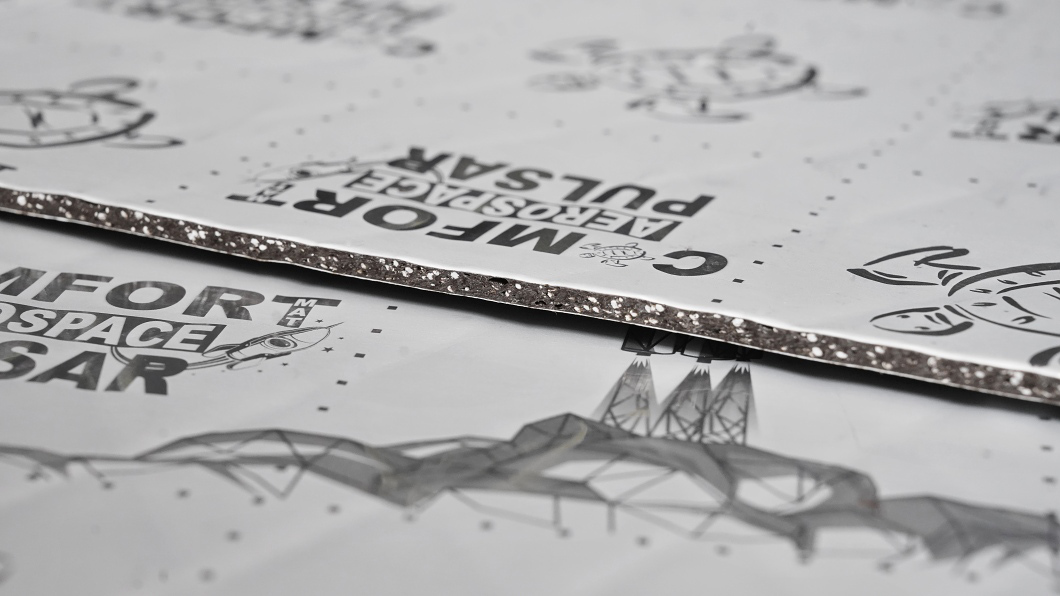
Material composition
Comfortmat Pulsar is based on a multilayer construction that effectively combines anti-vibration and acoustic properties in a single thin layer. The goal is to offer high effectiveness with minimal surface weight and without the need to layer multiple materials.
Vibroacoustic layer (5 mm)
A self-adhesive layer made of a polymer matrix with foamed elastic granules, providing effective vibration damping across a wide frequency range and advanced attenuation of airborne noise.Scale One aluminum foil (thickness 100 µm)
A surface layer with a matte finish that provides mechanical stability, higher transfer of damping energy into the body and resistance to damage.
How to apply
Comfortmat Pulsar is applied in a single layer directly to a cleaned and degreased body surface. Thanks to high adhesion it is not absolutely necessary to use a pressure roller; the material can be firmly pressed by hand. However, to achieve maximum effectiveness and perfect contact with the substrate, rolling is recommended, especially on contoured or vertical surfaces. Considering the 5 mm thickness, surface weight above 4 kg/m² and MLF 0.45, Pulsar is suitable for surfaces with medium to higher levels of vibration and noise. Typical application areas include:
- inner door skin
- roof
- fenders
- area under the rear seats
- trunk floor
- tailgate
About Comfortmat materials
The company Comfortmat has been operating on the market since 2010 and during that time has quickly established itself as a leading global manufacturer of anti-vibration and sound-insulating materials. Comfortmat has introduced new technologies to the automotive industry enabling maximum efficiency, lower material weight, consistent performance even in extreme temperatures and, last but not least, very easy application. In recent years Comfortmat has been setting the direction in vehicle soundproofing and regularly brings materials to market with record effectiveness and excellent properties that were previously unattainable. All this is possible only through many years of research in Comfortmat laboratories, the highest quality control at every stage of production, modernization of production machinery with the involvement of leading global experts in automation of production lines and the creation of a research center equipped with the most modern facilities. Highly qualified Comfortmat specialists have extensive scientific and manufacturing experience, regularly perform necessary physical and mechanical tests and possess expert knowledge in the field of automotive vibroacoustic properties. Thanks to this, Comfortmat products can meet the most demanding requirements of today's automotive market.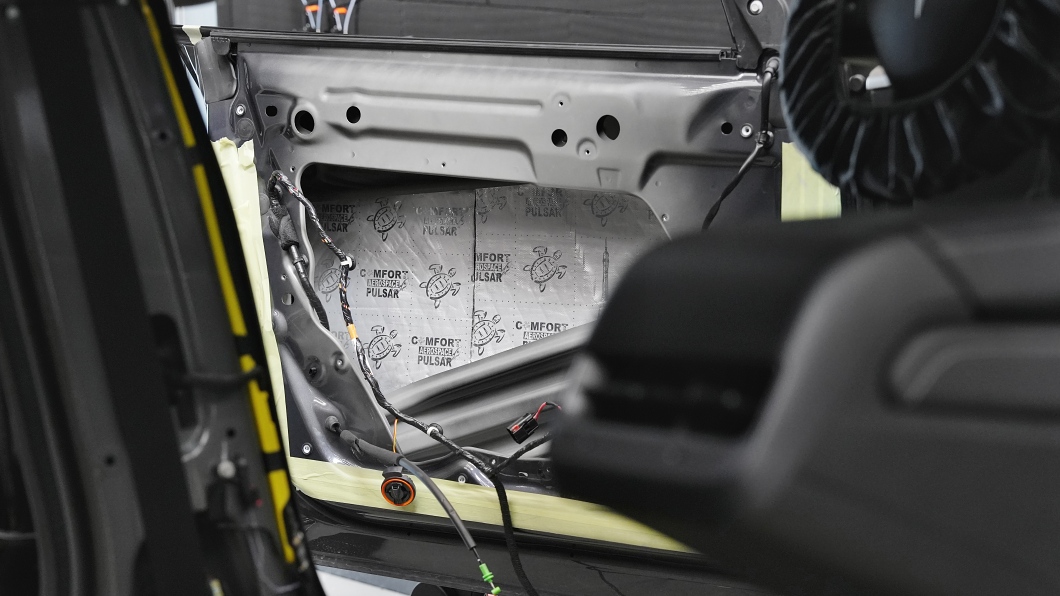
| Catalog number | COM PULSAR |
| Brand | Comfortmat |
| Material type | Vibroacoustic |
| Thickness | 5 mm |
| Dimension | 500 x 320 mm (0.16 m²) |
| Weight 1 piece | 0.65 kg |
| Basis weight | 4.06 kg/m² |
| Acoustic Loss Factor (MLF)The acoustic loss factor (in English, mechanical loss factor) expresses the ability of the material to absorb propagating sound and change the energy of vibrations created by the sound into thermal energy. The theoretical maximum loss factor is 1, which means no vibration. For example, non-sound-proof steel with a thickness of 1 mm has a loss factor of approx. 0.001 at 200 Hz. Therefore, the higher the loss factor, the better. By combining damping materials, it is possible to significantly increase the loss factor to values approaching 1. | 0.45 |
| Adhesion | > 15 N/cm |
| Aluminium foil | Scale One 100 μm |
| Water resistance | Yes (water absorption below 0.7%) |
| Heat insulation | Yes |
| Color | Matte silver with glossy silver print |
| Price for | 1 piece |