
Quartorigo Elisium II amplifier
More about the product
- You can return the goods to us within 14 days

Quartorigo Elysium II amplifier
Quartorigo Elysium represents the perfect balance between uncompromising audiophile quality and more accessible sophistication. It is based on the same acoustic principles as the prestigious Opus series and adopts its carefully designed printed circuit board, the development of which involved countless hours of component testing and precise tuning. While Opus pushes the boundaries of absolute performance, Elysium focuses on the essence itself — preserving the same sonic philosophy but in a technically more approachable form. The simplified chassis design does not mean any compromise in construction. On the contrary — it is an intelligent optimization. Every line and shape were redesigned to maintain mechanical rigidity and efficient heat dissipation while reducing manufacturing complexity. This thoughtful approach allows Quartorigo to "democratize perfection" — offering an experience close to the Opus series to a wider audience, without losing the acoustic DNA that defines their sound. Elysium proves that true audiophile performance requires no compromises. It is a gateway to excellence — a place where every listening session becomes a journey into pure musical emotion._f.jpg)
Design and construction
The design of the Quartorigo Elysium amplifiers is more restrained, sober and calm compared to the Opus series, yet still exceptionally elegant and sophisticated. It appears balanced, technically pure and mature, without trying to shock — exactly in the spirit of a philosophy that emphasizes substance over form.
As with Opus, the Elysium series is divided by amplifier classes. The Elysium I model operates in Class A and is an ideal choice for tweeters and midrange drivers, where its finesse, micro-dynamics and naturalness shine. The Elysium II model uses Class AB and is designed primarily for midbass drivers, offering higher power reserve while maintaining control and musicality.
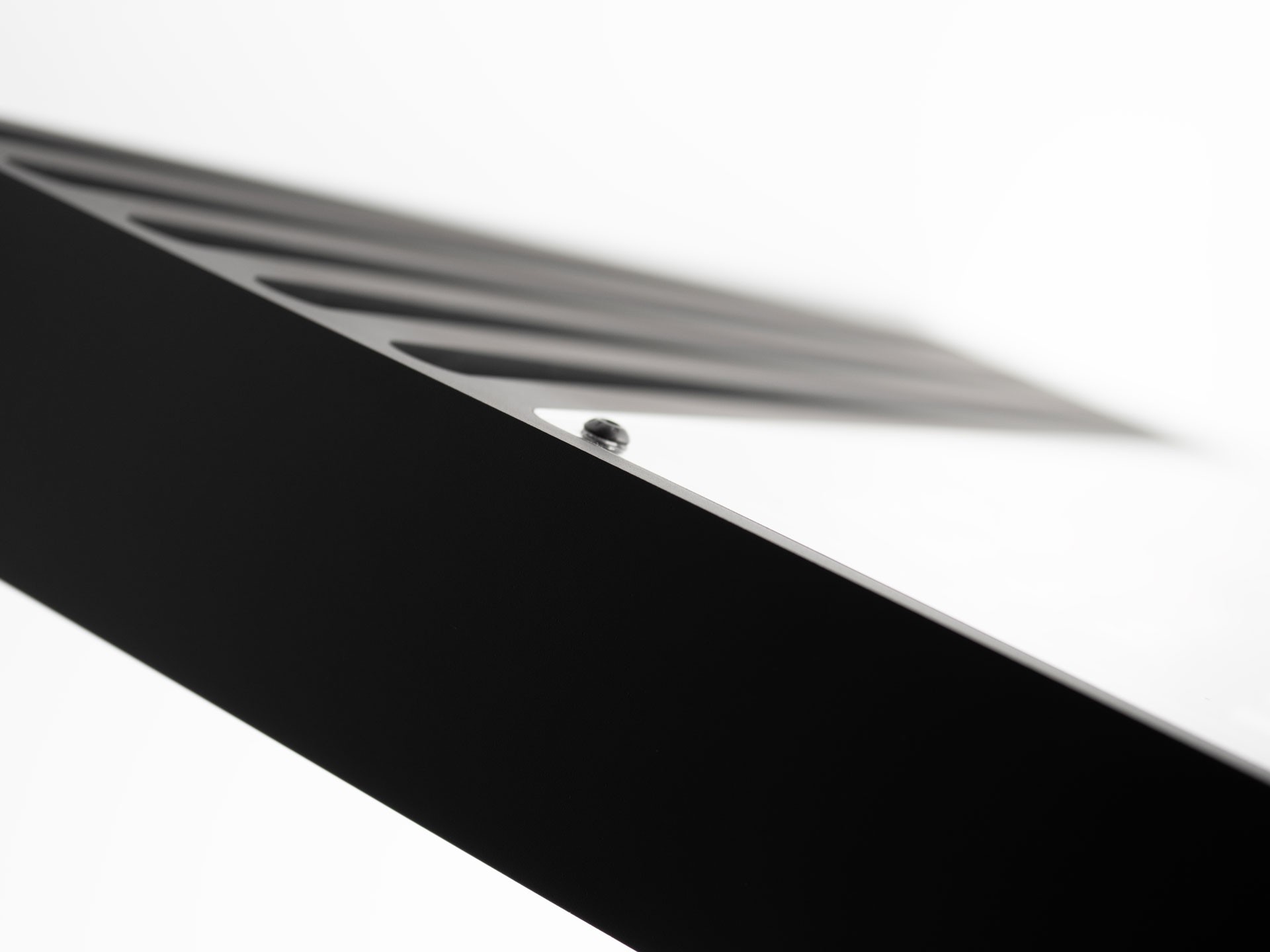
The goal of the Elysium series was to offer sound quality close to Opus in a more affordable form. The simpler construction and more rational design approach significantly contribute to this. The chassis is not machined from a single solid block of aluminum as with Opus, yet it is cleverly designed for efficient cooling and long-term stability. Lower amplifier power loading also helps reduce thermal stress.
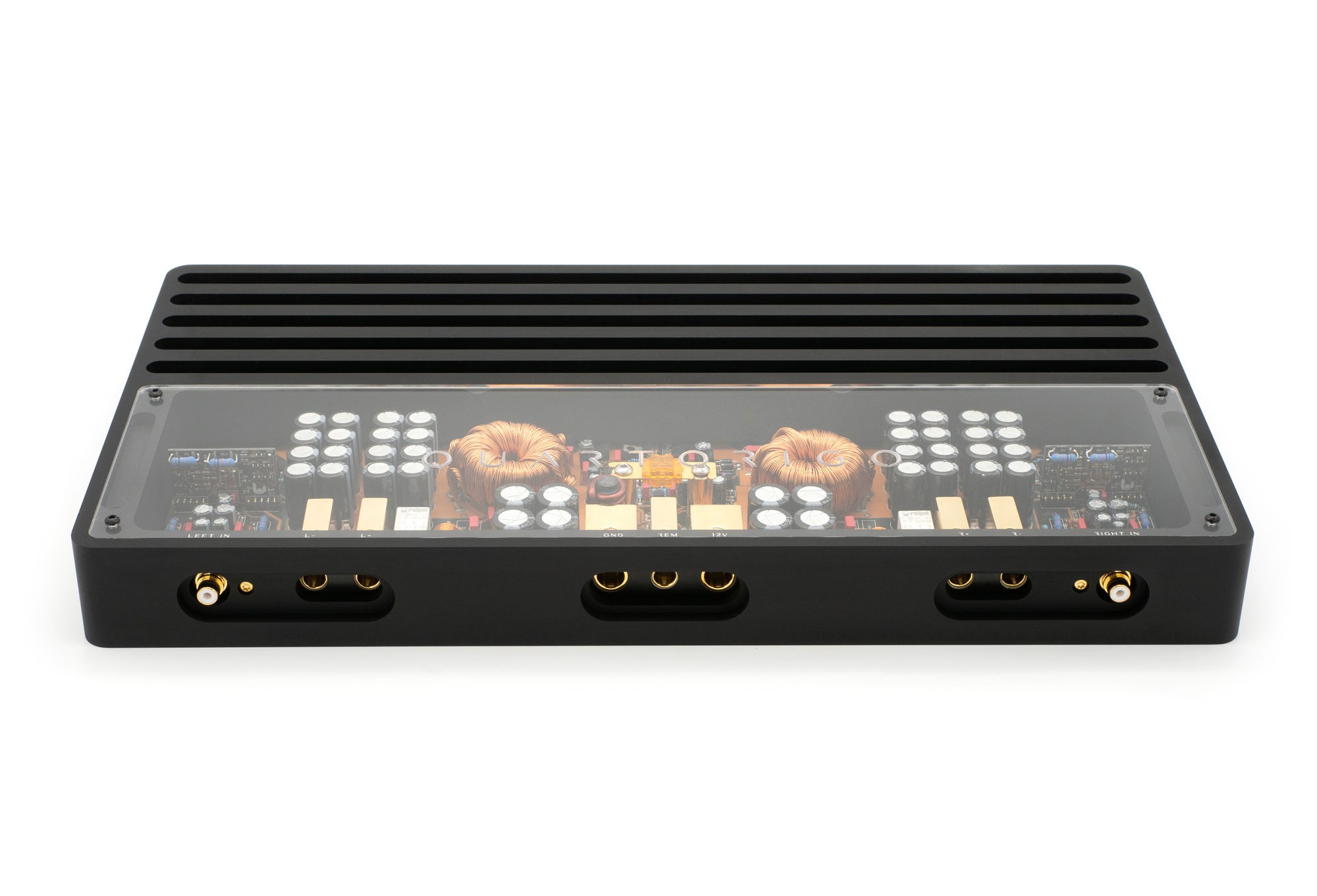
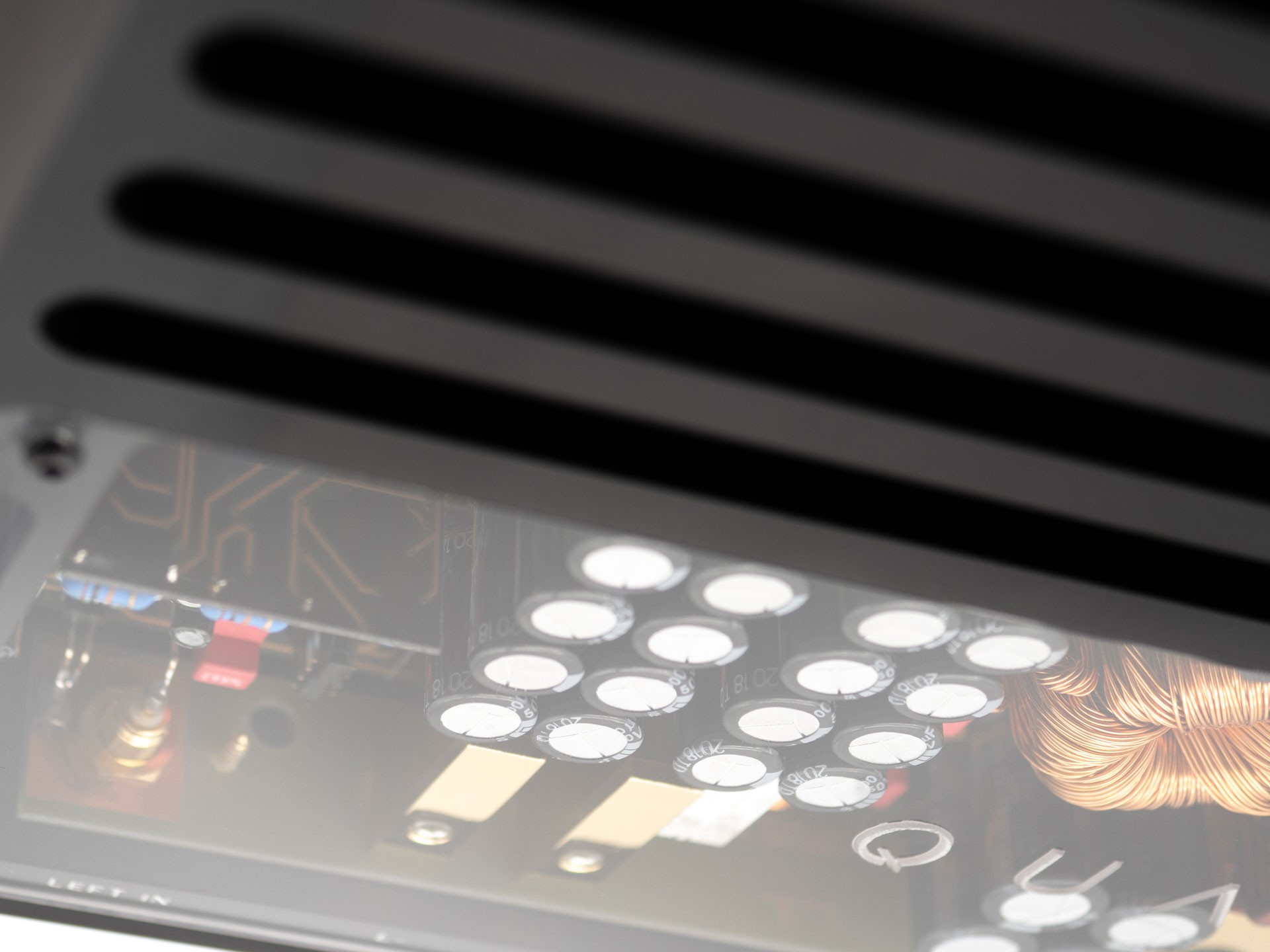
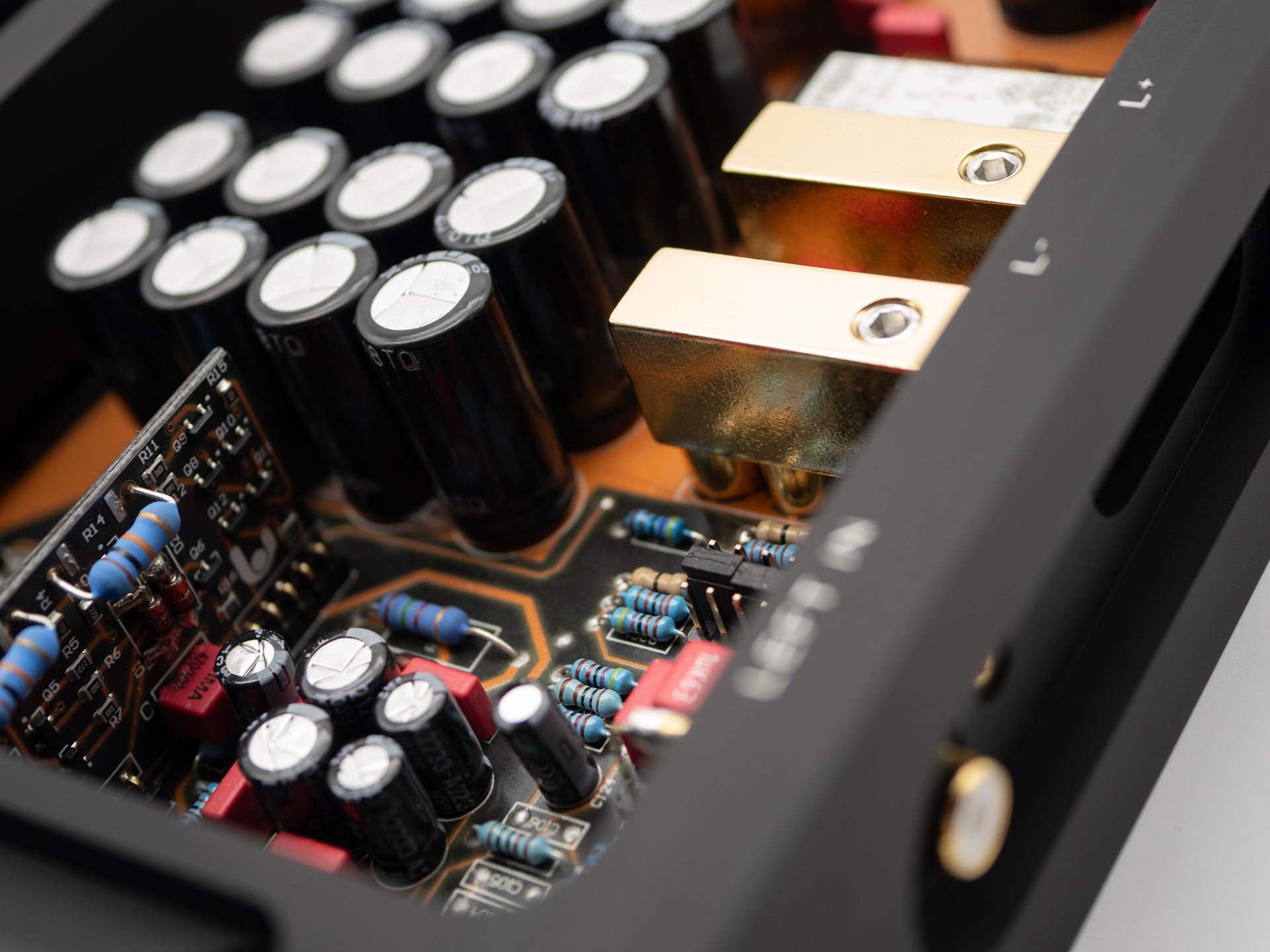
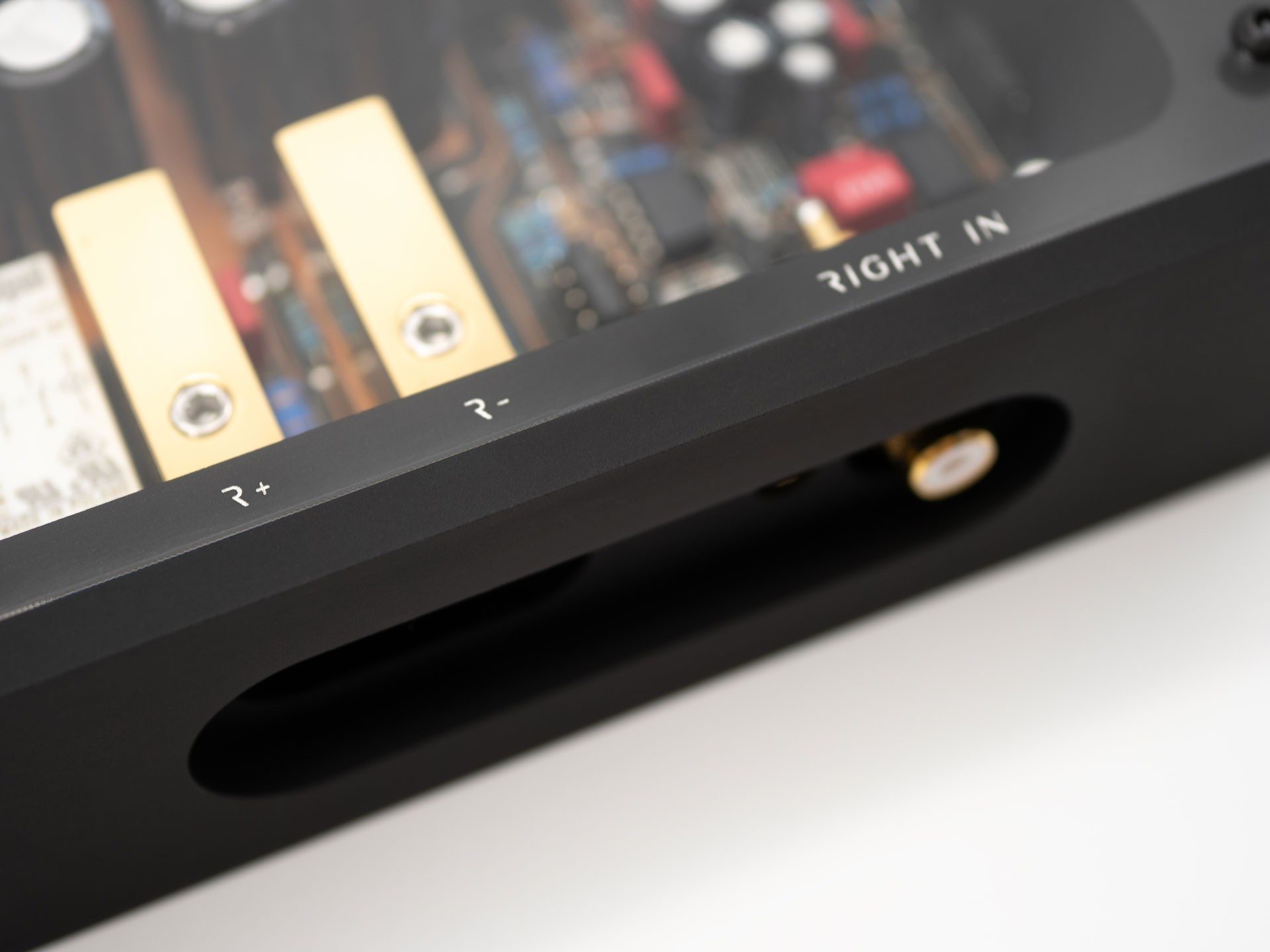
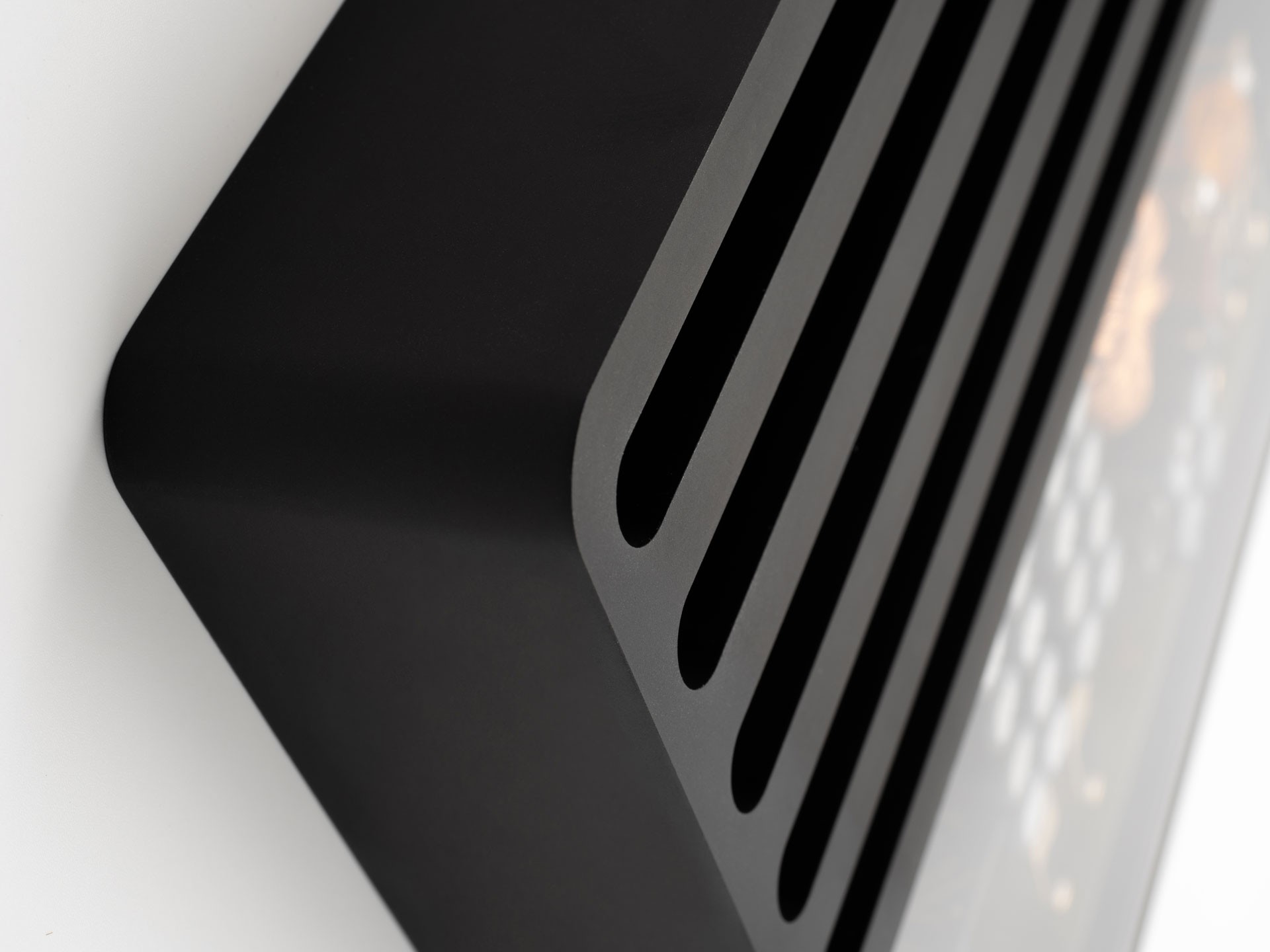
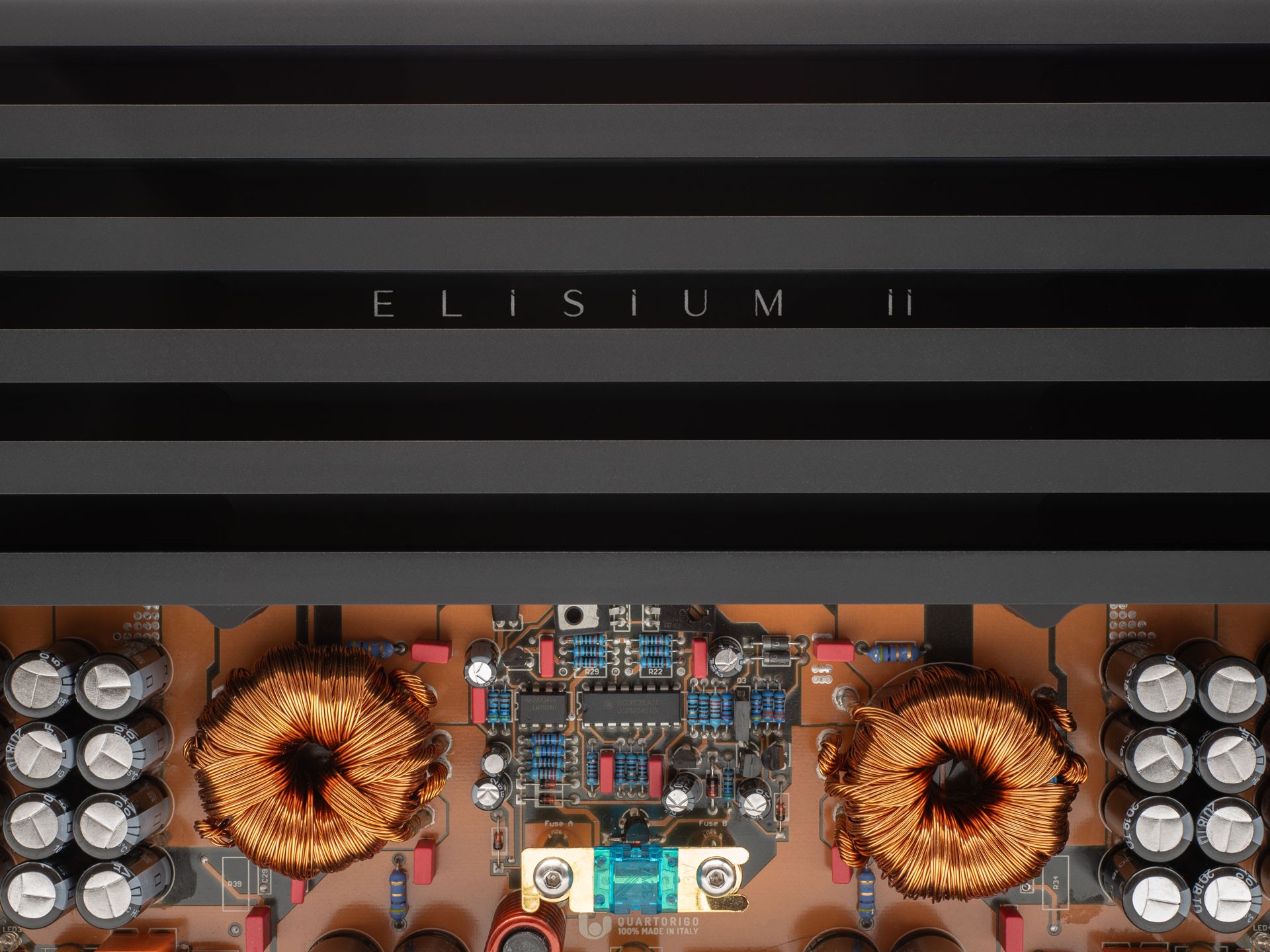
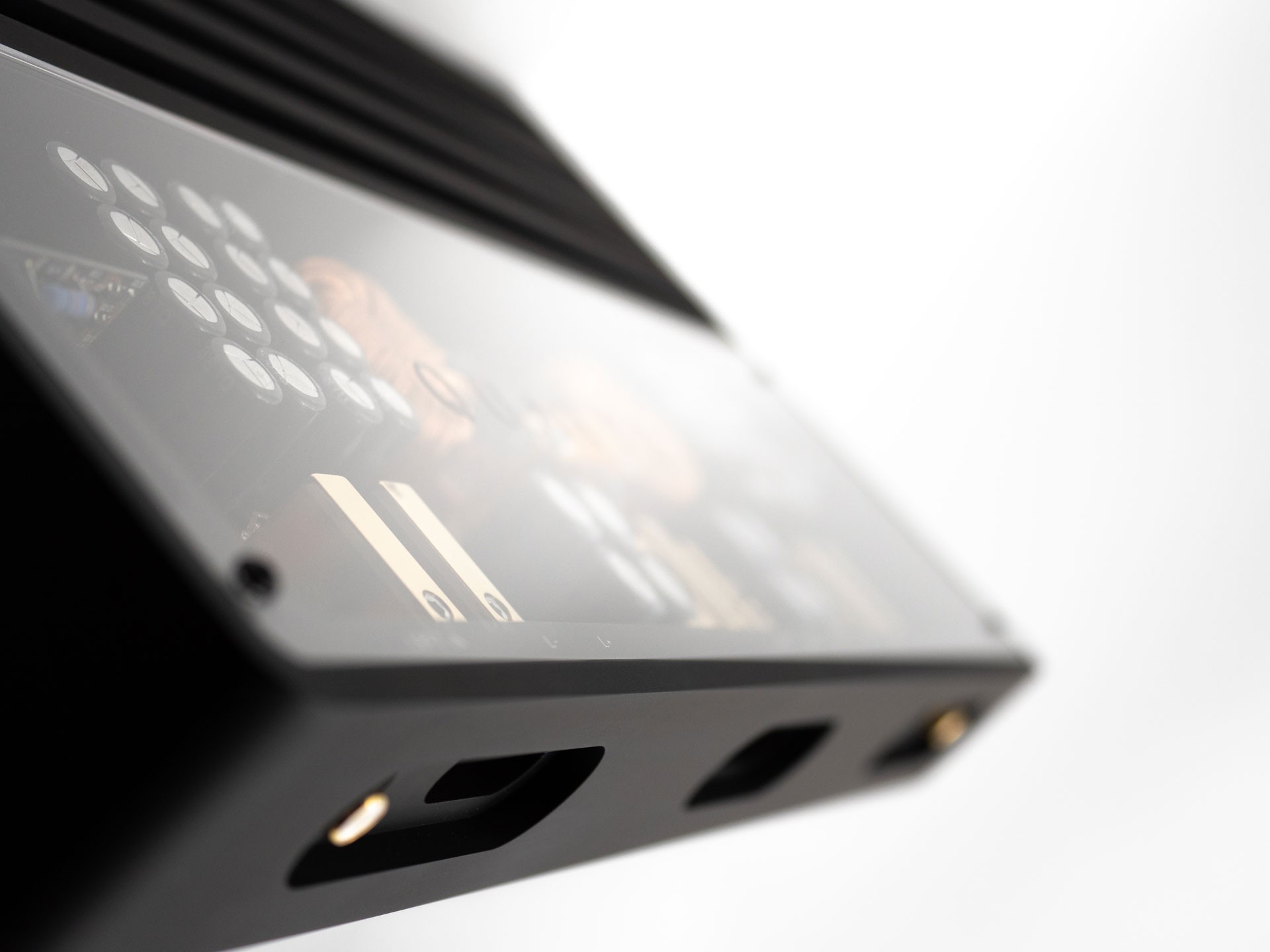
Visually, the amplifier is divided into a massive aluminum heatsink and a glassed top section that reveals the internal construction and precise component layout. Golden terminals add a subtle luxury accent. The result is a design that is simple yet extraordinarily elegant.
Technology
The Elysium amplifiers are conceived as two completely separate mono amplifiers housed in a single chassis. The basic idea is simple: keep the construction as clean and direct as possible to preserve maximum signal integrity passing through the amplifier.
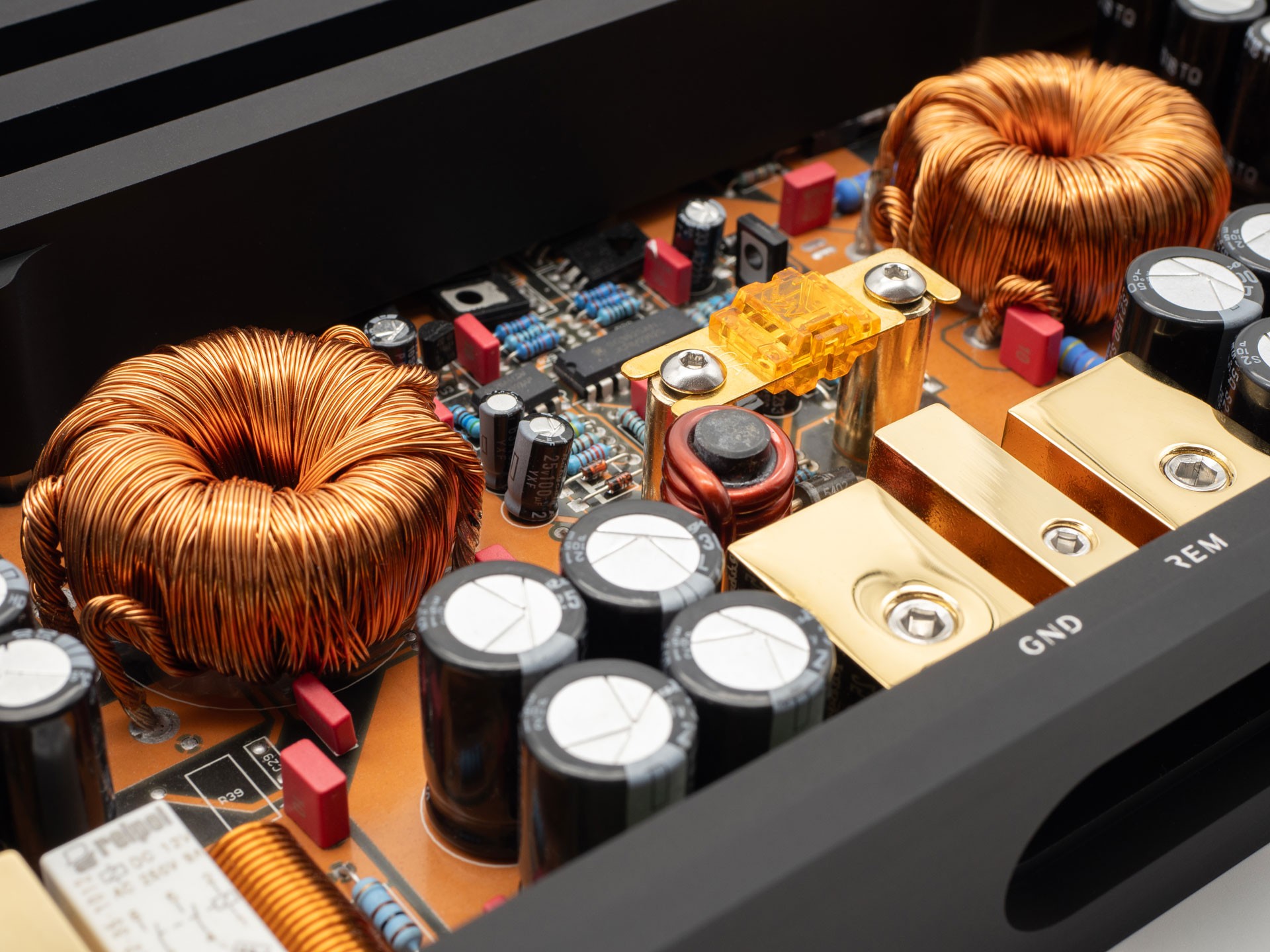
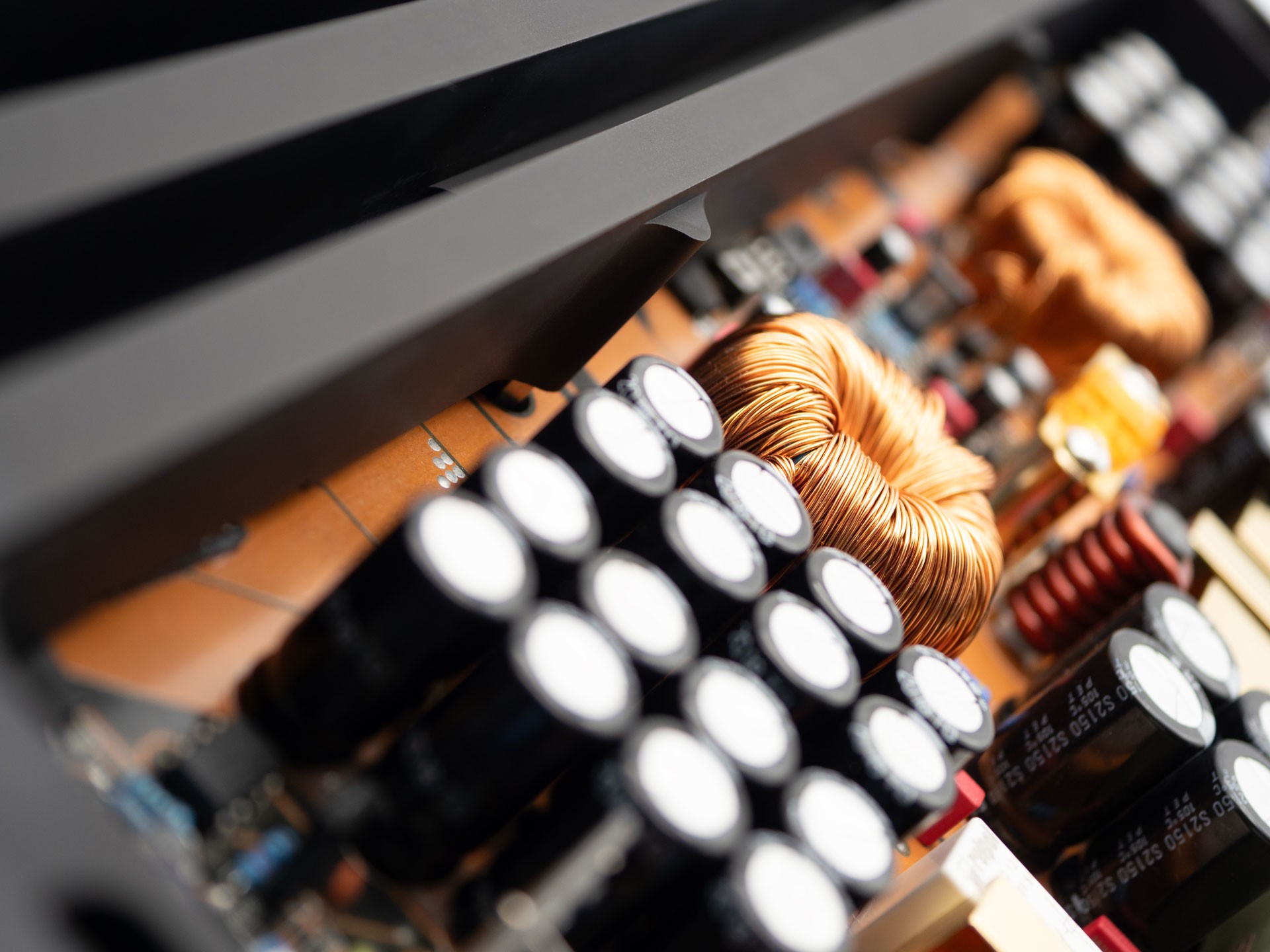
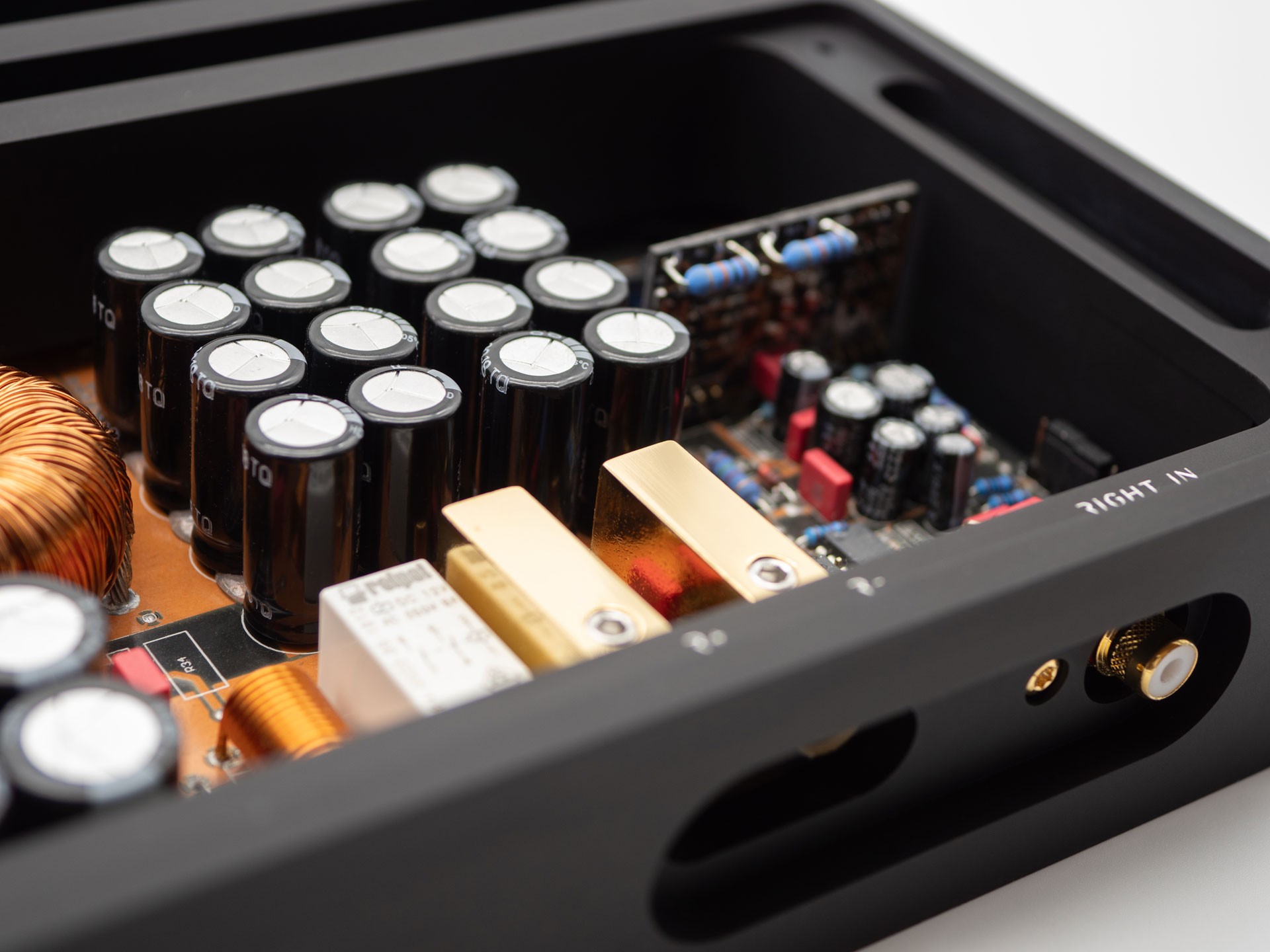
The power supply and amplifier stages are equipped with multiple large-capacity capacitors that ensure stable power and high current reserves. Only carefully selected components are used, whose precise placement, combined with short and wide signal paths, is one of the keys to the high performance and sound quality of these amplifiers.
The printed circuit board uses a direct and clear circuit configuration. The signal path is completely free of wiring — wires are used only for the protective LED module. This solution achieves exceptional tonal balance, natural sound coloration and precise spatial reconstruction of the musical event, matching the class of this device.
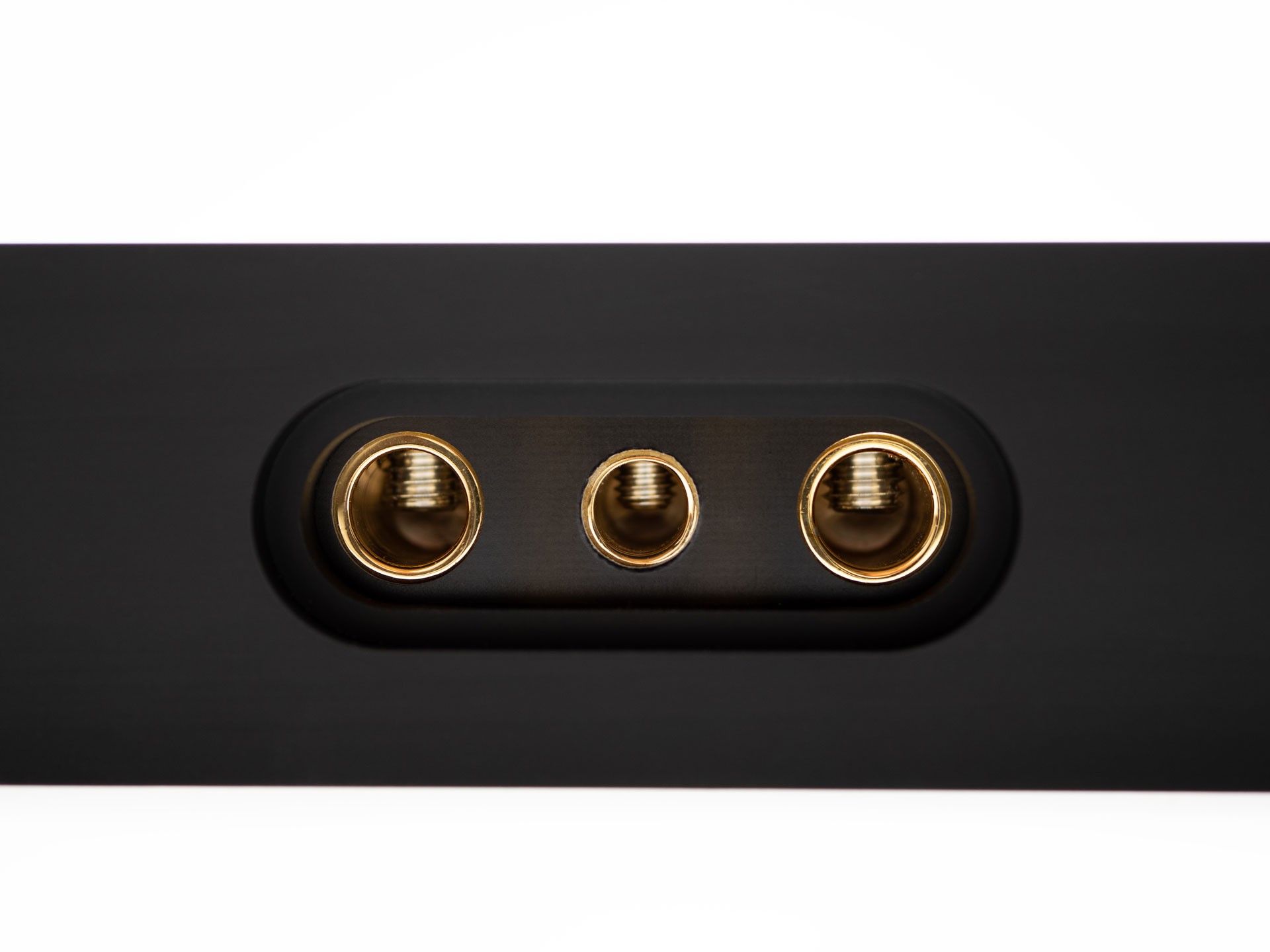
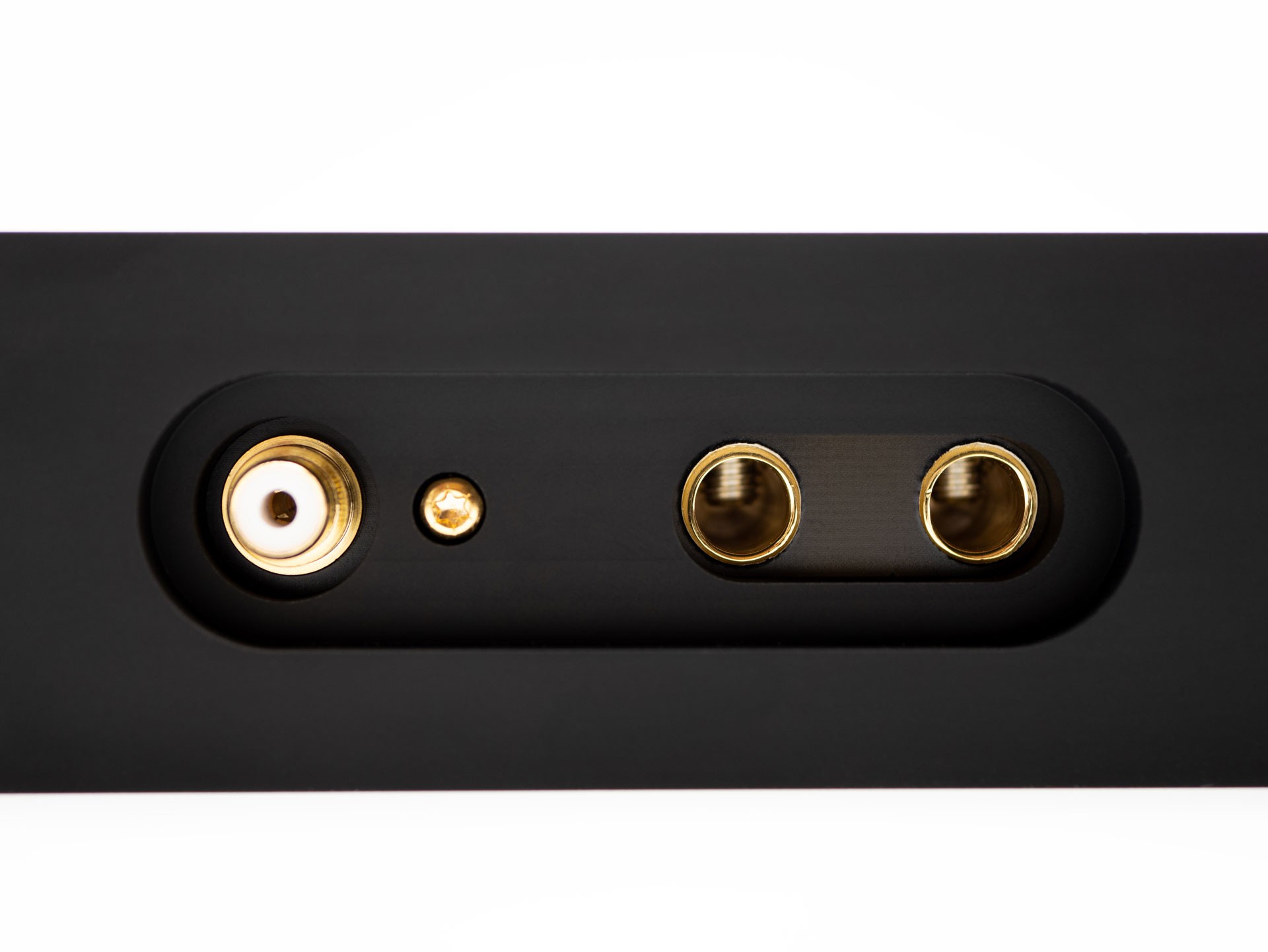
Speaker and power connectors, including the remote input, are machined from solid brass blocks and then plated with 24K gold. This improves electrical conductivity at the contact point and ensures long-term connection stability.
The amplifier is equipped with three independent protection circuits. Thermal protection prevents temperatures exceeding 95 °C and, in case of overheating, allows operation to resume only after the temperature drops by 10 °C. Speaker protection activates if a MOSFET fails, and overload protection prevents damage to the amplifier when an incorrect impedance is connected to the output._f.jpg)
100% Made in Italy
Like all Quartorigo products, the Estremo amplifiers carry a 100% Made in Italy certification. From initial design, through development and design to actual manufacturing and final assembly, the entire process takes place exclusively on Italian soil. Each amplifier is subjected to a rigorous load test with pink noise at full power, followed by a detailed listening test in a real configuration with speakers. This process ensures that every unit meets extreme demands for quality, stability and long-term reliability.
Main features of the Quartorigo Estremo 2.2 amplifier
- 2-channel Class AB amplifier derived from the audiophile Quartorigo Fantasia series.
- Extremely clean and uncompromising sound focused on absolute signal fidelity without any embellishment.
- Redesigned output stage for more precise dynamic control and linear response across the frequency spectrum.
- Simplified input stage minimizing noise and preserving maximum signal integrity from the source.
- Removal of one operational amplifier from the signal path for lower distortion and higher transparency.
- Four-position jumper switches for precise gain adjustment and perfect cooperation with DSP systems.
- Reinforced power supply with up to 20% increased power for better dynamics and control of transients.
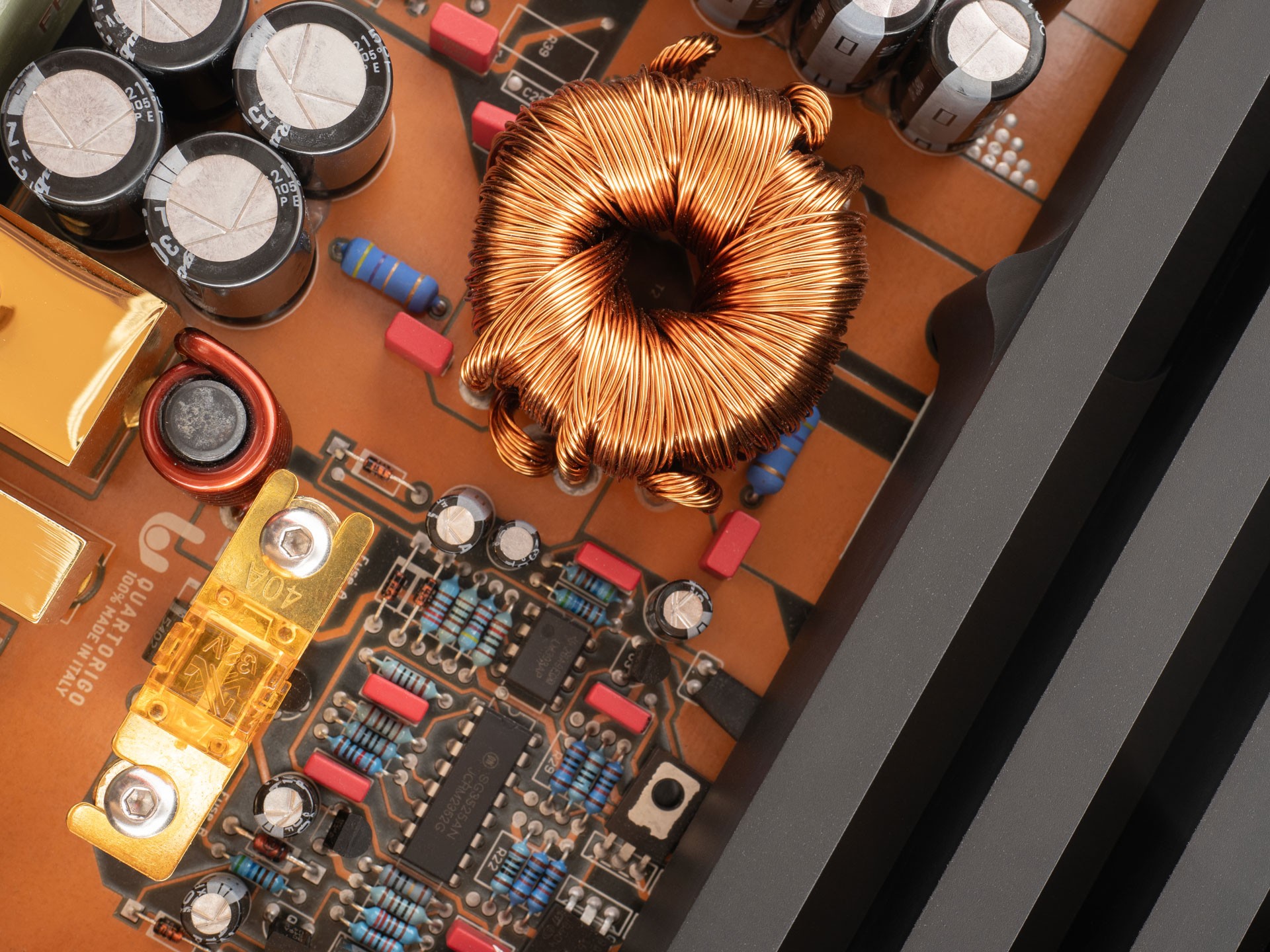
- Oversized toroidal transformer with optimized magnetic properties for higher efficiency and lower losses.
- Gold-plated conductive traces on the PCB for long-term electrical stability and corrosion resistance.
- Robust protection via ANL fuse for maximum operational safety and reliability.
- Minimalist, raw design expressing the pure power and technical essence of the Estremo series.
- Handcrafted production with 100% Made in Italy certification and individual load and listening tests for each unit.
About the Quatrorigo brand
For music Lovers. The motto of this Italian manufacturer, depicted with a conductor in its logo, expresses the core principles of Quatrorigo. In a highly competitive market where brands and products quickly lose their identity, Quatrorigo offers a clear and strong origin. Quatrorigo is proud of its heritage and combines the essence of Italian design, honest craftsmanship and a passion for music in every product, through which it presents its way of being, thinking and perceiving. With Quatrorigo products you instantly move from the concert hall to your car seats, experiencing the same emotions without losing a single tone. In line with this concept, Quatrorigo embodies a true conductor sitting in front of you to provide a unique musical experience faithful to its origins. For more than 25 years you can rely on handcrafted products born in the past, perfected over time and lasting a lifetime.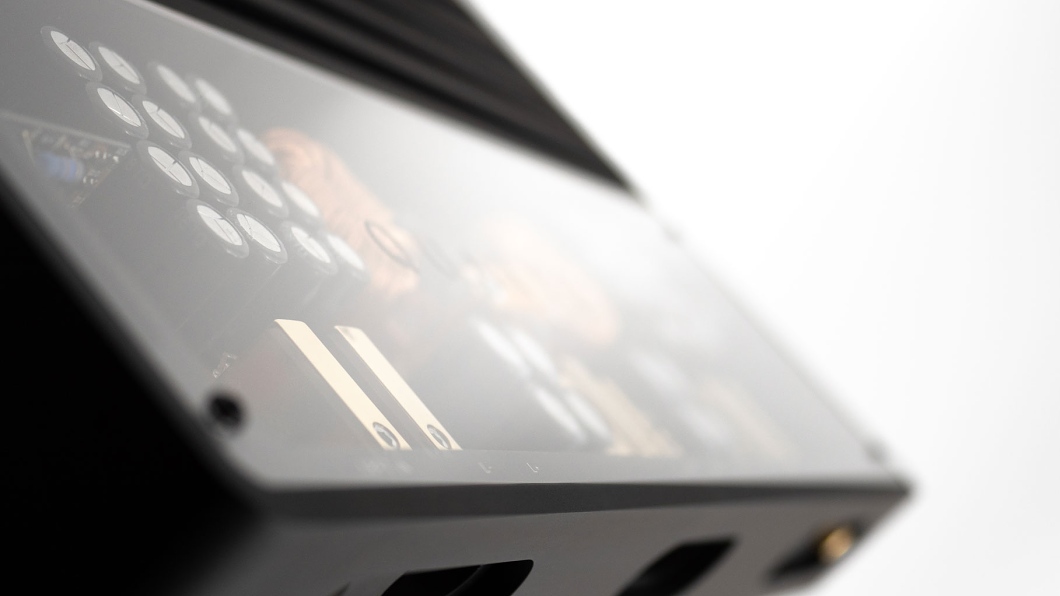
| Catalog number | ELISIUM II |
| Brand | Quartorigo |
| Links | Official web presentation |
| Energy class of the amplifierAmplifiers are divided into two basic classes: analog and digital . Analog amplifiers (A/B) have higher consumption requirements, but usually have a more natural sound. Digital amplifiers (D) have significantly lower consumption and higher efficiency, but the sound may not be as faithful as with classic analog amplifiers. | A |
| Number of amplifier channelsAmplifiers are divided into: - Monoblocks - 2-channel - 3-channel - 4-channel - 5-channel - 6-channel - multi-channel Each channel is used to power one speaker for the coaxial type, or one side if they are component speakers. Monoblock type amplifiers are mainly used for subwoofers. 2-channel are suitable for both subwoofers and, for example, the front pair of speakers in a car. 3-channel is used for front or rear speakers + subwoofer. 4-channel are used for front + rear speakers or 1 pair of speakers + subwoofer. 6 or 5-channel are used for 2 pairs of speakers + subwoofer, most often. Bridging means connecting the amplifier to a bridge, using the + pole from one channel and the - pole from the other channel. In most cases this is shown as "BRIDGED" on the amplifier. | 2 |
| RMS power into 4 ΩRMS power when loading speakers or subwoofer at 4 Ω. RMS power is the constant power of the amplifier and is one of the most important parameters when choosing an amplifier. | 2 x 150 / 1 x 495 W |
| RMS power into 2 ΩRMS power when loading speakers or subwoofer at 2 Ω. RMS power is the constant power of the amplifier and is one of the most important parameters when choosing an amplifier. | 2 x 250 / 1 x 805 W |
| Frequency rangeThe ability of the amplifier to reproduce the signal from the lowest frequency to the highest = faithfully reproduce the sound in a specific frequency band. Professionally: In the frequency range from 40 to 16,000 Hz, the vast majority of fundamental and overtones (harmonics) of all musical instruments are found. We are interested in the course of the radiated sound pressure in this range of frequencies when the loudspeaker system is supplied with constant power. We call this course the frequency characteristic, which tells us the level of radiated sound pressure in decibels (dB) depending on the frequency. The frequency characteristic of a speaker or speaker system can be expressed most succinctly with a graph. Mostly, however, the frequency characteristic is indicated by indicating the maximum tolerance of the sound pressure in the given frequency range, e.g. 50 to 15,000 Hz -+ 6 dB. Since the frequency characteristics of loudspeakers and systems in general are quite uneven, some manufacturers do not even specify this maximum tolerance of sound pressure in decibels in their catalogs for reasons of prestige. Data impoverished in this way is unfortunately worthless. What is valid is that the manufacturer offers a speaker system with a frequency range of 30 to 20,000 Hz, if he is worried about stating the maximum unevenness of the sound pressure in this range, because he can have a tolerance of, for example, +- 20 dB. The unevenness or undulation of the frequency curve in good speaker systems for high-quality music performance should not exceed +-3 dB in the 80 to 12,000 Hz band and +-6 dB in the 40 to 16,000 Hz band. Greater unevenness already depletes or emphasizes certain tonal areas, which can cause audible or even disturbing distortion. The proportion between fundamental tones and higher harmonics also changes, thereby changing the color of the sound, and individual musical instruments as well as the entire musical image sound unnatural. | 8 - 30000 Hz |
| Signal-to-noise ratioThe signal-to-noise ratio means that the output signal always contains noise. The signal-to-noise ratio expresses how much of this noise is compared to the useful signal. The so-called A value is given, which does not take deep and very high frequencies into account. This corresponds to the characteristic of human hearing, which is not so sensitive to deep frequencies, especially below 1 kHz. The higher the value, the better the amplifier is. | > 100 dB |
| Input sensitivityIn order for the amplifier to perform its function correctly, it requires an input signal of a certain level, which is different for car radios. It is measured in "Volts" (e.g. 2 V, 4 V, etc.) The higher the value at the output of the pre-amplifier, or car radio, the less demands are placed on the power of the amplifier. However, the amplifier must allow this input sensitivity, and for that reason this value is also given for the amplifier. | 0.4 - 8V |
| Input impedance | 48 KΩ |
| Power supply | 10 - 14.4 V |
| Standby power consumption | 1.4 A |
| High level inputsThe high-level input on the amplifier allows connection directly to the existing speakers in the car without additional purchase of an external high/low adapter. Important equipment in the case of installing an amplifier on an original car radio. | No |
| Socket input terminalsFerrule terminals allow better wiring contact to the amplifier. It is also a more secure form of terminals. If you are tightening the sleeve terminals, we recommend retightening them after 1 day, as the connected cable gradually compresses. | Yes |
| Dimensions of the amplifier | 433 x 228 x 45 mm |
| Mass | 5.85 Kg |
Evaluation
You might also be interested
 TipQuick preview2-channel amplifier, 2 x 60 / 1 x 195 W RMS (4 Ω), 2 x 110 / 1 x 405 W RMS (2 Ω), Class A3.899,00 EURIn stockQuartorigo Opus I Free transport
 Quick preview2-channel amplifier, 2 x 100 / 1 x 380 W RMS (4 Ω), 2 x 190 / 1 x 595 W RMS (2 Ω), class A6.499,00 EURIn stockQuartorigo Opus II Free transport
 Quick preview2-channel amplifier, 2 x 220 / 1 x 760 W RMS (4 Ω), 2 x 400 / 1 x 1350 W RMS (2 Ω), class AB7.099,00 EUR1 to 4 weeksQuartorigo Opus Free transport
 Quick previewmid-bass speakers, Ø 165 mm, 90 W RMS, 4 Ω, 92 dB (2.83V/1m)4.299,00 EURIn stockQuartorigo Opus Sub Free transport
 Quick previewhi‑end subwoofer, Ø 250 mm, 250 W RMS, 4 Ω, 92 dB (2.83 V/1 m), paper cone, neodymium magnet4.639,60 EUR1 to 4 weeksQuartorigo Opus Tweeter Free transport
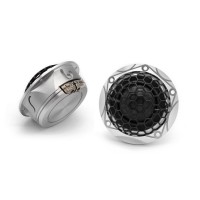 Quick previewtweeters, Ø 28 mm, 60 W RMS, 4 Ω, 92 dB (2.83V/1m)1.599,00 EURIn stockQuartorigo Opus Woofer 6.5" Free transport
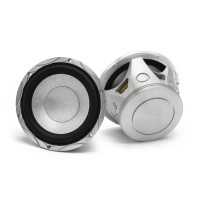 Quick previewMid-bass speakers, Ø 165 mm, 90 W RMS, 4 Ω, 92 dB (2.83V/1m)2.699,00 EURIn stockQuartorigo Opus Woofer 8" Free transport
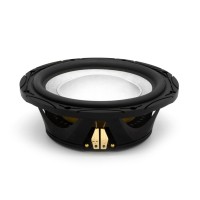 Quick previewmid-bass speakers, Ø 200 mm, 120 W RMS, 4 Ω, 92 dB (2.83V/1m)2.999,00 EURIn stockQuartorigo Fantasia 1.2 Free transport
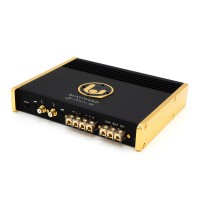 TipQuick preview2-channel amplifier, 2 x 80 / 1 x 360 W RMS (4 Ω), class AB979,00 EURIn stockQuartorigo Fantasia 1.4 Free transport
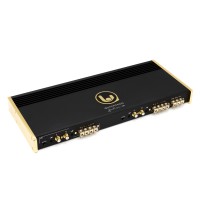 Quick preview4-channel amplifier, 2 x 40 + 2 x 80 W RMS / 1 x 230 + 1 x 360 W RMS (4 Ω), class A + AB1.729,00 EURIn stockQuartorigo Fantasia 2-Way Free transport
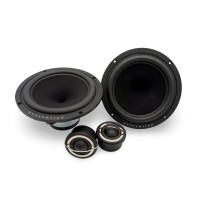 TipQuick preview2-way component speakers, Ø 165 mm, 90 W RMS, 4 Ω, 92 dB (2.83V/1m)1.999,00 EURIn stockQuartorigo Fantasia 2.2 Free transport
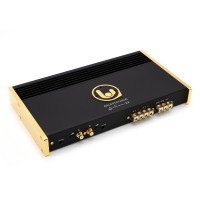 Quick preview2-channel amplifier, 2 x 130 / 1 x 495 W RMS (4 Ω), class AB1.499,00 EURIn stockQuartorigo Fantasia 2.2 Estremo Free transport
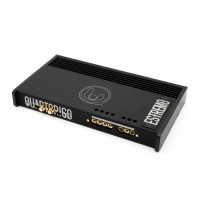 TipQuick preview2-channel amplifier, 2 x 156 / 1 x 594 W RMS (4 Ω), class AB1.999,00 EURIn stockQuartorigo Fantasia 3.2 Free transport
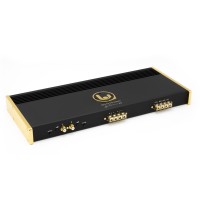 Quick preview2-channel amplifier, 2 x 180 / 1 x 780 W RMS (4 Ω), 2 x 365 / 1 x 1210 W RMS (2 Ω), class AB1.999,00 EURIn stockQuartorigo Fantasia 3.2 Estremo Free transport
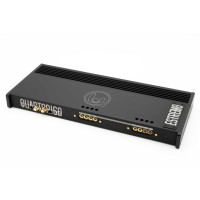 TipQuick preview2-channel amplifier, 2 x 210 / 1 x 900 W RMS (4 Ω), Class AB2.599,00 EURIn stockQuartorigo Fantasia Midrange Free transport
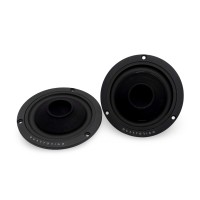 TipQuick previewmidrange speakers, Ø 89 mm, 70 W RMS, 4 Ω, 92 dB (2.83V/1m)999,00 EURIn stockQuartorigo Fantasia Sub Free transport
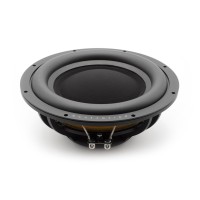 TipQuick previewsubwoofer, Ø 250 mm (10"), 250 W RMS, 4 Ω, 87.9 dB (2.83V/1m)1.369,00 EURIn stockQuartorigo Fantasia Tweeter Free transport
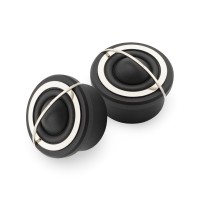 TipQuick previewtweeters, Ø 25 mm, silk dome, 60 W RMS, 4 Ω, 92 dB (2.83V/1m)679,00 EURIn stockQuartorigo Fantasia Woofer Free transport
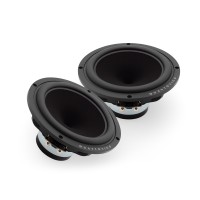 TipQuick previewmid-woofers, Ø 165 mm, 90 W RMS, 4 Ω, 92 dB (2.83V/1m)1.369,00 EURIn stock