
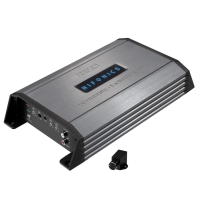
Hifonics ZXR2200/1 amplifier
More about the product
- You can return the goods to us within 14 days
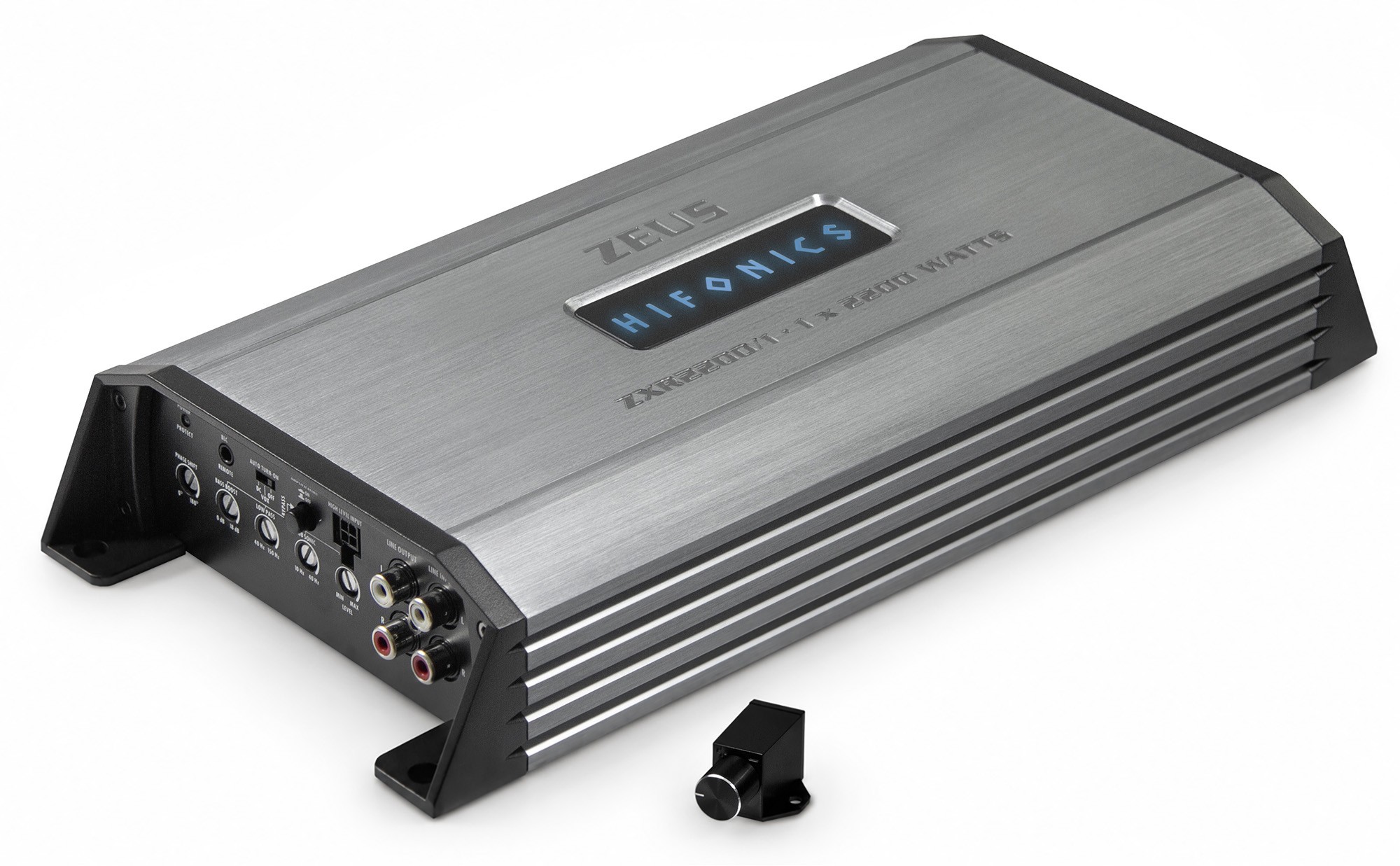
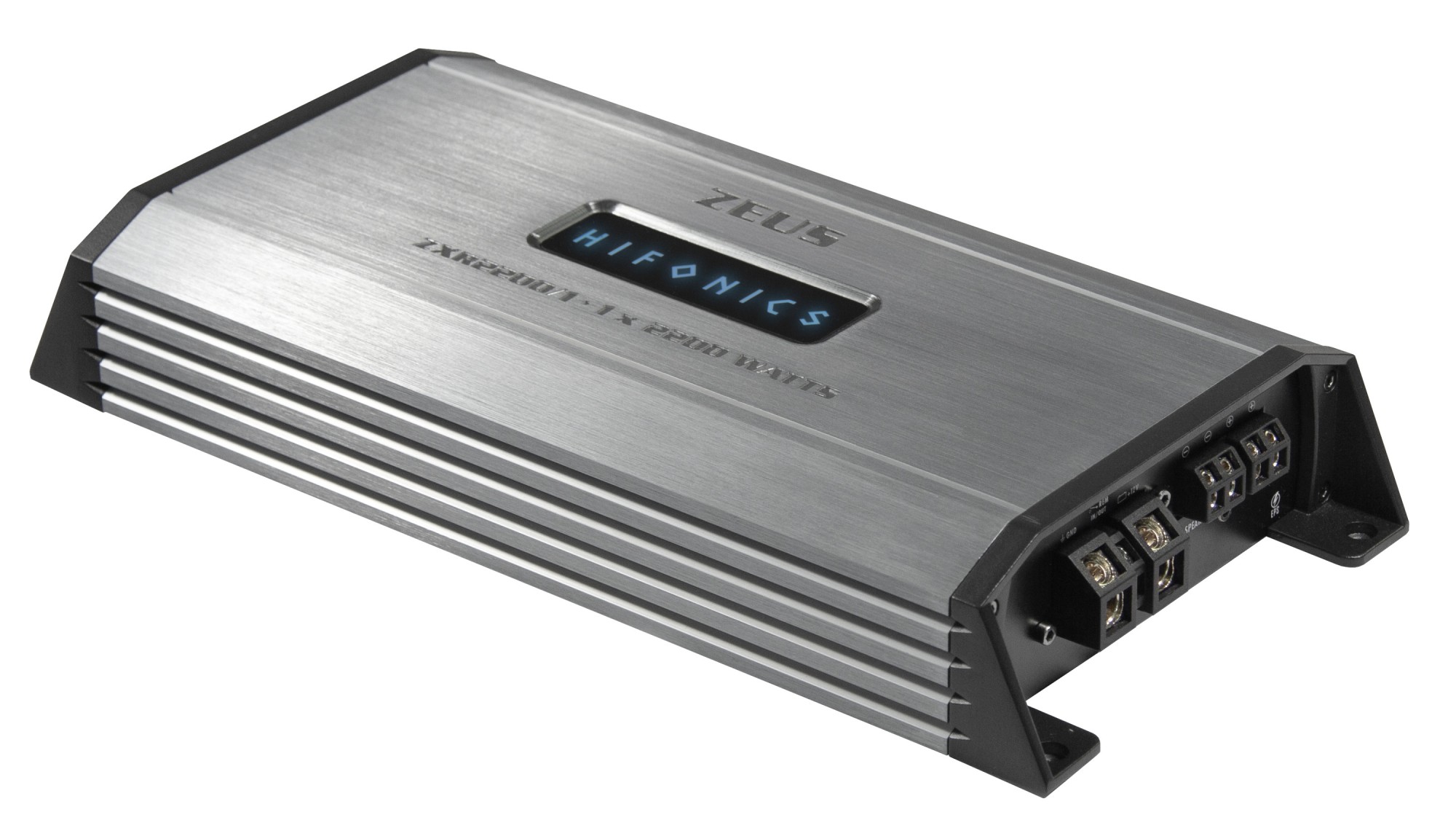
Hifonics ZXR2200/1 Amplifier
The Hifonics ZXR2200/1 is a powerful class D monoblock from the higher ZEUS POWER ZXR series, intended for demanding subwoofer installations. It offers very high power while maintaining exceptionally compact dimensions, which is one of the main advantages of the series. The class D design operates with efficiency over 90%, so the amplifier can deliver substantial power without excessive demands on space and cooling.
The ZEUS POWER ZXR series continues the long tradition of Hifonics ZEUS amplifiers, which for decades have been associated with high power, quality sound and precise workmanship. The ZXR transfers this philosophy into a modern digital class D design. The result is very slim and compact amplifiers with high power potential, quality internal components and the typical ZEUS appearance. A robust aluminum body is complemented by side pieces of die-cast aluminum and a blue backlit logo.
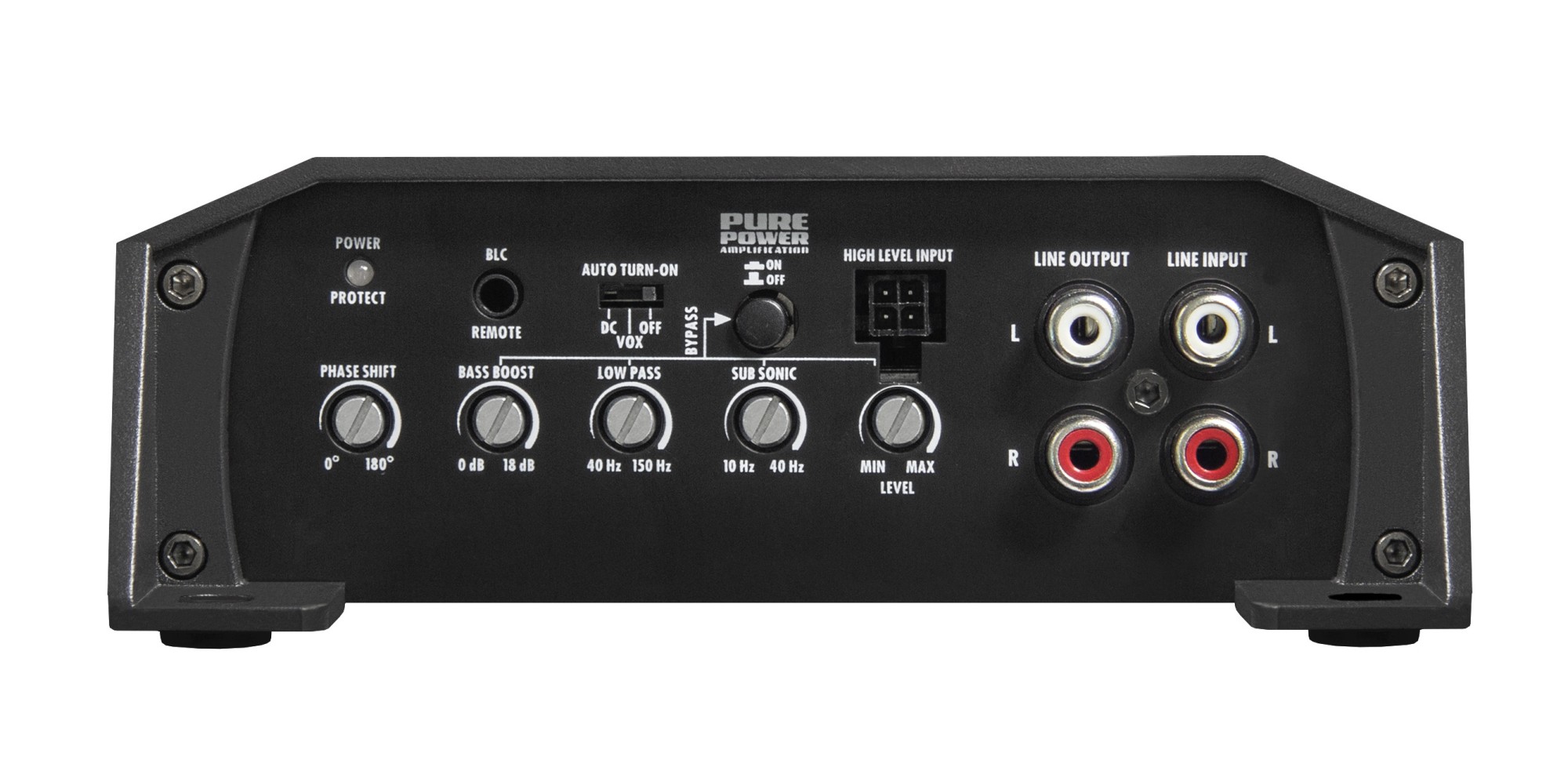
The ZXR2200/1 is also prepared for integration into modern vehicles. In addition to classic RCA inputs, it features a high-level input with EPS® technology, which helps prevent error messages from the vehicle’s original diagnostics. Auto turn-on can be used not only via DC offset when using high-level connections, but also via VOX signal detection through the RCA inputs. Support for vehicles with Start-Stop systems is also included.
For precise tuning of the subwoofer there are adjustable low-pass and subsonic filters, Bass Boost and continuous phase adjustment. An interesting feature is the PURE mode, which bypasses the amplifier’s internal filtering section and is useful, for example, when driving the subwoofer from an external DSP processor. An RCA output also allows easy signal pass-through to another amplifier, facilitating expansion to more powerful systems.
The equipment includes a compact wired remote bass level control, allowing convenient adjustment of the subwoofer level from the driver’s seat. The Hifonics ZXR2200/1 therefore combines extreme power, very compact dimensions, modern connectivity and quality workmanship in an amplifier designed for powerful subwoofer systems.
Main features
- Powerful class D monoblock from the higher Hifonics ZEUS POWER ZXR series.
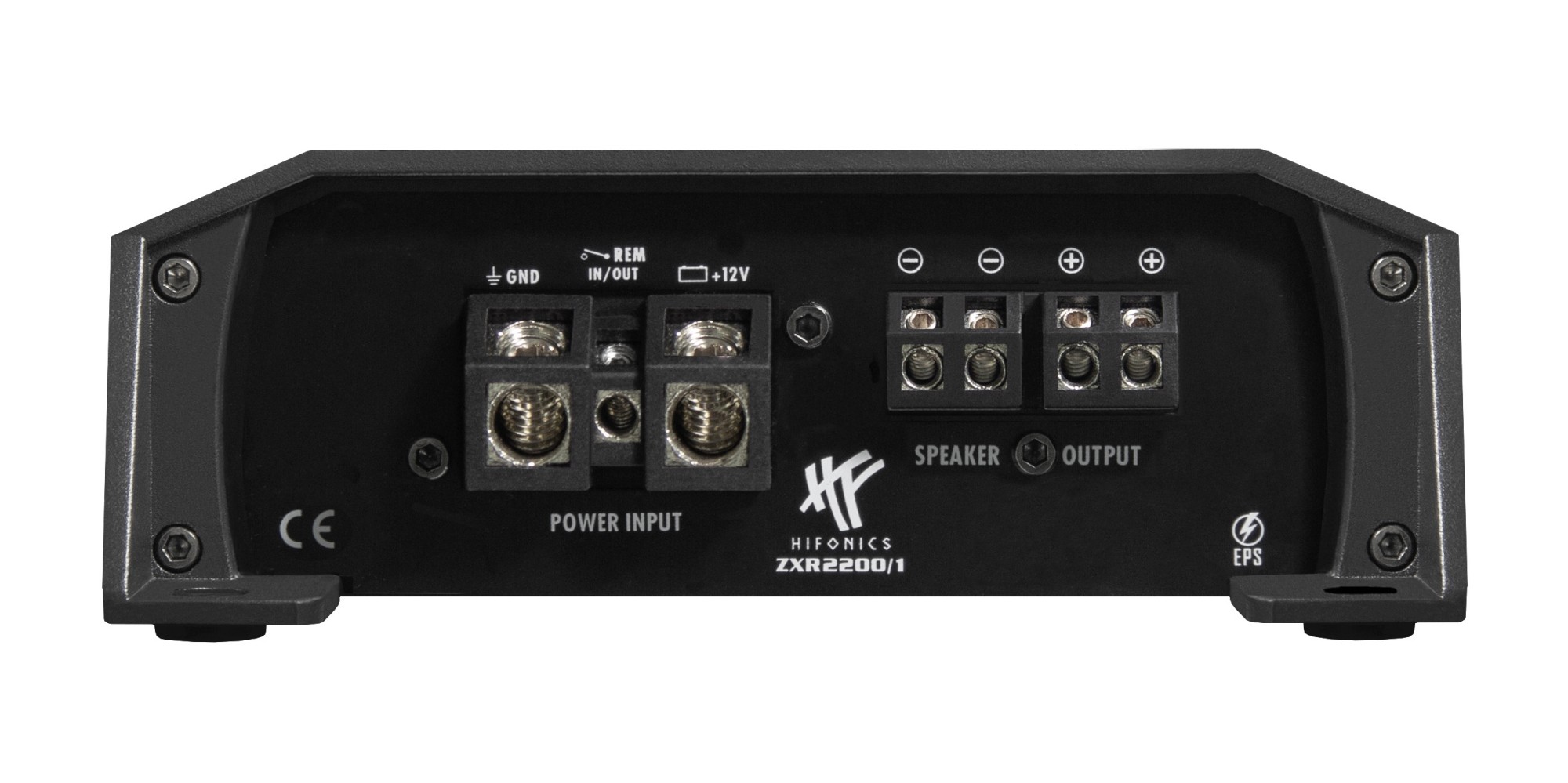
- Power 1 x 1000 / 1450 / 2200 W RMS (4 / 2 / 1 Ω).
- Very high efficiency over 90% while maintaining compact dimensions.
- Stable operation down to 1 Ω for driving powerful subwoofers.
- Selected and sonically optimized internal components.
- High-level input with EPS® technology for integration into factory audio systems.
- Automatic turn-on via DC offset or VOX signal detection.
- Support for vehicles with Start-Stop systems.
- IFT – Interference Free Technology emphasizing low electromagnetic interference.
- PURE mode to bypass the internal filtering section when using an external DSP.
- Adjustable low-pass and subsonic filters for precise subwoofer tuning.
- Continuous phase adjustment for better alignment of the subwoofer with the rest of the system.
- Bass Boost to emphasize the lowest frequencies.
- RCA input and output for easy system expansion with additional amplifiers.
- Wired bass level remote included.
- Massive and precisely crafted aluminum housing with die-cast aluminum side pieces.
- Blue backlit Hifonics logo.
- Very compact dimensions relative to the offered power.
About the brand
Hifonics is one of the world legends in car audio. Since its inception in the 1980s it has defined standards in automotive sound and is a strong player in the segments of amplifiers, speakers and subwoofers. The brand is known for its uncompromising philosophy – combining top performance with precise workmanship and unmistakable design. Hifonics products appeal to a wide range of customers, from demanding audiophiles to enthusiasts who want powerful bass and maximum dynamics in their vehicle. Hifonics amplifiers are renowned for high stability, clean sound and enormous power potential. Speakers and subwoofers also stand out for precise craftsmanship and long life even under extreme load. Hifonics continuously innovates its products. Modern technologies such as hybrid puffer capacitors, extremely stiff carbon cones, MICA composite cones or advanced cooling push the boundaries of sound even further. Alongside top amplifiers you’ll also find practical accessories in the portfolio from wired bass remotes to installation accessories and decorative protective grilles. If you’re looking for a proven brand that combines a legendary name with modern technologies and top sound, Hifonics is the right choice for your car. Treat yourself to superior performance you can feel – with Hifonics you’ll always be a step ahead!| Catalog number | ZXR2200/1 |
| Brand | Hifonics |
| Links | Official web presentation |
| Number of amplifier channelsAmplifiers are divided into: - Monoblocks - 2-channel - 3-channel - 4-channel - 5-channel - 6-channel - multi-channel Each channel is used to power one speaker for the coaxial type, or one side if they are component speakers. Monoblock type amplifiers are mainly used for subwoofers. 2-channel are suitable for both subwoofers and, for example, the front pair of speakers in a car. 3-channel is used for front or rear speakers + subwoofer. 4-channel are used for front + rear speakers or 1 pair of speakers + subwoofer. 6 or 5-channel are used for 2 pairs of speakers + subwoofer, most often. Bridging means connecting the amplifier to a bridge, using the + pole from one channel and the - pole from the other channel. In most cases this is shown as "BRIDGED" on the amplifier. | 1 |
| Energy class of the amplifierAmplifiers are divided into two basic classes: analog and digital . Analog amplifiers (A/B) have higher consumption requirements, but usually have a more natural sound. Digital amplifiers (D) have significantly lower consumption and higher efficiency, but the sound may not be as faithful as with classic analog amplifiers. | D |
| RMS power into 4 ΩRMS power when loading speakers or subwoofer at 4 Ω. RMS power is the constant power of the amplifier and is one of the most important parameters when choosing an amplifier. | 1 x 1000 W |
| RMS power into 2 ΩRMS power when loading speakers or subwoofer at 2 Ω. RMS power is the constant power of the amplifier and is one of the most important parameters when choosing an amplifier. | 1 x 1450 W |
| RMS power into 1 ΩRMS power when the subwoofer is loaded at 1 Ω. RMS power is the constant power of the amplifier and is one of the most important parameters when choosing an amplifier. When connected to 1 Ω, significant heating of the amplifier may occur. | 1 x 2200 W |
| Harmonic Distortion (THD)Total harmonic distortion indicates how much the input signal is distorted in the amplifier. Distortions appear as overtones contained in the output signal. The proportion of originally absent parts of the signal is given as a percentage, typical values are between 0.001% and 0.5%. Distortion is measured in their power band. If it exceeds the limit of 0.7% from a certain power, it is the value of the output power of the given amplifier, from which it no longer plays without distortion and from which the distortion usually increases steeply, so that no further increase in power can be counted on. The lower the value, the better. | < 0.02 % |
| Signal-to-noise ratioThe signal-to-noise ratio means that the output signal always contains noise. The signal-to-noise ratio expresses how much of this noise is compared to the useful signal. The so-called A value is given, which does not take deep and very high frequencies into account. This corresponds to the characteristic of human hearing, which is not so sensitive to deep frequencies, especially below 1 kHz. The higher the value, the better the amplifier is. | > 99 dB |
| Damping factorDF - Damping Factor . It is the ratio of the load (repro + cables, crossover, etc.) to the internal resistance of the amplifier. The bigger the DF, the more controlled the bass. Amplifiers with a lower DF tend to hum. Subwoofers with a higher Q in the bass reflex and sometimes in the enclosure will also cause humming. | > 140 |
| High level inputsThe high-level input on the amplifier allows connection directly to the existing speakers in the car without additional purchase of an external high/low adapter. Important equipment in the case of installing an amplifier on an original car radio. | Yes |
| Input sensitivityIn order for the amplifier to perform its function correctly, it requires an input signal of a certain level, which is different for car radios. It is measured in "Volts" (e.g. 2 V, 4 V, etc.) The higher the value at the output of the pre-amplifier, or car radio, the less demands are placed on the power of the amplifier. However, the amplifier must allow this input sensitivity, and for that reason this value is also given for the amplifier. | 300 mV – 19 V |
| Automatic on and offThis function allows you to automatically switch on the amplifier. | Yes |
| Low-pass filter (LPF)LPF / LP or "low pass filter" offers the possibility to adjust the amplifier using a potentiometer so that the lower band plays only the frequencies in a certain band that you need. This filter is used to adjust the frequency range for the subwoofer, so that it does not overload or distort the sound. Example: Amplifiers most often have an LPF from 20 to 300 Hz. We recommend setting this potentiometer in the range of 45-80 Hz. | 40 – 150 Hz |
| SubsonicA subsonic filter is essentially a high-pass filter for very low frequencies, typically 45 Hz or lower. Anything below this setting is weakened. The point is that the subwoofer does not go below the subsonic filter setting and does not overload itself with very low frequencies. A useful function, if set correctly, the subwoofer is not overloaded. | 10 – 40 Hz |
| Bass boostBass boost or bass enhancement. With this function, the bass itself can be emphasized, at a high level of bass boost, the speakers and the subwoofer can distort a lot and the sound will be worse than better. We therefore recommend using the "bass boost" function wisely. With maximum use of bass boost, there is a risk of damage to the speakers and thus to the subwoofer. | 0 – 18 dB |
| Phase shiftPhase shift is a linear electronic oscillator that produces a sinusoidal output. It consists of an inverting part of the amplifier such as a transistor. The feedback network "shifts" the phase at the output of the amplifier by 180 degrees to the oscillation frequency and gives positive feedback. The Phase shift filter produces a phase shift that increases with increasing frequency. This is usually used when the subwoofer sub-assembly is out with the magnet, or when two amplifiers are connected externally. Phase Shift is also used with active speaker wiring, where the time shift of the speakers is set. The point is that the subwoofer does not play the bass late, and for this reason better amplifiers offer this phase reversal option. | 0 – 180° |
| On-board voltage rangeThe ability of the amplifier to operate at a specified voltage. As the voltage decreases, so does the power of the amplifier. The ideal voltage in a car is between 13.8 and 14.4 V. | 10 – 16 V |
| Remote control included in the packageSome models of amplifiers also come with wired remote controls in the package, which on one side plug into the amplifier and on the other side you have a potentiometer that you can place anywhere in the cabin. A common place to place the remote control is under the steering wheel. The advantage is the regulation of power, and therefore volume, depending on driving conditions and the mood of the crew in the car. | Yes |
| Dimensions of the amplifier | 150 x 50 x 313 mm |
Evaluation
You might also be interested
 Quick preview1-channel amplifier, 1 x 500 / 800 / 1000 W RMS (4 / 2 / 1 Ω), class D231,60 EURIn stockHifonics ZXR1200/1 Free transport
 Quick preview1-channel amplifier, 400 / 750 / 1200 W RMS (4 / 2 / 1 Ω), class D271,60 EURIn stockHifonics ZXR1200/2E Free transport
 Quick preview2-channel amplifier, 2 x 300/450/600 W RMS (4.2.1 Ω), 1 x 900/1200 W RMS (4.2 Ω), Class D331,60 EURIn stockHifonics ZXR1200/4E Free transport
 Quick preview4-channel amplifier, 4 x 200 / 2 x 600 W RMS (4 Ω), 4 x 300 W RMS (2 Ω), class D299,60 EURIn stockHifonics ZXR1200/5 Free transport
 Quick preview5-channel amplifier, 4 x 80 + 1 x 225 W 4 Ω, class D419,60 EURIn stockHifonics ZXR1500/1E Free transport
 Quick preview1-channel amplifier, 1 x 650 / 1100 / 1500 W RMS (4 / 2 / 1 Ω), class D271,60 EURIn stockHifonics ZXR400/2 Free transport
 Quick preview2-channel amplifier, 2 x 110 / 1 x 400 W RMS (4 Ω), 2 x 200 W RMS (2 Ω), Class D171,60 EURIn stockHifonics ZXR500/1E Free transport
 Quick preview1-channel amplifier, 1 x 200 / 350 / 500 W RMS (4 / 2 / 1 Ω), Class D159,60 EURIn stockHifonics ZXR500/4E Free transport
 Quick preview4-channel amplifier, 4 x 75 / 2 x 250 W RMS (4 Ω), 4 x 125 W RMS (2 Ω), Class D199,60 EURIn stockHifonics ZXR600/2 Free transport
 Quick preview2-channel amplifier, 2 x 175 / 1 x 600 into 4 Ω or 2 x 300 W RMS into 2 Ω, class D231,60 EURIn stockHifonics ZXR700/2E Free transport
 Quick preview2-channel amplifier, 2 x 125/250/350 W RMS (4.2.1 Ω), 1 x 500/700 W RMS (4.2 Ω), Class D231,60 EURIn stockHifonics ZXR750/1E Free transport
 Quick preview1-channel amplifier, 1 x 300 / 500 / 750 W RMS (4 / 2 / 1 Ω), class D195,60 EURIn stockHifonics ZXR800/4E Free transport
 Quick preview4-channel amplifier, 4 x 120 / 2 x 400 W RMS (4 Ω), 4 x 200 W RMS (2 Ω), class D251,60 EURIn stockHifonics ZXR800/8DSP Free transport
 Quick preview8-channel amplifier with DSP, 8 × 35 W, Class D371,60 EURIn stockHifonics ZXR900/2E Free transport
 Quick preview2-channel amplifier, 2 x 200/300/450 W RMS (4.2.1 Ω), 1 x 600/900 W RMS (4.2 Ω), Class D271,60 EURRestocking within 1 weekHifonics ZXR900/4 Free transport
 Quick preview4-channel amplifier, 4 x 135 / 2 x 450 into 4 Ω or 4 x 225 W RMS into 2 Ω, class D299,60 EURIn stockHifonics ZXR900/5 Free transport
 Quick preview5-channel amplifier, 4 × 70 / 1 × 200 W RMS (4 Ω), 4 × 100 / 1 × 325 W RMS (2 Ω), 1 × 500 W RMS (1 Ω), Class D335,60 EURIn stock