Hifonics ZXR500/1E amplifier
More about the product
- You can return the goods to us within 14 days
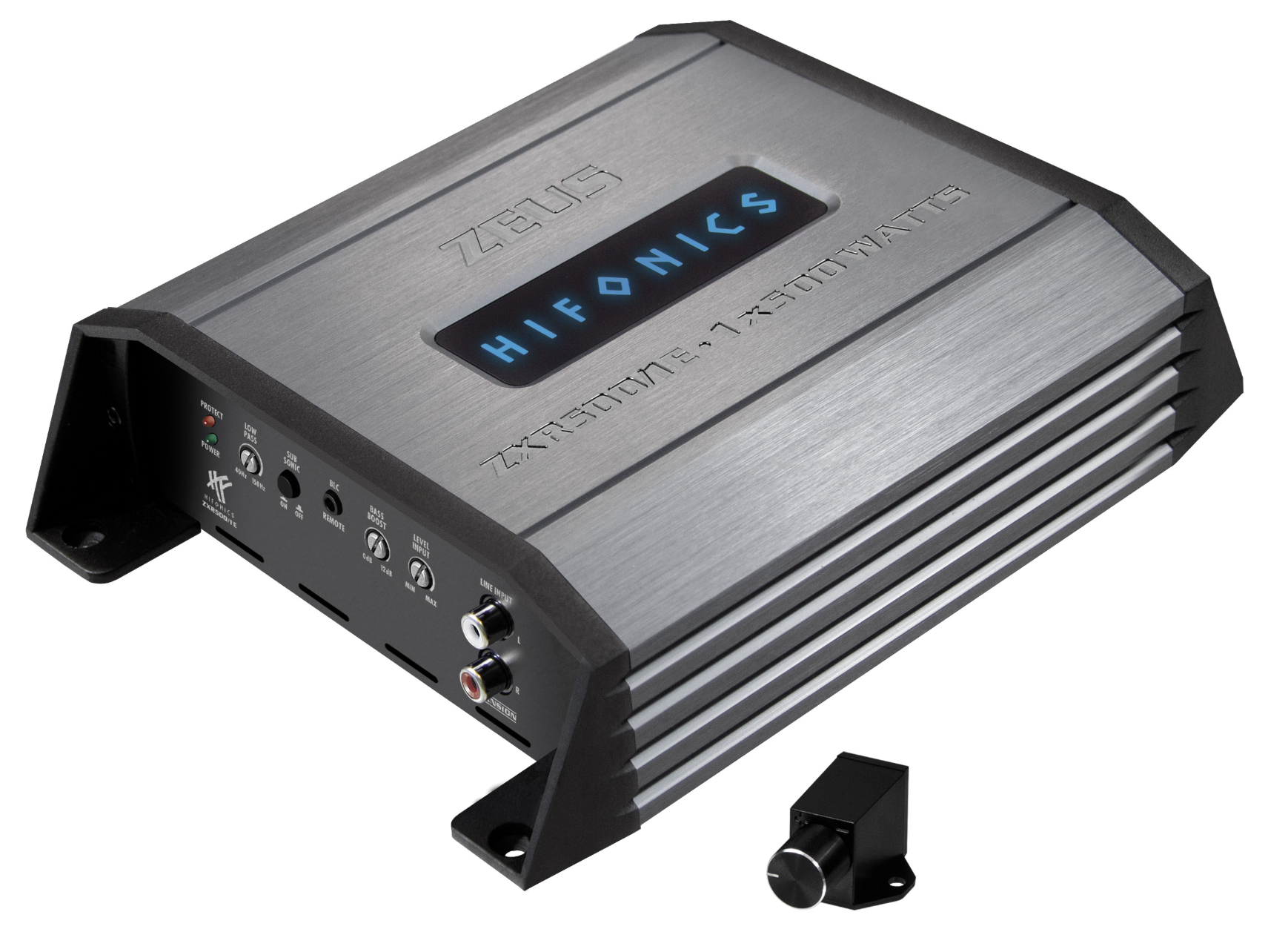
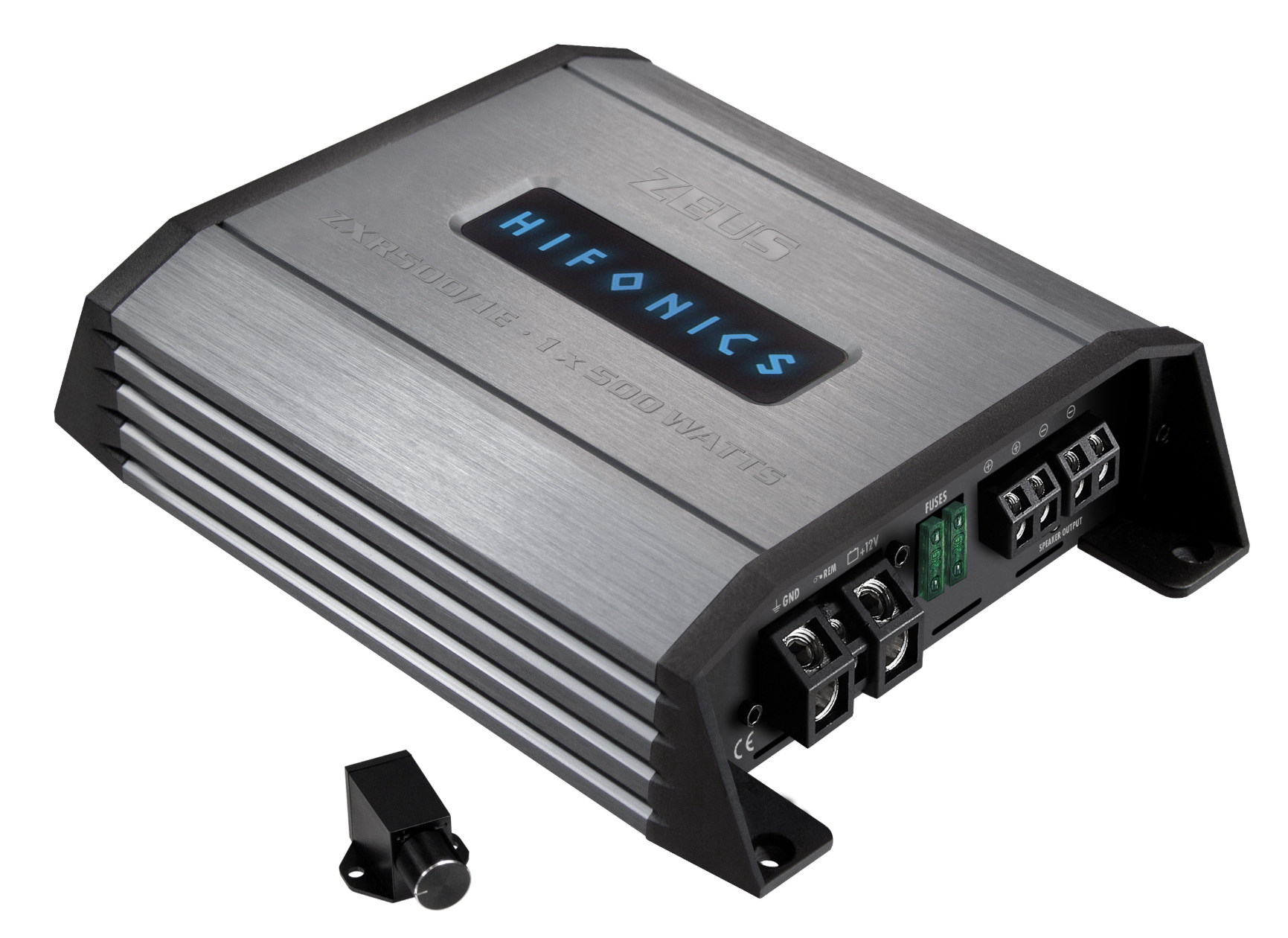
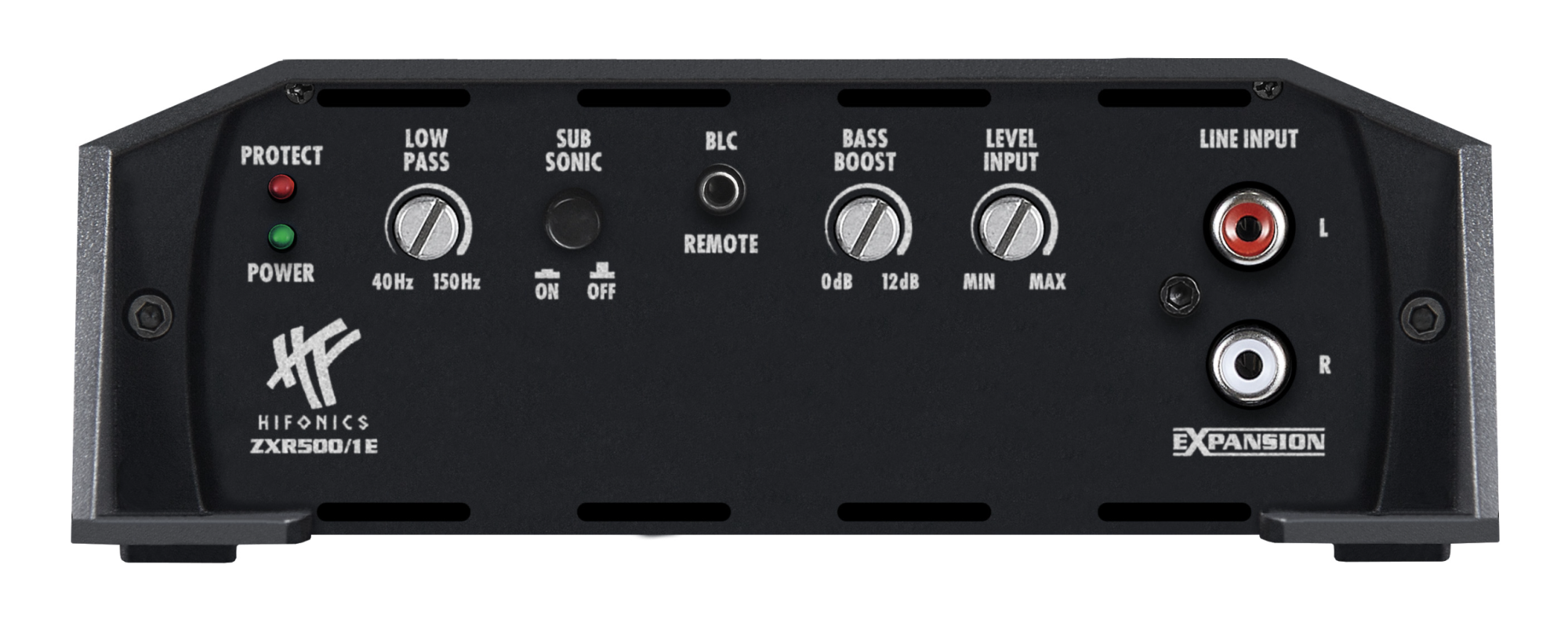
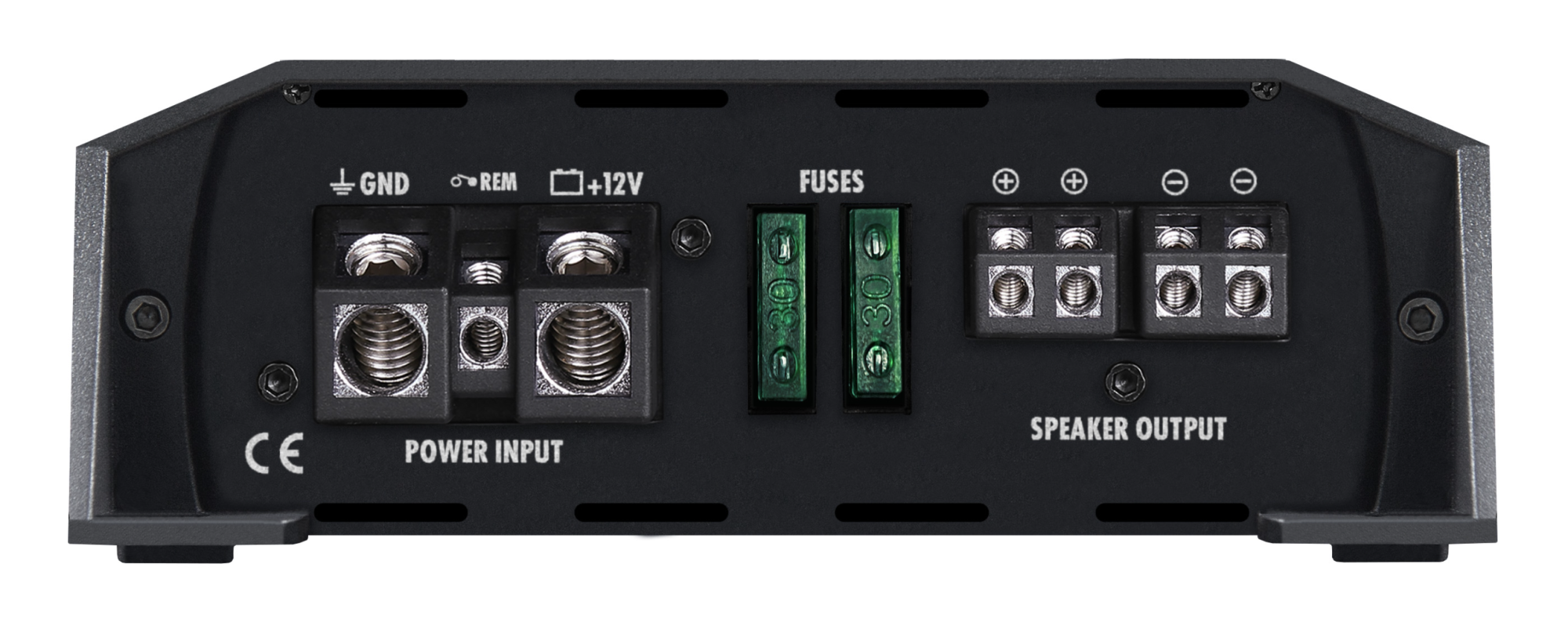
Zesilovač Hifonics ZXR500/1E
The ZEUS E-Class line expands the proven ZXR series with very modern, highly efficient Class D amplifiers. These “Expansion” power amplifiers impress with enormous power in an exceptionally compact heatsink body. Already at their debut in Car & Hifi (issue 1/2025) they won over the editorial team so completely that the entire series received the prestigious PRODUCT OF THE YEAR 2025 award.
Anyone familiar with Hifonics power amplifiers knows they are always equipped with state-of-the-art technology and thoughtful features. In high-quality multi-component sound systems, however, some functions—such as high-level inputs—are often unnecessary. That led to the idea of creating powerful monoblocks stable down to 1 Ω that, for higher efficiency and output, deliberately omit high-level inputs.
Hifonics now offers three such models in the ZXR/E range with remote bass gain control and power ratings of 750, 1000, and 1500 W RMS, capable of driving even large subwoofers with ease. Thanks to the latest Infineon® chips, they achieve extreme efficiency of up to 92%, saving the vehicle electrical system and reducing energy consumption. The ideal pairing is these monoblocks with the 8-channel DSP amplifier ZXR800/8DSP from the same design family, which features a 10-channel DSP with Bluetooth control. Via RCA/Cinch connection, the ZXR/E monoblock provides the system with an appropriate bass foundation.
Main features
- Stability at a 1 Ω load and Infineon® chipset.
- Advanced Class D technology with very high efficiency.
- Carefully selected, audiophile-grade components.
- Cast aluminum side panels.
- Prepared for vehicles with Start/Stop systems.
- IFT (Interference Free Technology), tested for electromagnetic compatibility.
- Blue backlit logo.
- Compact remote control for bass level.
About the brand
Hifonics is one of the world’s legends in car audio. Since its founding in the 1980s it has defined standards in automotive sound and is a strong player in amplifiers, speakers and subwoofers. The brand is known for its uncompromising philosophy—combining top performance with precise workmanship and unmistakable design. Hifonics products appeal to everyone, from demanding audiophiles to enthusiasts who want deep, powerful bass and maximum dynamics in their car. Hifonics amplifiers are famed for high stability, clean sound and massive power potential. Speakers and subwoofers also excel in precise construction and long durability even under extreme loads. Hifonics continuously innovates its products. Modern technologies—such as hybrid puffer capacitors, extremely rigid carbon cones, MICA composite cones and advanced cooling—push the boundaries of sound even further. Alongside top-tier amplifiers you’ll also find practical accessories in the portfolio, from remote bass controls to mounting accessories and stylish protective grilles. If you’re looking for a proven brand that combines a legendary name with modern technologies and outstanding sound, Hifonics is the right choice for your car. Treat yourself to exceptional performance you can feel—with Hifonics you’ll always be one step ahead!| Catalog number | ZXR500/1E |
| Brand | Hifonics |
| Links | Official web presentation |
| Energy class of the amplifierAmplifiers are divided into two basic classes: analog and digital . Analog amplifiers (A/B) have higher consumption requirements, but usually have a more natural sound. Digital amplifiers (D) have significantly lower consumption and higher efficiency, but the sound may not be as faithful as with classic analog amplifiers. | D |
| Number of amplifier channelsAmplifiers are divided into: - Monoblocks - 2-channel - 3-channel - 4-channel - 5-channel - 6-channel - multi-channel Each channel is used to power one speaker for the coaxial type, or one side if they are component speakers. Monoblock type amplifiers are mainly used for subwoofers. 2-channel are suitable for both subwoofers and, for example, the front pair of speakers in a car. 3-channel is used for front or rear speakers + subwoofer. 4-channel are used for front + rear speakers or 1 pair of speakers + subwoofer. 6 or 5-channel are used for 2 pairs of speakers + subwoofer, most often. Bridging means connecting the amplifier to a bridge, using the + pole from one channel and the - pole from the other channel. In most cases this is shown as "BRIDGED" on the amplifier. | 1 |
| RMS power into 4 ΩRMS power when loading speakers or subwoofer at 4 Ω. RMS power is the constant power of the amplifier and is one of the most important parameters when choosing an amplifier. | 1 x 200 W |
| RMS power into 2 ΩRMS power when loading speakers or subwoofer at 2 Ω. RMS power is the constant power of the amplifier and is one of the most important parameters when choosing an amplifier. | 1 x 350 W |
| RMS power into 1 ΩRMS power when the subwoofer is loaded at 1 Ω. RMS power is the constant power of the amplifier and is one of the most important parameters when choosing an amplifier. When connected to 1 Ω, significant heating of the amplifier may occur. | 1 x 500 W |
| Low-pass filter (LPF)LPF / LP or "low pass filter" offers the possibility to adjust the amplifier using a potentiometer so that the lower band plays only the frequencies in a certain band that you need. This filter is used to adjust the frequency range for the subwoofer, so that it does not overload or distort the sound. Example: Amplifiers most often have an LPF from 20 to 300 Hz. We recommend setting this potentiometer in the range of 45-80 Hz. | 40 - 150 Hz |
| SubsonicA subsonic filter is essentially a high-pass filter for very low frequencies, typically 45 Hz or lower. Anything below this setting is weakened. The point is that the subwoofer does not go below the subsonic filter setting and does not overload itself with very low frequencies. A useful function, if set correctly, the subwoofer is not overloaded. | 27 Hz |
| Damping factorDF - Damping Factor . It is the ratio of the load (repro + cables, crossover, etc.) to the internal resistance of the amplifier. The bigger the DF, the more controlled the bass. Amplifiers with a lower DF tend to hum. Subwoofers with a higher Q in the bass reflex and sometimes in the enclosure will also cause humming. | > 320 |
| Phase shiftPhase shift is a linear electronic oscillator that produces a sinusoidal output. It consists of an inverting part of the amplifier such as a transistor. The feedback network "shifts" the phase at the output of the amplifier by 180 degrees to the oscillation frequency and gives positive feedback. The Phase shift filter produces a phase shift that increases with increasing frequency. This is usually used when the subwoofer sub-assembly is out with the magnet, or when two amplifiers are connected externally. Phase Shift is also used with active speaker wiring, where the time shift of the speakers is set. The point is that the subwoofer does not play the bass late, and for this reason better amplifiers offer this phase reversal option. | 0 - 180° |
| High level inputsThe high-level input on the amplifier allows connection directly to the existing speakers in the car without additional purchase of an external high/low adapter. Important equipment in the case of installing an amplifier on an original car radio. | Yes |
| Automatic on and offThis function allows you to automatically switch on the amplifier. | Yes |
| Socket input terminalsFerrule terminals allow better wiring contact to the amplifier. It is also a more secure form of terminals. If you are tightening the sleeve terminals, we recommend retightening them after 1 day, as the connected cable gradually compresses. | Yes |
| Input for wired remote controlIf the amplifier has a remote control input. | Yes |
| Remote control included in the packageSome models of amplifiers also come with wired remote controls in the package, which on one side plug into the amplifier and on the other side you have a potentiometer that you can place anywhere in the cabin. A common place to place the remote control is under the steering wheel. The advantage is the regulation of power, and therefore volume, depending on driving conditions and the mood of the crew in the car. | Yes |
| Dimensions of the amplifier | 150 x 50 x 191 mm |