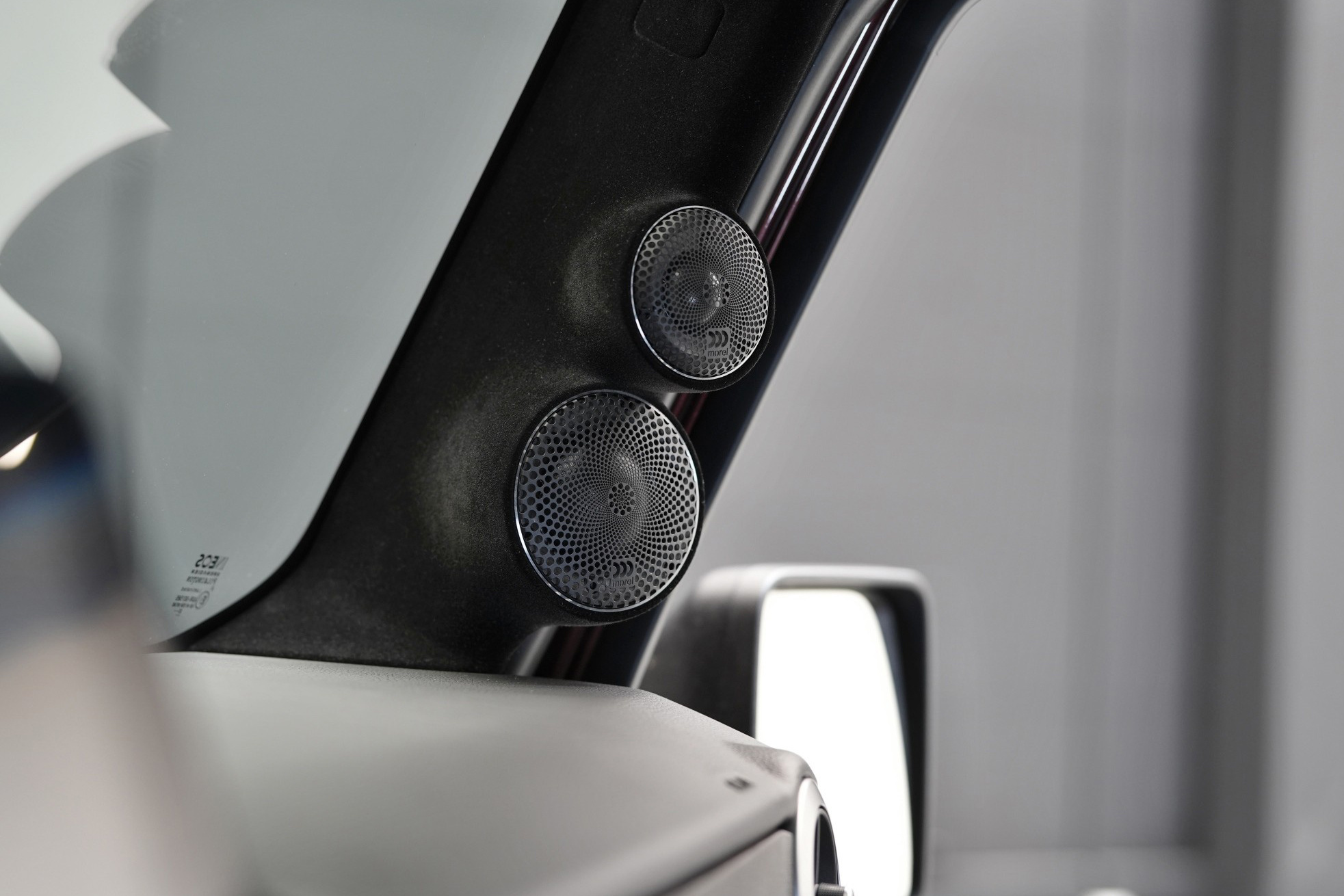
Is it worth investing in rear speakers? This is one of the most common questions we discuss with our customers when it comes to car audio systems. Car manufacturers try to convince us that the more speakers, the better the sound. But is that really the case? In this article, we will take a detailed look at this issue and explain once and for all why this myth persists, what impact it has on listening quality, and what the right solution is..jpg) Don't look for rear speakers in a car with high-quality sound. The photo shows the Morel Sensus 63 3-way speaker system for the front doors.
Don't look for rear speakers in a car with high-quality sound. The photo shows the Morel Sensus 63 3-way speaker system for the front doors.
Why rear speakers are unsuitable for car audio systems
Music is fundamentally recorded and produced in stereo. This means that it has two main channels – left and right – and both are directed towards the listener from the front. This creates a musical scene, space, and the localization of individual instruments. Rear speakers disrupt this principle. Instead of the music playing in front of you, you also receive a signal from behind, and the overall picture falls apart. The result is a loss of instrument localization, and the sound generally becomes less clear.
It can be compared to a concert. When you go to a concert by your favorite band, the sound system is never behind you. All the sound comes from the stage, from the front, because that's the only way to perceive the music as a whole. It's the same in a car – you want to feel like the music is coming from the front, not "chasing" you from the back seats. Rear speakers are therefore not only unnecessary, but in most cases downright inappropriate.
Car manufacturers and, unfortunately, some companies presenting themselves as "experts" try to claim the opposite. Under the slogan "the more speakers, the better the sound," systems are created that look impressive on paper but actually degrade the music. It's similar to at home – when you want to enjoy music, you turn on your stereo system, not a home theater with ten speakers around you. Music is not a movie and is not about effects from all sides, but about pure stereo and natural listening.
So what should properly designed sound in a car sound like?
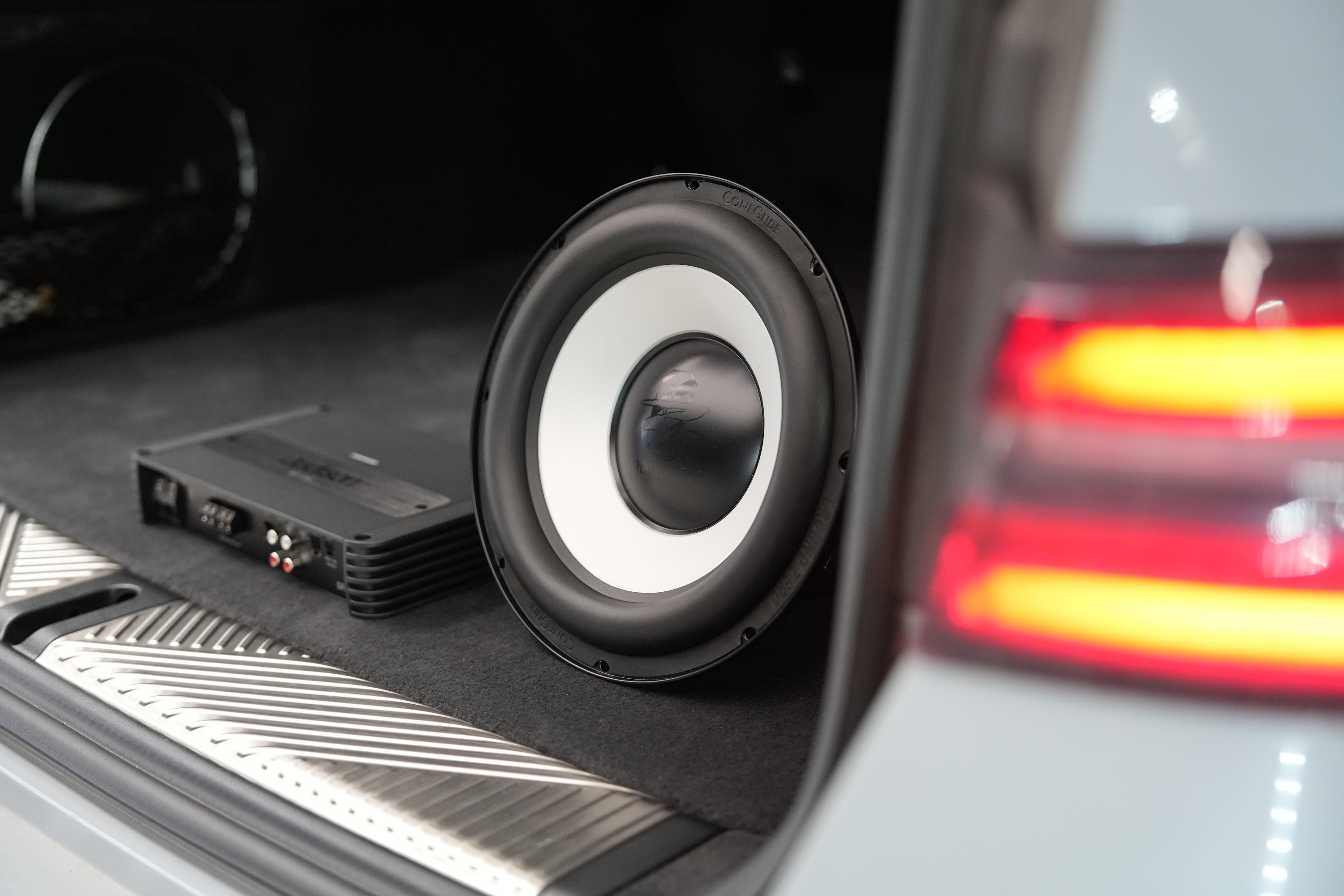
The ideal solution is to use only front speakers in an active configuration, if possible in a three-way configuration, powered by a high-quality amplifier and supplemented by a separate monoblock and subwoofer. Active connection means that each speaker has its own amplifier channel and is controlled directly via a DSP processor. This allows for precise adjustment of crossover frequencies and time delays.
The front array ensures a stereo image exactly as intended when the song was recorded. The subwoofer provides the necessary depth and energy of the bass, and the DSP processor takes care not only of equalization, time corrections, and correct phasing of the speakers with the subwoofer, but above all of the overall integration of the system. The secret lies in the professional setup of the DSP processor and a thorough knowledge of acoustics. When properly tuned, you will hardly notice the difference between a system with front speakers and a system with rear speakers. Rear speakers are therefore an unnecessary investment. It is much better to invest the money you save in a high-quality front speaker system, which is key to the final sound and determines the overall listening experience. 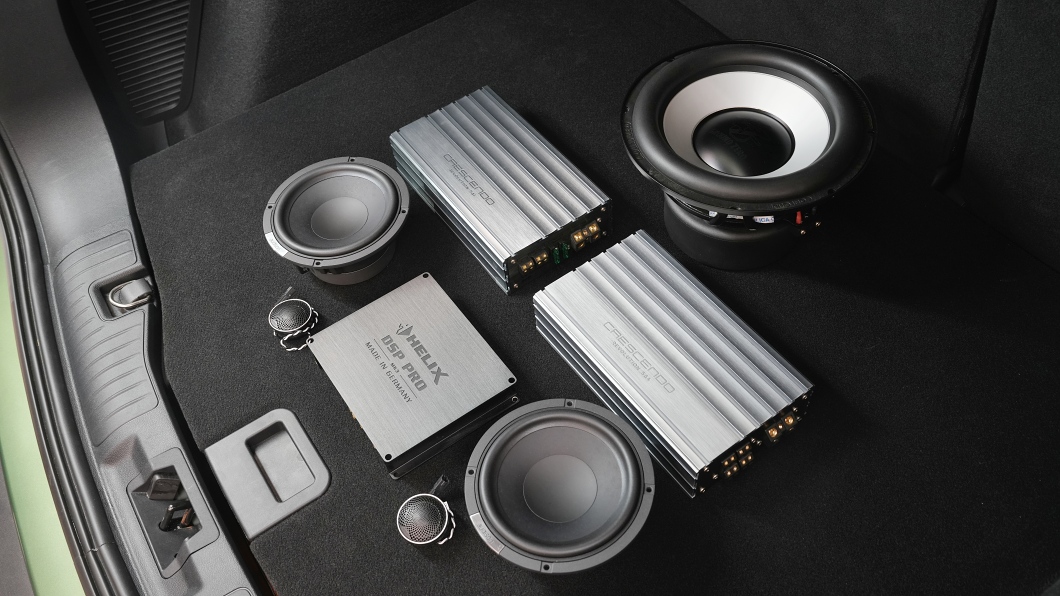 For advanced installations, we most often choose front speakers, an amplifier for the speakers only, a second amplifier for the subwoofer, a separate DSP processor, and a subwoofer.
When rear speakers make sense
Nevertheless, there are situations where installing rear speakers makes sense. Typically, these are cases where you often carry passengers in the rear seats and want them to enjoy the music too. In such cases, it is advisable to replace the rear speakers with higher quality ones, but it is often sufficient to connect them directly to the car radio and then control the volume using a fader so that they do not interfere with the stereo image in the front. A more advanced solution is to use a DSP processor and create a separate preset for all passengers, which can be switched as needed.
Rear speakers can also be used in simpler installations without an external amplifier and DSP processor, where the entire sound system is powered only from the main unit. In this case, it is advisable to replace all speakers so that the resulting sound is balanced throughout the car.
Differential rear fill – the path to more spacious sound
For demanding listeners who want an even more realistic experience from their car, there is a solution called differential rear fill. This is not a standard rear speaker connection, but a special signal adjustment using a DSP processor. The rear center speakers (tweeters are not used) play only the L-R differential signal, which simulates the reverberations and acoustics of the recording room.
This principle expands the soundstage without compromising accuracy and localization at the front. The result is a more natural and spacious listening experience, closer to that of a studio listening room. Rear fill is now considered the best possible way to use rear speakers and is also finding its place in sound quality competition installations.
Conclusion – come and hear the difference
As we have explained, more speakers in a car does not mean better sound. On the contrary, in most cases, rear speakers disrupt the stereo image and are an unnecessary investment. The right approach is to use a high-quality front system, amplifiers, a subwoofer, and a professionally configured DSP processor. If rear speakers are used, then only for a specific purpose – for rear passengers or as a sophisticated rear fill.
This concept forms the basis of 95% of our installations and is the reason why customers return with a smile. If you want to form your own opinion, come visit us in Brno and listen to our demo cars, which always feature only front speakers and, in two installations, rear differential rear fill. We are confident that after this experience, you will no longer even consider rear speakers.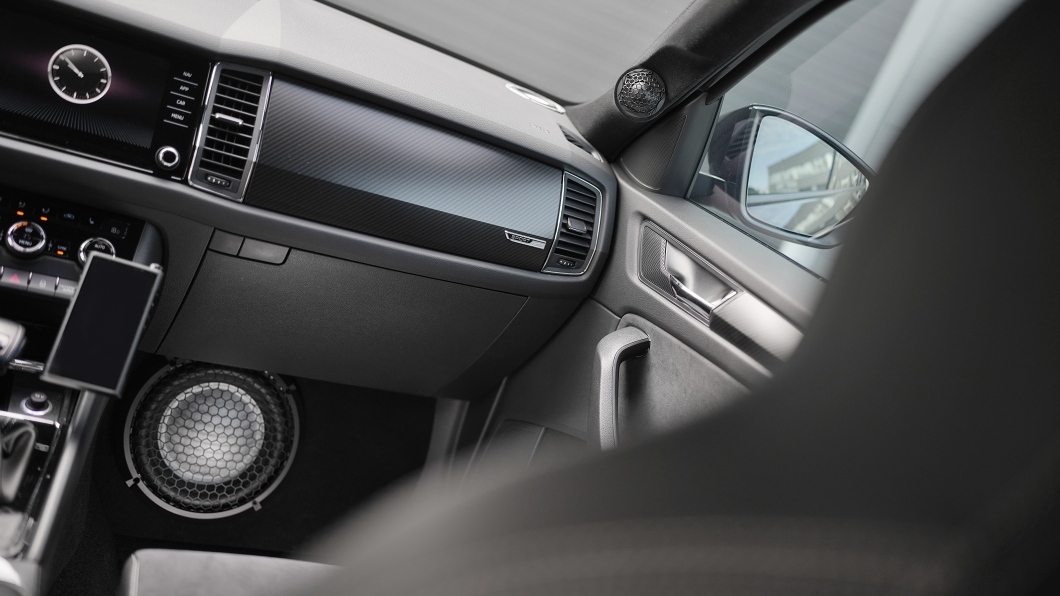 Škoda Kodiaq from Ahifi. Come and listen to high-end sound with a three-band system, rear fill, and front and rear subwoofers.