
When designing an audio system, it is important not only to choose the right components and stick to the budget, but also to consider the role of each individual element of the system and what we expect from it. The subwoofer is one of the most demanding elements of the entire system—it needs much more power and better control than other speakers. That is why, in most installations, we rely on a separate monoblock, in other words, a 1-channel amplifier that is specifically designed for this task. In the following article, we will take a detailed look at the advantages and disadvantages of monoblocks and multi-channel amplifiers in terms of subwoofer power supply.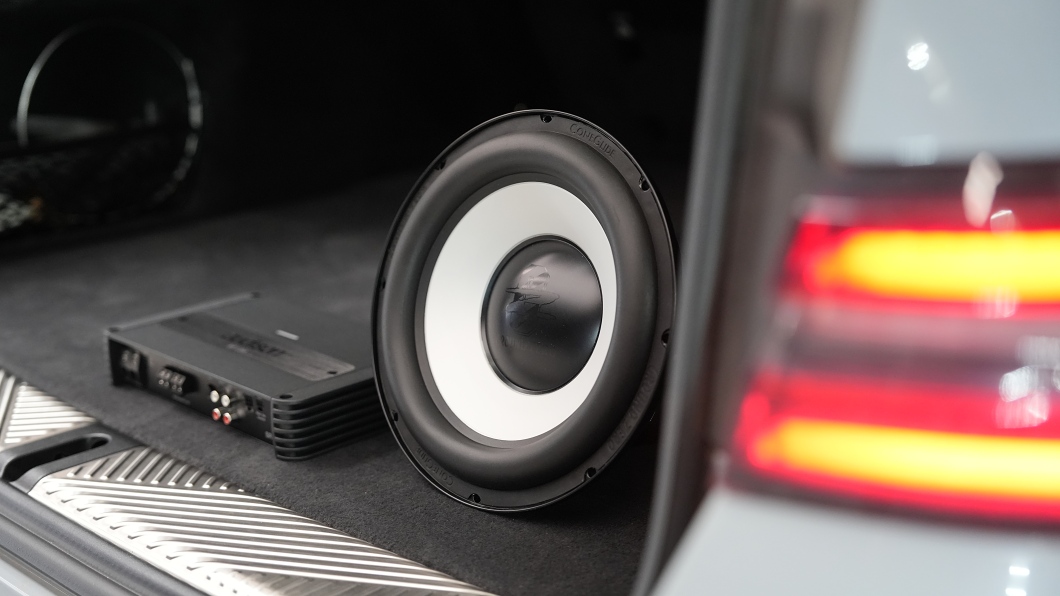 A subwoofer needs not only power, but also optimal control. That's why installing a separate monoblock to power the subwoofer is the best choice.
Monoblock vs. multi-channel amplifier – what are the differences?
For a better understanding, let's start with a little theory. A monoblock is a single-channel amplifier, i.e., a device designed to power a single subwoofer or speaker. The entire design is optimized to deliver maximum power to a single channel, which is why it is mainly used for the bass section of the system. This allows it to offer higher efficiency and power, better speaker control, and usually more accurate filtering, as it focuses only on a narrow frequency band.
In contrast, a multi-channel amplifier has several separate channels – for example, four (for speakers or a subwoofer when connected in a bridge configuration) or five, with one of the channels usually designated for the subwoofer. The advantage is compactness and practicality, as it can power the entire system from a single chassis and requires less cabling. At the same time, however, it shares the power supply for all channels, which can mean lower power reserves and a certain compromise in sound quality.
Damping factor and subwoofer control
The damping factor is one of the key parameters of an amplifier. Technically, it is the ratio between the load impedance (subwoofer) and the amplifier output impedance. In layman's terms, it expresses the amplifier's ability to keep the subwoofer diaphragm under control after the tone has faded away. The higher the damping factor, the tighter, faster, and more accurate the bass is – without reverberation and unnecessary vibrations. A value of around 50 is considered the minimum limit for reasonable control. Multi-channel amplifiers (e.g., five-channel) usually achieve even lower values and produce softer, less accurate bass with reverberation.
However, monoblocks typically achieve a damping factor of 100 or more, which ensures much better control of the diaphragm. Top-of-the-line monoblocks offer a damping factor of 200 to 500 or more, which is a level that ensures precise control even with powerful subwoofers. It is worth mentioning that the actual damping factor in an installation is always lower than the figure stated in the catalog – it is reduced by the resistance of the cabling and individual connections. That is why, in our installations, we not only pay attention to choosing a monoblock with sufficient reserve, but also to correctly dimensioned and as short as possible cabling. Only in this way can the amplifier's potential be truly maximized.
Separate power supply and stability
The monoblock has its own power supply section designed exclusively for the subwoofer. This gives it greater power reserves and allows it to handle even demanding dynamic peaks with ease. In practice, this means that the subwoofer plays with maximum confidence and the rest of the system is never limited in terms of performance. A stable power supply is key to ensuring that the entire audio system sounds clear and balanced even at high volumes.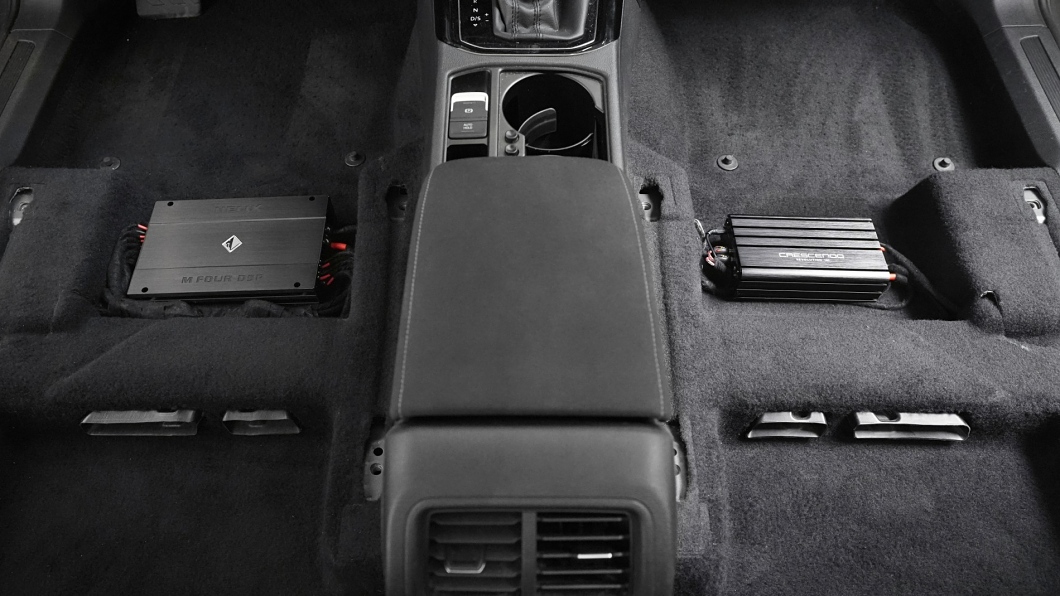 Most modern vehicles have enough space for the concealed installation of two amplifiers – one for the speakers and one for the subwoofer.
Independent operation and clear sound
The monoblock operates completely separately from the amplifiers for other speakers. This keeps the power stable and clean, without the risk of the subwoofer affecting other parts of the system. This is especially important in more complex installations where we work with a DSP processor and precise tuning. In so-called sound quality installations, a single monoblock is used not only for the subwoofer, but even for each speaker. This ensures not only absolute power separation, but also perfect separation of the stereo image and zero mutual interference between channels.
It is no coincidence that top-of-the-line two-channel amplifiers are actually designed as two independent monoblocks in one chassis. A typical example is the Quartorigo Opus, which we installed in our demonstration Kodiaq. This concept allows for unrivaled clarity and control of reproduction, not only in the bass range, but across the entire frequency spectrum.
Precise low-frequency filtering
Since the monoblock is designed exclusively for low frequencies, it features precise low-pass filters and detailed adjustment options. This allows you to fine-tune the crossover frequency and slope precisely to the specific subwoofer and car acoustics. This is the only way to ensure that the bass seamlessly connects to the midrange and treble bands and acts as a natural part of the overall sound.
And what about active subwoofers?
Active subwoofers with integrated amplifiers represent the most compromising solution in terms of sound quality. In most cases, their built-in amplifiers do not offer sufficient power or quality to keep the subwoofer under real control. The result is rather soft and less distinct bass. On the other hand, active subwoofers also have their advantages – they save space and usually money, making them a suitable solution for simpler installations with limited space, for example. However, if the goal is high-quality reproduction, we prefer to use a classic combination of a separate subwoofer and a matching amplifier in our installations.
Our philosophy
At Ahifi, we generally choose solutions that strive to achieve the highest possible sound quality. That is why we use separate monoblocks, high-quality subwoofers, and appropriate speakers for most installations—of course, in cases where the space in the car and the set budget allow us to do so. We believe that if a car's sound system is to be worthwhile, and logically so is the money spent on it, it must be adequately designed and implemented. Only then can we achieve sound that is clear, dynamic, and completely under control..JPG) Amplifiers and, ideally, a separate DSP processor can often be hidden in the double floor of the luggage compartment.
Amplifiers and, ideally, a separate DSP processor can often be hidden in the double floor of the luggage compartment.
Summary of advantages and disadvantages
Every solution has its strengths and weaknesses, and this also applies to amplifiers. Monoblocks offer a number of technical advantages, but on the other hand, they require a slightly more complex installation and usually a slightly higher investment. Multi-channel amplifiers are more practical and affordable, but at the cost of certain compromises in sound quality. To make the comparison clearer, we have summarized the key advantages and disadvantages of both options in the following overview.Monoblocks
✅ Higher damping factor and precise membrane control.
✅ Separate power supply and stable performance.
✅ Precise low-frequency filtering.
✅ Independent operation without affecting other channels.
✅ Easy expandability and upgradeability.
❌ Usually higher investment and more demanding installation.
❌ Greater space and cabling requirements.
Multi-channel amplifiers
✅ Simpler and more compact installation.
✅ Less cabling and components.
❌ Lower damping factor and control.
❌ Shared power supply and lower power reserve.
❌ Compromised filtering.
❌ Risk of mutual interference between channels.
❌ Higher heat generation under load.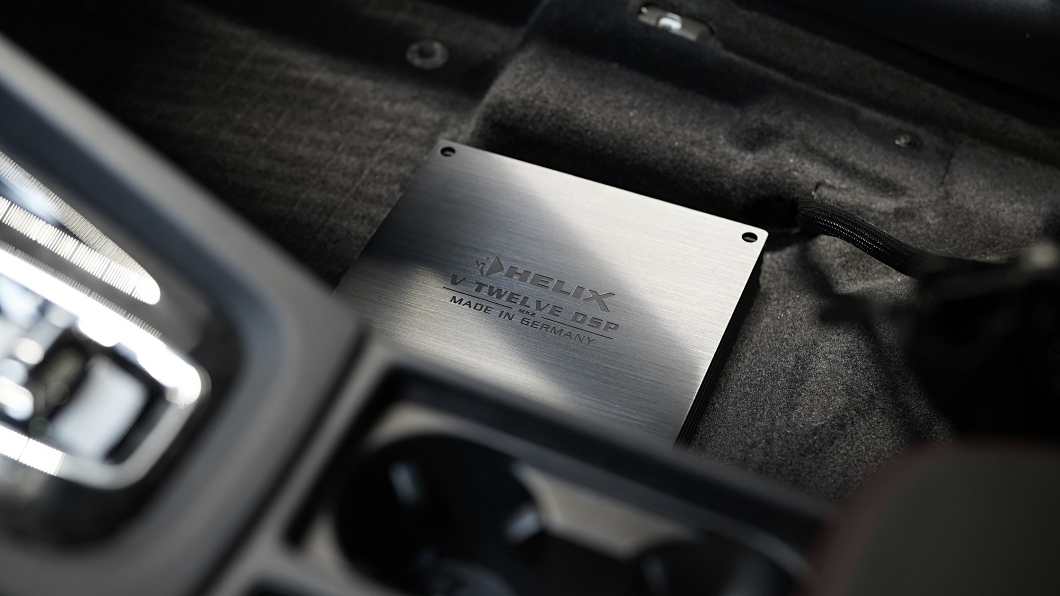 And if there really isn't enough space? One multi-channel amplifier will suffice. However, you will have to compromise on sound quality.