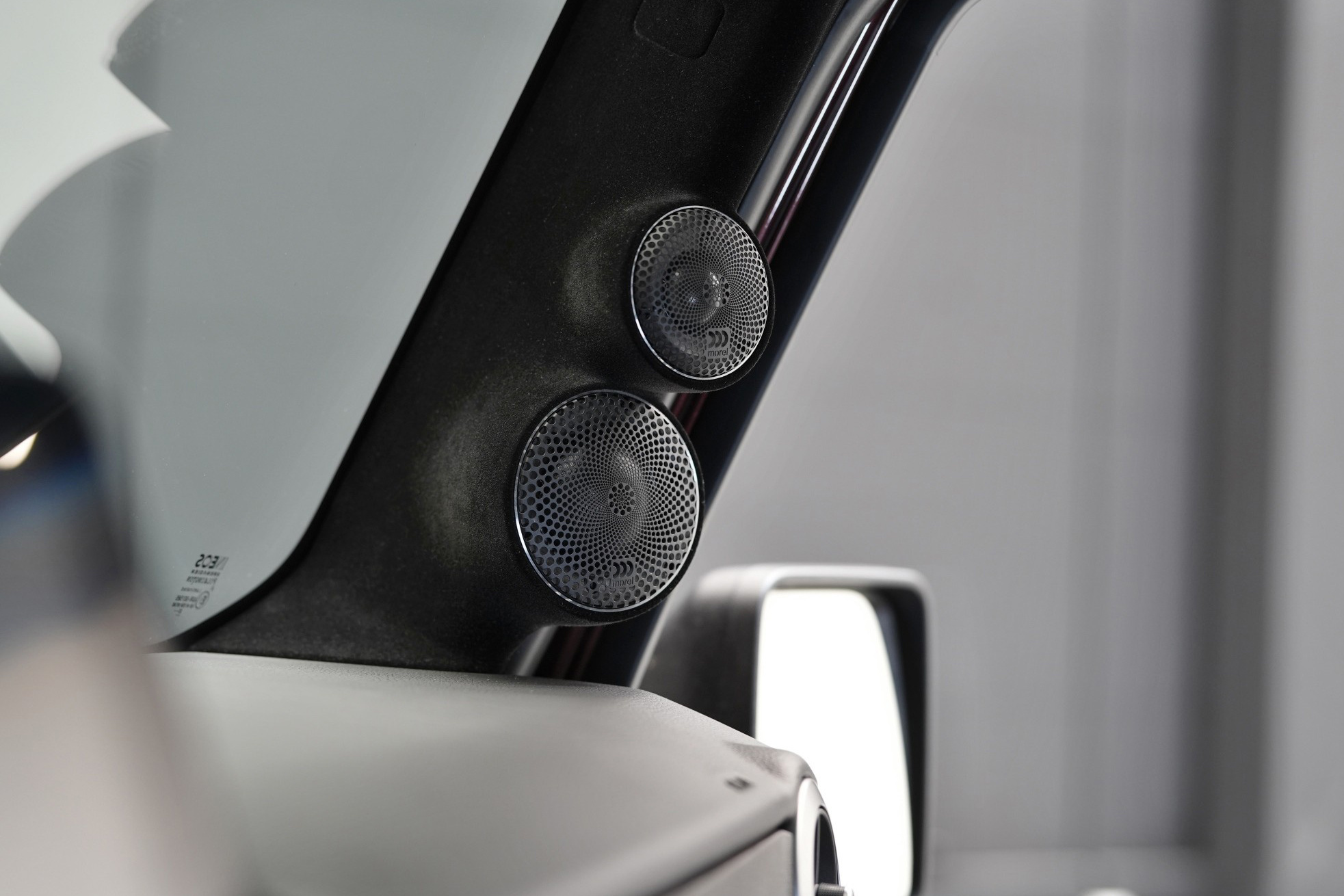
At first glance they look almost the same. Same range, same diameter, similar price and a difference in the name that is easy to miss. Yet the Morel Maximo Ultra 602 MkII and Maximo Ultra 602HE MkII behave completely differently in practice. Not because one is better and the other worse, but because they are designed for different types of installations. That is exactly why you ask us about the differences so often — and why it makes sense to explain them a bit more thoroughly. We also frequently use both speakers in our installations, and the Maximo Ultra 602HE are even the most used speakers in our workshop. Why, you will find out in our review.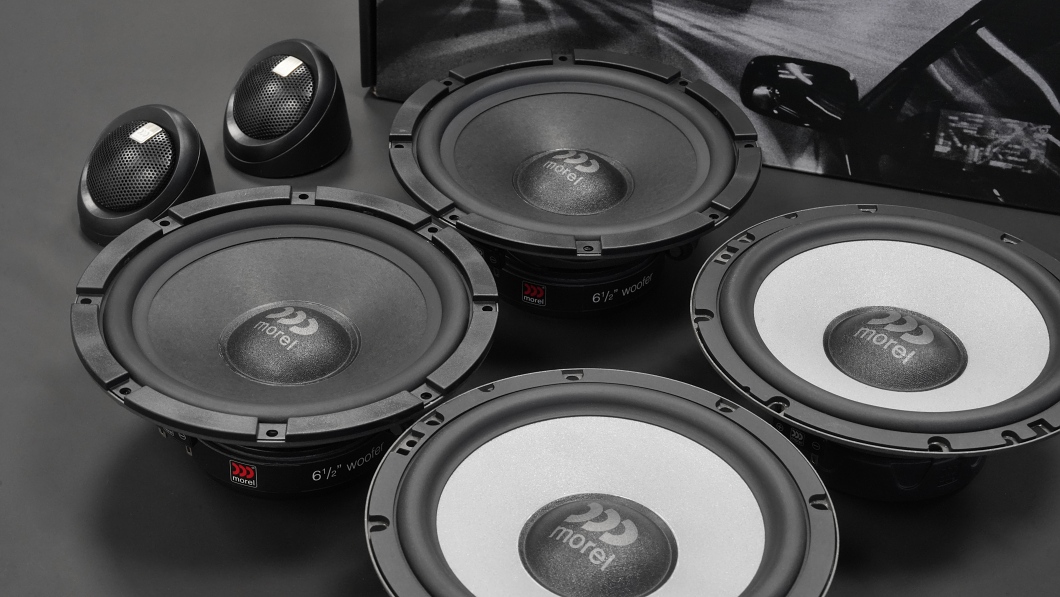
Same series, different philosophy
Both two-way sets belong to the Maximo Ultra line, i.e. the affordable and at the same time best-selling range in Morel's offer. They are speakers that retain the typical Morel character, but also make sense as an upgrade to factory audio without high budget demands. The difference between them is already hidden in the name. The HE designation means High Efficiency. And this is precisely where the whole comparison splits:
- Morel Maximo Ultra 602 MkII are designed for use with an external amplifier.
- Morel Maximo Ultra 602HE MkII are optimized to play directly from a car radio or a weak factory amplifier.
To begin with, it's good to briefly recall the theory. Car radios, especially factory ones, actually deliver about 10 to 15 W RMS per channel. When you connect speakers that are primarily designed to work with an amplifier to such a source, a paradoxical situation can occur: the result can be worse than with stock speakers. The reason is not the quality of the speakers themselves, but physics. For a speaker to play loudly it needs either power or high sensitivity — ideally both. And this is exactly the point where the paths of the two reviewed models diverge.
Mid-bass construction: similar at first glance, different on closer inspection
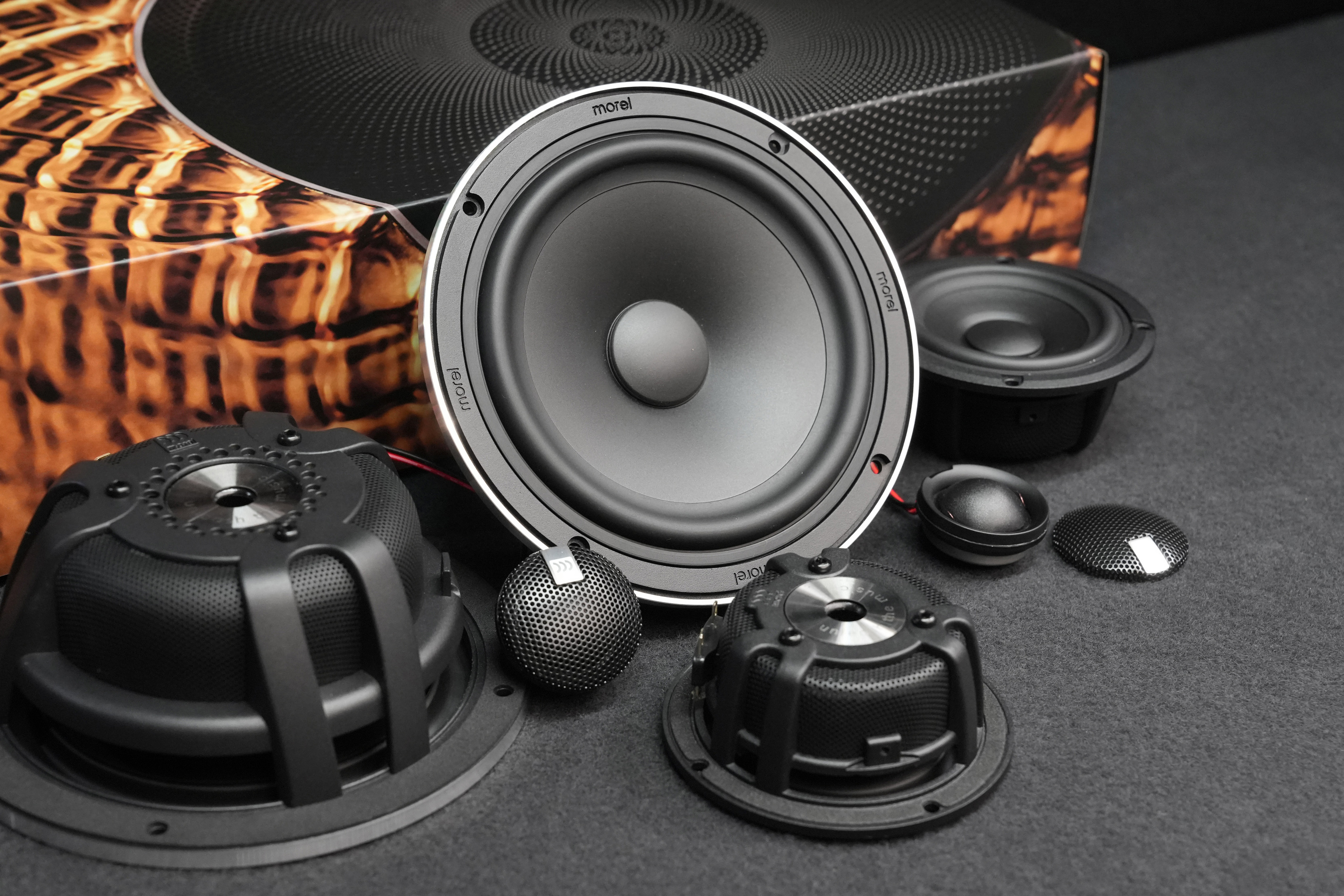
At first glance the mid-bass drivers look very similar. Steel basket, paper cone and the typical understated Morel aesthetic without flashy design. But when you look closer, the construction details differ — and it's definitely not accidental. The first significant difference is the cones themselves, which are made using different technologies and with different goals.
In the Maximo Ultra 602 MkII Morel opted for a stiffer and heavier cellulose-based cone with a coarser Acudamp surface treatment. It has very good internal damping, suppresses unwanted resonances and contributes to a calm, cultivated sound. The higher moving mass, however, also means the speaker needs more energy to reach its optimal operating regime.
The 602HE version uses a thinner and lighter cone made from finely pressed cellulose. It is mechanically livelier, but the required stiffness is achieved by the cone's construction — it is deeper and has a different profile. In combination with a differently designed magnetic system this leads to significantly higher sensitivity. And the motor is the second fundamental difference between the two mid-bass drivers.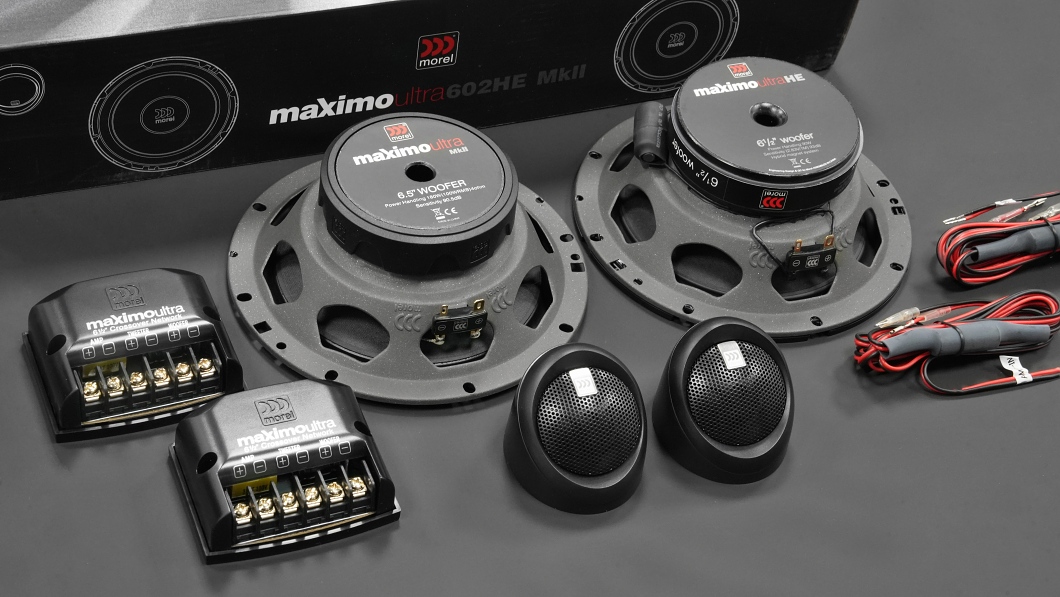
Different motor and magnetic system
Both versions are built on the same stamped steel baskets, but their magnetic circuits differ fundamentally. The classic Maximo Ultra 602 MkII uses a traditional ferrite magnetic system. It is a proven and stable solution that works very well at higher power and long-term loading — i.e. in combination with an external amplifier, for which this model is primarily designed.
The 602HE model, on the other hand, borrows a solution known from Morel's higher model ranges and uses a hybrid magnetic system where ferrite is supplemented by neodymium directly in the speaker motor. The neodymium here is not a marketing element, but an effective way to increase magnetic flux in the gap without significantly increasing the weight of the entire system.
The result is primarily better control of the cone at low signal levels and higher acoustic output per watt. Added to that is a lower DC resistance of the voice coil, which allows the car radio to deliver more energy into the speaker and convert it into sound more efficiently.
Tweeters unchanged. Except for the crossovers
In the case of the tweeters, don't look for differences this time. At least we didn't find any — neither visually nor by listening. The only difference is different stickers on the back, everything else appears identical. It can therefore be assumed that both sets use the same tweeters.
They are 25 mm silk domes with the characteristic three-legged bridges over the dome, complemented by protective grilles. The accessories are identical too — the package includes two types of mounting cups for surface and flush installation. A big advantage of this Morel range is the ability to remove the tweeter from its plastic housing, making it relatively easy to install in almost any type of vehicle.
A different approach is, however, apparent in the crossovers. The Maximo Ultra 602 MkII uses a classic external passive crossover with second-order filters. This solution allows more precise control of the transition between mid-bass and tweeter, calmer behavior in the critical band and better integration in systems with an external amplifier.
For the 602HE Morel goes a different way. The crossover is split — the inductor is placed directly on the mid-bass and the tweeter is protected by a simple capacitor in the feed cable. First-order filters minimize losses and help preserve the high efficiency of the entire system. From a purist's point of view it's a compromise, but from the practical perspective of a system without an amplifier it is a very clever solution that also simplifies installation. And that is exactly what this type of speaker is primarily about.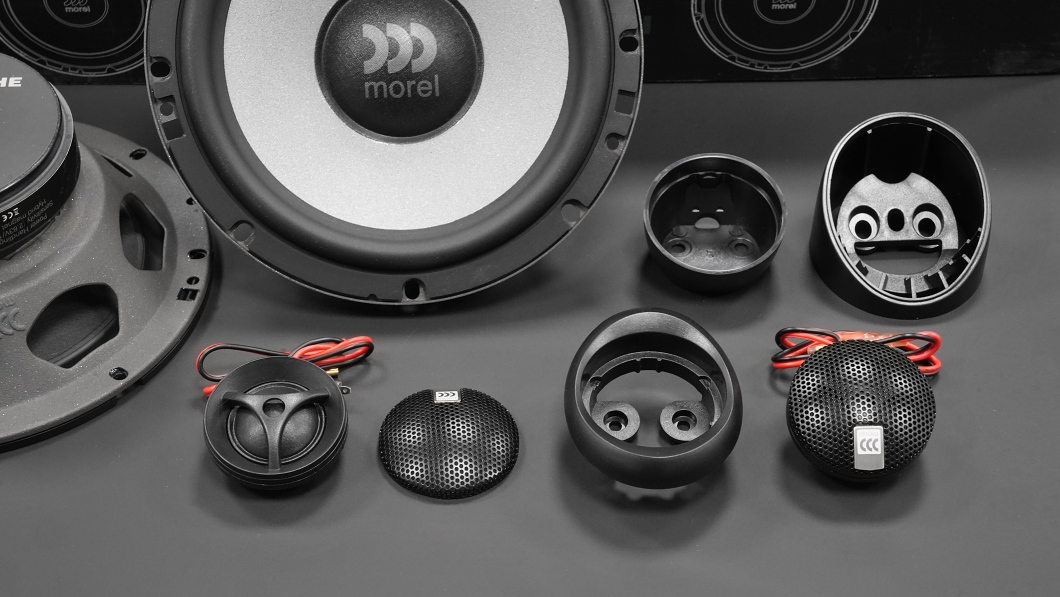
What do the measurements tell us?
The measured parameters exactly match the construction philosophy of both models and practically do not differ from the values stated by the manufacturer. In this respect Morel has long been strong — the declared figures are not just marketing, but realistically correspond to the speakers' behavior in practice.
The Maximo Ultra 602 MkII has a lower resonant frequency, specifically 67 Hz, higher total mechanical and electrical damping, and a sensitivity around 87 dB at 1 W/1 m. The cone does not produce any pronounced resonances, which is positively reflected in the listening test. Generally these are values typical for speakers designed to work with higher power, which, when properly powered, reward you with a fuller low end and a calm, balanced presentation.
The Maximo Ultra 602HE MkII has the resonant frequency shifted higher, above 80 Hz, a lower Qts and a lower moving mass. The thinner cone causes a less smooth frequency response, but everything is within reasonable limits. Crucially — the sensitivity is close to 91 dB at 1 W/1 m. In the more common sensitivity notation that corresponds to roughly 94 dB at 2.83 V/1 m. And the difference of a few decibels on paper means dramatically higher loudness in the real world at the same car radio setting.
Measurements of the tweeters showed no significant differences, which confirms the assumption that both sets use identical tweeters. From a construction and measurement behavior perspective these are classic 25 mm silk domes with all their typical traits — both positive and limiting. The frequency response is smooth, without pronounced dips or peaks, with a gradual roll-off at the highest frequencies. Even here the tweeters do not lose the clarity and refinement that are typical for Morel.
And finally the listening: this is where the differences show most clearly
In direct comparison on the same source the differences are audible immediately. First we test on an aftermarket Alpine head unit, where the Maximo Ultra 602 play calmly, balanced and mature. The bass is full, soft and reaches low, the midrange is natural, vocals have body and the right color. The highs are typically Morel — delicate, refined and with no hint of aggression. The whole is very universal and pleasant over long listening periods. However, as volume increases it becomes clear that the head unit itself does not provide the speakers with the power they would need to fully show their potential.
The Maximo Ultra 602HE MkII sound noticeably livelier on the same head unit. They play louder, react faster to dynamic changes and overall give a more energetic impression. The bass is not as voluminous or deep, but it is tight and well controlled. The midrange and highs are very readable and, thanks to the higher sensitivity, more prominent. On the tested aftermarket head unit the HE version therefore comes across as more fun and would probably be preferred by the vast majority of listeners.
The turning point comes when we switch the speakers to an amplifier. The Maximo Ultra 602 come alive, amplify all of the acoustic traits mentioned above and impress with power and dynamics. In contrast, the Maximo Ultra 602HE do not show such a noticeable improvement and you won't get the power and headroom you might expect. They are designed differently and their limits appear sooner at higher power.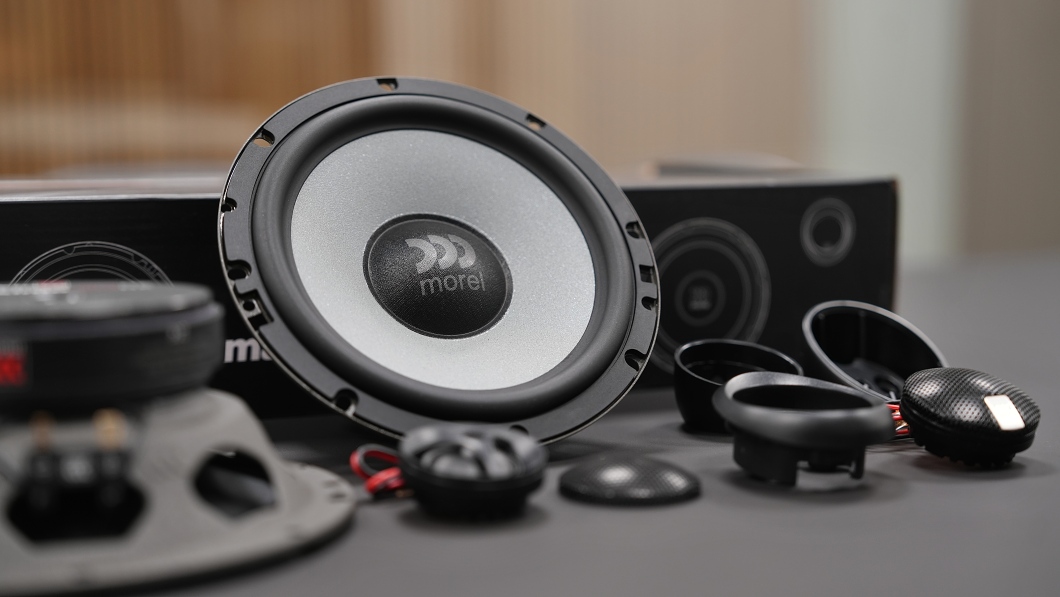
So… which to choose?
It's surprisingly simple. If you are building a system with an amplifier or with a DSP processor, the Maximo Ultra 602 MkII is the clear choice. And it's important to say openly that if you connect them directly to a head unit you will miss out on the best this set can offer.If you want a pronounced improvement in sound without changing the vehicle wiring and without adding an amplifier, the Maximo Ultra 602HE MkII makes a lot of sense. Even weak factory radios will provide them with enough power to fully demonstrate their capabilities. And it must be said that they simply sound great. In their price range we actually don't know a more suitable candidate for connecting to factory or aftermarket head units.
So it's not a matter of better or worse models, but of intended use. And one more fair point: if you choose the Maximo Ultra 602HE today and later decide to expand the system with an amplifier, you will of course hear an improvement, especially when using a DSP processor, but it won't be dramatic. Conversely, if you are already planning for an amplifier now, or plan to install one in the future, the classic Maximo Ultra 602 MkII will reward you handsomely.