
Subwoofer Ground Zero GZHW 20-D1
More about the product
- You can return the goods to us within 14 days
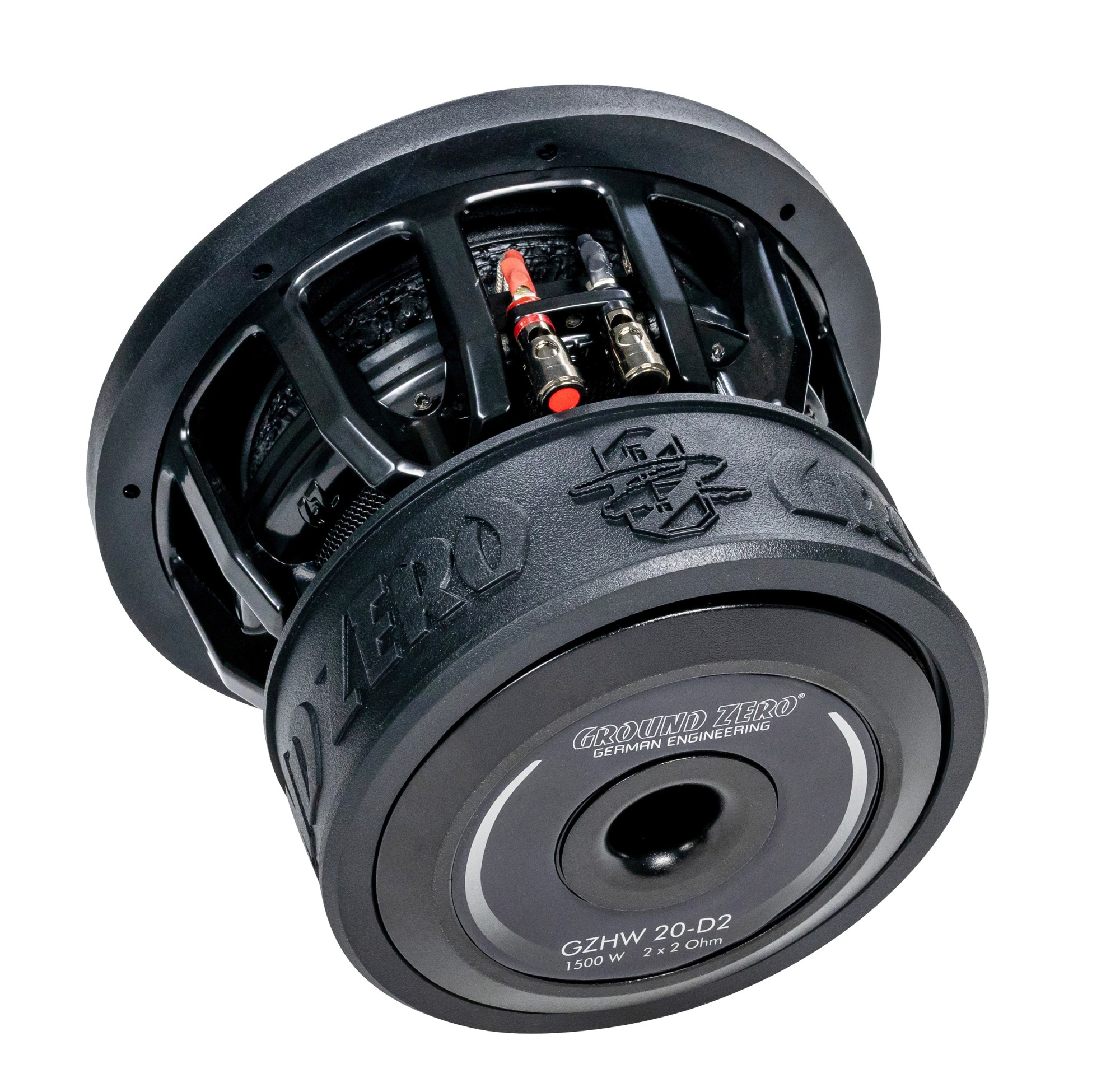
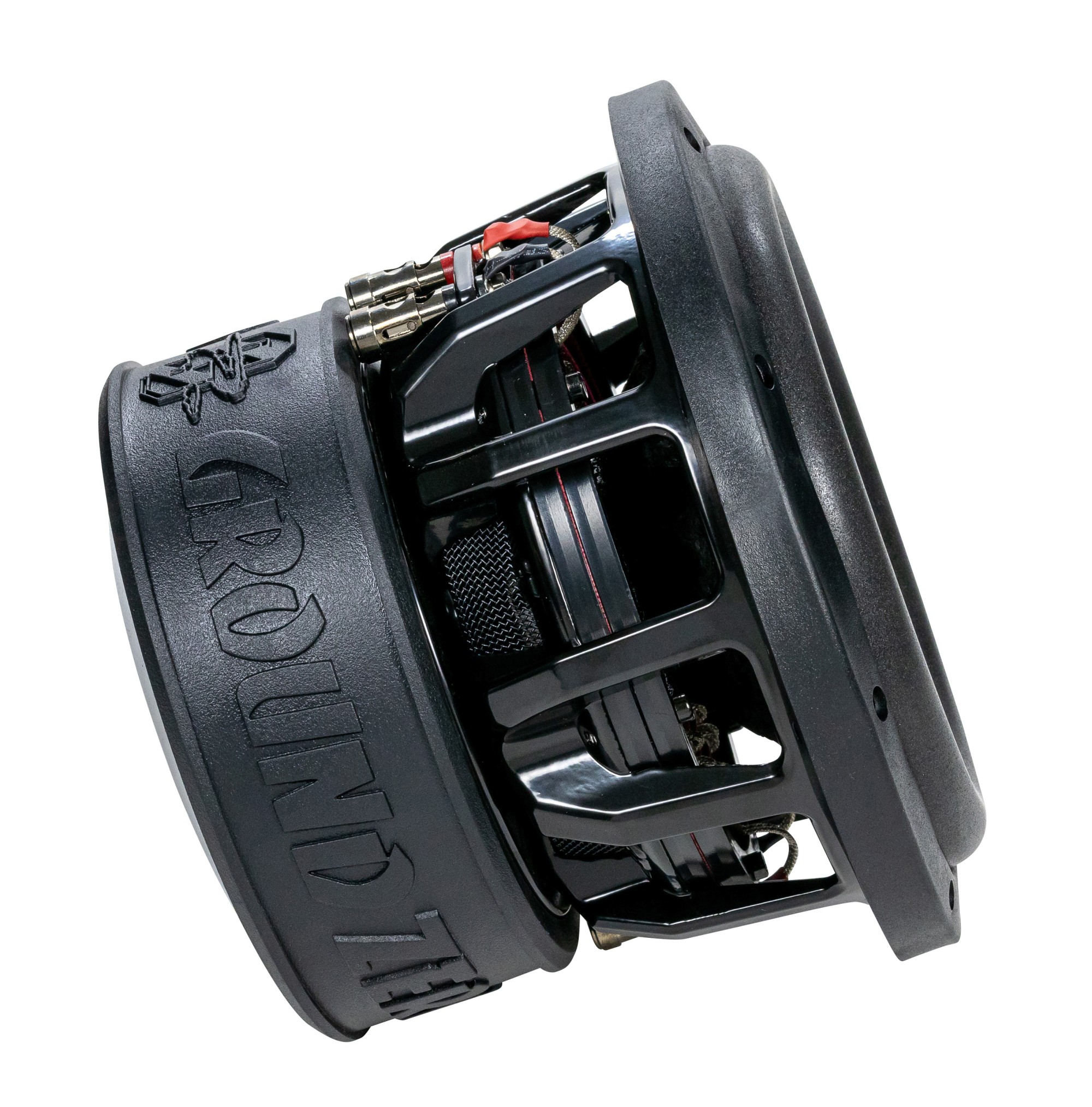
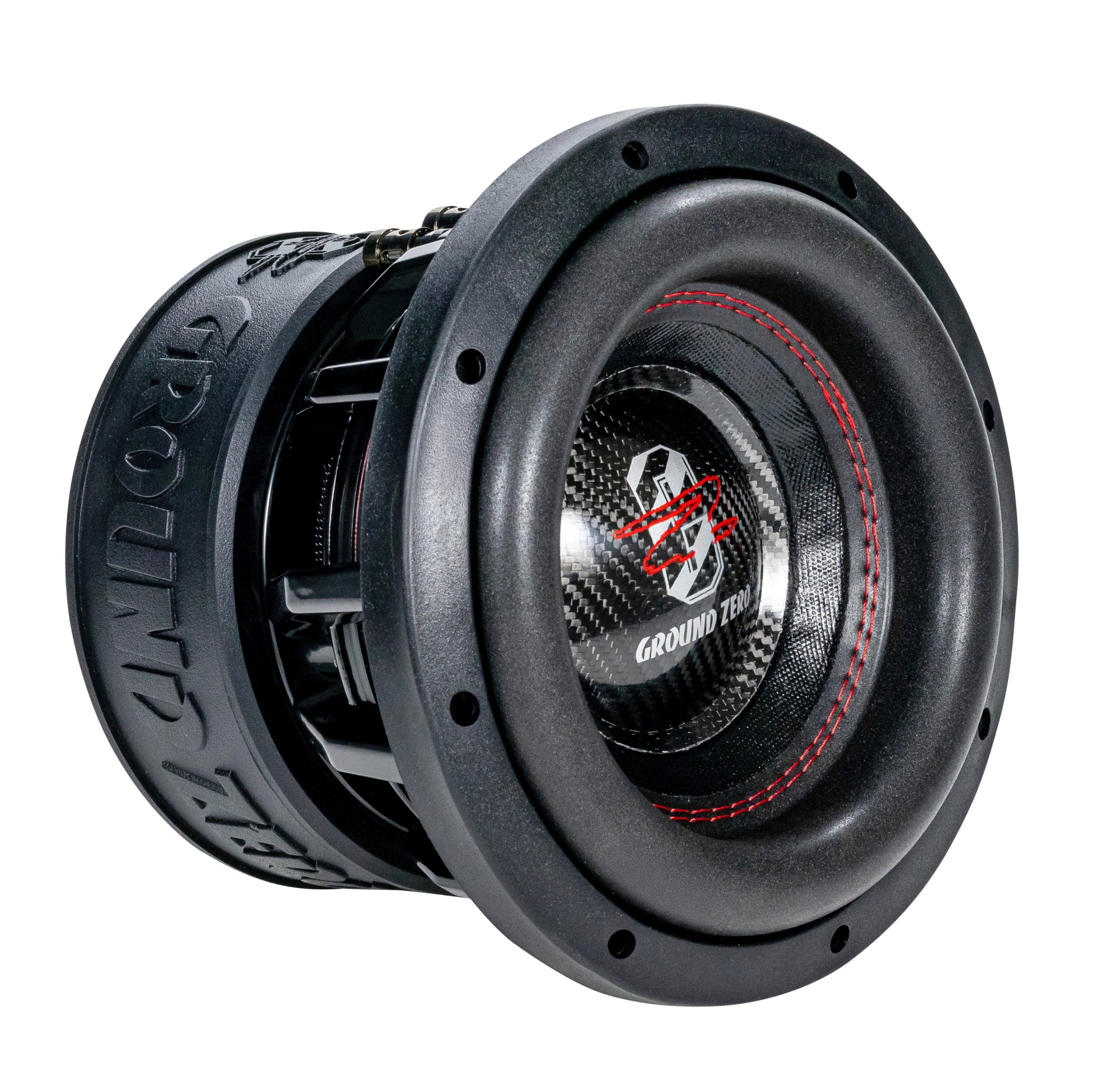
Subwoofer Ground Zero GZHW 20-D1
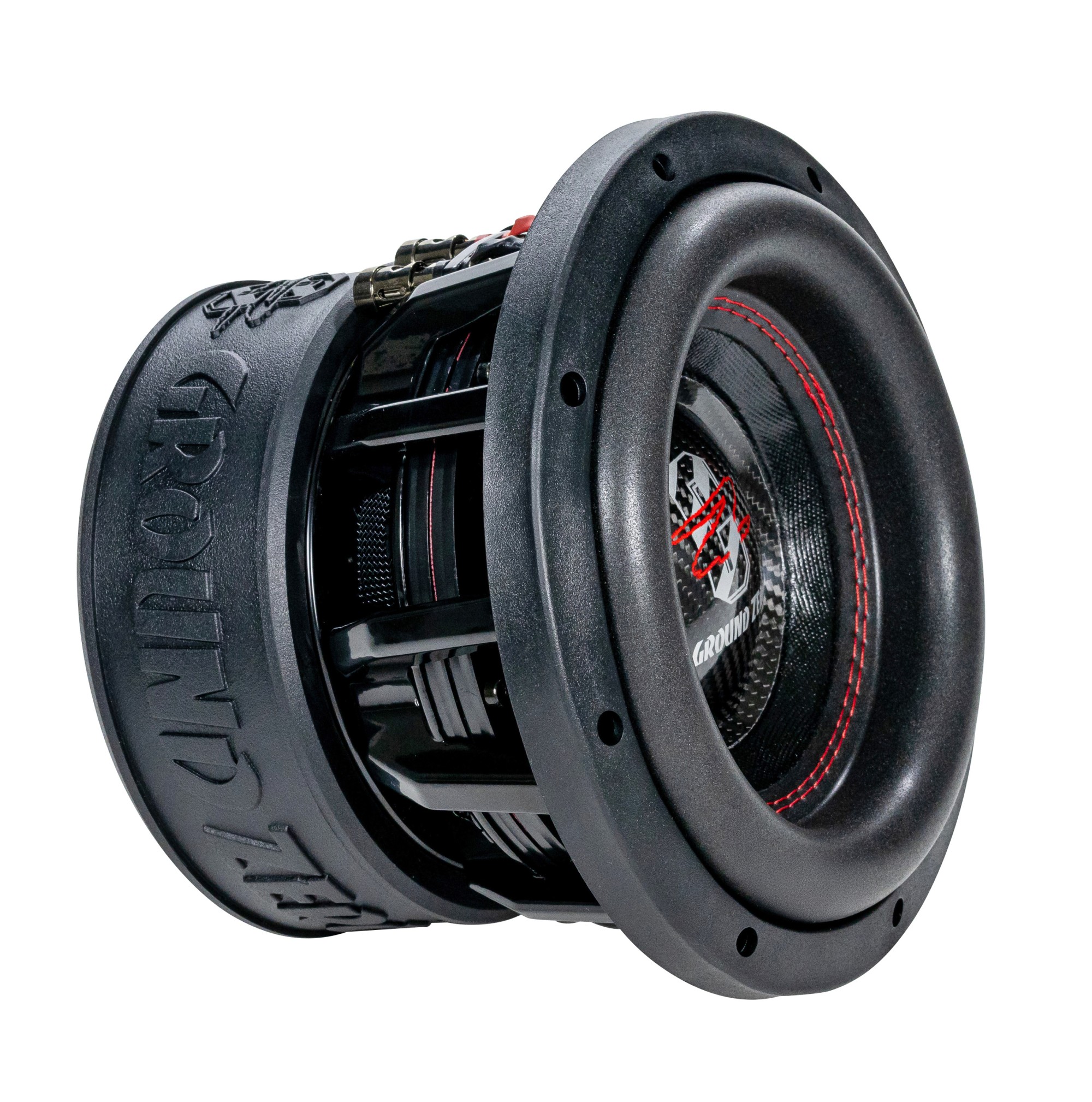
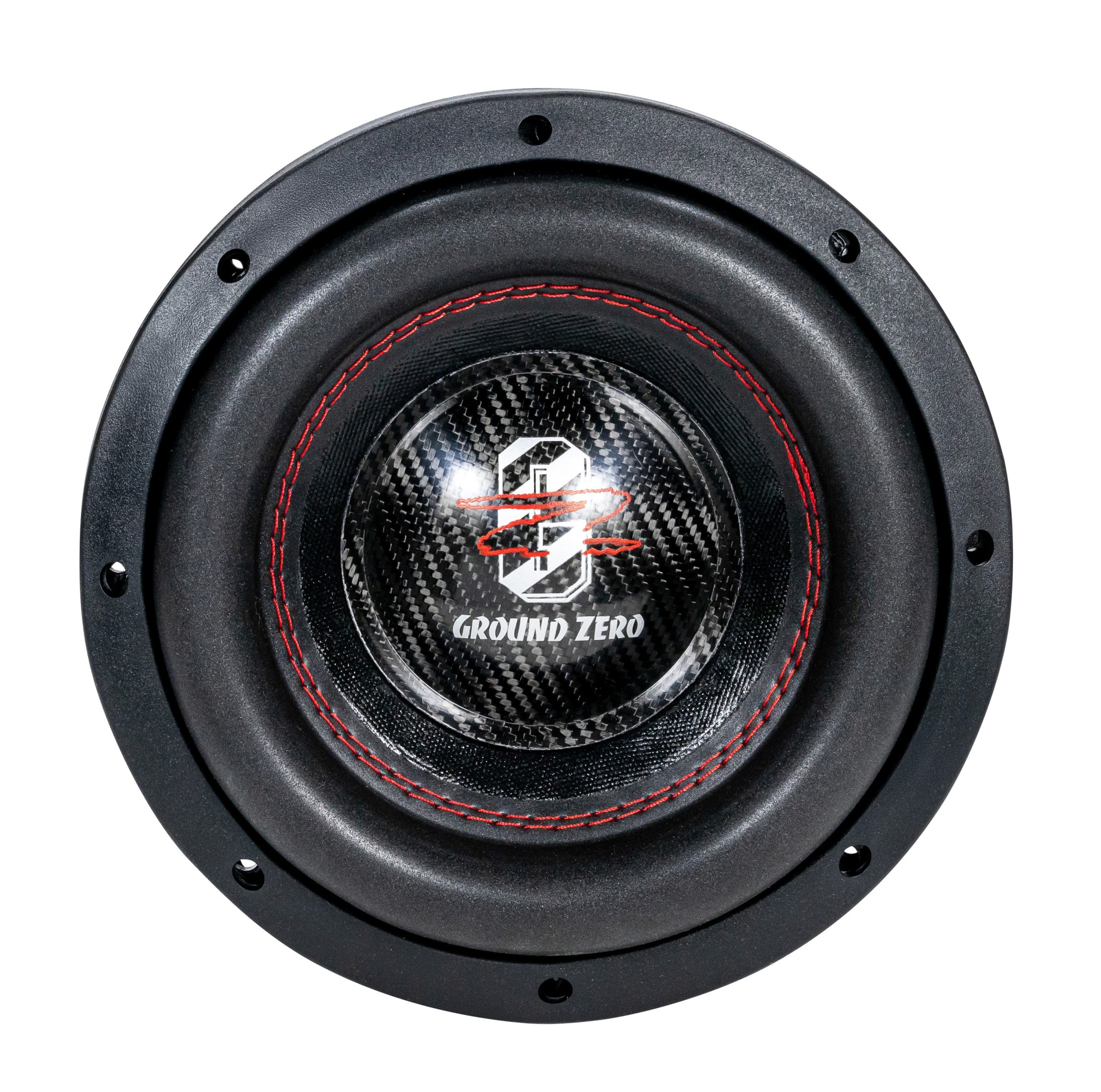
Ground Zero GZHW 20-D1 is a high-performance subwoofer designed for SPL applications where the goal is to achieve maximum sound pressure while maintaining compact dimensions. The model comes from the updated Hydrogen series, which brings not only a modernized design but also improved materials and construction solutions with an emphasis on higher power handling and overall performance. Despite its compact size the subwoofer offers 700 W RMS, which makes it suitable for more demanding installations that emphasize dynamics and bass energy. The construction is based on proven materials and manufacturing processes that combine high mechanical durability with long-term stability under load. A reinforced paper cone combined with a carbon dust cap ensures the necessary stiffness and control even under high loads, while the long-throw suspension enables efficient transfer of energy into the space. The overall design is adapted for installations in smaller enclosures, where the subwoofer can deliver a pronounced and dynamic bass performance with emphasis on stability and reliability.Řada Hydrogen – vyvážený výkon a kvalita zvuku
The Ground Zero Hydrogen range represents the mid-level in the manufacturer's portfolio and is engineered with a focus on combining high-quality sound and increased power reserve. Speakers in this range offer a neutral and pleasant sonic character, making them a versatile solution for a wide spectrum of installations. The subwoofers, on the other hand, are conceived with emphasis on power and dynamics while maintaining good control even under higher loads, allowing a pronounced bass presentation even in demanding SPL applications. The range is complemented by compact class D amplifiers, which due to their small dimensions are ideal for installation into modern vehicles with limited space. Despite their compact design they retain high power and the sound quality characteristic of Ground Zero.
Main features
- 8" Hydrogen series SPL subwoofer.
- 700 W RMS power for long-term operation without loss of control.
- Maximum handling up to 1500 W (SPL) for short-term power peaks.
- Optimized using Klippel® for linear behavior and efficient use of excursion.
- Reinforced paper cone for high mechanical durability.
- Carbon dust cap to reinforce the cone's centre.
- Long-throw compound surround for maximum use of excursion.
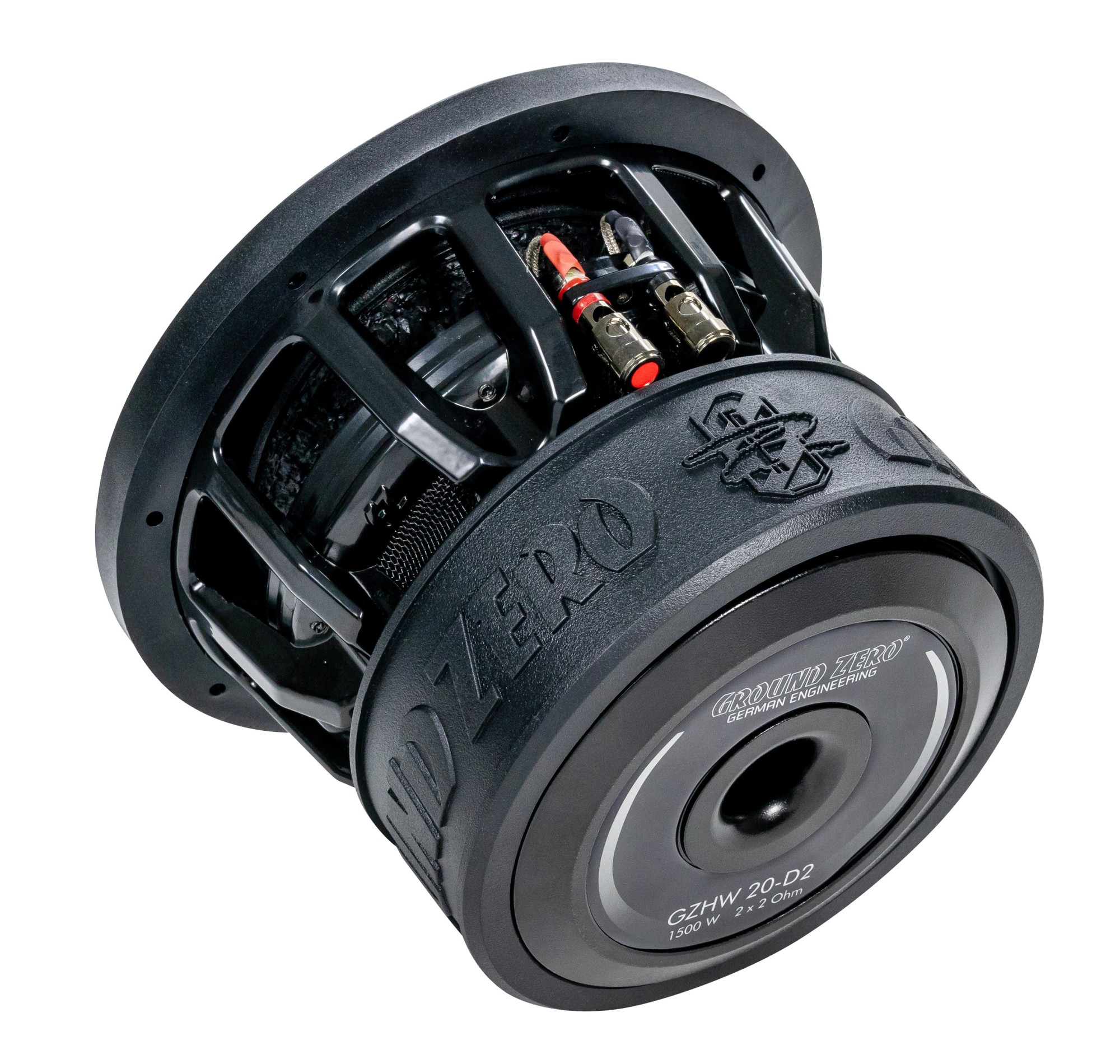
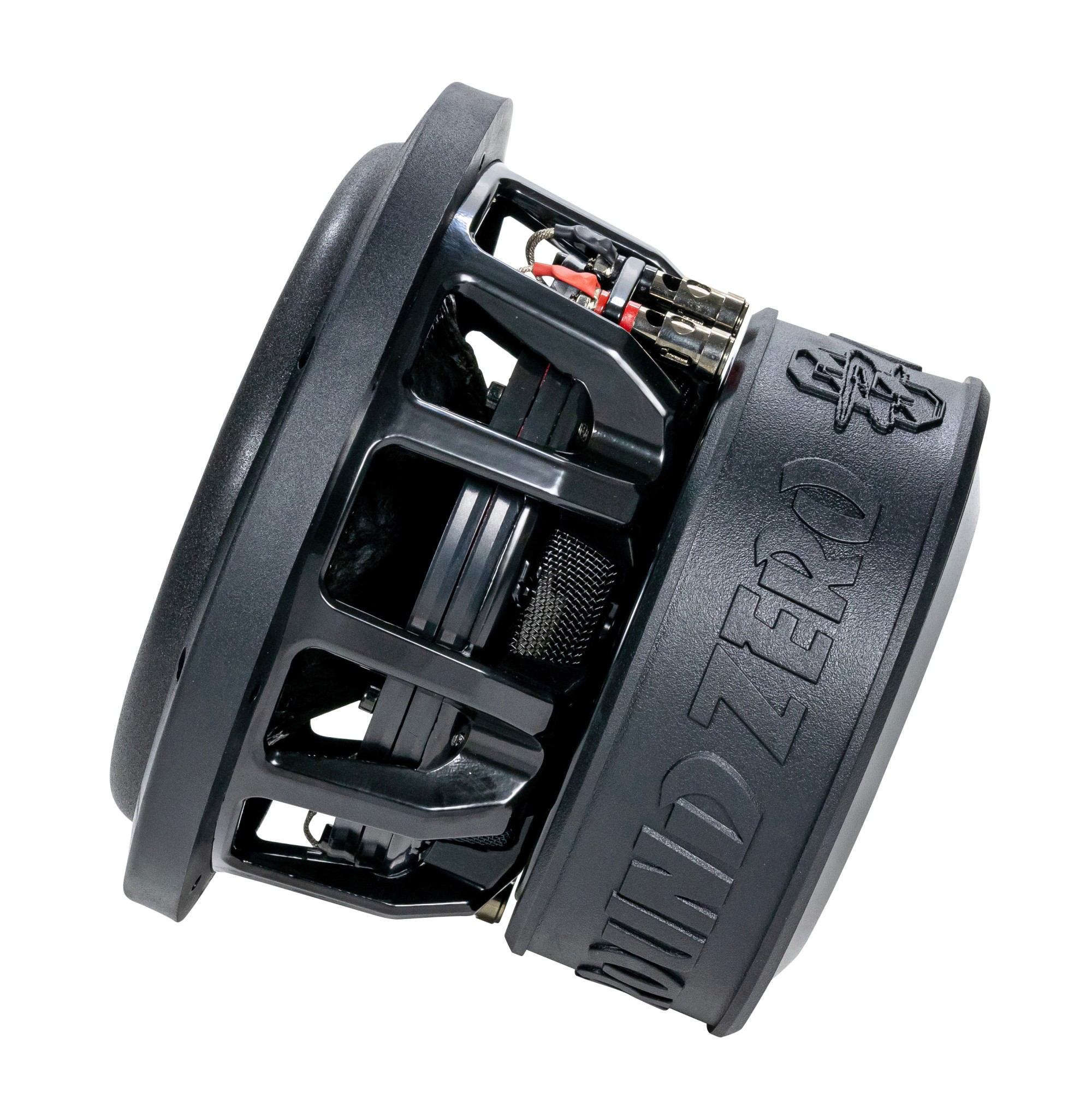
- 63 mm copper voice coil with high thermal resistance.
- Dual 1-ohm impedance for flexible wiring.
- Massive die-cast aluminum basket with high rigidity.
- Two-layer Polycot spider for stable and precise cone guidance.
- Design optimized for compact bass-reflex enclosures.
About the brand
Ground Zero is a German brand operating in car audio since 1995, which has long held a strong position thanks to its focus on technical development and build quality. The range includes complete vehicle audio solutions – from speakers through subwoofers to amplifiers, both for sound quality (SQ) oriented applications and for maximum sound pressure (SPL). Ground Zero products are known for robust construction, high power handling and an emphasis on accurate reproduction, which is reflected in results at international competitions. In development the manufacturer uses modern measurement technologies including the Klippel® system and CEA standards, which help ensure consistent and verifiable parameters. The brand philosophy summarized by the slogan "Respect The Music" refers to the effort to reproduce music as faithfully as possible without unnecessary effects and distortion.
| Catalog number | GZHW 20-D1 |
| Brand | Ground Zero |
| Links | Official web presentation |
| Subwoofer diameterThe diameter of the subwoofer is indicated on the screw holes. The overall outer diameter of the subwoofer is usually 1-2 cm wider, depending on the size category of the subwoofer. For a 30 cm subwoofer, the outer diameter incl. protective rubber 31.8 cm and in the 25 cm subwoofer it is 26.5 cm incl. protective rubbers. | 200 mm (8") |
| RMS powerThe RMS power of the subwoofer is the constant power of continuous use of the subwoofer. If the power is exceeded for a longer period of time, irreversible damage may occur, or to burn out the voice coil of the subwoofer. | 700 W |
| Max. (maximum performancePeak performance , which the subwoofer can play momentarily (approx. 0.5 s), for example when hitting drums in a song. If the maximum power is exceeded, damage can quickly occur, or to burn out the voice coil of the subwoofer. | 1500 W |
| Sensitivity (SPL 2.83V/1m)Subwoofer sensitivity or efficiency. The sensitivity of the subwoofer is given in decibels (dB) and, in simple terms, means that the higher the value, the lower the demands on the power of the amplifier. This is a de facto rating of how a subwoofer converts watts to sound. Sensitivity ratings are in noise level measured at 1 meter from the subwoofer using 1 W (watt of power) or using 2.83 volts at the source at 1 meter. A higher decibel level means the subwoofer is louder with less power. For every 3 dB increase in sensitivity, the subwoofer requires half the power to reproduce the same volume. For example, if an 88 dB subwoofer needs 300 Watts to produce a certain volume, then a subwoofer with 91 dB sensitivity needs only 150 Watts to reach the same efficiency. | 83 dB |
| Sensitivity (SPL 1W/1m)Subwoofer sensitivity or efficiency. The sensitivity of the subwoofer is given in decibels (dB) and, in simple terms, means that the higher the value, the lower the demands on the power of the amplifier. This is a de facto rating of how a subwoofer converts watts to sound. Sensitivity ratings are in noise level measured at 1 meter from the subwoofer using 1 W (watt of power) or using 2.83 volts at the source at 1 meter. A higher decibel level means the subwoofer is louder with less power. For every 3 dB increase in sensitivity, the subwoofer requires half the power to reproduce the same volume. For example, if an 88 dB subwoofer needs 300 watts to produce a certain volume, then a 91 dB subwoofer needs only 150 watts to reach the same efficiency. | 80 dB |
| ImpedanceImpedance - measurement of electrical resistance. When buying a subwoofer, it is very important that everyone make sure that the impedance matches the amplifier that you are connecting to it. For subwoofers with a double voice coil, we recommend following the information in the advice center! Example: A 2 Ohm subwoofer cannot be connected to an amplifier that is only stable up to 4 Ohms. A 4 Ohm subwoofer can easily be used on an amplifier that is stable up to 2 Ohms. Connecting a 4 Ohm subwoofer to an amplifier that is stable up to 4 Ohms also without problems. The most common subwoofer impedance is 4 Ohm. | 1 + 1 Ω |
| Subwoofer diaphragm materialThe specific material from which the subwoofer membrane is made. | Pressed paper / carbon dust cap |
| Subwoofer mounting depthThe mounting depth of the subwoofer is measured from the bottom edge of the magnet to the bottom edge of the subwoofer's metal or cast basket. | 145 mm |
| Recommended enclosure volumeThe closed enclosure is characterized by a simple construction. Closed enclosures are usually smaller than bass-reflex enclosures, and a special damping fleece is used for their damping. A closed baffle has the advantage of preventing an acoustic short between the front and back radiation of the subwoofer diaphragm. The disadvantage is that the closed enclosure raises the natural resonance frequency of the used subwoofer and thereby also increases the lower limit frequency. This is because the back side of the diaphragm is forced to compress and dilute the air inside the enclosure when the subwoofer is radiating in a closed enclosure. This adds to the inherent stiffness of the subwoofer's oscillation system the stiffness of the air in the closed enclosure. This causes an increase in the stiffness of the oscillating system and thus an increase in the resonant frequency of the entire system: subwoofer -> loudspeaker. The increase in resonant frequency for a given subwoofer is greater, the smaller the volume of air in the closed enclosure. The relatively small volume of air in the closed enclosure acts on the subwoofer as an acoustic spring when radiating the back side of the membrane into the enclosed enclosure. USE: Mainly for quality bass listening in the entire band with an emphasis on detail and accurate reproduction in the lower band. Pros and cons: + pure reproduction + small closets + easier tuning - low level of efficiency in deep bass - loudness only at the cost of enormous deflection of the membrane - a significant acoustic pressure cannot be expected | 7 l |
| Recommended bass reflex speaker volumeA bass reflex enclosure is designed in the same way as a closed enclosure, but it also has a so-called bass reflex mouthpiece, or "bass reflex" or slot. Needle foam is used to dampen bass reflex enclosures. USE: The ideal use is in cases where the listener wants to achieve a high volume and a good sound pressure level. It is the best compromise between sound quality and performance and is also the most commonly used Pros and cons: + good efficiency in deep bass + a small deflection of the membrane is enough for a large volume - reproduction less accurate than with closed enclosures | 21 l |
| Subwoofer voice coil diameterThe larger the diameter of the voice coil, the more load capacity the subwoofer has, in layman's terms. | 63 mm (2.5") |
| Fs - resonant frequencyFs - is the lower resonant frequency. This parameter is the de facto free air resonant frequency of the subwoofer. Simply put, it is the point at which the weight of the subwoofer's moving parts equals the force of the subwoofer's suspension while it is in motion. If you've ever seen a piece of string start to hum uncontrollably in the wind, you've seen the effect of reaching a resonant frequency. The weight of the moving parts and the stiffness of the suspension (surround and spider) are key elements that affect the resonant frequency. As a general rule, a lower Fs indicates a subwoofer that would be better at reproducing low frequencies than a subwoofer with a higher Fs. However, this is not always the case, as other important parameters of the subwoofer also enter the resulting sound. | 38.9 Hz |
| Xmax + -Xmax - the maximum deflection of the subwoofer diaphragm in one direction – it is not a sum, or an abbreviation for the maximum linear deflection. The subwoofer output becomes non-linear as the voice coil begins to leave the magnetic gap. | 40 mm |
| MassSubwoofer weight in kilograms. The weight is usually given net, i.e. without packaging. | 8.8 Kg |