
Subwoofer Crunch CRB501
More about the product
- You can return the goods to us within 14 days
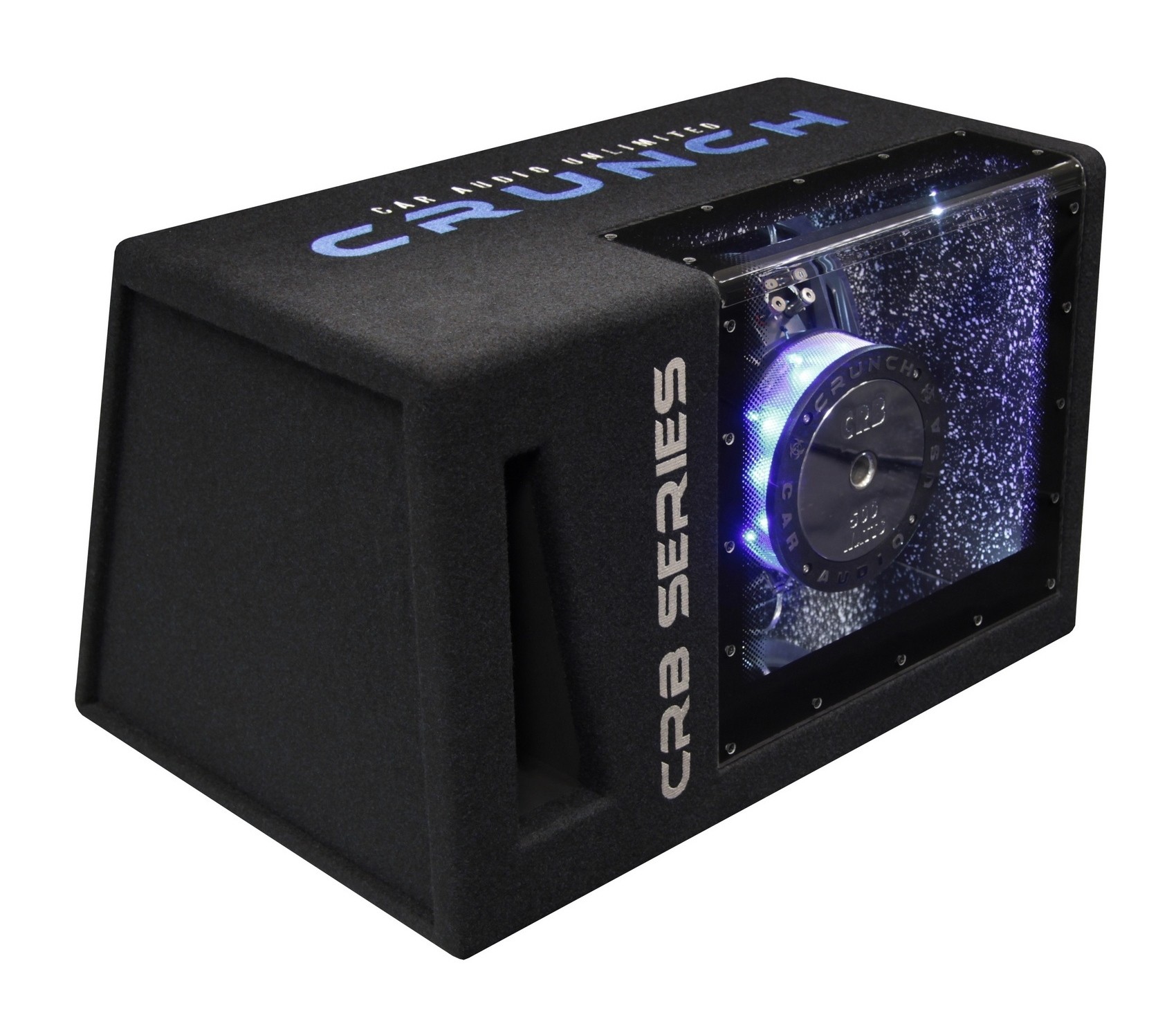
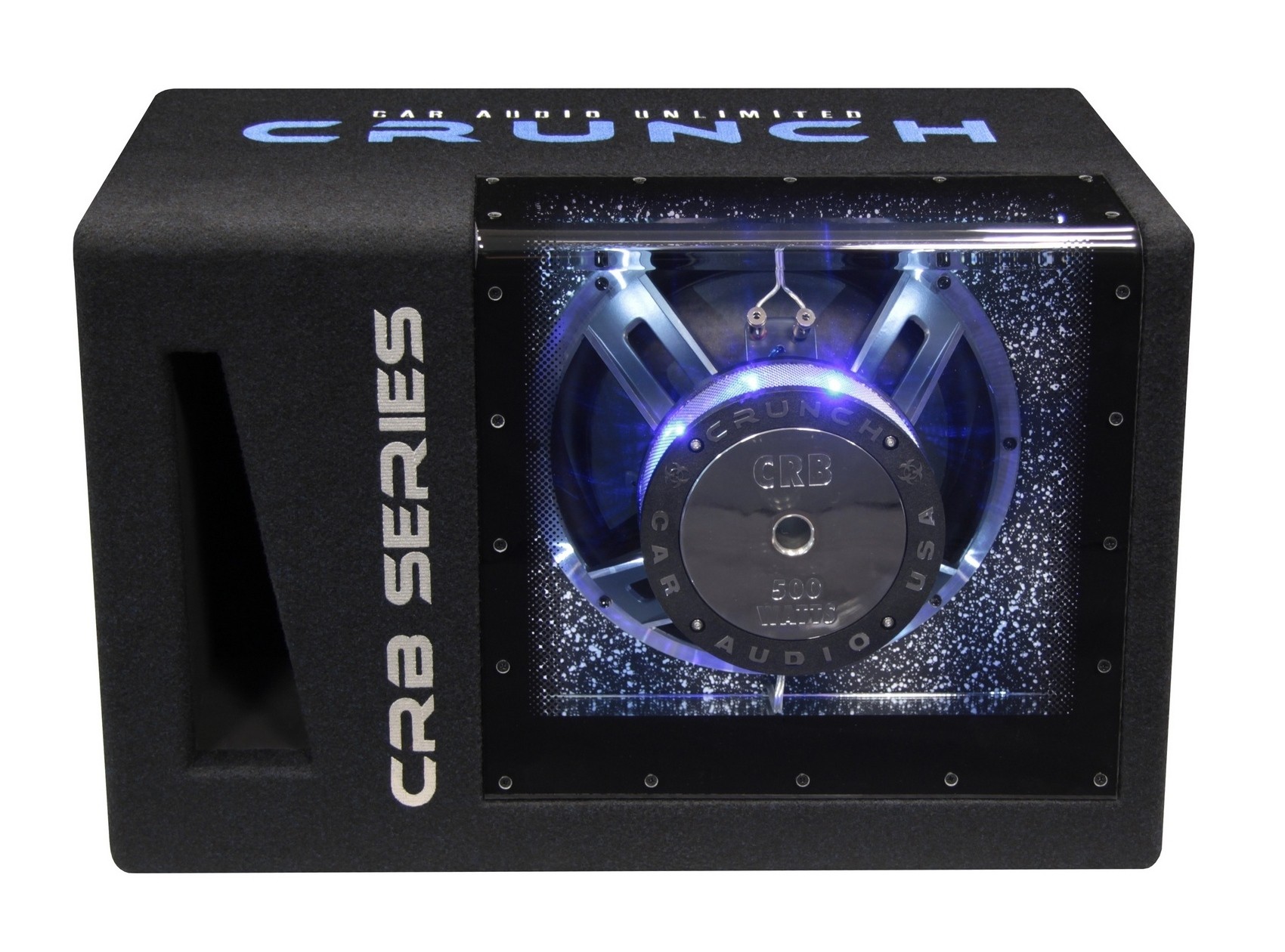
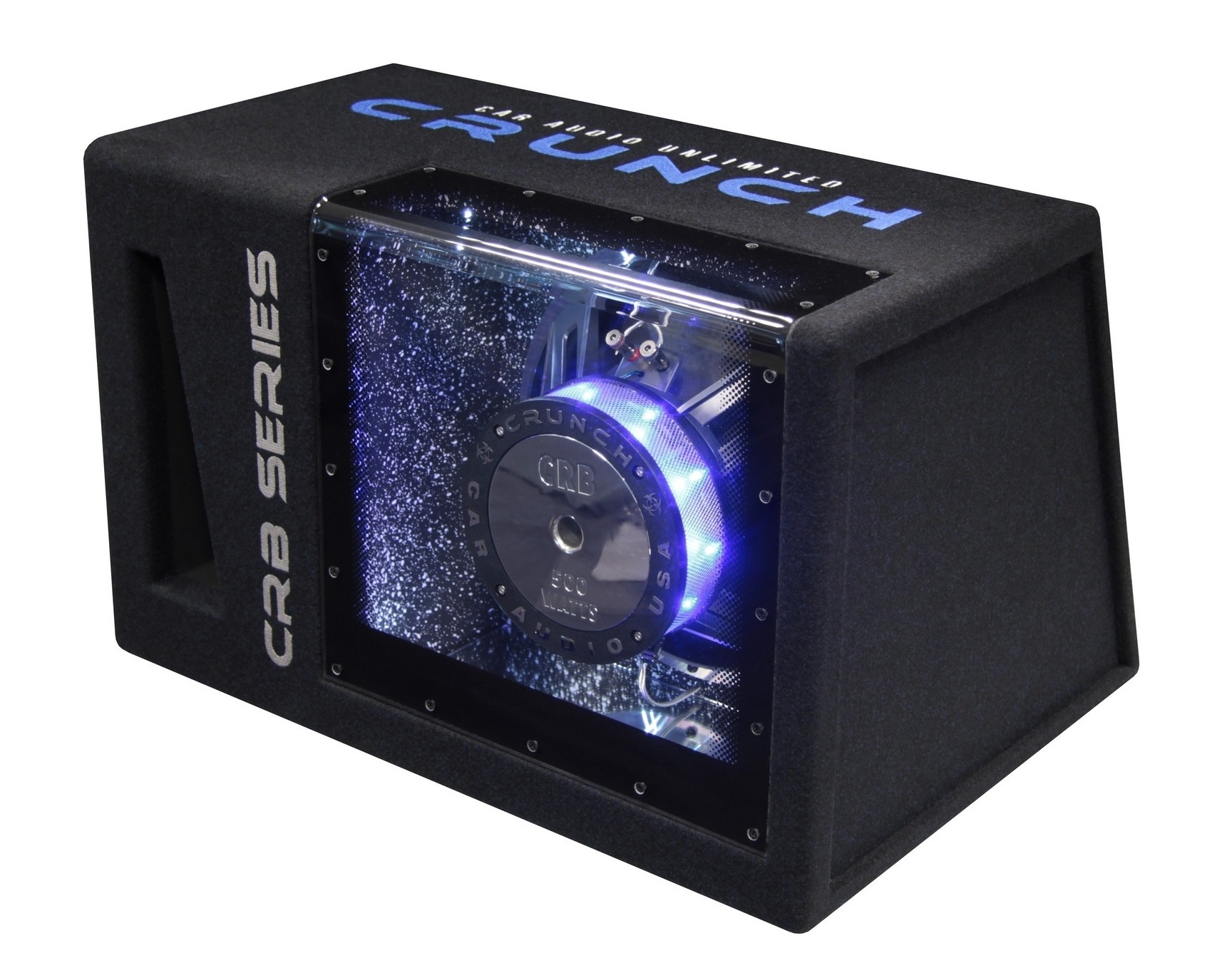
Subwoofer Crunch CRB501
Crunch CRB501 is a 300 mm (12\") subwoofer system in a single bandpass enclosure, designed with an emphasis on high sensitivity and pronounced acoustic pressure. The bandpass design allows efficient use of the driver’s energy and achieves high volume with relatively low amplifier power. Thanks to this concept the system is tuned primarily for a dynamic and punchy bass response in the typical music band. Inside the enclosure sits a 12\" subwoofer with a cast aluminum basket and a 64 mm voice coil, working in a combination of sealed and bass-reflex chambers. This type of construction helps increase efficiency and focus the energy into a specific frequency band, resulting in quick bass attack and strong pressure. The sturdy enclosure is complemented by an acrylic window that provides a view of the rear of the driver. The interior is further enhanced by white internal lighting and blue illumination of the magnet, creating a striking visual effect in the trunk.
Main features
- 300 mm (12\") subwoofer system in a bandpass enclosure.
- Subwoofer with a cast aluminum basket.
- 64 mm voice coil.
- Acrylic window showing the rear of the driver.
- White internal lighting and blue magnet illumination.
- Decorative logos inside the enclosure.
- Sturdy enclosure optimized for high acoustic pressure.
About the brand
Crunch has been active in the car audio market for more than three decades. The brand originated in the United States in the 1980s and gradually established itself among manufacturers of affordable audio equipment intended for everyday and less demanding installations. Later, the brand became part of the American Maxxsonics USA group, which also includes other well-known car audio brands such as Hifonics, MB Quart and Autotek. Within this group Crunch has long been positioned as a budget-friendly alternative focused on simple and functional solutions for enhancing and expanding factory audio systems. Crunch’s range includes a wide portfolio of amplifiers, speakers, subwoofers and accessories offering good value for money.
| Catalog number | CRB501 |
| Brand | Crunch |
| Links | Official web presentation |
| RMS powerThe RMS power of the subwoofer is constant power. This is also the performance of continuous use of the subwoofer. If you exceed the power for a longer period of time, irreversible damage or subwoofer voice coil burning! You can tell if the subwoofer is overloaded by the vibration of the subwoofer membrane. | 500 W |
| Max. (maximum performancePeak performance , which the subwoofer can play momentarily (approx. 0.5 s), for example when hitting drums in a song. If the maximum power is exceeded, damage can quickly occur or subwoofer voice coil burning! | 1000 W |
| The diameter of the subwoofer in the box | 12" (300 mm) |
| ImpedanceImpedance - measurement of electrical resistance. When buying a subwoofer, it is very important that everyone make sure that the impedance is compatible with the amplifier that you are connecting to it. For subwoofers with a double voice coil, we recommend following the information in the advice center! Example: A 2 Ohm subwoofer cannot be connected to an amplifier that is only stable up to 4 Ohms. A 4 Ohm subwoofer can easily be used with an amplifier that is stable up to 2 Ohms. Connecting a 4 Ohm subwoofer to an amplifier that is stable up to 4 Ohms also without problems. The most common subwoofer impedance is 4 Ohm. Example: A 2 Ohm subwoofer cannot be connected to an amplifier that is only stable up to 4 Ohms! A 4 Ohm subwoofer can easily be used with an amplifier that is stable up to 2 Ohms. The most common impedance of subwoofers is 1 x 4 Ohm. | 4 Ω |
| Loudspeaker typeThe closed enclosure is characterized by a simple construction. Closed enclosures are usually smaller than bass-reflex enclosures, and a special damping fleece is used for their damping. A closed baffle has the advantage of preventing an acoustic short between the front and back radiation of the subwoofer diaphragm. The disadvantage is that the closed enclosure raises the natural resonance frequency of the used subwoofer and thereby also increases the lower limit frequency. This is because the back side of the diaphragm is forced to compress and dilute the air inside the enclosure when the subwoofer is radiating in a closed enclosure. This adds to the inherent stiffness of the subwoofer's oscillation system the stiffness of the air in the closed enclosure. This causes an increase in the stiffness of the oscillating system and thus an increase in the resonant frequency of the entire system: subwoofer -> loudspeaker. The increase in resonant frequency for a given subwoofer is greater, the smaller the volume of air in the closed enclosure. The relatively small volume of air in the closed enclosure acts on the subwoofer as an acoustic spring when radiating the back side of the membrane into the enclosed enclosure. USE: Mainly for quality bass listening in the entire band with an emphasis on detail and accurate reproduction in the lower band. Pros and cons: + pure reproduction + small closets + easier tuning - low level of efficiency in deep bass - loudness only at the cost of enormous deflection of the diaphragm - a significant acoustic pressure cannot be expected The bass reflex enclosure is designed in the same way as a closed enclosure, but it also has a so-called bass reflex mouthpiece, or "bass reflex". Needle foam is used to dampen bass reflex enclosures. USE: The ideal use is in cases where the listener wants to achieve a high volume and a good sound pressure level. It is the best compromise between sound quality and performance and is also the most commonly used Pros and cons: + good efficiency in deep bass + a small deflection of the membrane is enough for a large volume - reproduction less accurate than with closed enclosures | Bandpass |
| What is the baffle made of?Subwoofer enclosures are usually made of 18-22 mm MDF board or pressed chipboard. Due to its higher strength, MDF board is a better material than ordinary chipboard. | MDF |
| Dimensions of the boxEnclosure dimensions are given as height, width and depth, which is often longer at the bottom edge than at the top, due to the bevel of the rear wall. | 600 x 380 x 450/320 mm |
| Box weight incl. subwoofer | 25 Kg |
Evaluation
You might also be interested
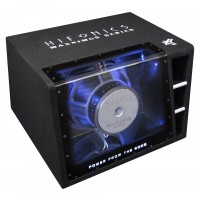
 Quick preview12", 500 W RMS, 4 Ω349,00 EURIn stockHifonics MXZ12BP Free transport
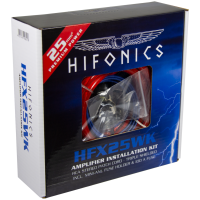
 Quick preview12", 1000 W RMS, 4 Ω479,00 EURRestocking within 1 weekHifonics HF25WK Premium
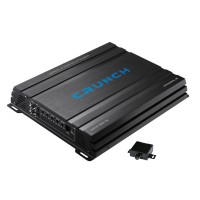
 Quick previewpower cable cross-section 25 mm²57,90 EURRestocking within 1 weekCrunch GPX2200.1D Free transport
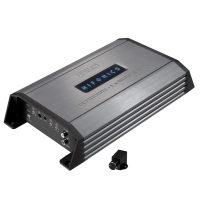
 Quick preview1-channel amplifier, 1 x 500 / 800 / 1100 W RMS (4 / 2 / 1 Ω), Class D229,00 EURIn stockHifonics ZXR1000/1E Free transport
 Quick preview1-channel amplifier, 1 x 500 / 800 / 1000 W RMS (4 / 2 / 1 Ω), class D229,00 EURRestocking within 1 weekCrunch GTX3000.1D Free transport
 Quick preview1-channel amplifier, 1 × 600 / 1000 / 1500 W RMS (4 / 2 / 1 Ω), Class D, remote control249,00 EURWe usually stock in 1 - 3 days