
Subwoofer Autotek A690RX
More about the product
- You can return the goods to us within 14 days
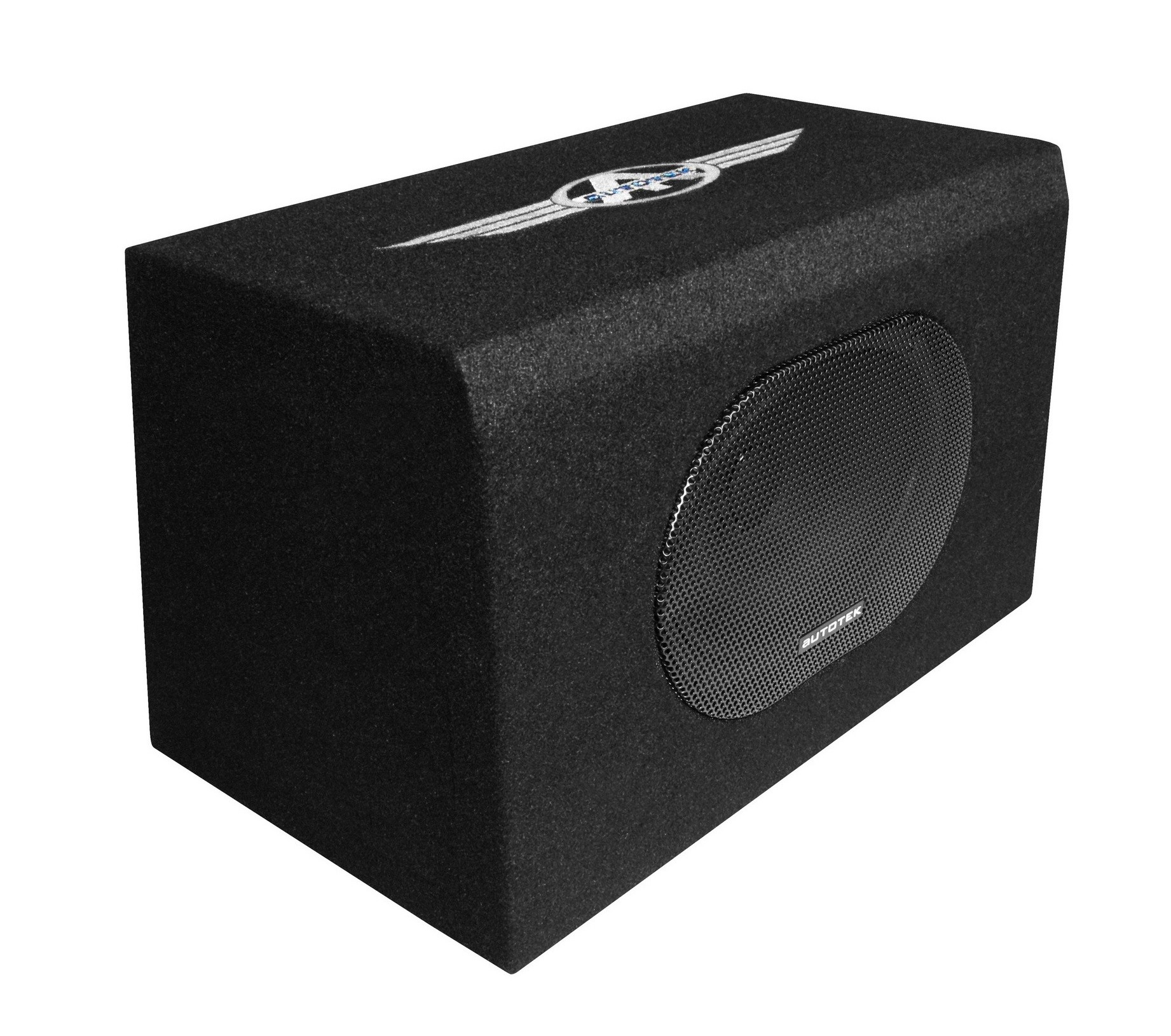
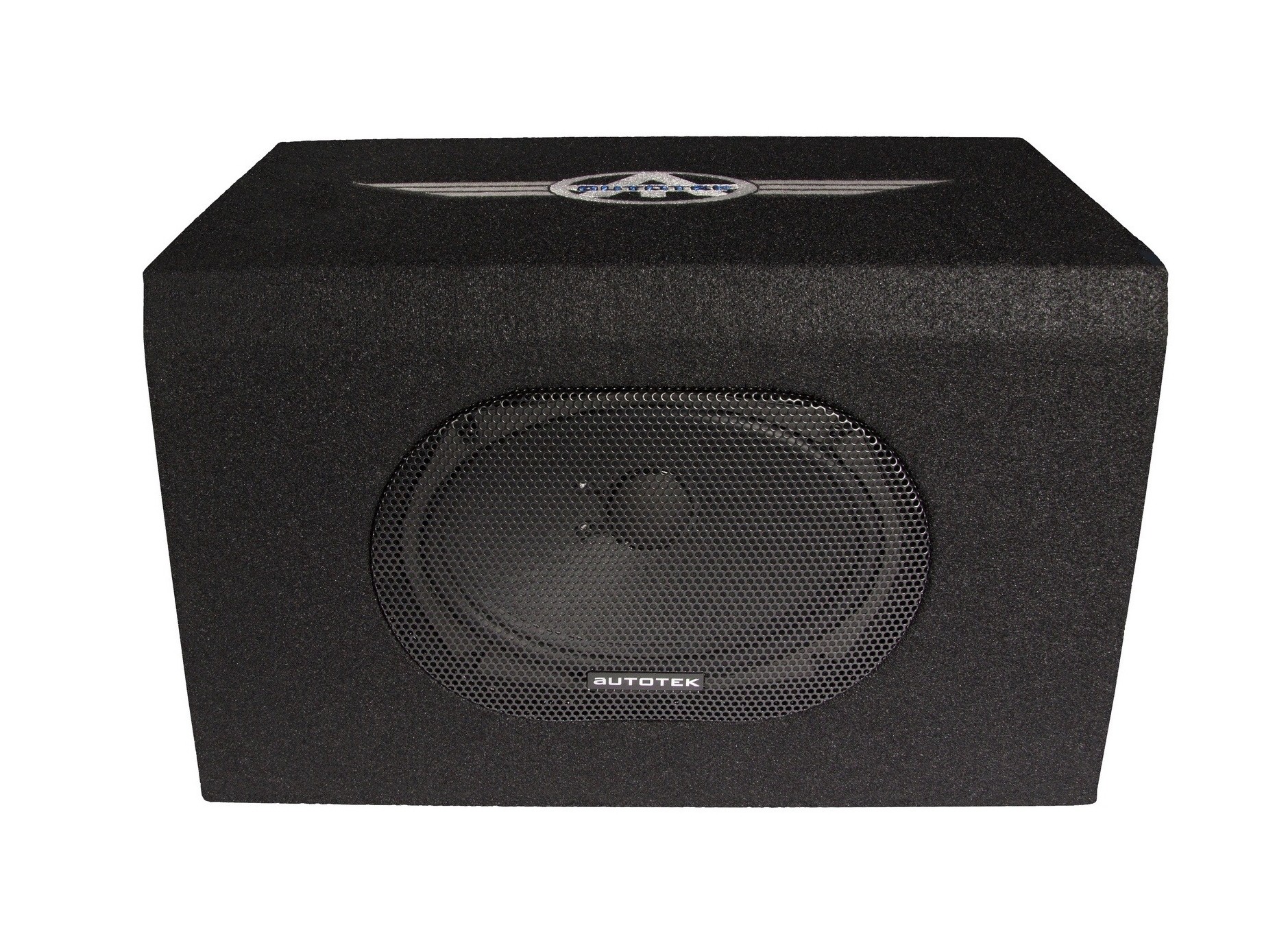
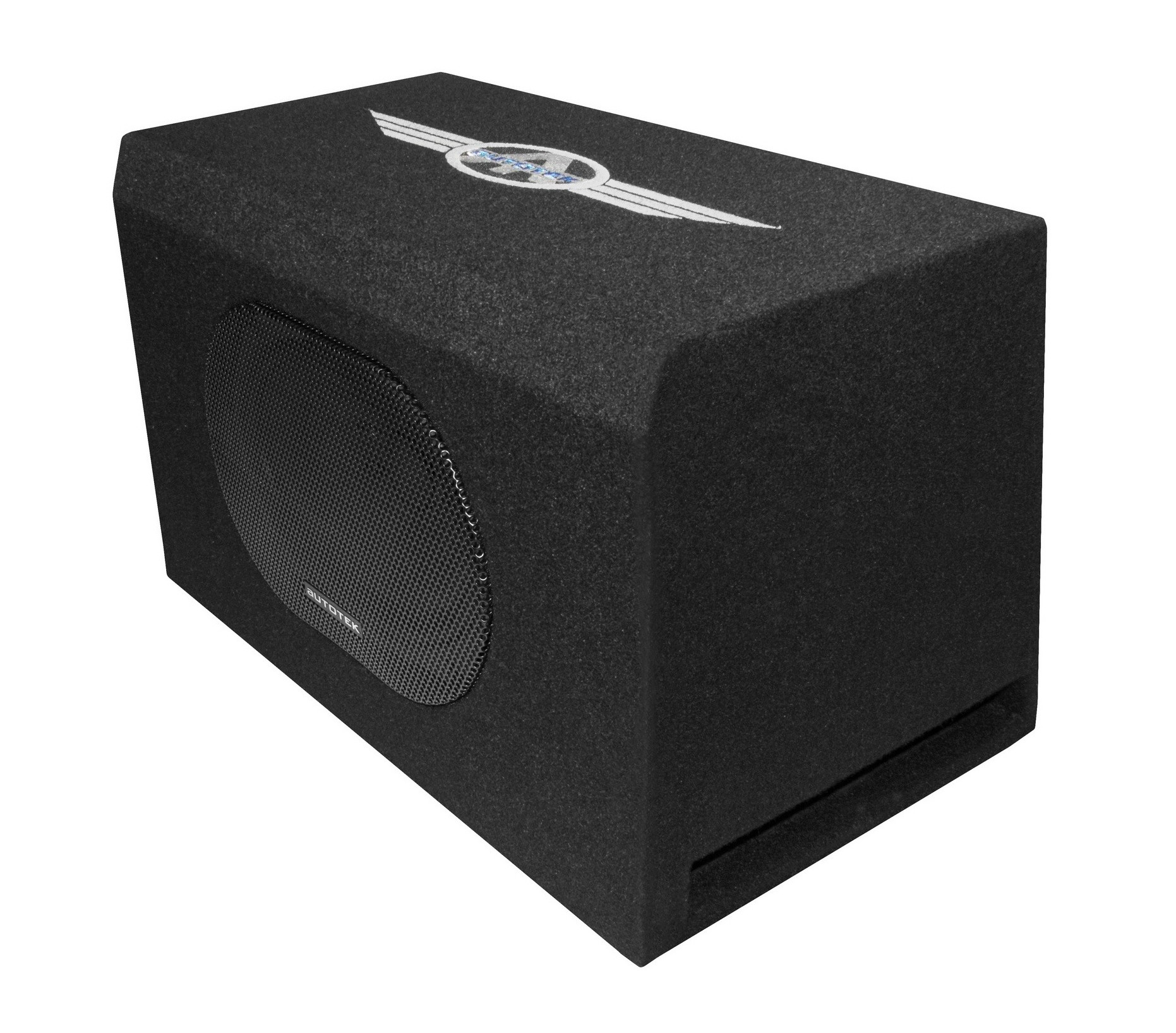
Active subwoofer Autotek A690RX
Autotek A690RX is a passive subwoofer in a compact bass-reflex enclosure, intended for the simple addition of bass in basic audio setups. It is equipped with an oval 6 × 9\" subwoofer that provides a respectable bass foundation while keeping the enclosure compact. The subwoofer is designed for use with an external amplifier and is a suitable choice for installations where an amplifier is already part of the system or is planned to be used. The bass-reflex design helps boost efficiency in the lower range and support bass volume with lower power requirements. The compact design simplifies placement in the trunk while leaving sufficient room for normal vehicle use. The enclosure is finished with a subtle embroidered logo that underscores the simple and functional character of the subwoofer. Autotek A690RX is suitable for modest subwoofer installations where the goal is to add a bass foundation without the need for a large enclosure or complex solution.
Main features
- Passive subwoofer in a bass-reflex enclosure.
- Oval 6 × 9\" subwoofer for compact installations.
- Intended for use with an external amplifier.
- Bass-reflex design for higher efficiency and fuller bass response.
- Compact dimensions that facilitate placement in the trunk.
- Simple, unobtrusive design with an embroidered logo.
About the brand
Autotek is originally a classic American car audio brand that has been on the market since the early 1980s, when it was founded by a group of car enthusiasts. In later years it became part of the Maxxsonics USA group, which incorporated the brand into its broader portfolio and preserved its focus on simple, reliable and affordable audio solutions. Today Autotek offers a basic range of products intended primarily as direct replacements for factory components or for no-fuss audio upgrades without complex modifications.
| Catalog number | A690RX |
| Brand | Autotek |
| Links | Official web presentation |
| RMS powerThe RMS power of the subwoofer is constant power. This is also the performance of continuous use of the subwoofer. If you exceed the power for a longer period of time, irreversible damage or subwoofer voice coil burning! You can tell if the subwoofer is overloaded by the vibration of the subwoofer membrane. | 200 W |
| Max. (maximum performancePeak performance , which the subwoofer can play momentarily (approx. 0.5 s), for example when hitting drums in a song. If the maximum power is exceeded, damage can quickly occur or subwoofer voice coil burning! | 400 W |
| The diameter of the subwoofer in the box | 6 x 9\" (15 x 23 cm) |
| ImpedanceImpedance - measurement of electrical resistance. When buying a subwoofer, it is very important that everyone make sure that the impedance is compatible with the amplifier that you are connecting to it. For subwoofers with a double voice coil, we recommend following the information in the advice center! Example: A 2 Ohm subwoofer cannot be connected to an amplifier that is only stable up to 4 Ohms. A 4 Ohm subwoofer can easily be used with an amplifier that is stable up to 2 Ohms. Connecting a 4 Ohm subwoofer to an amplifier that is stable up to 4 Ohms also without problems. The most common subwoofer impedance is 4 Ohm. Example: A 2 Ohm subwoofer cannot be connected to an amplifier that is only stable up to 4 Ohms! A 4 Ohm subwoofer can easily be used with an amplifier that is stable up to 2 Ohms. The most common impedance of subwoofers is 1 x 4 Ohm. | 4 Ω |
| Frequency rangeThe ability of the subwoofer to play a signal from the lowest frequency to the highest, or the ability of a subwoofer to faithfully reproduce sound in a specific frequency band. Subwoofers ideally play from 20 - 150 Hz. Professionally: In the frequency range from 40 to 16,000 Hz, the vast majority of fundamental and overtones (harmonics) of all musical instruments are found. We are interested in the course of the radiated sound pressure in this range of frequencies when the loudspeaker system is supplied with constant power. We call this course the frequency characteristic, which tells us the level of radiated sound pressure in decibels (dB) depending on the frequency. The frequency characteristic of a speaker or speaker system can be expressed most succinctly with a graph. Mostly, however, the frequency characteristic is indicated by indicating the maximum tolerance of the sound pressure in the given frequency range, e.g. 50 to 15,000 Hz -+ 6 dB. Since the frequency characteristics of loudspeakers and systems in general are quite uneven, some manufacturers do not even specify this maximum tolerance of sound pressure in decibels in their catalogs for reasons of prestige. Data impoverished in this way is unfortunately worthless. What is valid is that the manufacturer offers a speaker system with a frequency range of 30 to 20,000 Hz, if he is worried about stating the maximum unevenness of the sound pressure in this range, because he can have a tolerance of, for example, +- 20 dB. The unevenness or undulation of the frequency curve in good speaker systems for high-quality music performance should not exceed +-3 dB in the 80 to 12,000 Hz band and +-6 dB in the 40 to 16,000 Hz band. Greater unevenness already depletes or emphasizes certain tonal areas, which can cause audible or even disturbing distortion. The proportion between fundamental tones and higher harmonics also changes, thereby changing the color of the sound, and individual musical instruments as well as the entire musical image sound unnatural. | 40 - 300 Hz |
| Loudspeaker typeThe closed enclosure is characterized by a simple construction. Closed enclosures are usually smaller than bass-reflex enclosures, and a special damping fleece is used for their damping. A closed baffle has the advantage of preventing an acoustic short between the front and back radiation of the subwoofer diaphragm. The disadvantage is that the closed enclosure raises the natural resonance frequency of the used subwoofer and thereby also increases the lower limit frequency. This is because the back side of the diaphragm is forced to compress and dilute the air inside the enclosure when the subwoofer is radiating in a closed enclosure. This adds to the inherent stiffness of the subwoofer's oscillation system the stiffness of the air in the closed enclosure. This causes an increase in the stiffness of the oscillating system and thus an increase in the resonant frequency of the entire system: subwoofer -> loudspeaker. The increase in resonant frequency for a given subwoofer is greater, the smaller the volume of air in the closed enclosure. The relatively small volume of air in the closed enclosure acts on the subwoofer as an acoustic spring when radiating the back side of the membrane into the enclosed enclosure. USE: Mainly for quality bass listening in the entire band with an emphasis on detail and accurate reproduction in the lower band. Pros and cons: + pure reproduction + small closets + easier tuning - low level of efficiency in deep bass - loudness only at the cost of enormous deflection of the diaphragm - a significant acoustic pressure cannot be expected The bass reflex enclosure is designed in the same way as a closed enclosure, but it also has a so-called bass reflex mouthpiece, or "bass reflex". Needle foam is used to dampen bass reflex enclosures. USE: The ideal use is in cases where the listener wants to achieve a high volume and a good sound pressure level. It is the best compromise between sound quality and performance and is also the most commonly used Pros and cons: + good efficiency in deep bass + a small deflection of the membrane is enough for a large volume - reproduction less accurate than with closed enclosures | Bass reflex |
| Dimensions of the boxEnclosure dimensions are given as height, width and depth, which is often longer at the bottom edge than at the top, due to the bevel of the rear wall. | 455 x 285 x 270 / 230 cm |
Evaluation
You might also be interested
 TipQuick previewsubwoofer in enclosure, Ø 12\", 300 W RMS, 4 Ω149,00 EUR1 to 4 weeksHertz DBX 25.3 Free transport
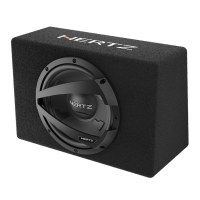 TipQuick previewsubwoofer in box, Ø 10" (250 mm), 150 W RMS, 89 dB (SPL 2.83V/1m), 4 Ω159,00 EURIn stockHifonics TS300R Free transport
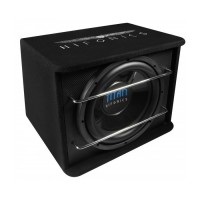 TipQuick preview12", 400 W RMS, 4 Ω169,00 EURIn stockAudison APBX 8 R Free transport
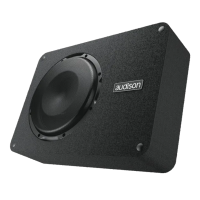 Quick preview8", 250 W RMS, 84 dB (SPL 2.83V/1m), 4 Ω279,00 EURIn stockHertz DP 2.200 Free transport
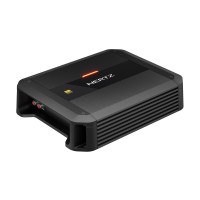 TipQuick preview2-channel amplifier, 2 x 80 / 1 x 220 W RMS (4 Ω), 2 x 110 W RMS (2 Ω), class AB149,00 EURIn stockGladen RC 90c2 G2 Free transport
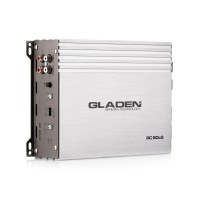 TipQuick preview2-channel, 2 x 85 / 1 x 260 W RMS into 4 Ω, class A/B179,00 EURIn stockMorel MPD 1,500 Free transport
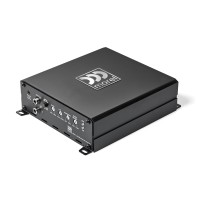 TipQuick preview1-channel amplifier, 1 x 350 / 550 W RMS (4 / 2 Ω), class D239,00 EURIn stockRenegade REN10KIT-ECO
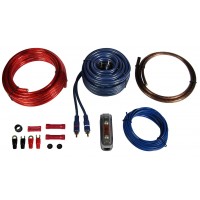 TipQuick previewwiring kit, power cable cross-section 10 mm²18,90 EURIn stock