
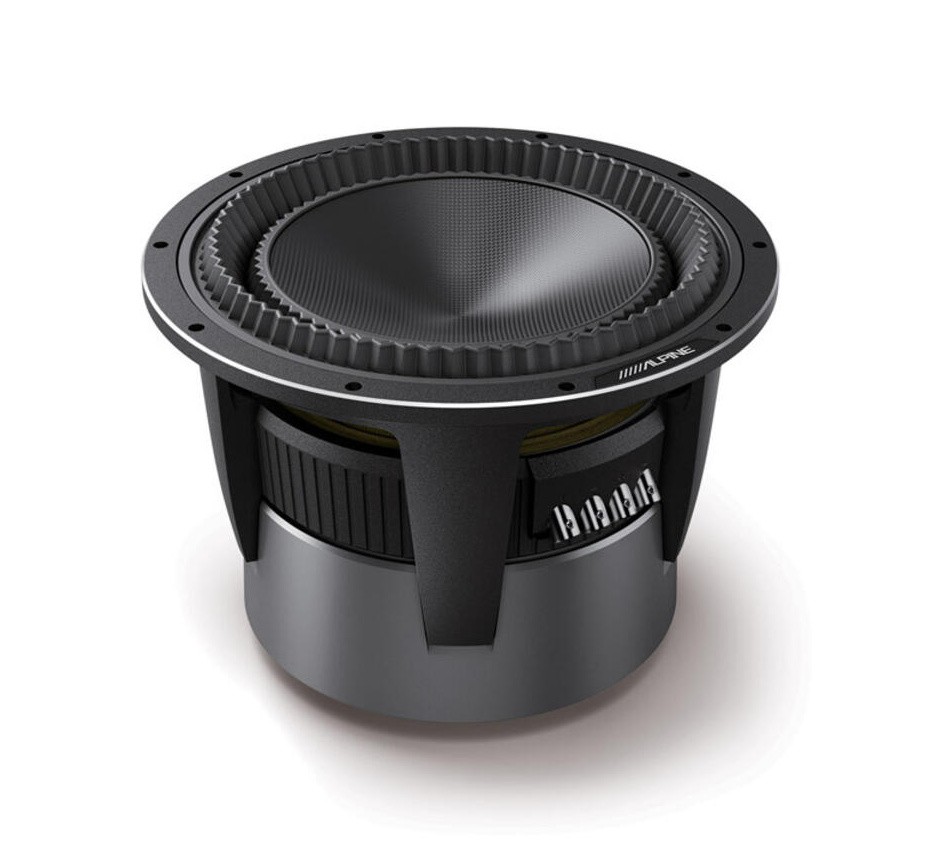
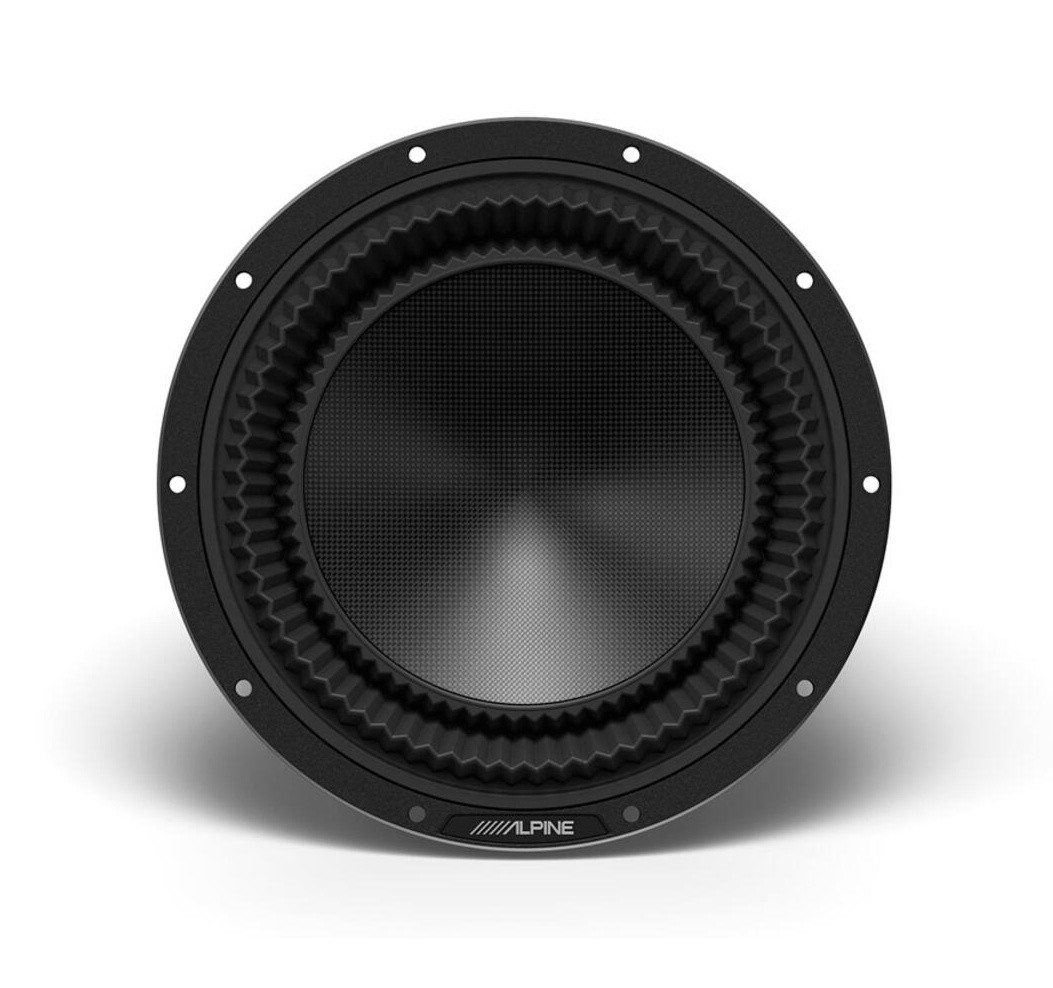
Subwoofer Alpine HDZ-110
subwoofer, Ø 11" (280 mm), 400 W RMS, 2 + 2 Ω
More about the product
More about the product
We will help you with your purchase
- You can return the goods to us within 14 days
Subwoofer Alpine HDZ-110
Alpine has created an all-new "Alpine Status" sound system using the same technical and design concepts used in the third generation AlpineF#1Status Ultra High Definition system to achieve high definition sound at a more affordable price. The Alpine Status system is also extremely flexible: all components can be purchased and used in a "stand-alone" configuration. The massive 28cm HDZ-110 Alpine Status subwoofer features a powerful ferrite magnet to ensure efficient power delivery and boasts an impressive 400W RMS / 1200W Peak Power Handling. The double pickup carbon composite diaphragm minimizes distortion and reproduces clear and precise bass even at high volumes. The HDZ-110 is very similar in look and feel to the AlpineF#1Status subwoofer, using a very similar design and motor assembly, as well as identical construction materials for the highest sound quality.Main features
- High-Resolution Audio Access - The Alpine Status system features many of the technologies, components and materials of the AlpineF#1Status system to achieve ultra-accurate music reproduction - at an affordable price. It is designed to play 192 kHz / 24-bit music tracks that are widely available in many online stores and streaming platforms. High-resolution 192kHz / 24-bit audio playback enables Alpine Status to create an elevated in-vehicle listening experience that mimics the feel of an intimate recording studio session.
- 28 cm high-performance subwoofer - based on the findings from the development of the AlpineF#1Status subwoofer, the 28 cm HDZ-110 Alpine Status subwoofer was created. It features a dual 2 Ohm configuration, an ultra-strong fired carbon diaphragm, dual circuitry, large diameter screw terminals and a huge ferrite magnet.
- Carbon Fiber Diaphragm - The HDZ-110 Alpine Status subwoofer is equipped with a carbon composite diaphragm with a back cover to achieve a fully uniform timbre with the Alpine Status speakers - the result is excellent harmony. Carbon is very light and stiff, resulting in high dynamics and low distortion.
- Alpine Status Full System - contains many components that are optimized for power and performance as a complete system for playback in the intended high definition specification for excellent audiophile sound quality. However, each component can be purchased separately to build your own system.
- Premium build quality - Trickle-down technology - double edge allows for maximum diaphragm deflection with excellent diaphragm control and stability. This reduces the sound distortion caused by the vibration of the diaphragm at higher volume levels.
- Dual 2 Ohm Configuration - this subwoofer is equipped with dual 2 Ohm voice coils to drive 2 mono amplifiers. You can also create a 4 ohm configuration by making a serial connection and using the HDA-V90 amplifier channel.
- Studio recording specification - Alpine Status achieves 192kHz/24bit playback, which is 6.5 times the amount of digital audio data in a standard CD or digital streaming service and exceeds the standard 96kHz/24bit high definition specification found in most audio aftermarket solution. This allows Alpine Status to capture and accurately reproduce details such as a performer's breath or a musician's subtle interaction with an instrument. This capability not only reproduces the music as originally intended by the artist, but mimics the in-vehicle studio recording experience.
Technical characteristics
- AlpineF#1Status speaker trickle-down technology.
- Die-cast aluminum frame.
- Carbon fiber backed membrane.
- Double gathering edge.
- Strong screw cable clamps.
- High performance ferrite magnet.
About the brand
Alpine is a traditional Japanese manufacturer of car sound systems, which is characterized by the highest quality on the market. In the offer of this brand, you will find Alpine car radios, Alpine subwoofers, Alpine speakers, Alpine amplifiers and many other accessories for integrating multimedia systems into the most modern cars. Alpine's extensive range includes premium multimedia systems with Android Auto and Apple CarPlay for car models such as the Fiat Ducato, Mercedes-Benz Vito, Ford Transit and some other models.
| Catalog number | HDZ-110 |
| Brand | Alpine |
| Links | Official web presentation |
| Subwoofer diameterThe diameter of the subwoofer is indicated on the screw holes. The overall outer diameter of the subwoofer is usually 1-2 cm wider, depending on the size category of the subwoofer. For a 30 cm subwoofer, the outer diameter incl. protective rubber 31.8 cm and in the 25 cm subwoofer it is 26.5 cm incl. protective rubbers. | 280 mm (8\") |
| RMS powerThe RMS power of the subwoofer is the constant power of continuous use of the subwoofer. If the power is exceeded for a longer period of time, irreversible damage may occur, or to burn out the voice coil of the subwoofer. | 400 W |
| Max. (maximum performancePeak performance , which the subwoofer can play momentarily (approx. 0.5 s), for example when hitting drums in a song. If the maximum power is exceeded, damage can quickly occur, or to burn out the voice coil of the subwoofer. | 1200 W |
| Sensitivity (SPL 2.83V/1m)Subwoofer sensitivity or efficiency. The sensitivity of the subwoofer is given in decibels (dB) and, in simple terms, means that the higher the value, the lower the demands on the power of the amplifier. This is a de facto rating of how a subwoofer converts watts to sound. Sensitivity ratings are in noise level measured at 1 meter from the subwoofer using 1 W (watt of power) or using 2.83 volts at the source at 1 meter. A higher decibel level means the subwoofer is louder with less power. For every 3 dB increase in sensitivity, the subwoofer requires half the power to reproduce the same volume. For example, if an 88 dB subwoofer needs 300 Watts to produce a certain volume, then a subwoofer with 91 dB sensitivity needs only 150 Watts to reach the same efficiency. | 84 dB |
| ImpedanceImpedance - measurement of electrical resistance. When buying a subwoofer, it is very important that everyone make sure that the impedance matches the amplifier that you are connecting to it. For subwoofers with a double voice coil, we recommend following the information in the advice center! Example: A 2 Ohm subwoofer cannot be connected to an amplifier that is only stable up to 4 Ohms. A 4 Ohm subwoofer can easily be used on an amplifier that is stable up to 2 Ohms. Connecting a 4 Ohm subwoofer to an amplifier that is stable up to 4 Ohms also without problems. The most common subwoofer impedance is 4 Ohm. | 2 + 2 Ω |
| Frequency rangeThe ability of the subwoofer to play a signal from the lowest frequency to the highest, or the ability of a subwoofer to faithfully reproduce sound in a specific frequency band. Subwoofers ideally play from 20 - 150 Hz. Professionally: In the frequency range from 40 to 16,000 Hz, the vast majority of fundamental and overtones (harmonics) of all musical instruments are found. We are interested in the course of the radiated sound pressure in this range of frequencies when the loudspeaker system is supplied with constant power. We call this course the frequency characteristic, which tells us the level of radiated sound pressure in decibels (dB) depending on the frequency. The frequency characteristic of a speaker or speaker system can be expressed most succinctly with a graph. Mostly, however, the frequency characteristic is indicated by indicating the maximum tolerance of the sound pressure in the given frequency range, e.g. 50 to 15,000 Hz -+ 6 dB. Since the frequency characteristics of loudspeakers and systems in general are quite uneven, some manufacturers do not even indicate this maximum tolerance of sound pressure in decibels in their catalogs for tactical reasons. Data impoverished in this way is unfortunately worthless. What is valid is that the manufacturer offers a speaker system with a frequency range of 30 to 20,000 Hz, if he is worried about stating the maximum unevenness of the sound pressure in this range, because he can have a tolerance of, for example, +- 20 dB. The unevenness or undulation of the frequency curve in good speaker systems for high-quality music performance should not exceed +-3 dB in the 80 to 12,000 Hz band and +-6 dB in the 40 to 16,000 Hz band. Greater unevenness already depletes or emphasizes certain tonal areas, which can cause audible or even disturbing distortion. The proportion between fundamental tones and higher harmonics also changes, thereby changing the color of the sound, and individual musical instruments as well as the entire musical image sound unnatural. | 25 - 300 Hz |
| Subwoofer mounting depthThe mounting depth of the subwoofer is measured from the bottom edge of the magnet to the bottom edge of the subwoofer's metal or cast basket. | 196 mm |
| Fs - resonant frequencyFs - is the lower resonant frequency. This parameter is the de facto free air resonant frequency of the subwoofer. Simply put, it is the point at which the weight of the subwoofer's moving parts equals the force of the subwoofer's suspension while it is in motion. If you've ever seen a piece of string start to hum uncontrollably in the wind, you've seen the effect of reaching a resonant frequency. The weight of the moving parts and the stiffness of the suspension (surround and spider) are key elements that affect the resonant frequency. As a general rule, a lower Fs indicates a subwoofer that would be better at reproducing low frequencies than a subwoofer with a higher Fs. However, this is not always the case, as other important parameters of the subwoofer also enter the resulting sound. | 30.8 Hz |
Evaluation
You might also be interested
Alpine HDZ-65 Free transport Quick previewcoaxial speakers, Ø 165 mm, 100 W RMS, 4 Ω, 88 dB (2.83V/1m), installation depth 67 mm679,60 EURRestocking within 1 weekAlpine HDZ-653 Free transport
 Quick previewcomponent speakers, Ø 165 mm, 100 W RMS, 4 Ω, 88 dB (2.83V/1m), installation depth 65 mm1.159,60 EURRestocking within 1 weekAlpine HDZ-653S Free transport
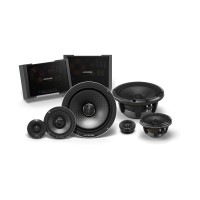 Quick previewslim-fit component speakers, Ø 165 mm, 100 W RMS, 4 Ω, 88 dB (2.83V/1m), installation depth 67 mm1.059,60 EURRestocking within 1 weekAlpine HDZ-65C Free transport
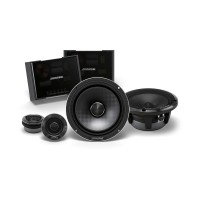 Quick previewcomponent speakers, Ø 165 mm, 100 W RMS, 4 Ω, 88 dB (2.83V/1m), installation depth 65 mm919,60 EURRestocking within 1 weekAlpine HDZ-65CS Free transport
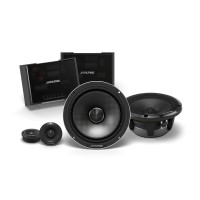 Quick previewcomponent speakers, Ø 165 mm, 100 W RMS, 4 Ω, 88 dB (2.83V/1m), installation depth 65 mm819,60 EURRestocking within 1 week
Quick previewcoaxial speakers, Ø 165 mm, 100 W RMS, 4 Ω, 88 dB (2.83V/1m), installation depth 67 mm679,60 EURRestocking within 1 weekAlpine HDZ-653 Free transportQuick previewcomponent speakers, Ø 165 mm, 100 W RMS, 4 Ω, 88 dB (2.83V/1m), installation depth 65 mm1.159,60 EURRestocking within 1 weekAlpine HDZ-653S Free transportQuick previewslim-fit component speakers, Ø 165 mm, 100 W RMS, 4 Ω, 88 dB (2.83V/1m), installation depth 67 mm1.059,60 EURRestocking within 1 weekAlpine HDZ-65C Free transportQuick previewcomponent speakers, Ø 165 mm, 100 W RMS, 4 Ω, 88 dB (2.83V/1m), installation depth 65 mm919,60 EURRestocking within 1 weekAlpine HDZ-65CS Free transportQuick previewcomponent speakers, Ø 165 mm, 100 W RMS, 4 Ω, 88 dB (2.83V/1m), installation depth 65 mm819,60 EURRestocking within 1 weekask us