
Nakamichi NSQ-M250 speakers
More about the product
- You can return the goods to us within 14 days
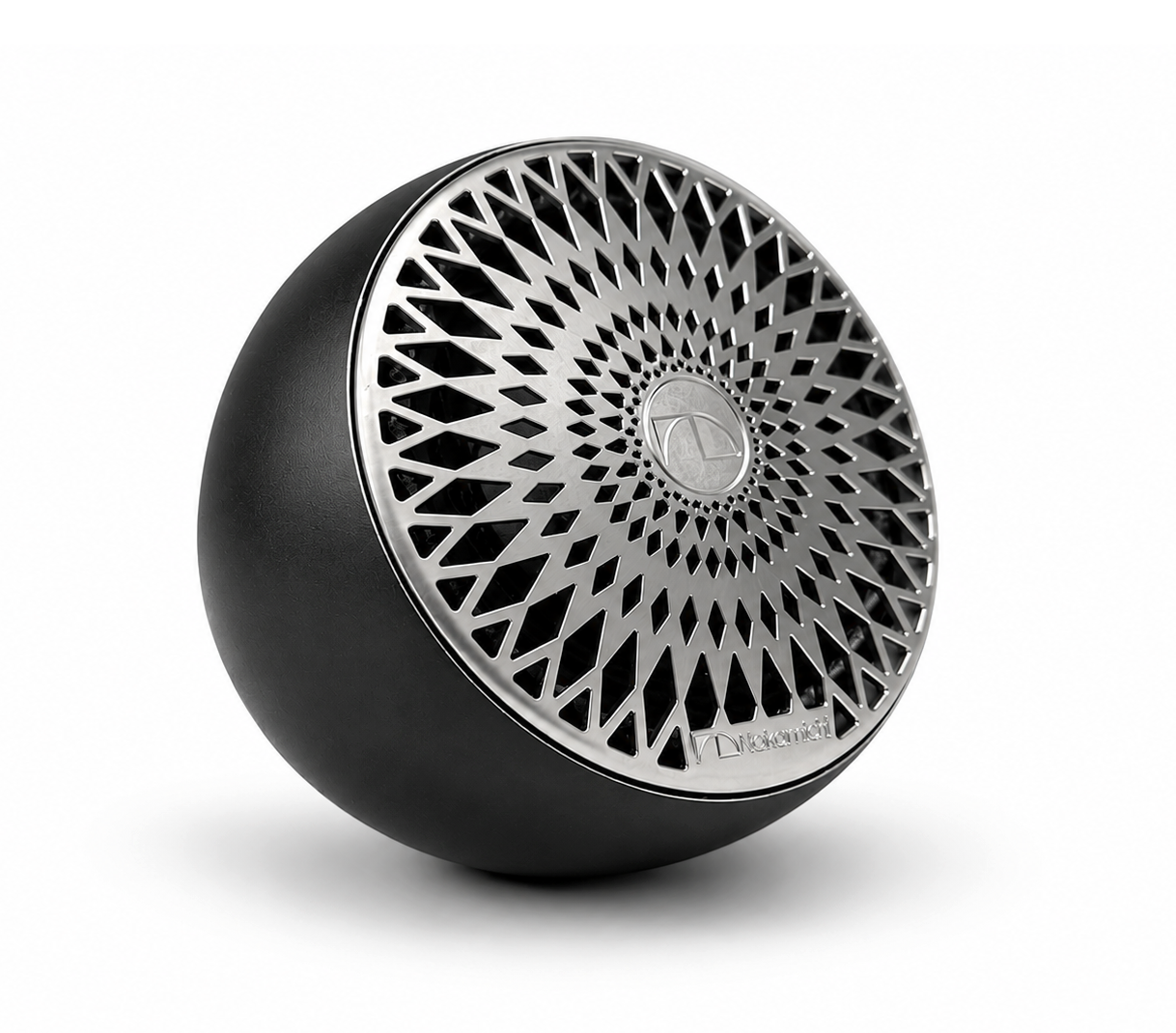
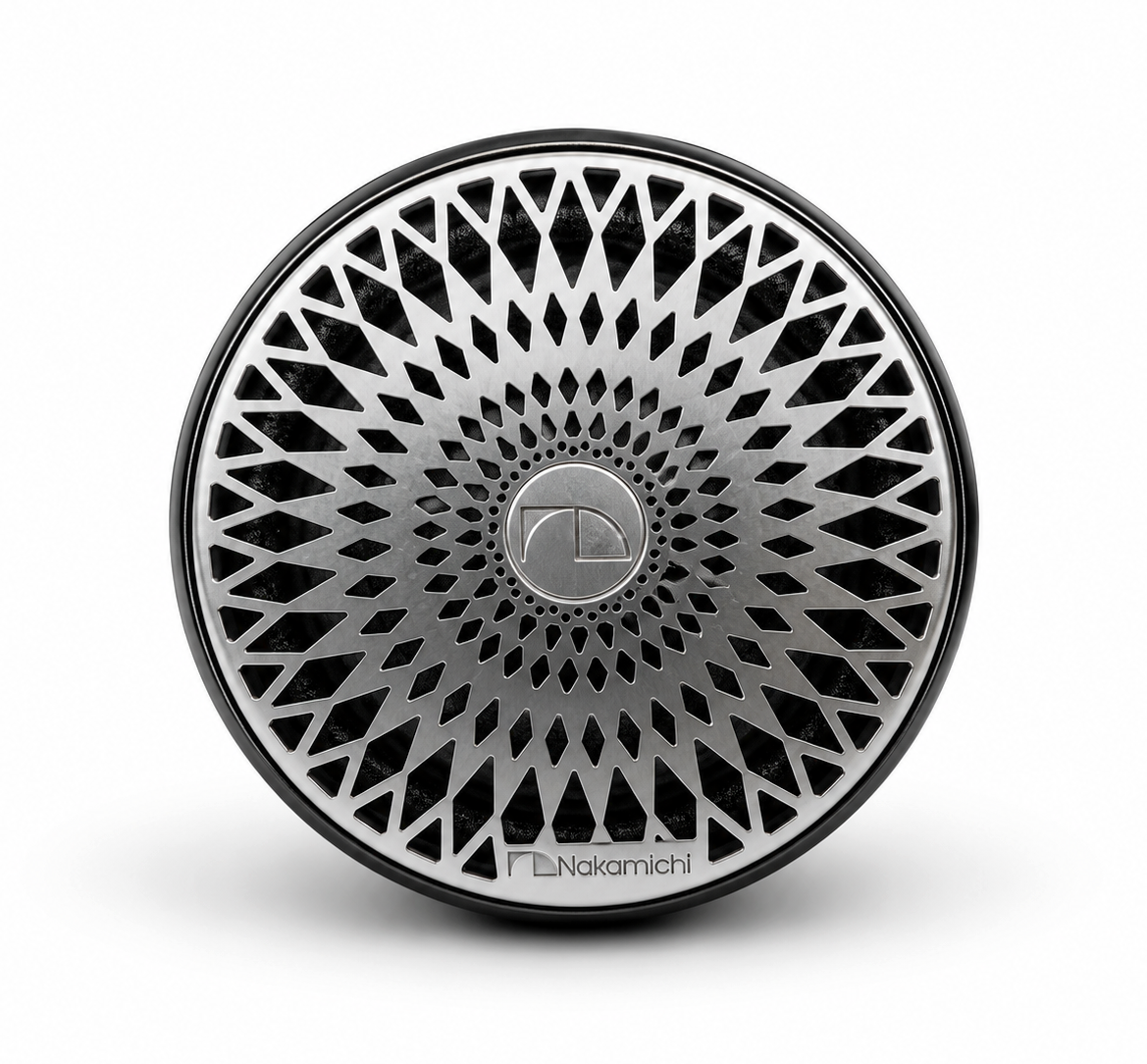
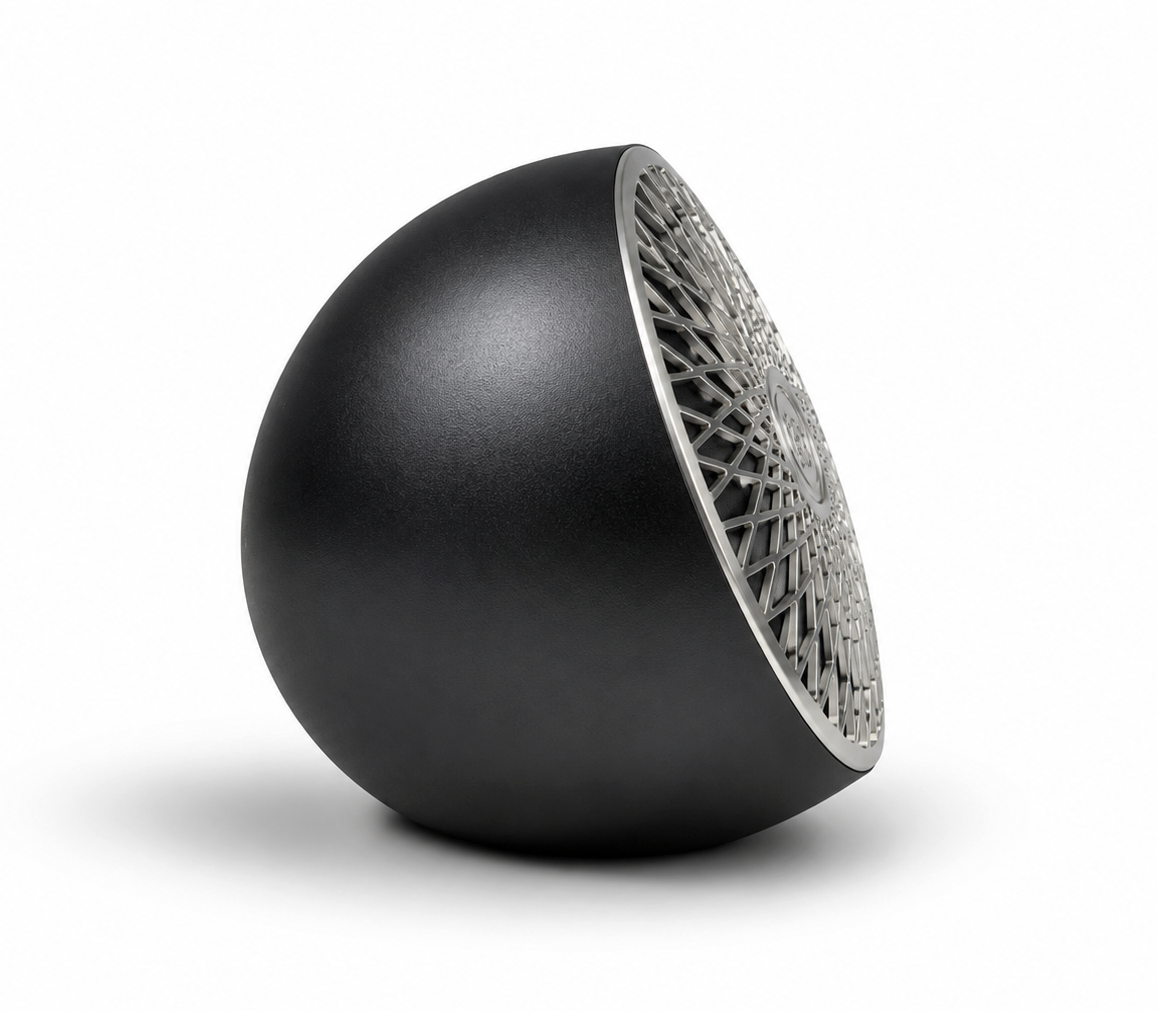
Speaker Nakamichi NSQ-M250
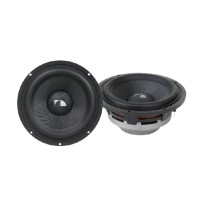
The Nakamichi NSQ-M250 is a compact 2.5" full-range speaker designed for both center and surround channels of modern car audio systems. Compared to the smaller model, it offers a larger cone and fuller midrange reproduction, making it ideal as a center speaker or as front and rear surround channels. The full-range driver with a rubber surround provides natural reproduction of voices and musical details, while the integrated spherical acoustic chamber and robust aluminum body contribute to a clean sound character and high mechanical durability. Thanks to its compact dimensions, the speaker can be easily installed into the dashboard, A- and B-pillars, roof panels and other OEM locations in modern vehicles.
Main features
- 2.5" full-range speaker for center and surround channels.
- Suitable for installation into the dashboard, A-pillars, B-pillars and roof.
- Integrated spherical acoustic chamber to optimize acoustic properties.
- Aluminum body with high mechanical durability.
- Rubber surround for long life and natural reproduction.
- Frequency range 380 Hz to 15 kHz.
- Power 25 W RMS and 180 W maximum.
- Ideal for OEM upgrades of multichannel audio systems.
About the brand
The history of the Nakamichi brand dates back to 1948, when it was founded in Japan by Etsuro Nakamichi. His journey began with the establishment of the Nakamichi Research Corporation in Tokyo, focused on research into sonars, magnets and development solutions for leading brands, government institutions and universities. From the beginning, the brand was built on a scientific approach, deep understanding of sound and emphasis on technical precision. A key period of expansion came in 1972 when Takeshi Nakamichi joined the company and played a major role in the development of legendary audio products sold worldwide. Under his leadership, for example, the Nakamichi 1000 was created — the world’s first cassette deck. Thanks to the combination of outstanding sound and timeless design, to which chief engineer Kozo Kobayashi also contributed, Nakamichi products became icons of their time. Nakamichi remains successful today. Its portfolio offers high-quality products for home and car audio, distinguished by thoughtful construction, quality workmanship and excellent sound within their price category.
| Catalog number | NSQ-M250 |
| Brand | Nakamichi |
| Links | Official web presentation |
| Speaker typeCoaxial speakers: Coaxial speakers are characterized by a so-called all-in-one design. The tweeter and mid-bass speaker are in one basket. The advantage is simpler assembly, but thanks to the connection or proximity of the bands in one speaker, the sound quality will usually be reduced. As a rule, in the middle of the mid-bass speaker, there is a tweeter whose voice coil works in the second air gap of the common magnetic circuit. The three-way coaxial speaker consists of a mid-bass speaker, a center speaker and a separate tweeter in the front on a special beam. Component Speakers: Component speakers are characterized by a division into individual frequency bands, treble + mid-bass + or. bass band. The individual speakers can be placed completely separately, which results in a better sound and acoustic performance. In the vast majority of cases of component speakers, an external crossover is also supplied, which divides the treble, middle / mid-bass, and into the three-band the bass band or allows setting the decibel level of the tweeter (e.g. +2 dB, 0 dB, -2 dB), steepness (e.g. 6dB/Oct. 12dB/Oct.) or active or bi-amp connection. | Full-range / center |
| RMS powerRMS speaker power is the constant power of the entire system, not just one speaker or one side. This is also the performance of continuous use of the speakers. If the RMS power is exceeded for a long time, the speakers may be irreversibly damaged! | 25 W |
| Max. (maximum performancePeak performance , which the speaker can play for a moment (approx. 0.5 s), for example when hitting drums in a song. If the max power is exceeded, the speakers will usually be damaged! | 180 W |
| ImpedanceImpedance - measurement of electrical resistance. When buying speakers, it is important to make sure that the impedance matches the amplifier or car stereo you are using. Example: A 2 Ohm speaker cannot be connected to an amplifier that is only stable up to 4 Ohms! A 4 Ohm speaker can easily be used with an amplifier that is stable up to 2 Ohms. The most common speaker impedance today is 3 - 4 Ohm. | 4 Ω |
| Frequency rangeThe ability of the speakers to play a signal from the lowest frequency to the highest, or the speaker's ability to faithfully reproduce sound in a specific frequency band. Professionally: In the frequency range from 40 to 16,000 Hz, the vast majority of fundamental and overtones (harmonics) of all musical instruments are found. We are interested in the course of the radiated sound pressure in this range of frequencies when the loudspeaker system is supplied with constant power. We call this course the frequency characteristic, which tells us the level of radiated sound pressure in decibels (dB) depending on the frequency. The frequency characteristic of a speaker or speaker system can be expressed most succinctly with a graph. Mostly, however, the frequency characteristic is indicated by indicating the maximum tolerance of the sound pressure in the given frequency range, e.g. 50 to 15,000 Hz -+ 6 dB. Since the frequency characteristics of loudspeakers and systems in general are quite uneven, some manufacturers do not even specify this maximum tolerance of sound pressure in decibels in their catalogs for reasons of prestige. Data impoverished in this way is unfortunately worthless. What is valid is that the manufacturer offers a speaker system with a frequency range of 30 to 20,000 Hz, if he is worried about stating the maximum unevenness of the sound pressure in this range, because he can have a tolerance of, for example, +- 20 dB. The unevenness or undulation of the frequency curve in good speaker systems for high-quality music performance should not exceed +-3 dB in the 80 to 12,000 Hz band and +-6 dB in the 40 to 16,000 Hz band. Greater unevenness already depletes or emphasizes certain tonal areas, which can cause audible or even disturbing distortion. The proportion between fundamental tones and higher harmonics also changes, thereby changing the color of the sound, and individual musical instruments as well as the entire musical image sound unnatural. | 380 - 15000 Hz |
| The diameter of the full-range speaker | 65 mm (2.5\") |
| Cover grids included in the packageOriginal cover grilles in speaker packaging. | Yes |
| Price forIf the price is for a pair, the package always includes 2 pieces of everything, e.g. 2x mid-bass, 2x tweeter and 2x crossover. | Pair |
Evaluation
You might also be interested
 Quick previewwideband surround speakers, Ø 38 mm, 40 W RMS, 4 Ω67,60 EURIn stockESB Audio 3.65 Free transport
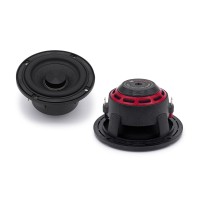 Quick previewfull-range / center speakers, Ø 65 mm, 60/120 W, 4 Ω, 83 dB (1W/1m), installation depth 36 mm179,00 EURIn stockMorel Virtus VWB25.4 Free transport
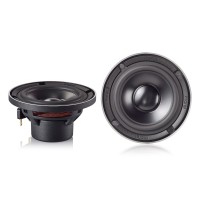 TipQuick previewmid / wide range speakers, Ø 65 mm, 40 W, 4 Ω, 86 dB (2.83V/1m)269,00 EURIn stockNakamichi NS-QT66-II
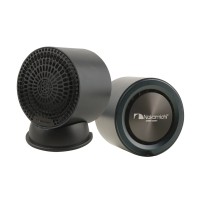 Quick previewfull-range speakers, Ø 66 mm, 20 W RMS, 4 Ω, 92 dB (2.83V/1m)119,60 EURIn stockNakamichi NS-QT65
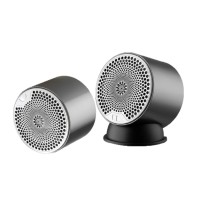 Quick previewfull-range speakers, Ø 65 mm, 20 W RMS, 4 Ω, 92 dB (2.83V/1m)107,60 EURIn stockNakamichi NSM-6528
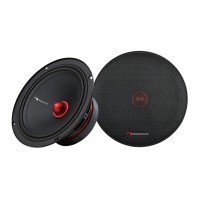 Quick previewcenter speakers, Ø 165 mm, 50/350 W, 4 Ω, 92 dB, installation depth 65 mmThe sale is overNakamichi NSM-8517
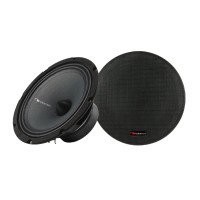 Quick previewcenter speakers, Ø 200 mm, 60/400 W, 4 Ω, 93 dB, installation depth 84 mmThe sale is overNakamichi NS-S31M Free transport
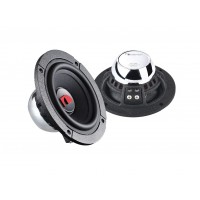 Quick previewØ 100 mm, 30 W RMS, 4 Ω, mid-woofer mounting depth 37 mm123,60 EURIn stockNakamichi NS-QT25
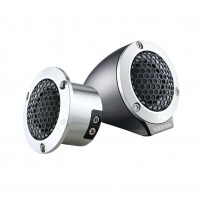 -46 %Last piecesQuick previewØ 25 mm, 20 W RMS, 4 Ω79,96 EUR
 Quick previewcenter speakers, Ø 96 mm, 15 W RMS, 4 Ω, 90 dB (2.83V/1m)207,60 EURIn stock