
Musway CSB42X speakers
More about the product
- You can return the goods to us within 14 days
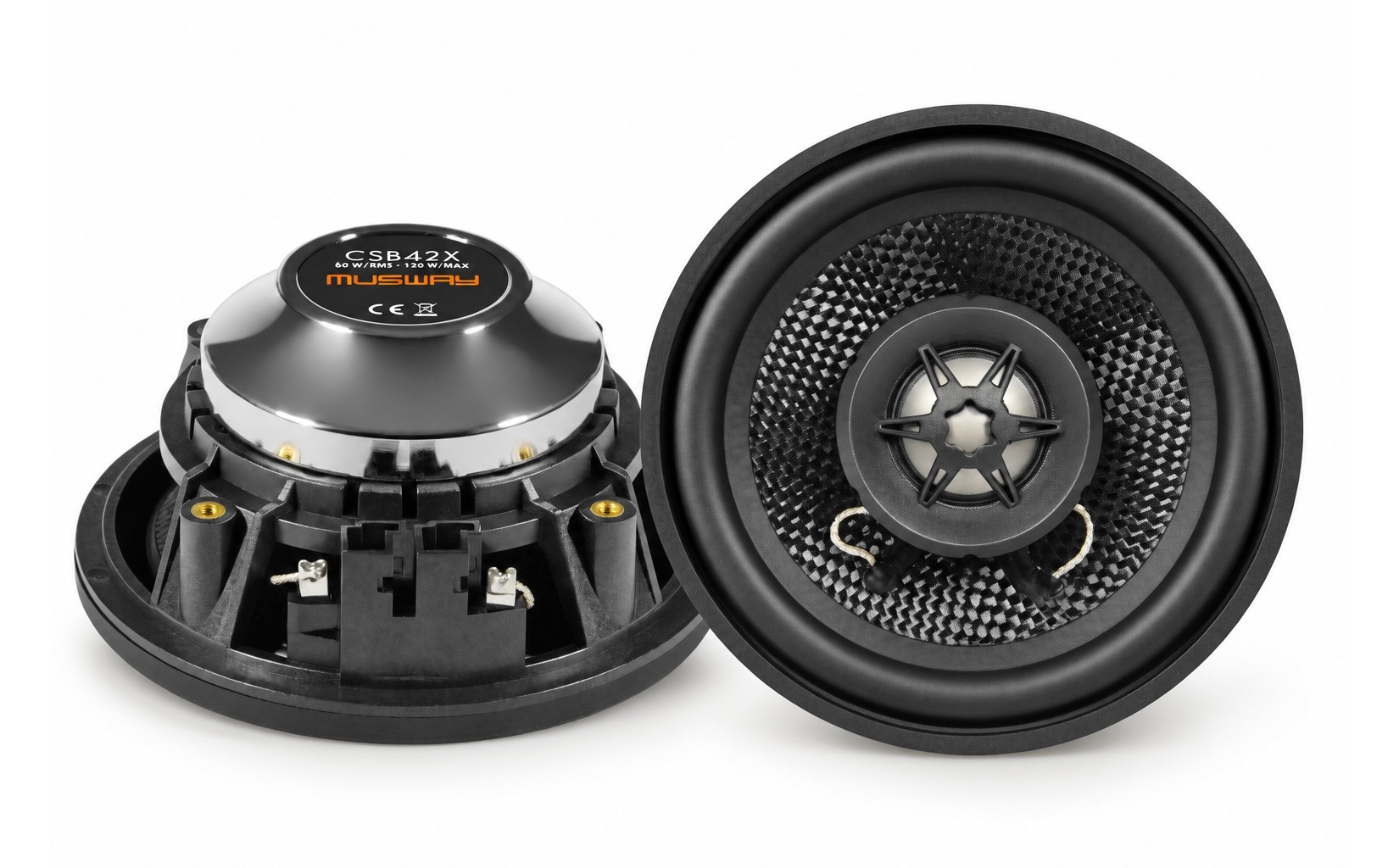
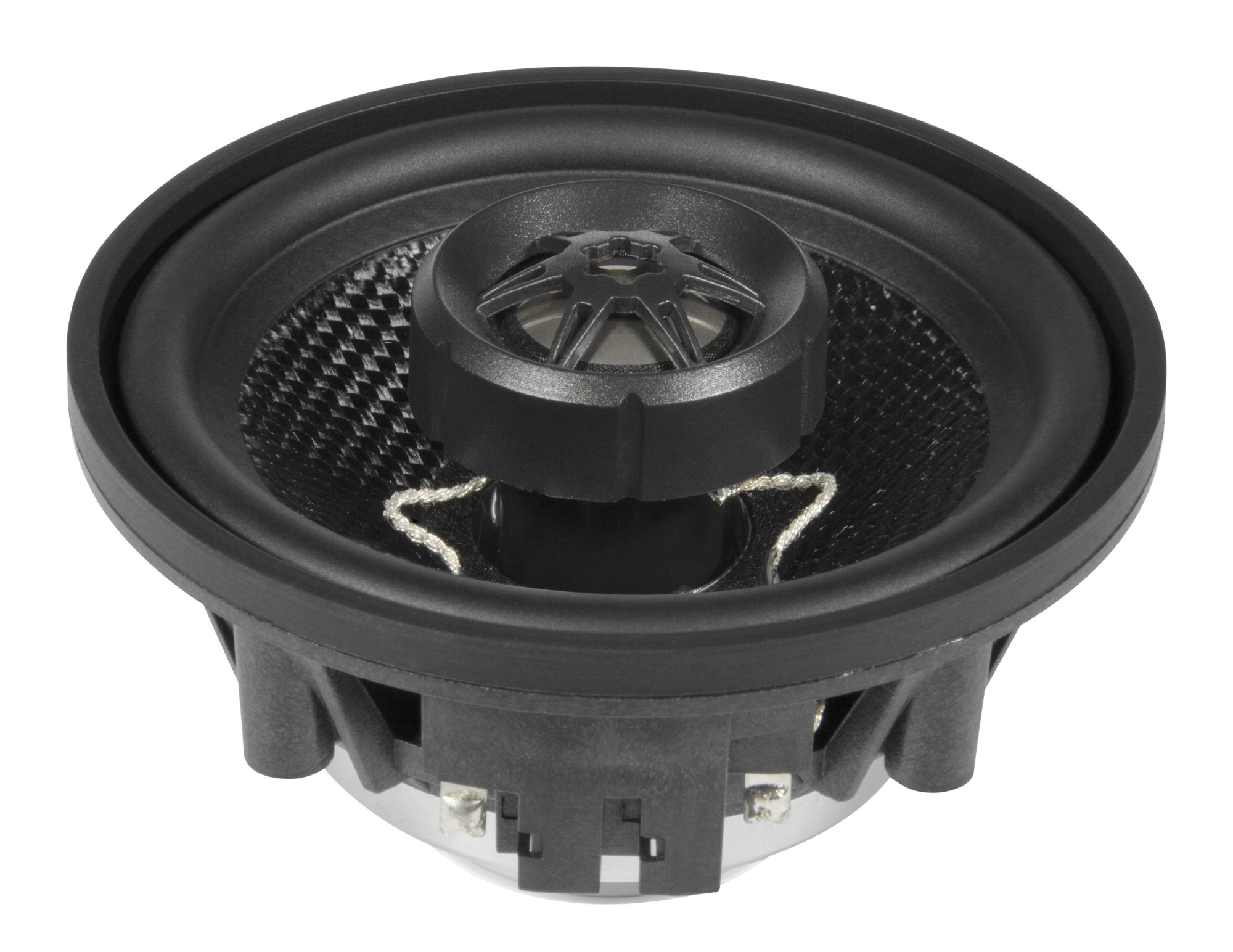
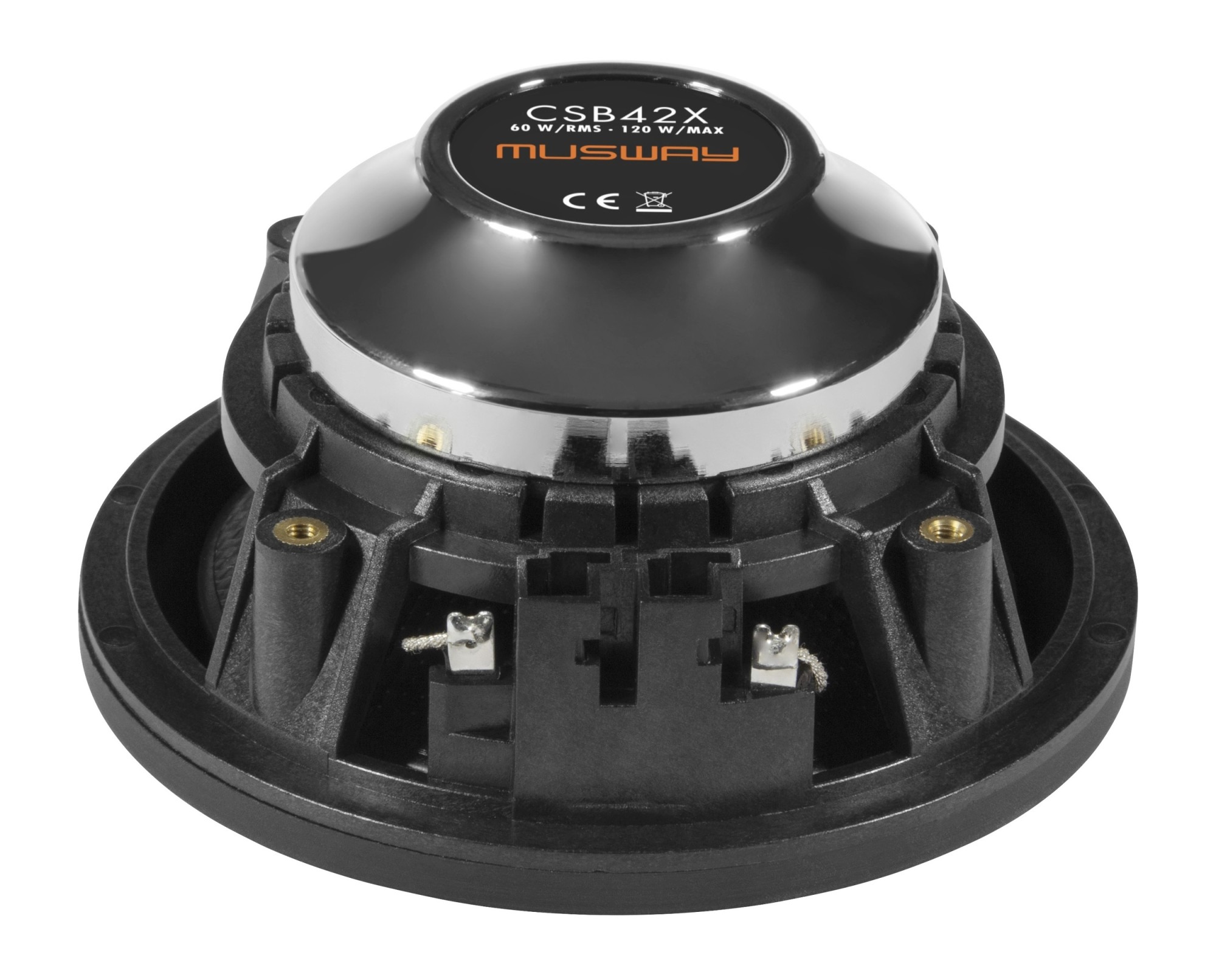
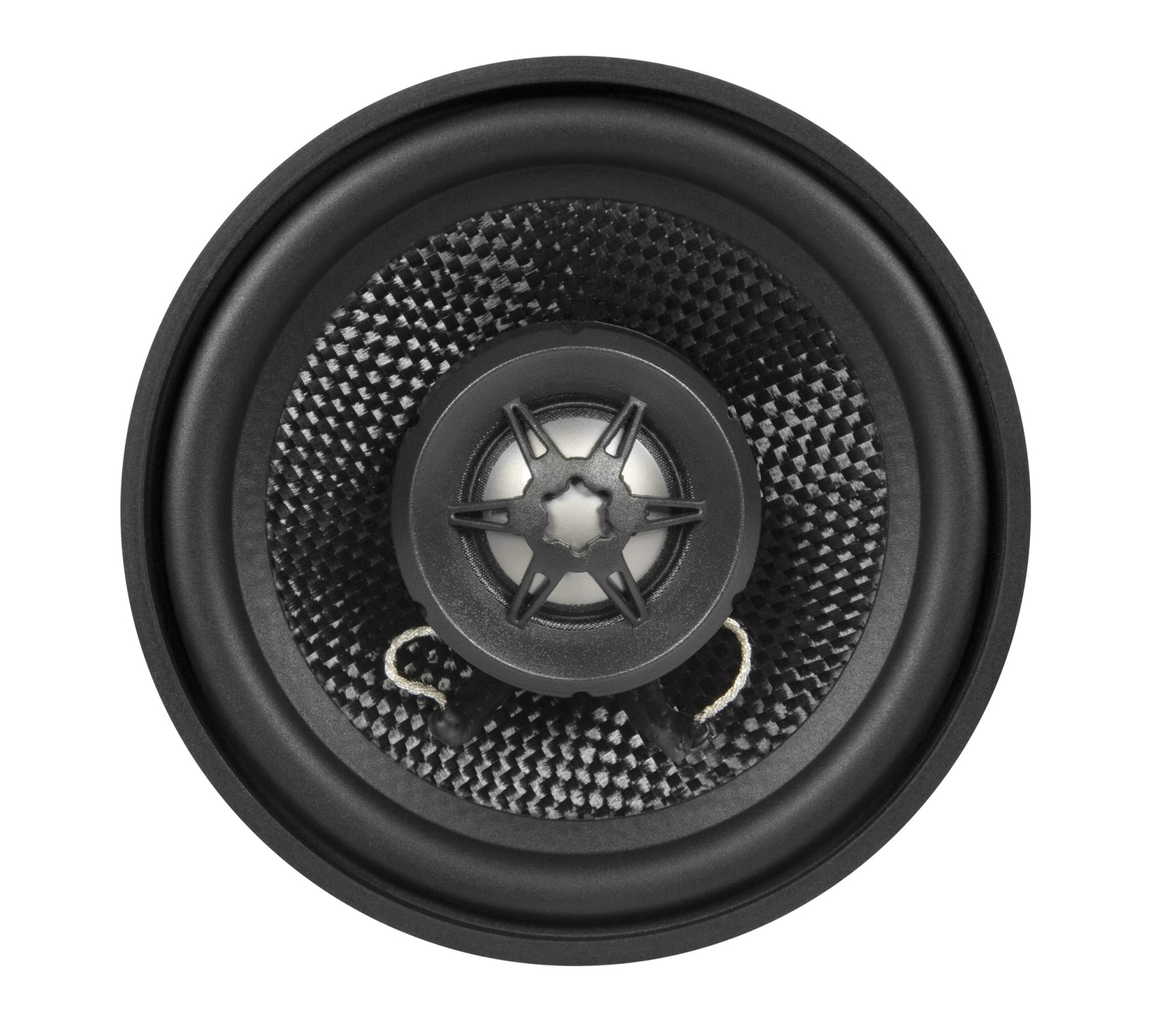
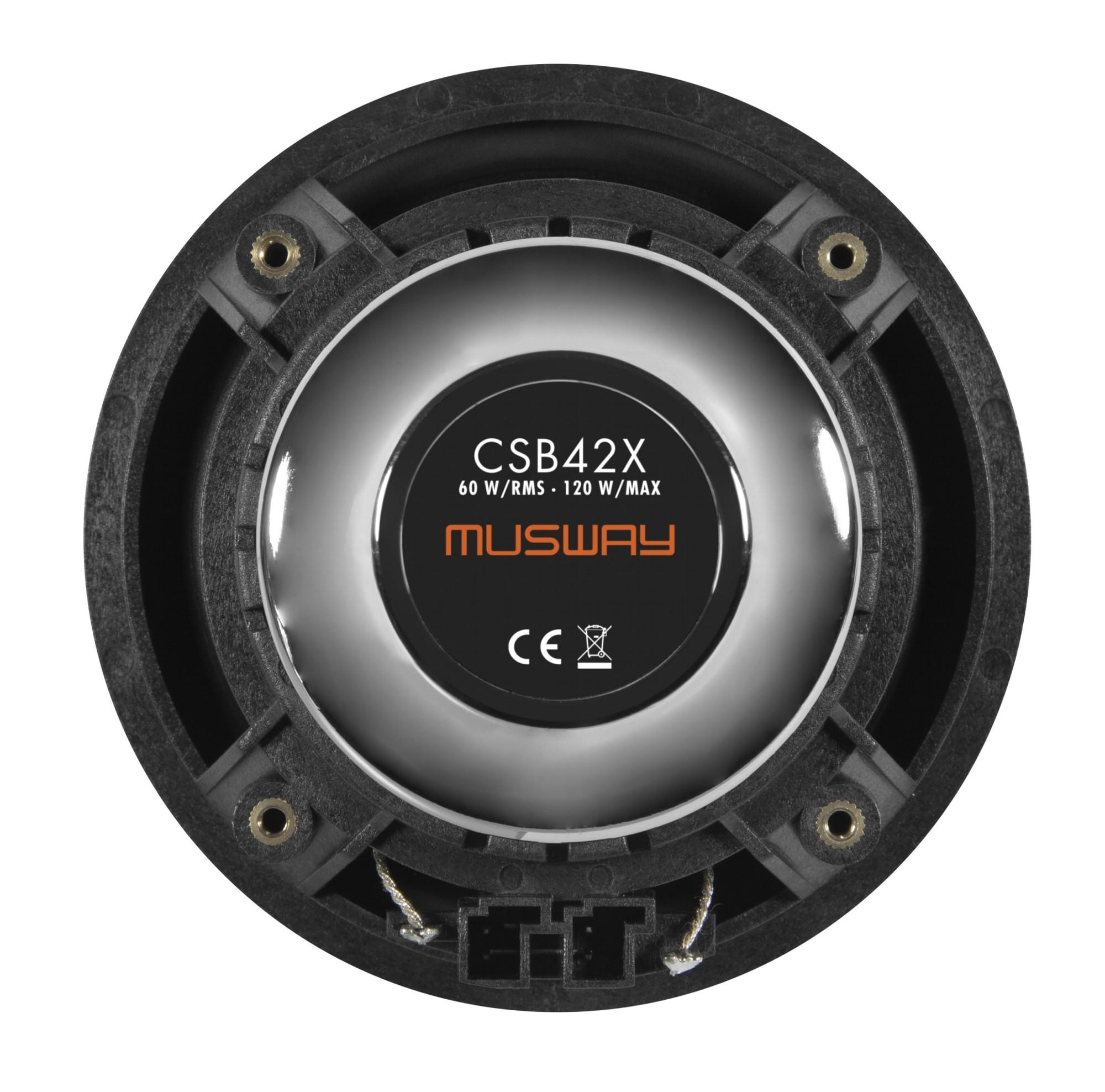
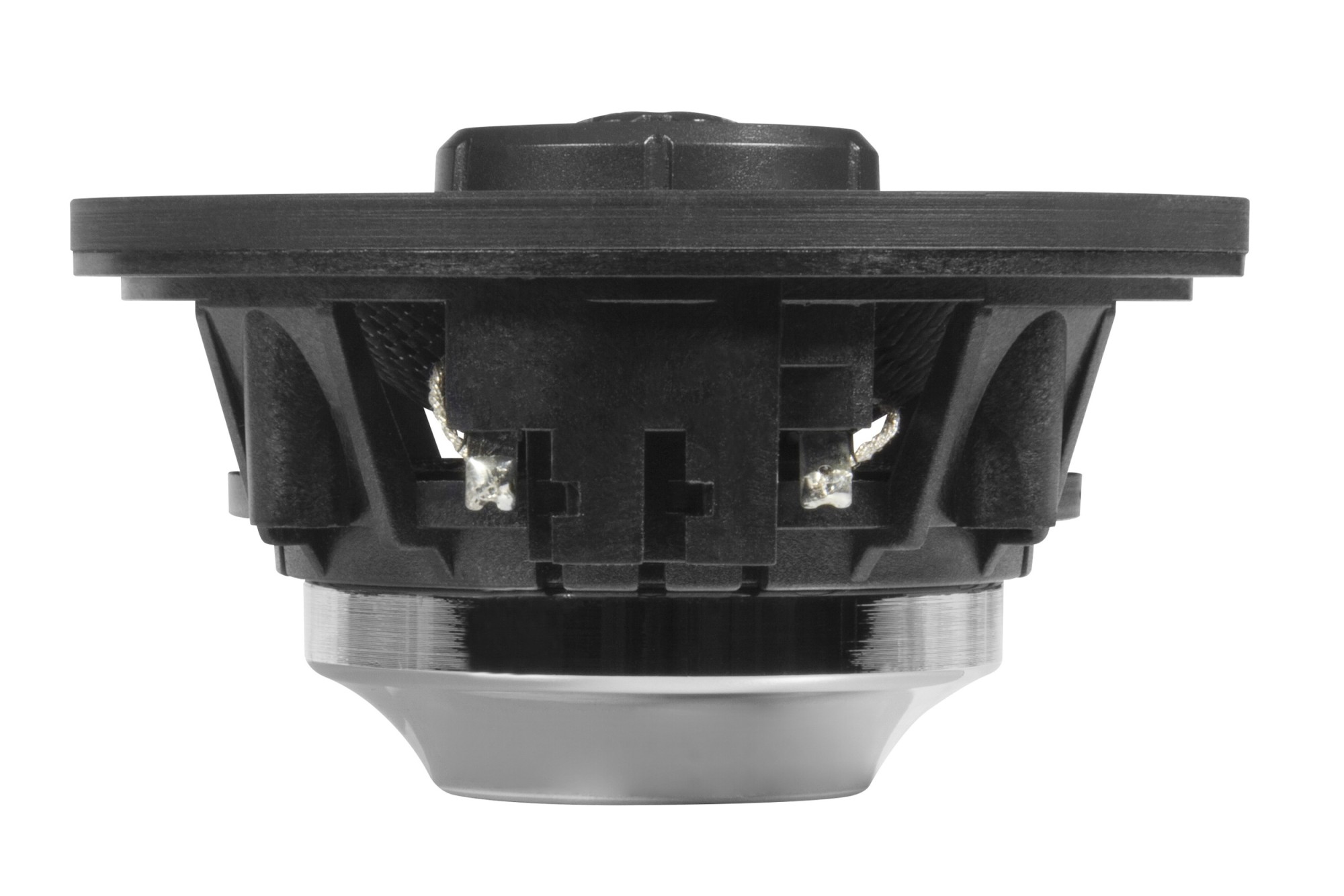
Musway CSB42X Speakers for BMW Cars
Musway CSB42X is a 10 cm two-way coaxial speaker system designed as a direct upgrade to the factory sound of BMW vehicles in the E, F and G series. Thanks to vehicle-specific adapters, wiring and connectors, the speakers can be installed in place of the original drivers without unnecessary modifications to the vehicle's electrical system. The set is conceived to deliver significantly better sound while preserving the original interior appearance.
The midrange drivers use a lightweight and rigid glass-fiber cone that contributes to quick response, good resolution and more accurate midrange reproduction. Drive is provided by a dual neodymium magnet with high-quality N42H magnets, allowing the speakers to operate efficiently even with the lower power of a factory or auxiliary amplifier. High frequencies are handled by 20 mm tweeters with a titanium diaphragm and neodymium drive. Their design delivers detailed, clean and well-defined highs with a frequency range beyond 20 kHz. In combination with the midrange drivers this creates a significantly more open and precise soundstage compared to typical factory systems.
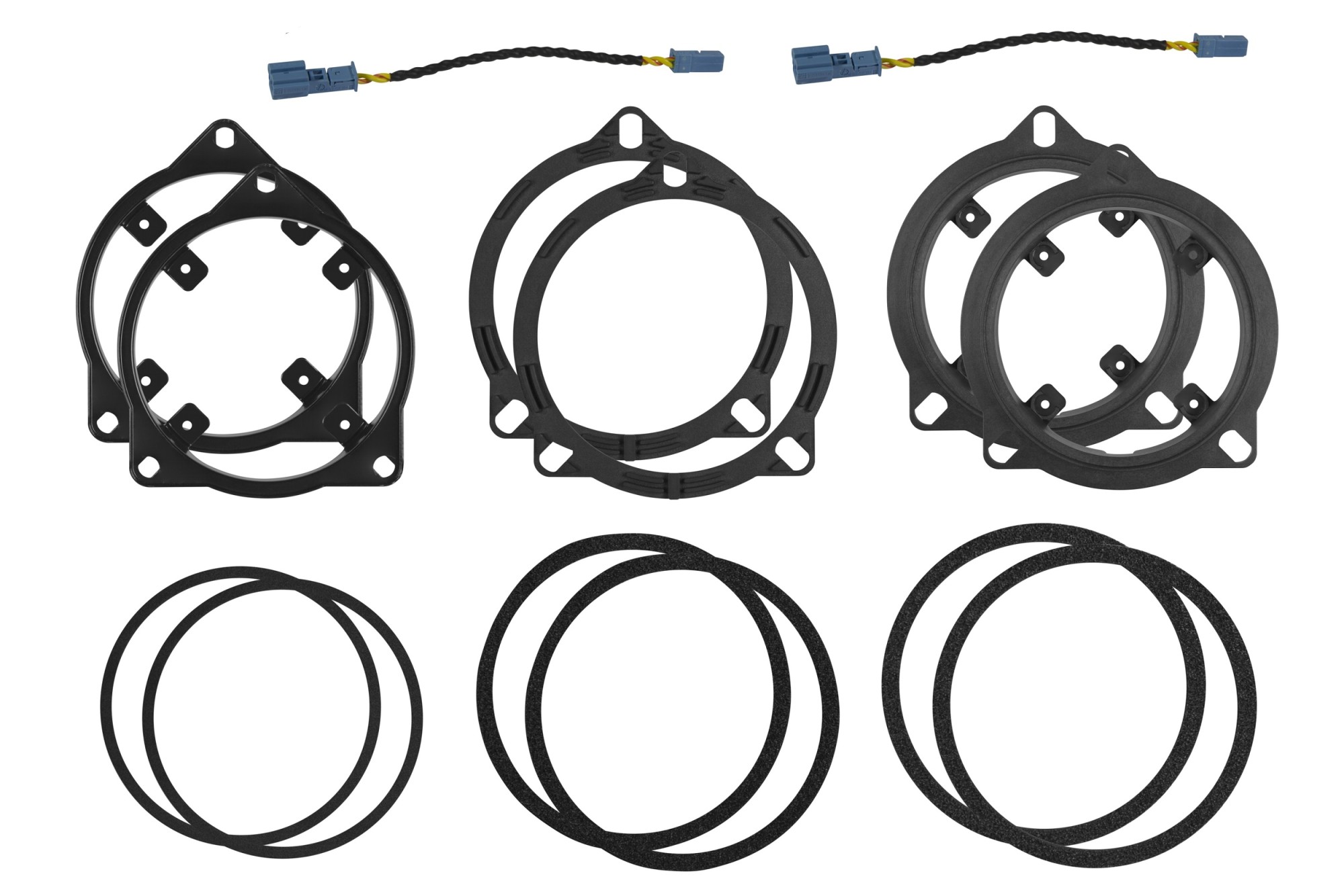
A major advantage of the CSB42X is the extensive installation hardware. The kit includes adapters for several mounting options, sealing rings, vehicle-specific wiring and tweeter adapters. As a result, the system is compatible with a wide range of BMW E, F and G models. Exceptions are the front doors of BMW F15 and F16 models. If a particular car does not have a factory mounting point for a tweeter, corresponding original mirror covers prepared for a tweeter can be used.
Main features
- 10 cm two-way coaxial speaker system designed for BMW vehicles.
- Compatibility with a wide range of BMW E, F and G models.
- Plug and Play installation with vehicle-specific wiring and connectors.
- Lightweight and rigid glass-fiber cone for precise and dynamic reproduction.
- Dual neodymium magnet drive for high efficiency even at lower amplifier power.
- 20 mm tweeter with a titanium diaphragm.
- Neodymium tweeter drive for clean and detailed high frequencies.
- Significant improvement in detail, dynamics and overall clarity compared to factory sound.
- Complete mounting hardware for multiple installation variants.
- Metal and plastic speaker adapters included in the package.
- Sealing rings of different thicknesses for correct fitting in specific vehicles.
- Tweeter mounting adapters included.
- Preserves the original interior appearance of the vehicle.
Compatibility
- BMW E series.
- BMW F series.
- BMW G series.
- Exception: front doors of BMW F15 and F16 models.
- Compatibility may vary depending on the specific model and vehicle equipment.
About the brand
MUSWAY is an abbreviation of the motto „Music is the Way“ – music is the way. The brand was born out of a passion for high-quality sound reproduction and achieved its first notable successes with high-end Hi-Res audio players and digital signal processors. The true breakthrough came with the introduction of the first class-D amplifiers with integrated DSP, which gradually earned international recognition in specialist magazine tests and several prestigious awards, including EISA. Since 2015 the brand’s development has been anchored in Germany, where product design, technical tuning and final concept for each model take place. Musway has gradually built a reputation as a maker of compact, technically advanced yet musically natural components that combine modern digital technologies with an emphasis on clean and linear sound. The portfolio today includes standalone and DSP amplifiers, speakers and subwoofers, with each new generation following the brand philosophy – to offer maximum musical experience without compromises in technology, functionality or workmanship.
| Catalog number | CSB42X |
| Brand | Musway |
| Links | Official web presentation |
| Speaker typeCoaxial speakers: Coaxial speakers are characterized by a so-called all-in-one design. The tweeter and mid-bass speaker are in one basket. The advantage is simpler assembly, but thanks to the connection or proximity of the bands in one speaker, the sound quality will usually be reduced. As a rule, in the middle of the mid-bass speaker, there is a tweeter whose voice coil works in the second air gap of the common magnetic circuit. The three-way coaxial speaker consists of a mid-bass speaker, a center speaker and a separate tweeter in the front on a special beam. Component Speakers: Component speakers are characterized by a division into individual frequency bands, treble + mid-bass + or. bass band. The individual speakers can be placed completely separately, which results in a better sound and acoustic performance. In the vast majority of cases of component speakers, an external crossover is also supplied, which divides the treble, middle / mid-bass, and into the three-band the bass band or allows setting the decibel level of the tweeter (e.g. +2 dB, 0 dB, -2 dB), steepness (e.g. 6dB/Oct. 12dB/Oct.) or active or bi-amp connection. | Coaxial 2-way |
| RMS powerRMS speaker power is the constant power of the entire system, not just one speaker or one side. This is also the performance of continuous use of the speakers. If the RMS power is exceeded for a long time, the speakers may be irreversibly damaged! | 60 W |
| Max. (maximum performancePeak performance , which the speaker can play for a moment (approx. 0.5 s), for example when hitting drums in a song. If the max power is exceeded, the speakers will usually be damaged! | 120 W |
| Sensitivity (SPL 2.83V/1m)Sensitivity, sensitivity or efficiency of the speaker. Speaker sensitivity is given in decibels (dB) and simply put, the higher the value, the lower the demands on the amplifier's power. This is a defacto rating of how a speaker converts watts to sound. Sensitivity ratings are in noise level measured at 1 meter from the speaker using 1 W (watt of power) or using 2.83 volts at the source at 1 meter. A higher decibel level means the speaker is louder with less power. For every 3 dB increase in sensitivity, the speaker requires half the power to reproduce the same volume. For example, if an 88 dB speaker needs 100 Watts to produce a certain volume, then a speaker with a sensitivity of 91 dB needs only 50 Watts to reach the same volume. | 87 dB |
| ImpedanceImpedance - measurement of electrical resistance. When buying speakers, it is important to make sure that the impedance matches the amplifier or car stereo you are using. Example: A 2 Ohm speaker cannot be connected to an amplifier that is only stable up to 4 Ohms! A 4 Ohm speaker can easily be used with an amplifier that is stable up to 2 Ohms. The most common speaker impedance today is 3 - 4 Ohm. | 4 Ω |
| Frequency rangeThe ability of the speakers to play a signal from the lowest frequency to the highest, or the speaker's ability to faithfully reproduce sound in a specific frequency band. Professionally: In the frequency range from 40 to 16,000 Hz, the vast majority of fundamental and overtones (harmonics) of all musical instruments are found. We are interested in the course of the radiated sound pressure in this range of frequencies when the loudspeaker system is supplied with constant power. We call this course the frequency characteristic, which tells us the level of radiated sound pressure in decibels (dB) depending on the frequency. The frequency characteristic of a speaker or speaker system can be expressed most succinctly with a graph. Mostly, however, the frequency characteristic is indicated by indicating the maximum tolerance of the sound pressure in the given frequency range, e.g. 50 to 15,000 Hz -+ 6 dB. Since the frequency characteristics of loudspeakers and systems in general are quite uneven, some manufacturers do not even specify this maximum tolerance of sound pressure in decibels in their catalogs for reasons of prestige. Data impoverished in this way is unfortunately worthless. What is valid is that the manufacturer offers a speaker system with a frequency range of 30 to 20,000 Hz, if he is worried about stating the maximum unevenness of the sound pressure in this range, because he can have a tolerance of, for example, +- 20 dB. The unevenness or undulation of the frequency curve in good speaker systems for high-quality music performance should not exceed +-3 dB in the 80 to 12,000 Hz band and +-6 dB in the 40 to 16,000 Hz band. Greater unevenness already depletes or emphasizes certain tonal areas, which can cause audible or even disturbing distortion. The proportion between fundamental tones and higher harmonics also changes, thereby changing the color of the sound, and individual musical instruments as well as the entire musical image sound unnatural. | 75 – 22000 Hz |
| The diameter of the mid-bass speakerWe state the diameter of the speaker as the diameter of the entire speaker, not including the mounts, when smaller speakers (87, 100, 130 mm) have extra mounts. Some speakers are oval and there the dimension is given in inches, always the shortest side to the longest side. One inch is approx. 2.5 cm. | 100 mm |
| Installation depth of the mid-bass speakerThe installation depth of the speaker is measured from the bottom edge of the magnet to the bottom edge of the tin, plastic or cast speaker basket, or speaker bearing surfaces. | 43 mm |
| Mid-woofer diaphragm materialThe material that was used for the speaker diaphragm. Don't be afraid of the paper, it surprisingly has a very natural and high-quality sound and, thanks to the surface treatment, it can withstand moisture without any problems. | Glass fibers |
| Tweeter dome diameterThe net diameter of the dome (diaphragm) of the tweeter. | 20 mm |
| Tweeter dome materialThe shell material that was used in the manufacture of the tweeter. | Titan |
| Price forIf the price is for a pair, the package always includes 2 pieces of everything, e.g. 2x mid-bass, 2x tweeter and 2x crossover. | Pair |