
Morel Supremo 63 Special Edition speakers
More about the product
- You can return the goods to us within 14 days
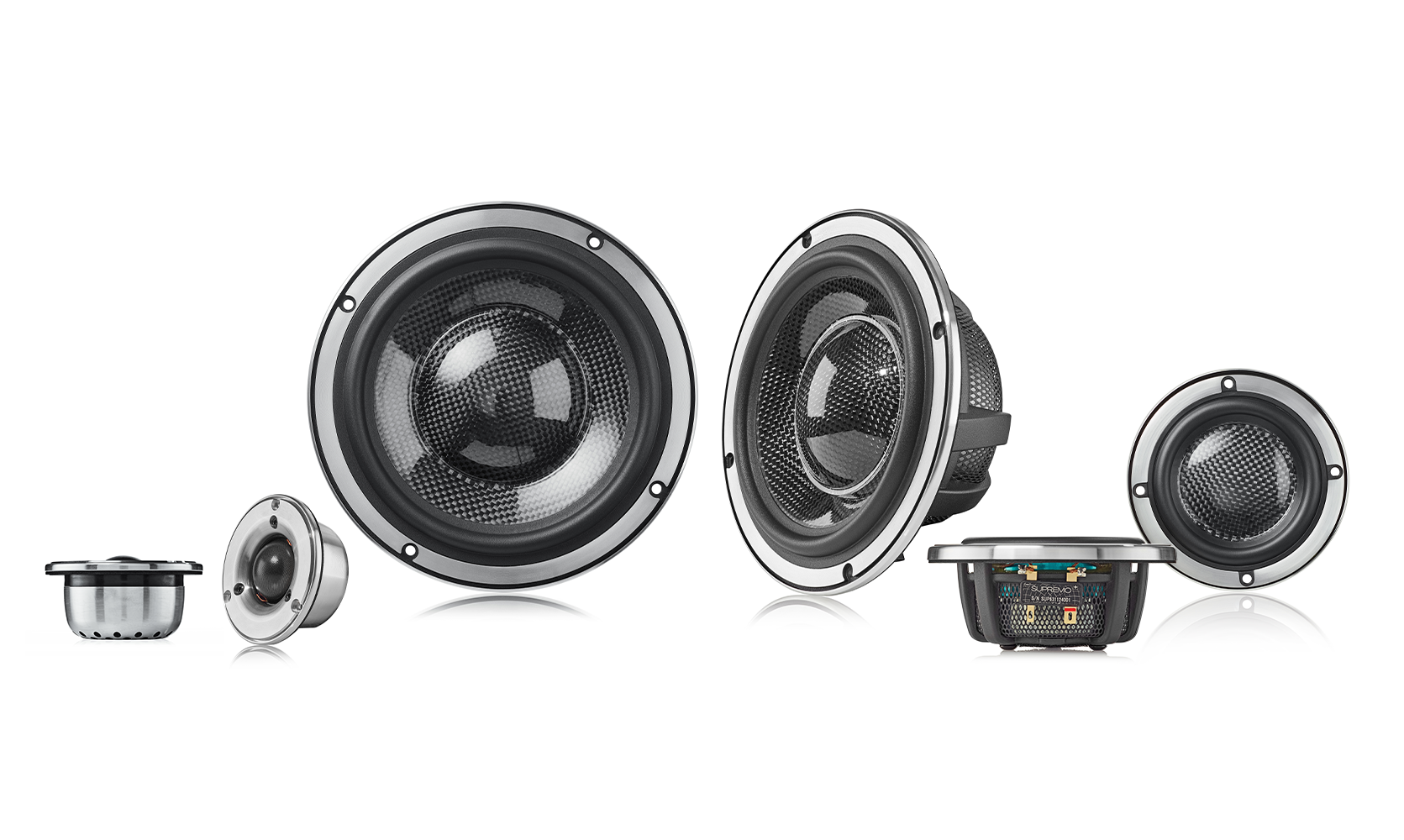

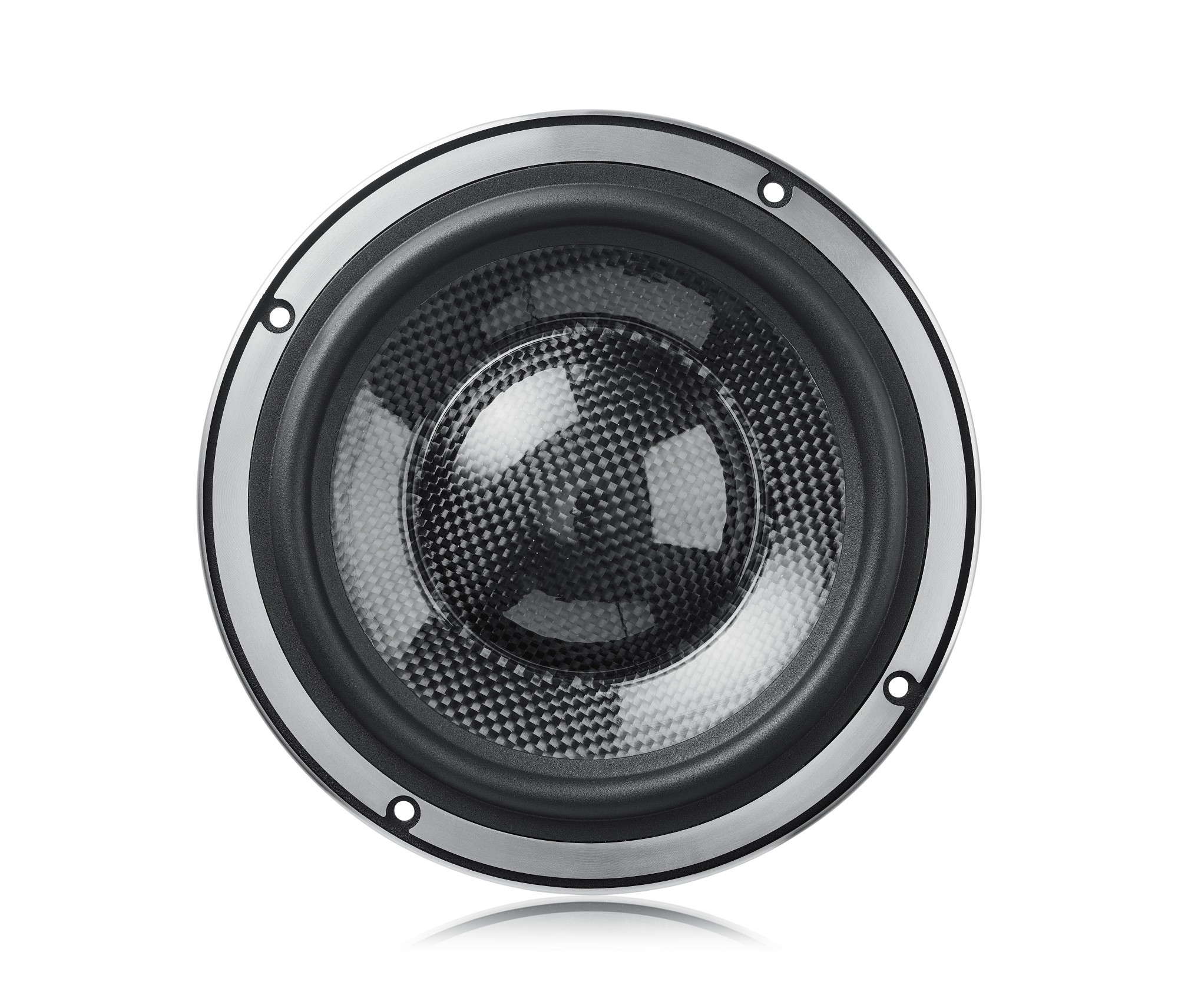


Morel Supremo 63 Special Edition
The Morel Supremo Special Edition speakers, introduced to celebrate the 50th anniversary of the brand's founding, represent the pinnacle of Morel's innovation in high-fidelity automotive audio. This meticulously designed 3-way active component system is crafted to push the boundaries of linearity, dynamics, and tonal balance. It utilizes advanced electro-acoustic engineering principles and strict quality control to achieve a unique listening experience. Unlike conventional speaker systems that rely on passive crossovers, the Supremo Special Edition is built exclusively for active setups controlled by DSP. This allows precise adjustments of crossover frequencies, time delay, phase correction, and equalization. Users can thus optimize the system for any vehicle, ensuring maximum integration, coherence, and accuracy of the sound field.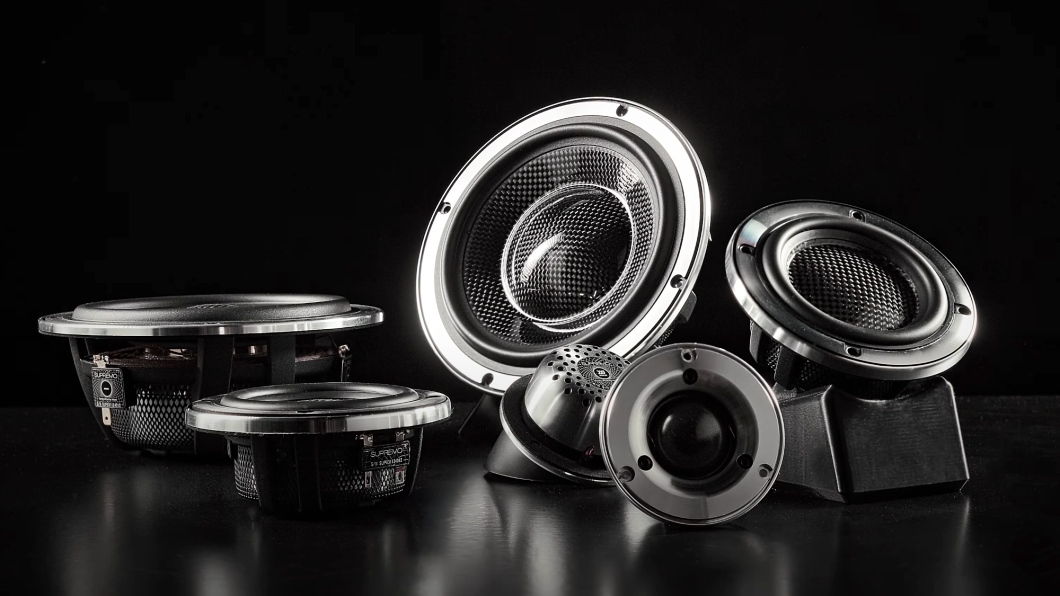
Supremo Special Edition Tweeter
At the heart of the Supremo Special Edition is the Acuflex™ silk dome tweeter, equipped with a special damping layer to control resonance and prevent high-frequency distortion. Its wide dispersion design ensures uniform off-axis response, while the precisely designed suspension system allows for linear movement and smooth, distortion-free high tones, even at maximum power levels. The rear chamber features new Anti-Standing Wave Technology (ASW™), using specially designed internal structures to break and disperse standing sound waves, providing cleaner, more open, and detailed sound.Supremo Special Edition Midrange
The Supremo Special Edition midrange speaker features a 2.1" underhung EVC™ voice coil, ensuring exceptional clarity, transient accuracy, and dynamic range. Its wide frequency response from 200 Hz to 5 kHz ensures seamless integration with both tweeter and woofer. The Uniflow™ chassis reduces rear reflections for greater midrange clarity and a deeper, more immersive three-dimensional soundstage. Together, these elements maintain consistent magnetic force during diaphragm movement, resulting in natural, distortion-free midrange tones with remarkable detail, vocal articulation, and depth.Supremo Special Edition Woofer
The Supremo SE woofer is designed with a 3" underhung EVC™ voice coil, allowing greater linear excursion and high power handling. The underhung coil keeps the coil centered in the magnetic field, minimizing distortion at high power levels. The carbon fiber and Rohacell composite cone achieves the perfect balance of strength and lightness, preventing breakup and ensuring precise and controlled performance. Morel's Controlled Acoustic Resistance (C.A.R™) filter enhances transient response, prevents overhang, and keeps bass tight, fast, and impactful. These technologies enable the Supremo woofer to produce deep, accurate bass while maintaining low distortion and clean transient response, ensuring outstanding clarity and control.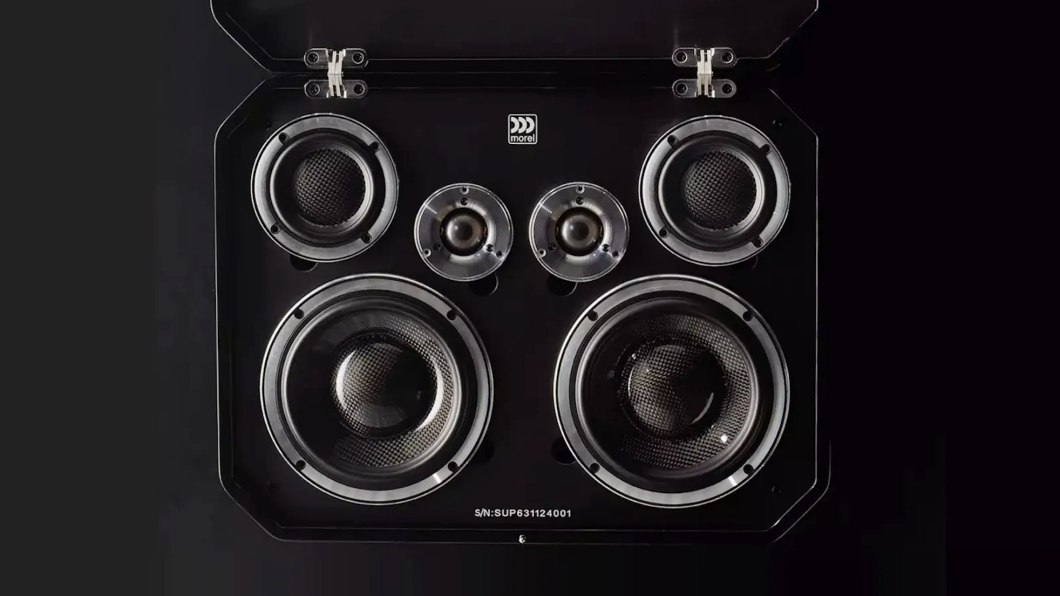
Acuflex™ Tweeter Dome
A specially designed damping compound is hand-applied to the silk dome, enhancing its strength and damping capabilities, significantly improving the tweeter's clarity and bandwidth reproduction. The Acuflex™ dome exhibits controlled breakup modes (accurate bending), meaning each breakup mode is balanced by another mode in the opposite direction. This allows for an exceptionally smooth frequency response.
Triple Layer Carbon Cone (TLC)
The advanced one-piece cone construction consists of a woven carbon fiber top layer, a Rohacell™ foam core, and a non-woven carbon fiber layer beneath. This patented cone construction offers the perfect balance between weight, extremely high rigidity, and high self-damping properties for natural and distortion-free sound reproduction.
EVC™ Voice Coil Technology
Morel's speakers with EVC™ (External Voice Coil) technology use coils that are up to three times larger than those used in conventional speakers. This allows for better heat dissipation, power handling, and linearity. The EVC™ design moves the magnetic motor system inside the coil, eliminating stray magnetic flux by effectively directing all magnetic energy into the coil. The EVC architecture is over 90% more efficient than conventional coil designs, plus it is magnetically shielded and very compact. The underhung coil has a winding height shorter than the magnetic gap. This means the coil is always positioned in the magnetic energy field, leading to better articulation and transient response.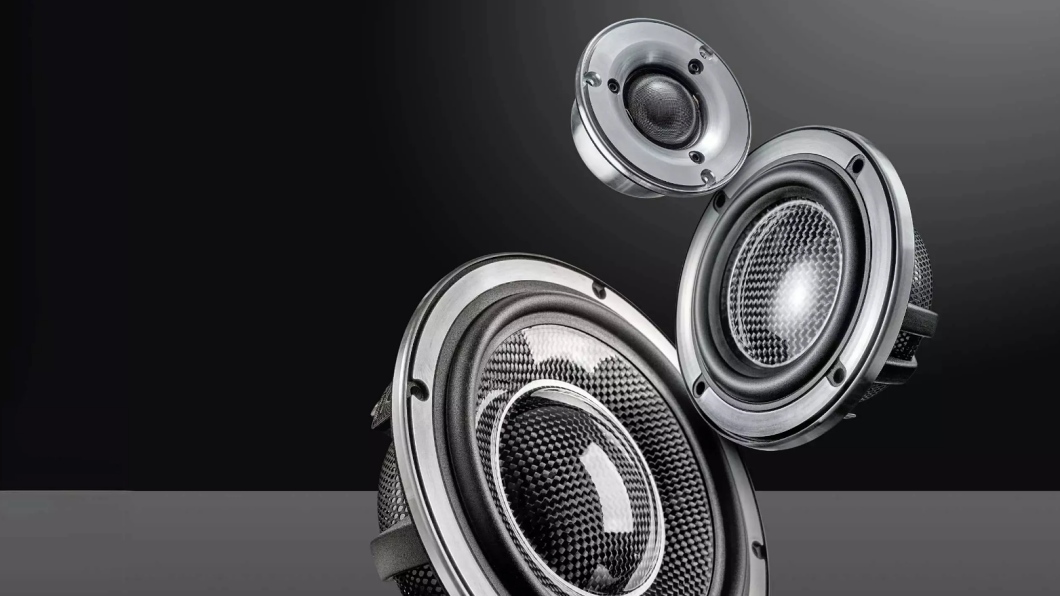
Uniflow™ Chassis and C.A.R.™ Filter
ASW™ Technology
ASW™ (Anti Standing Waves Technology) uses specially designed internal structures to break and disperse standing waves before they can affect the natural response of the driver. This innovative solution ensures that internal reflections are dispersed, preventing frequency peaks and dips caused by wave interference. Harmonic distortion is reduced, allowing for more accurate and neutral sound reproduction. The system maintains clarity at high sound pressure levels (SPL) as unwanted reflections are minimized. The tweeter and midrange operate in a controlled acoustic environment, ensuring consistent tonal balance in various installations.
Morel Lotus Grille
The Morel Lotus grille features a specific pattern of holes in various shapes and diameters designed to minimize the "horn" effect (a high-frequency peak caused by the resonant frequency of multiple holes of the same size). Innovative metalworking has enabled the construction of a very thin and nearly transparent grille, which hardly affects the sound when reproducing all frequencies, while maintaining structural integrity to protect the speaker cone.
| Catalog number | SUPREMO 63 SE |
| Brand | Morel |
| Links | Official web presentation |
| Speaker typeCoaxial speakers: Coaxial speakers are characterized by a so-called all-in-one design. The tweeter and mid-bass speaker are in one basket. The advantage is simpler assembly, but thanks to the connection or proximity of the bands in one speaker, the sound quality will usually be reduced. As a rule, in the middle of the mid-bass speaker, there is a tweeter whose voice coil works in the second air gap of the common magnetic circuit. The three-way coaxial speaker consists of a mid-bass speaker, a center speaker and a separate tweeter in the front on a special beam. Component Speakers: Component speakers are characterized by a division into individual frequency bands, treble + mid-bass + or. bass band. The individual speakers can be placed completely separately, which results in a better sound and acoustic performance. In the vast majority of cases of component speakers, an external crossover is also supplied, which divides the treble, middle / mid-bass, and into the three-band the bass band or allows setting the decibel level of the tweeter (e.g. +2 dB, 0 dB, -2 dB), steepness (e.g. 6dB/Oct. 12dB/Oct.) or active or bi-amp connection. | Component 2-way |
| RMS powerRMS speaker power is the constant power of the entire system, not just one speaker or one side. This is also the performance of continuous use of the speakers. If the RMS power is exceeded for a long time, the speakers may be irreversibly damaged! | 140 W |
| Max. (maximum performancePeak performance , which the speaker can play for a moment (approx. 0.5 s), for example when hitting drums in a song. If the max power is exceeded, the speakers will usually be damaged! | 600 W |
| Sensitivity (SPL 2.83V/1m)Sensitivity, sensitivity or efficiency of the speaker. Speaker sensitivity is given in decibels (dB) and simply put, the higher the value, the lower the demands on the amplifier's power. This is a defacto rating of how a speaker converts watts to sound. Sensitivity ratings are in noise level measured at 1 meter from the speaker using 1 W (watt of power) or using 2.83 volts at the source at 1 meter. A higher decibel level means the speaker is louder with less power. For every 3 dB increase in sensitivity, the speaker requires half the power to reproduce the same volume. For example, if an 88 dB speaker needs 100 Watts to produce a certain volume, then a speaker with a sensitivity of 91 dB needs only 50 Watts to reach the same volume. | 88 dB |
| ImpedanceImpedance - measurement of electrical resistance. When buying speakers, it is important to make sure that the impedance matches the amplifier or car stereo you are using. Example: A 2 Ohm speaker cannot be connected to an amplifier that is only stable up to 4 Ohms! A 4 Ohm speaker can easily be used with an amplifier that is stable up to 2 Ohms. The most common speaker impedance today is 3 - 4 Ohm. | 4 Ω |
| Frequency rangeThe ability of the speakers to play a signal from the lowest frequency to the highest, or the speaker's ability to faithfully reproduce sound in a specific frequency band. Professionally: In the frequency range from 40 to 16,000 Hz, the vast majority of fundamental and overtones (harmonics) of all musical instruments are found. We are interested in the course of the radiated sound pressure in this range of frequencies when the loudspeaker system is supplied with constant power. We call this course the frequency characteristic, which tells us the level of radiated sound pressure in decibels (dB) depending on the frequency. The frequency characteristic of a speaker or speaker system can be expressed most succinctly with a graph. Mostly, however, the frequency characteristic is indicated by indicating the maximum tolerance of the sound pressure in the given frequency range, e.g. 50 to 15,000 Hz -+ 6 dB. Since the frequency characteristics of loudspeakers and systems in general are quite uneven, some manufacturers do not even specify this maximum tolerance of sound pressure in decibels in their catalogs for reasons of prestige. Data impoverished in this way is unfortunately worthless. What is valid is that the manufacturer offers a speaker system with a frequency range of 30 to 20,000 Hz, if he is worried about stating the maximum unevenness of the sound pressure in this range, because he can have a tolerance of, for example, +- 20 dB. The unevenness or undulation of the frequency curve in good speaker systems for high-quality music performance should not exceed +-3 dB in the 80 to 12,000 Hz band and +-6 dB in the 40 to 16,000 Hz band. Greater unevenness already depletes or emphasizes certain tonal areas, which can cause audible or even disturbing distortion. The proportion between fundamental tones and higher harmonics also changes, thereby changing the color of the sound, and individual musical instruments as well as the entire musical image sound unnatural. | 40 - 25000 Hz |
| The diameter of the mid-bass speakerWe state the diameter of the speaker as the diameter of the entire speaker, not including the mounts, when smaller speakers (87, 100, 130 mm) have extra mounts. Some speakers are oval and there the dimension is given in inches, always the shortest side to the longest side. One inch is approx. 2.5 cm. | 165 mm |
| Installation depth of the mid-bass speakerThe installation depth of the speaker is measured from the bottom edge of the magnet to the bottom edge of the tin, plastic or cast speaker basket, or speaker bearing surfaces. | 61 mm |
| Overall tweeter diameterThe total diameter of the tweeter is given as the diameter of the individual tweeter without the installation houses. | 67 mm |
| Tweeter dome diameterThe net diameter of the dome (diaphragm) of the tweeter. | 28 mm |
| The overall depth of the tweeterThe total depth of the tweeter itself without the installation houses. | 55 mm |
| Tweeter dome materialThe shell material that was used in the manufacture of the tweeter. | Silk |
| Frequency crossover included in the packageThe crossover is an important part of defacto all loudspeakers. A crossover usually contains different resistor values, coil sizes, and capacitor types that fundamentally modify the sound. We describe below what the turnouts are for. Component Speakers: A crossover is part of every quality component speaker system. Its task is to ensure the distribution of frequencies that the amplifier produces in the entire acoustic spectrum of frequencies so that each of the speakers receives only that part of the band that it can optimally play in terms of efficiency and minimal distortion. Coaxial speakers: In most cases, coaxial loudspeakers have a simple crossover (6dB/Oct.) formed by a capacitor at the tweeter. | No |
| Cover grids included in the packageOriginal cover grilles in speaker packaging. | Yes |
| Other | Dual neodymium magnet |
| Price forIf the price is for a pair, the package always includes 2 pieces of everything, e.g. 2x mid-bass, 2x tweeter and 2x crossover. | Pair |
Evaluation
You might also be interested
 -30 %Last piecesQuick previewcomponent speakers, Ø 165 mm, 140 W RMS, 4 Ω, 89 dB (2,83V/1m), mounting depth 61 mm3.249,00 EUR
 TipQuick previewsound insulation material, 700 x 500 mm, thickness 6 mm, insulation 32 dB, weight 3,57 kg/m²14,49 EURIn stock