Hifonics ZXE1000/4 amplifier
More about the product
- You can return the goods to us within 14 days
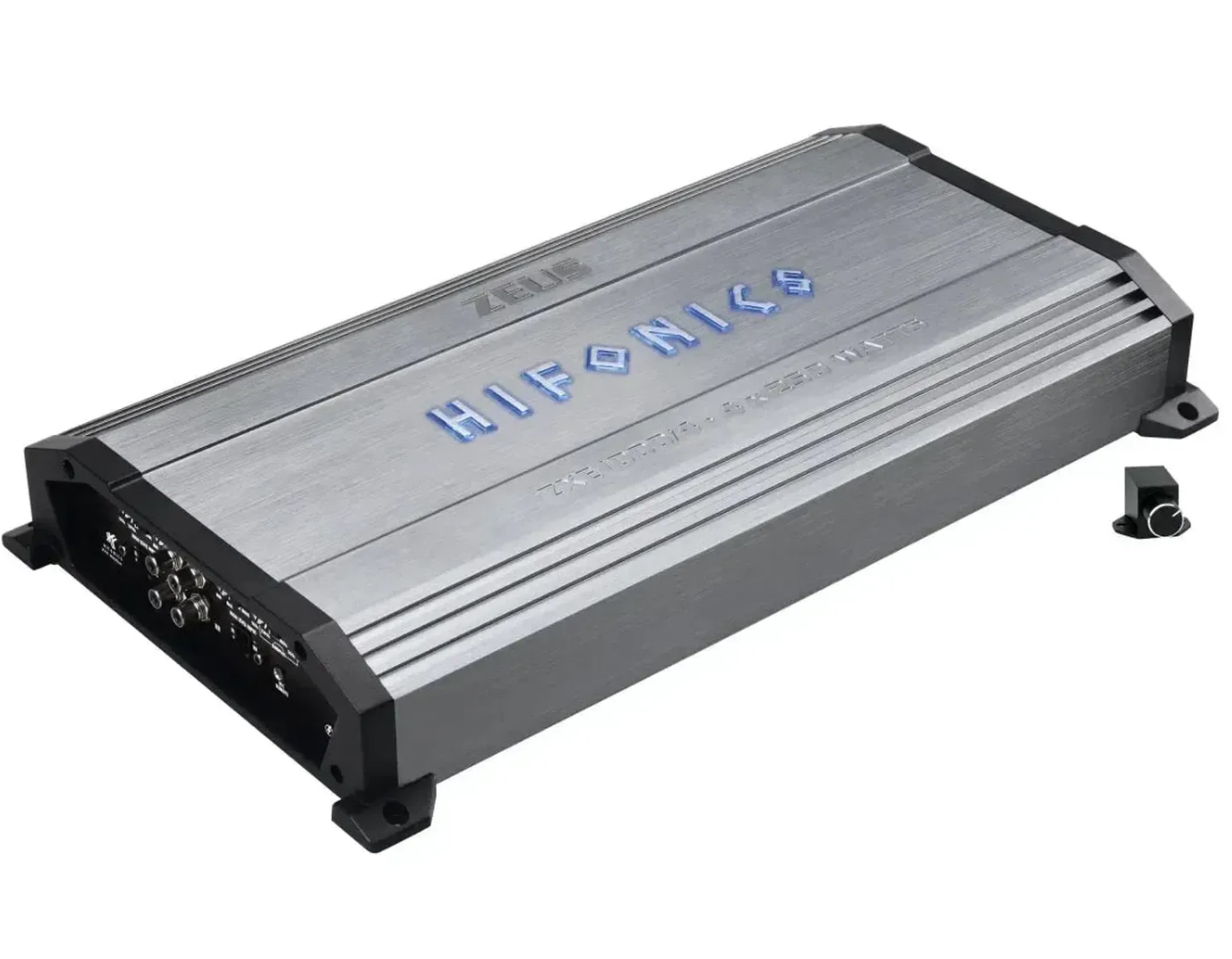
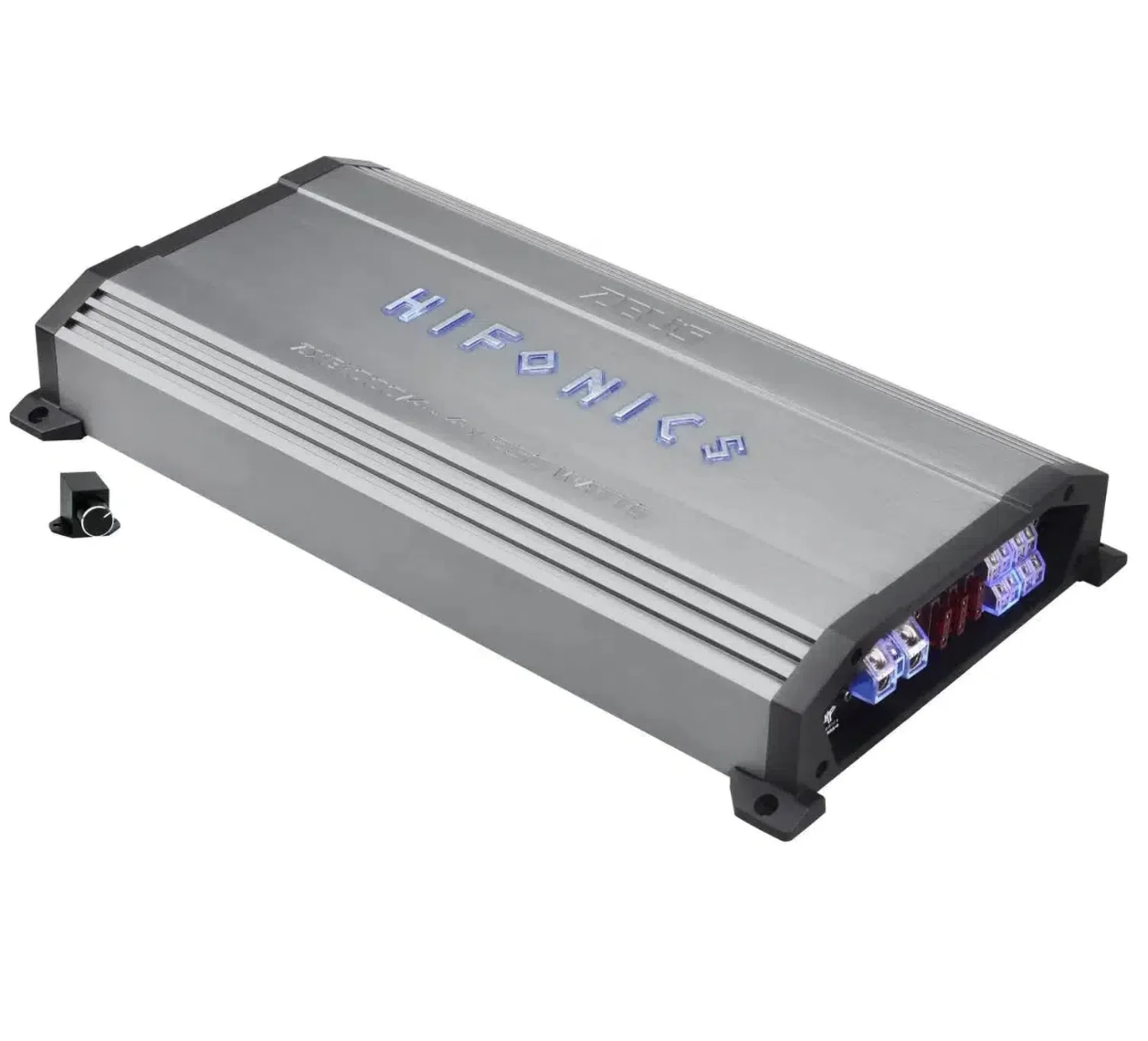
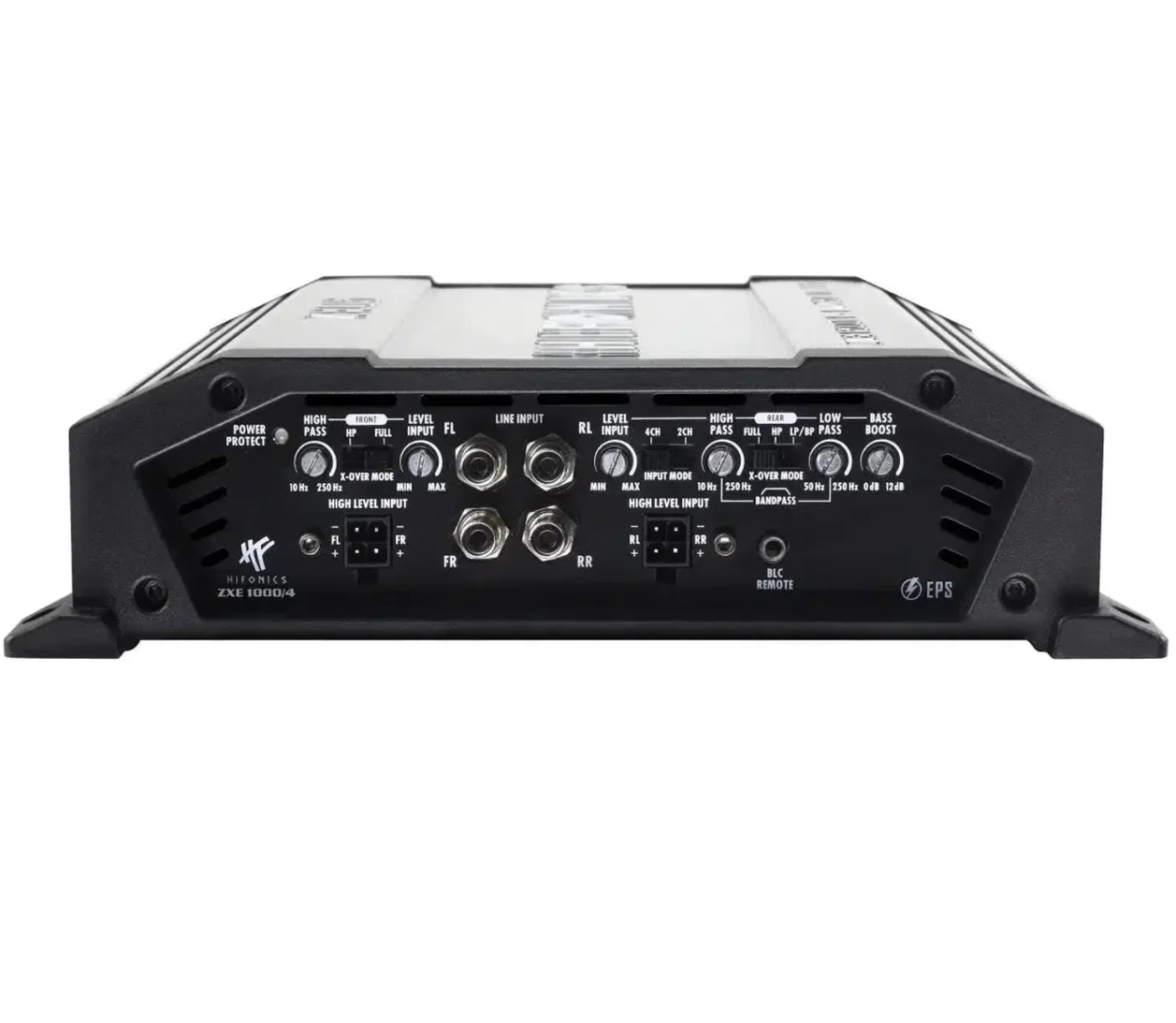
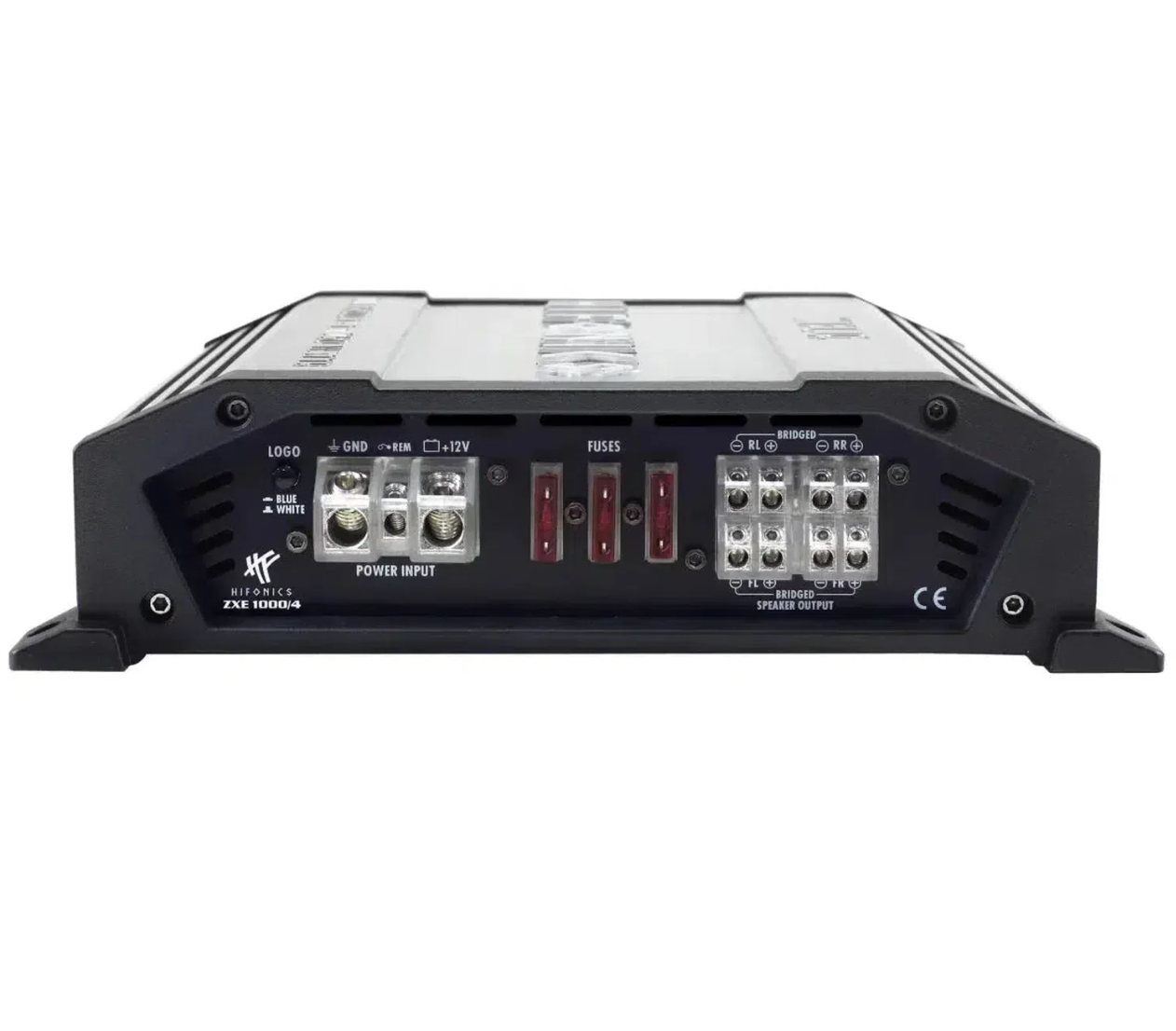
Hifonics ZXE1000/4 Amplifier
New Hifonics ZEUS EVOLUTION ZXE amplifiers are equipped with a rich set of features from the factory, such as high-level inputs with EPS®, automatic turn-on, Start-Stop system compatibility, fully adjustable filters, bandpass function, and remote bass level control. This makes them perfectly prepared for wide use in modern Car Hifi systems. The selection of internal components was not spared either - demanding and expensive NE5532 operational amplifiers, usually found only in much more expensive models, were used. The result is not only high performance but also incredibly smooth and clear sound.
The brushed aluminum heatsink in gray is a feast for the eyes in itself. Black end caps made of die-cast aluminum further emphasize the valuable appearance of the ZEUS EVOLUTION ZXE series. The optical highlight is the backlit Hifonics logo, which can be switched from blue to white. But not only the logo - the power and speaker terminals also shine with the typical Hifonics blue, adding an additional attractive visual effect to the device.
Main Features
- Screwed RCA connectors.
- Side parts made of die-cast aluminum.
- Backlit logo (blue or white).
- Blue backlighting of connection terminals.
- High-level inputs with EPS® (Error Protection System).
- Automatic turn-on function, ready for Start/Stop systems.
- Remote bass level control.
About the Brand
Hifonics is among the world legends in car audio. Since its inception in the 1980s, it has set standards in automotive sound and is a strong player in the amplifier, speaker, and subwoofer segments. The brand is known for its uncompromising philosophy - combining top performance with precise craftsmanship and distinctive design. Hifonics products appeal to all customers, from demanding audiophiles to enthusiasts who want to experience deep bass and maximum dynamics in their cars. Hifonics amplifiers are renowned for their high stability, clear sound, and enormous power potential. The speakers and subwoofers also excel with precise craftsmanship and long lifespan even under extreme load. Hifonics constantly innovates its products. Modern technologies, such as hybrid buffer capacitors, extremely rigid carbon membranes, MICA composite membranes, or advanced cooling, push the boundaries of sound even further. Besides top-notch amplifiers, you will find practical accessories in the portfolio, from remote bass controls to mounting accessories and designer protective grilles. If you are looking for a proven brand that combines a legendary name with modern technologies and top sound, Hifonics is the right choice for your car. Treat yourself to superior performance that you'll feel firsthand - with Hifonics, you'll always be one step ahead!| Catalog number | ZXE1000/4 |
| Brand | Hifonics |
| Links | Official web presentation |
| Energy class of the amplifierAmplifiers are divided into two basic classes: analog and digital . Analog amplifiers (A/B) have higher consumption requirements, but usually have a more natural sound. Digital amplifiers (D) have significantly lower consumption and higher efficiency, but the sound may not be as faithful as with classic analog amplifiers. | AB |
| Number of amplifier channelsAmplifiers are divided into: - Monoblocks - 2-channel - 3-channel - 4-channel - 5-channel - 6-channel - multi-channel Each channel is used to power one speaker for the coaxial type, or one side if they are component speakers. Monoblock type amplifiers are mainly used for subwoofers. 2-channel are suitable for both subwoofers and, for example, the front pair of speakers in a car. 3-channel is used for front or rear speakers + subwoofer. 4-channel are used for front + rear speakers or 1 pair of speakers + subwoofer. 6 or 5-channel are used for 2 pairs of speakers + subwoofer, most often. Bridging means connecting the amplifier to a bridge, using the + pole from one channel and the - pole from the other channel. In most cases this is shown as "BRIDGED" on the amplifier. | 4 |
| RMS power into 4 ΩRMS power when loading speakers or subwoofer at 4 Ω. RMS power is the constant power of the amplifier and is one of the most important parameters when choosing an amplifier. | 4 x 150 / 2 x 500 W |
| RMS power into 2 ΩRMS power when loading speakers or subwoofer at 2 Ω. RMS power is the constant power of the amplifier and is one of the most important parameters when choosing an amplifier. | 4 x 250 W |
| Low-pass filter (LPF)LPF / LP or "low pass filter" offers the possibility to adjust the amplifier using a potentiometer so that the lower band plays only the frequencies in a certain band that you need. This filter is used to adjust the frequency range for the subwoofer, so that it does not overload or distort the sound. Example: Amplifiers most often have an LPF from 20 to 300 Hz. We recommend setting this potentiometer in the range of 45-80 Hz. | 50 - 250 Hz |
| Bass boostBass boost or bass enhancement. With this function, the bass itself can be emphasized, at a high level of bass boost, the speakers and the subwoofer can distort a lot and the sound will be worse than better. We therefore recommend using the "bass boost" function wisely. With maximum use of bass boost, there is a risk of damage to the speakers and thus to the subwoofer. | 0 - 12 dB |
| Damping factorDF - Damping Factor . It is the ratio of the load (repro + cables, crossover, etc.) to the internal resistance of the amplifier. The bigger the DF, the more controlled the bass. Amplifiers with a lower DF tend to hum. Subwoofers with a higher Q in the bass reflex and sometimes in the enclosure will also cause humming. | > 300 |
| The value of the fuses on the amplifierFrom the value of the fuses on the amplifier, you can get a true picture of the real performance of the amplifier. | 3 x 40 A |
| High level inputsThe high-level input on the amplifier allows connection directly to the existing speakers in the car without additional purchase of an external high/low adapter. Important equipment in the case of installing an amplifier on an original car radio. | Yes |
| Automatic on and offThis function allows you to automatically switch on the amplifier. | Yes |
| Socket input terminalsFerrule terminals allow better wiring contact to the amplifier. It is also a more secure form of terminals. If you are tightening the sleeve terminals, we recommend retightening them after 1 day, as the connected cable gradually compresses. | Yes |
| Input for wired remote controlIf the amplifier has a remote control input. | Yes |
| Remote control included in the packageSome models of amplifiers also come with wired remote controls in the package, which on one side plug into the amplifier and on the other side you have a potentiometer that you can place anywhere in the cabin. A common place to place the remote control is under the steering wheel. The advantage is the regulation of power, and therefore volume, depending on driving conditions and the mood of the crew in the car. | Yes |
| Dimensions of the amplifier | 248 x 64 x 442 mm |