
Harmony HB1.6K2X speakers
More about the product
- You can return the goods to us within 14 days
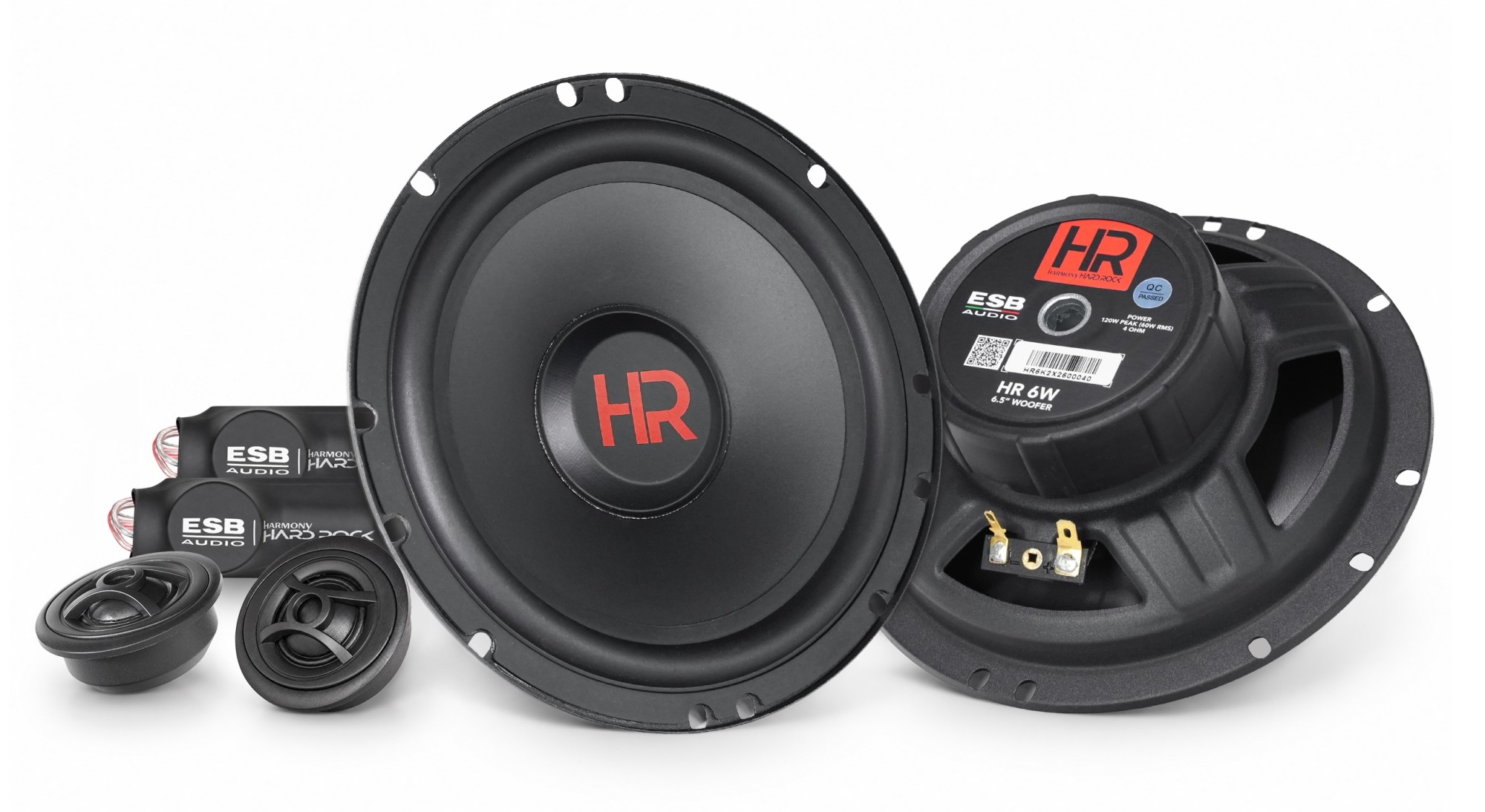
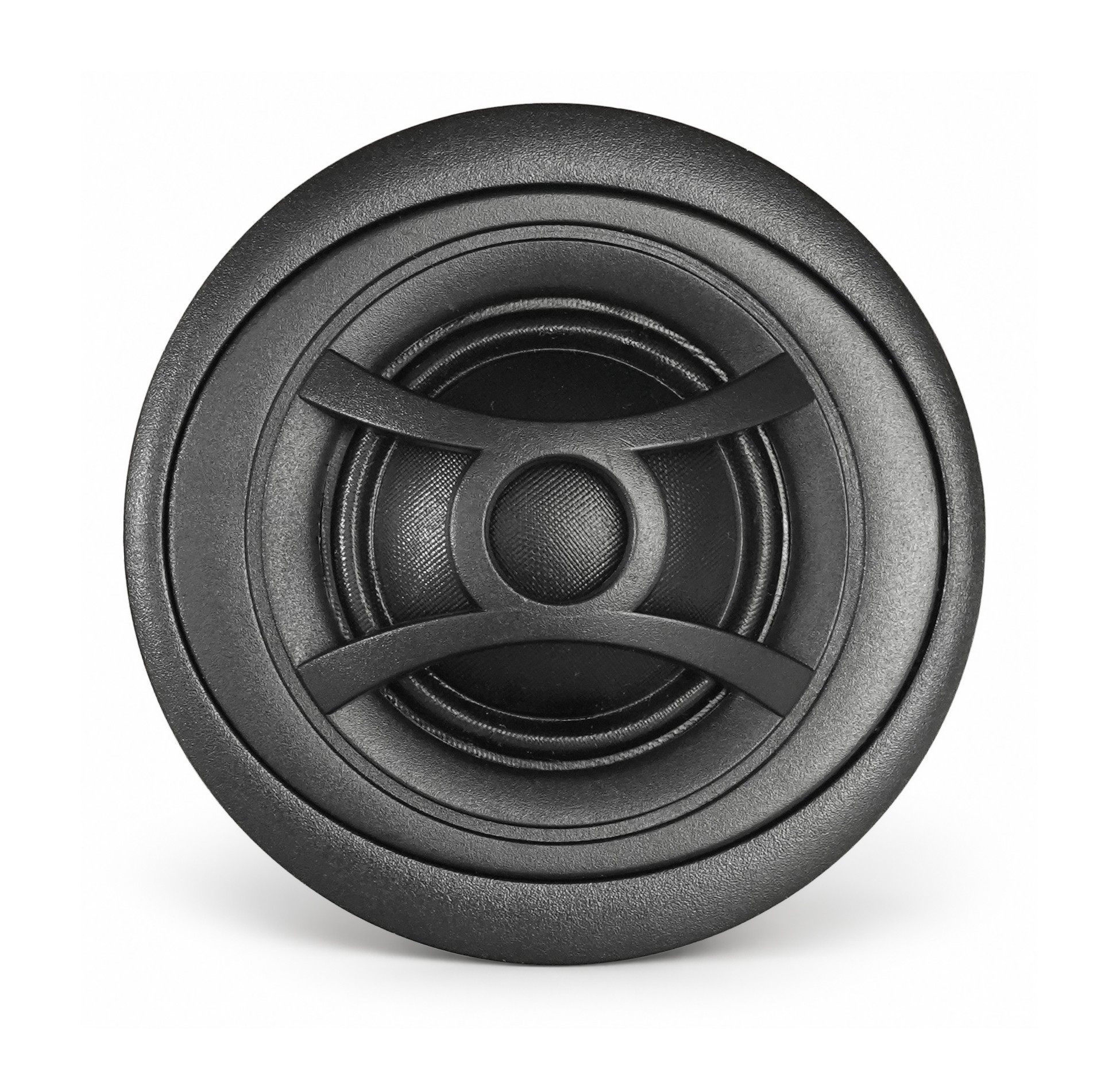
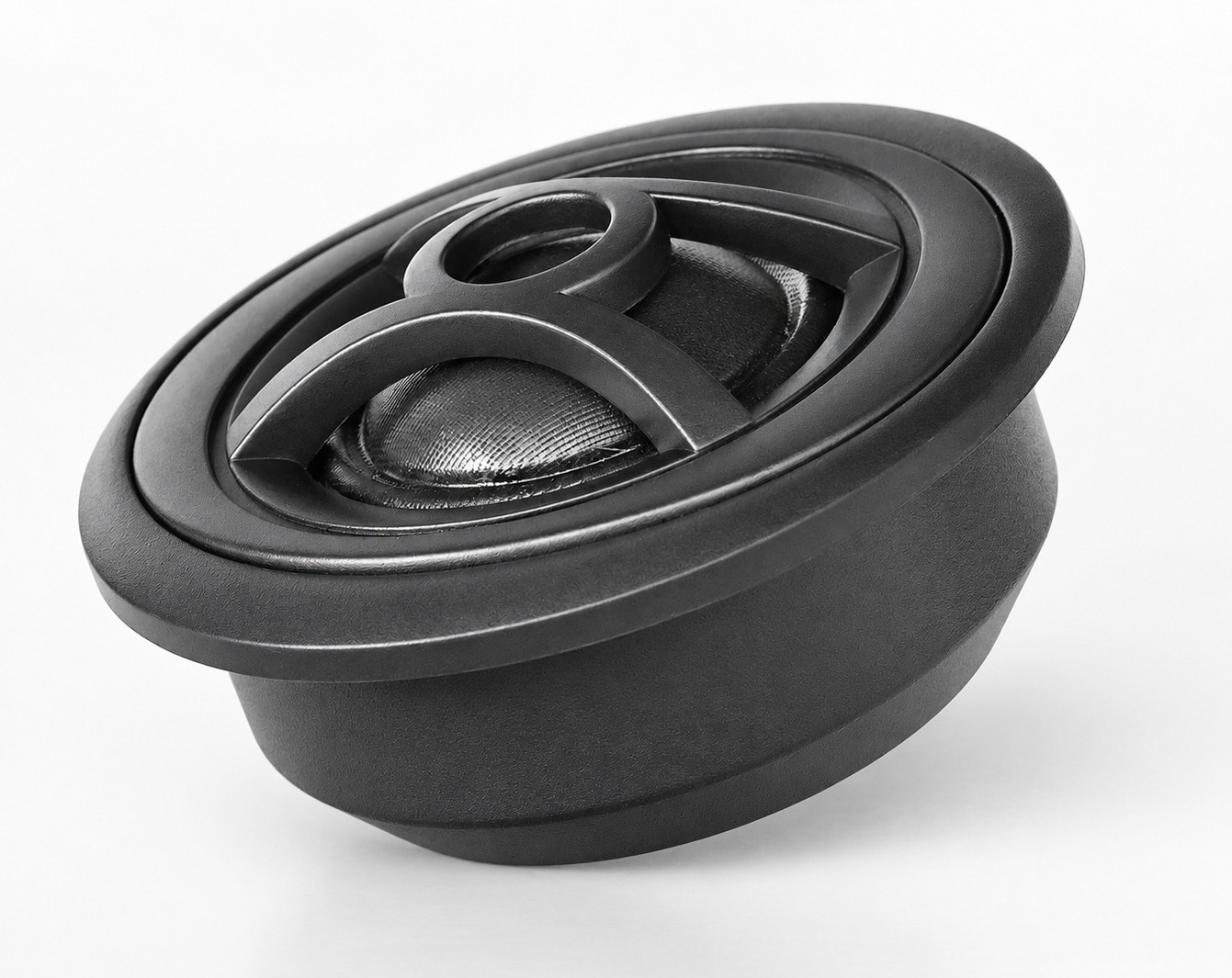
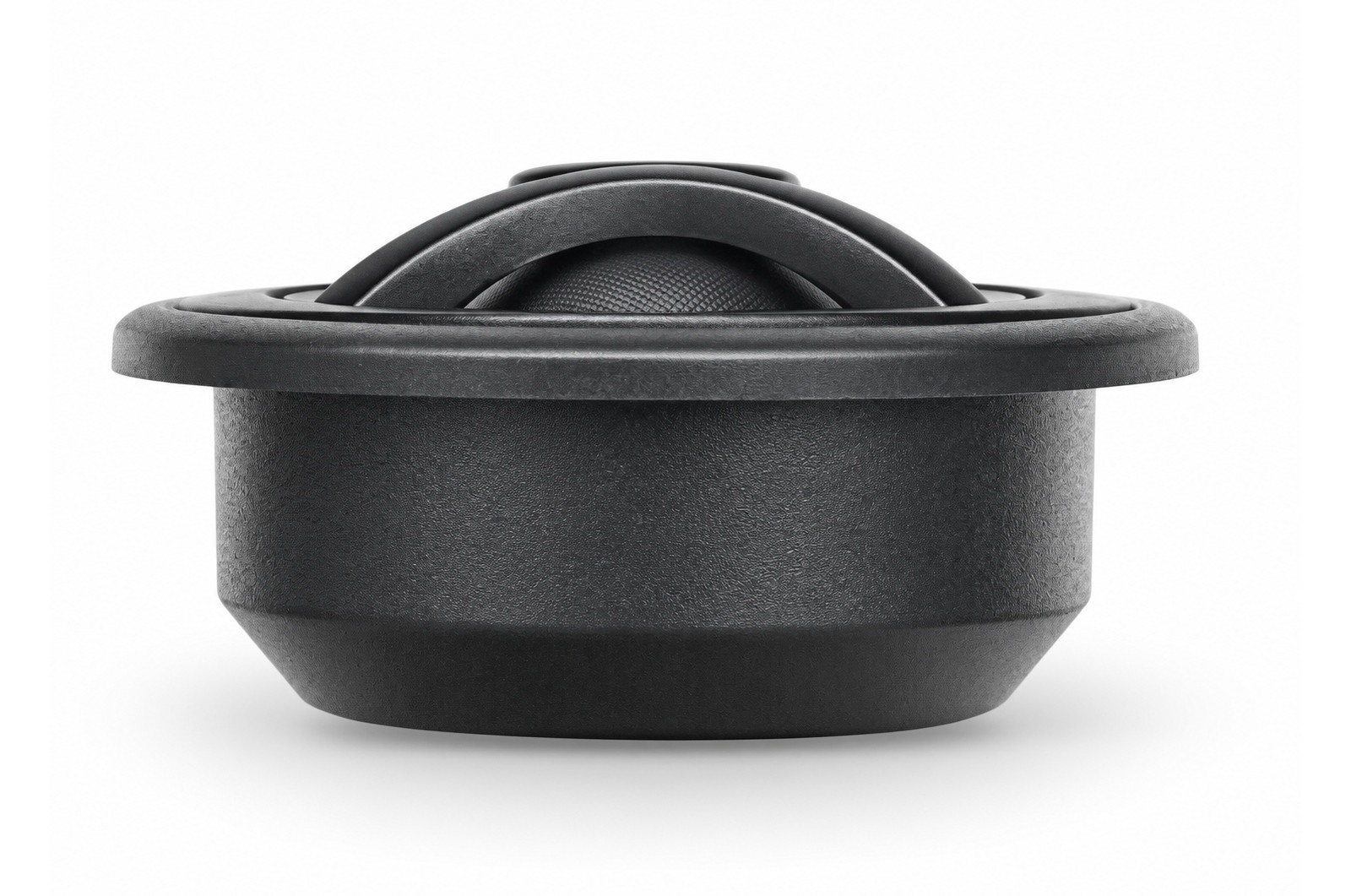
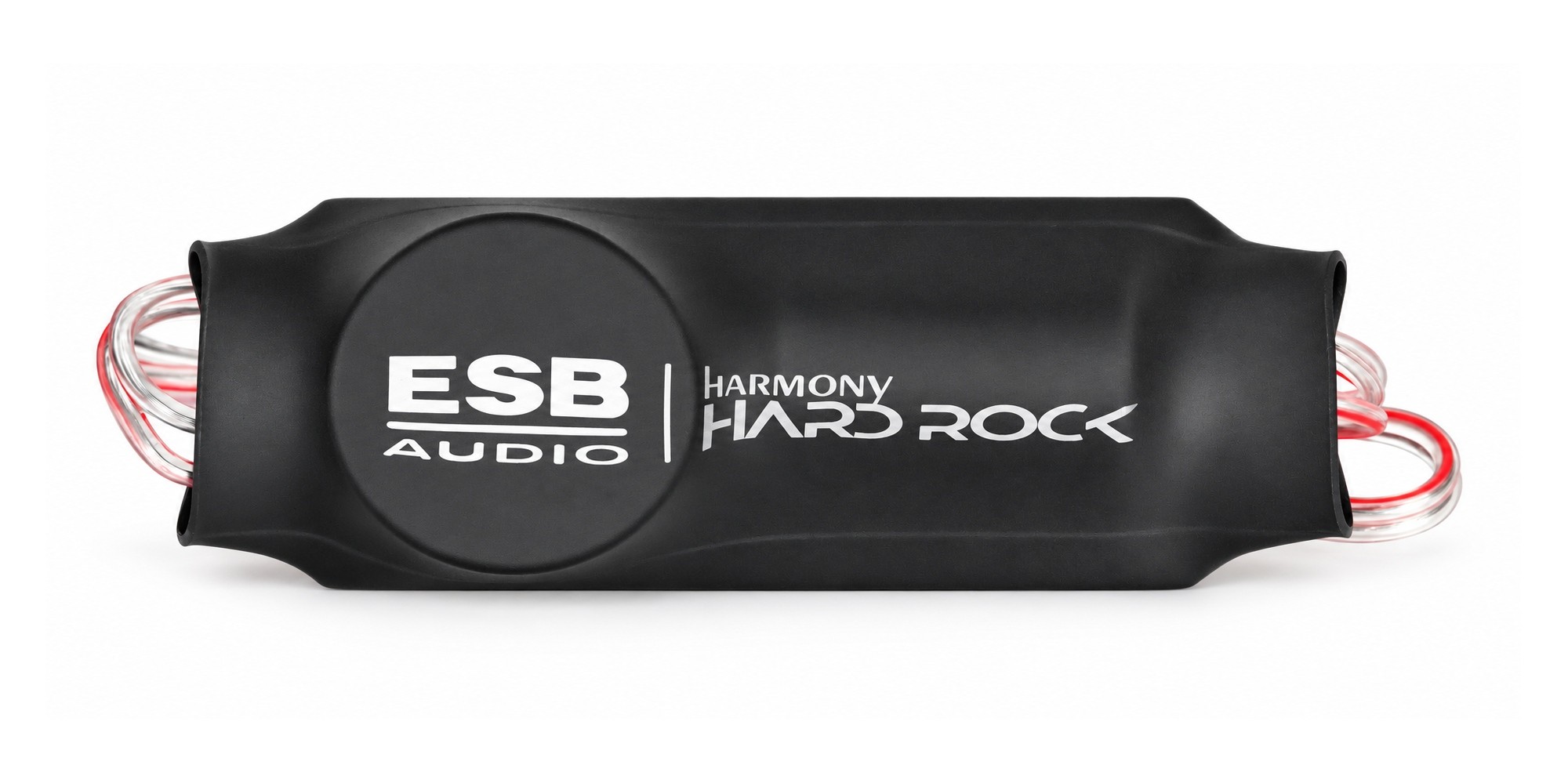
Komponentní reproduktory ESB Audio HR 6K2X
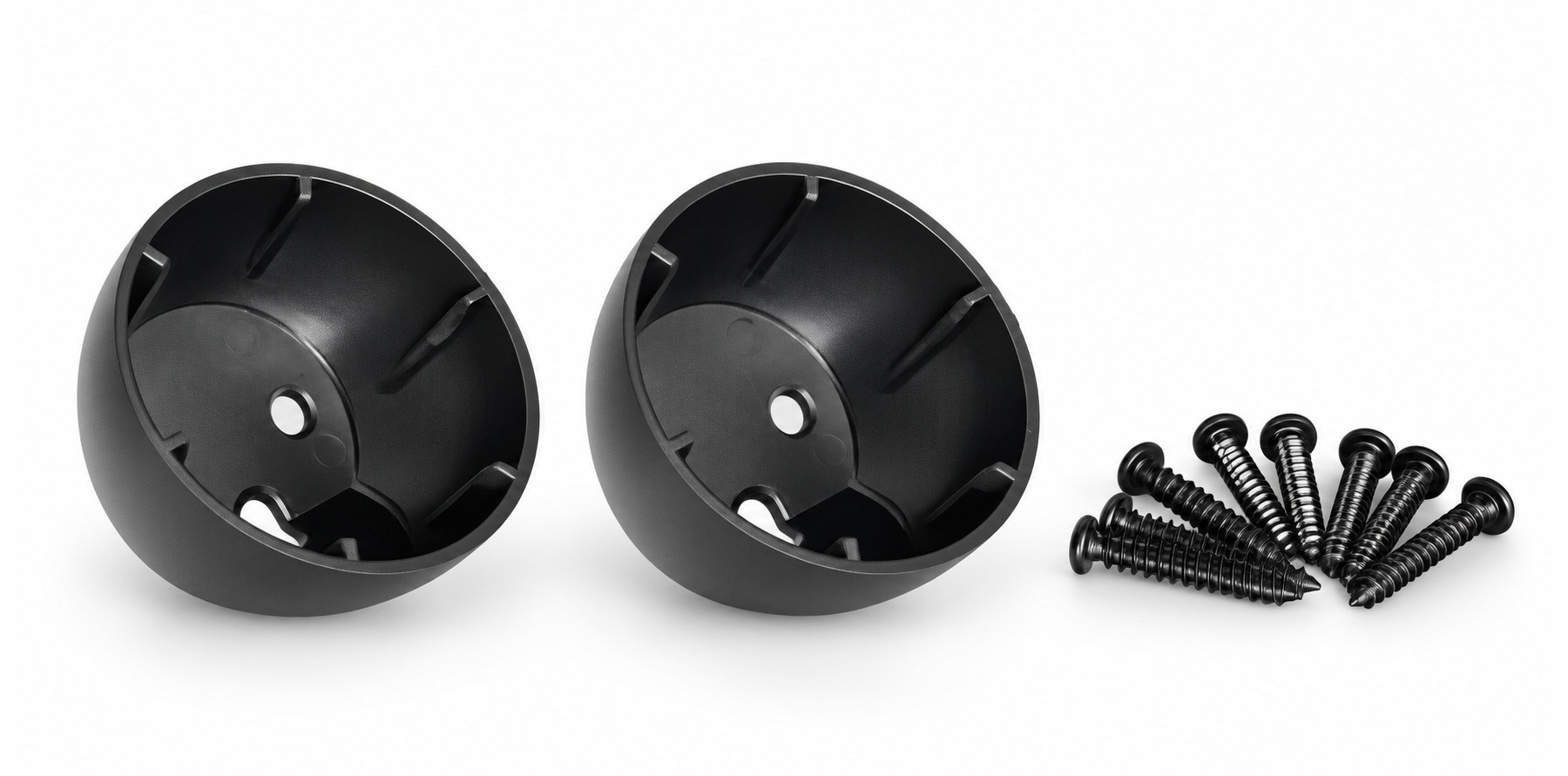
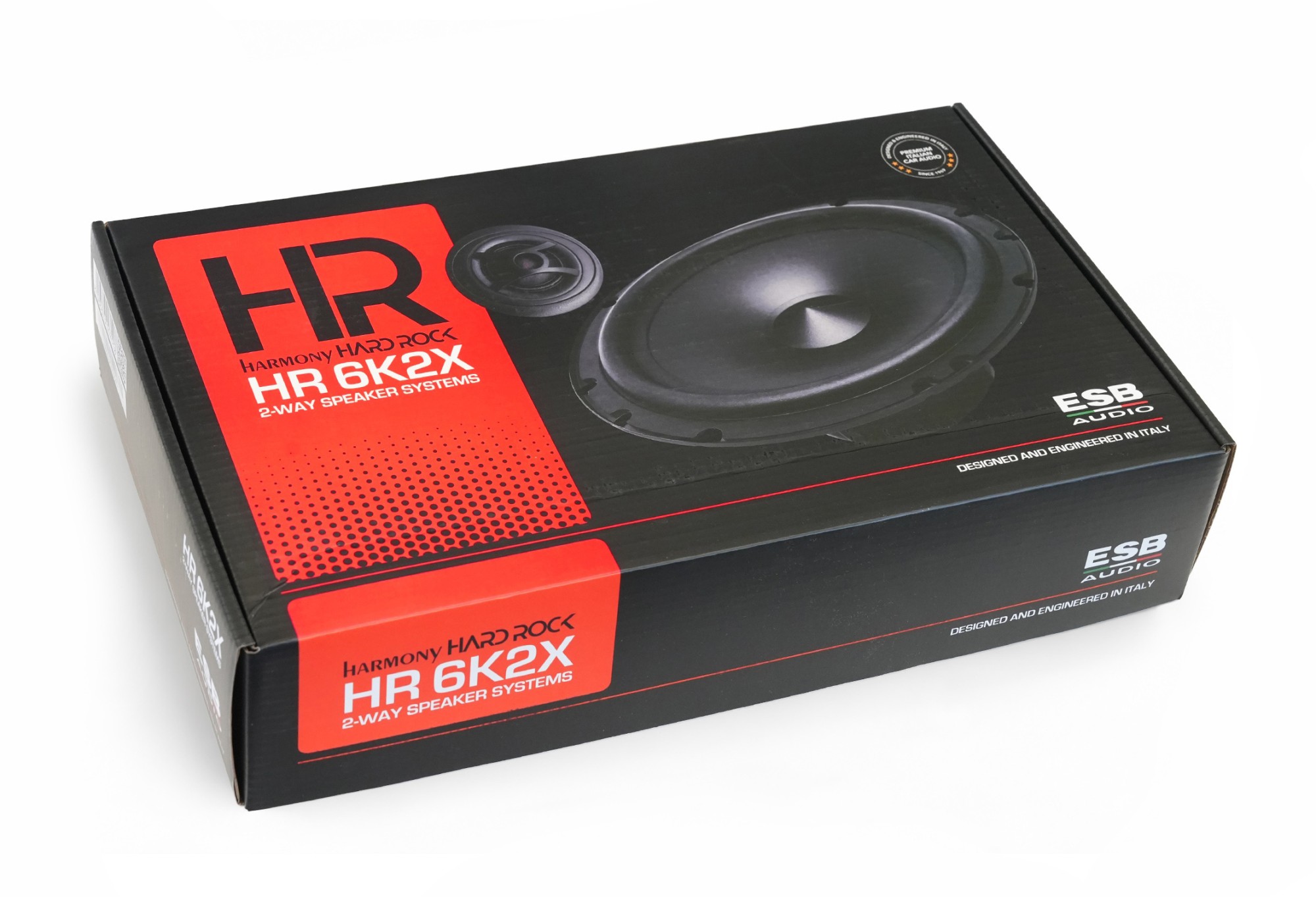
ESB Audio introduces the component speakers of the entry-level Harmony Hard Rock series, which combine quality workmanship, pleasant sound and an affordable price. The HR 6K2X model is designed as a universal solution for upgrading factory audio and, thanks to its high sensitivity and low power demands, can be operated without issues from a factory head unit, an aftermarket car radio or an external amplifier. A light paper cone of the midbass driver delivers a natural and balanced presentation, offering an ideal mix of low weight, stiffness and the ability to damp unwanted resonances. The optimized ferrite magnetic system ensures precise control of the cone and low distortion even at higher volumes. The separate tweeters use a lightweight fabric dome and a neodymium magnet for smooth, detailed and naturally sounding high frequencies. The system also includes compact crossovers and mounting accessories that simplify installation into a wide range of vehicles.
Membrána a závěs
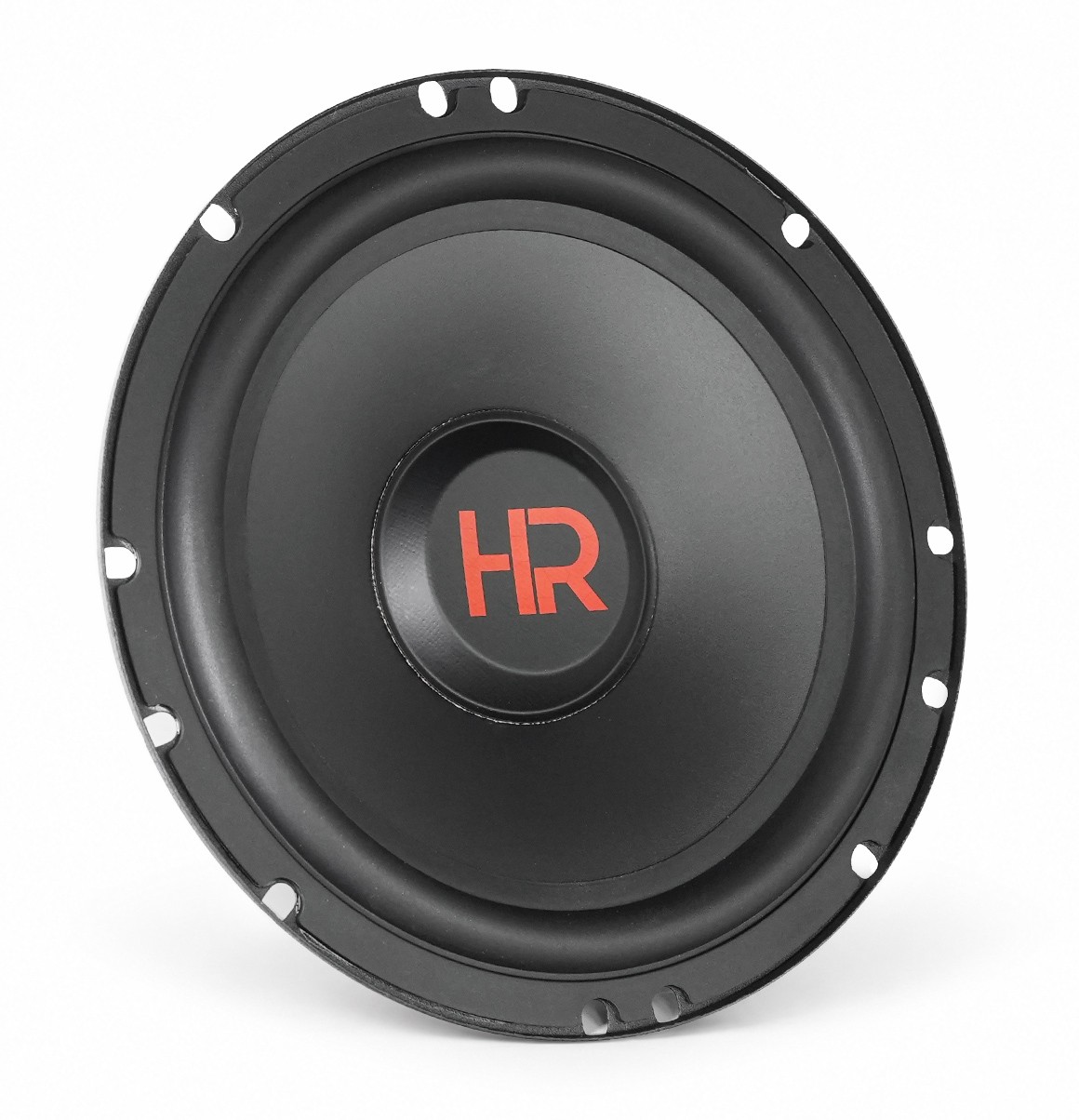
The midbass cone is made of paper, which provides an ideal combination of low mass, required stiffness and a natural ability to damp unwanted vibrations. Because of this, the cone can respond quickly to changes in the audio signal while maintaining good control even at higher volumes. The result is a clean midrange, natural instrument timbre and accurate reproduction of lower frequencies without unwanted resonances. The rubber surround ensures proper damping and lateral stability of the cone, limits undesired movements of the moving assembly and helps keep the voice coil precisely centered in the magnetic gap. Its geometry and elasticity were designed to prioritize maximally linear cone movement, thereby reducing distortion and improving bass dynamics.
Otevřený koš
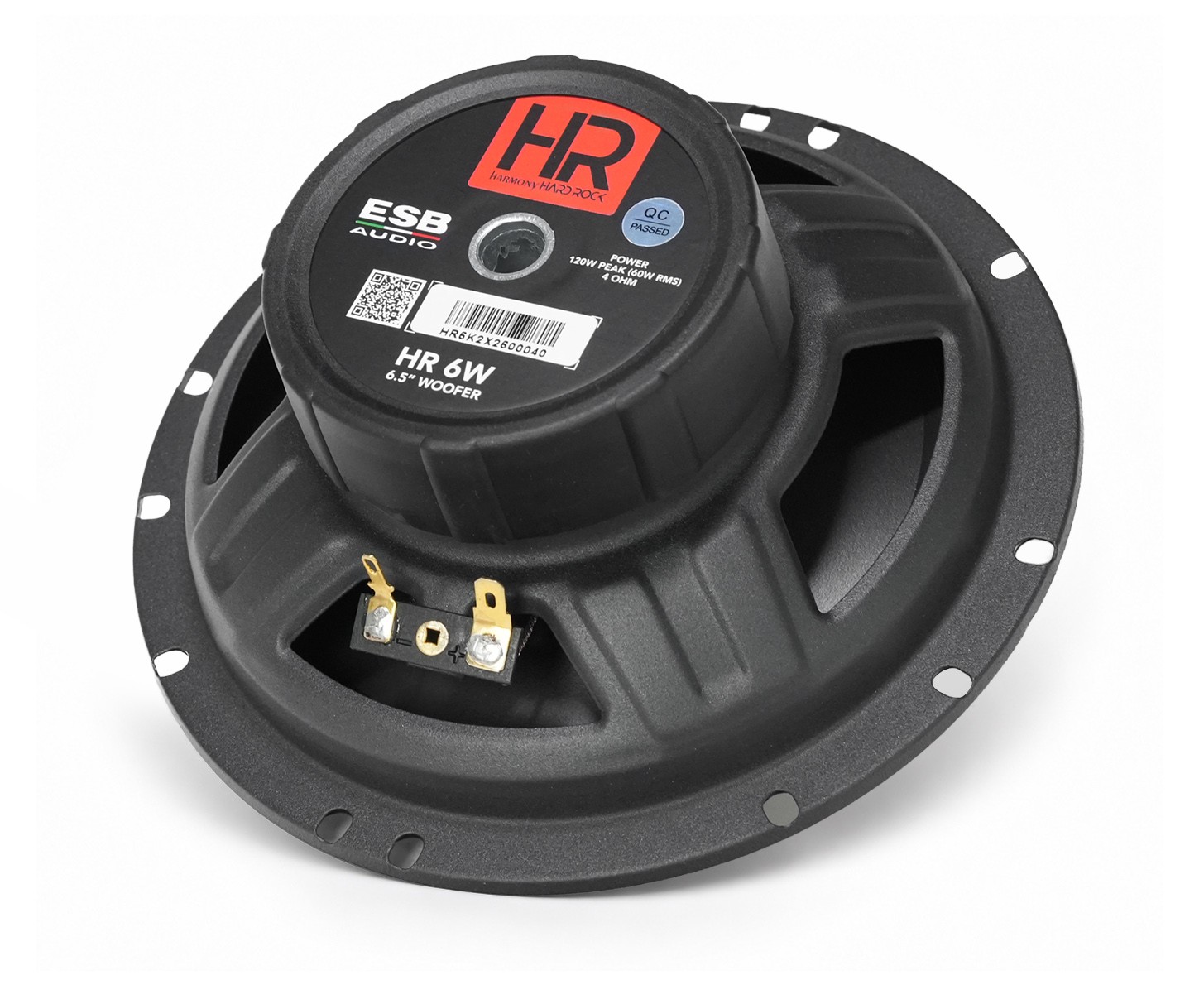
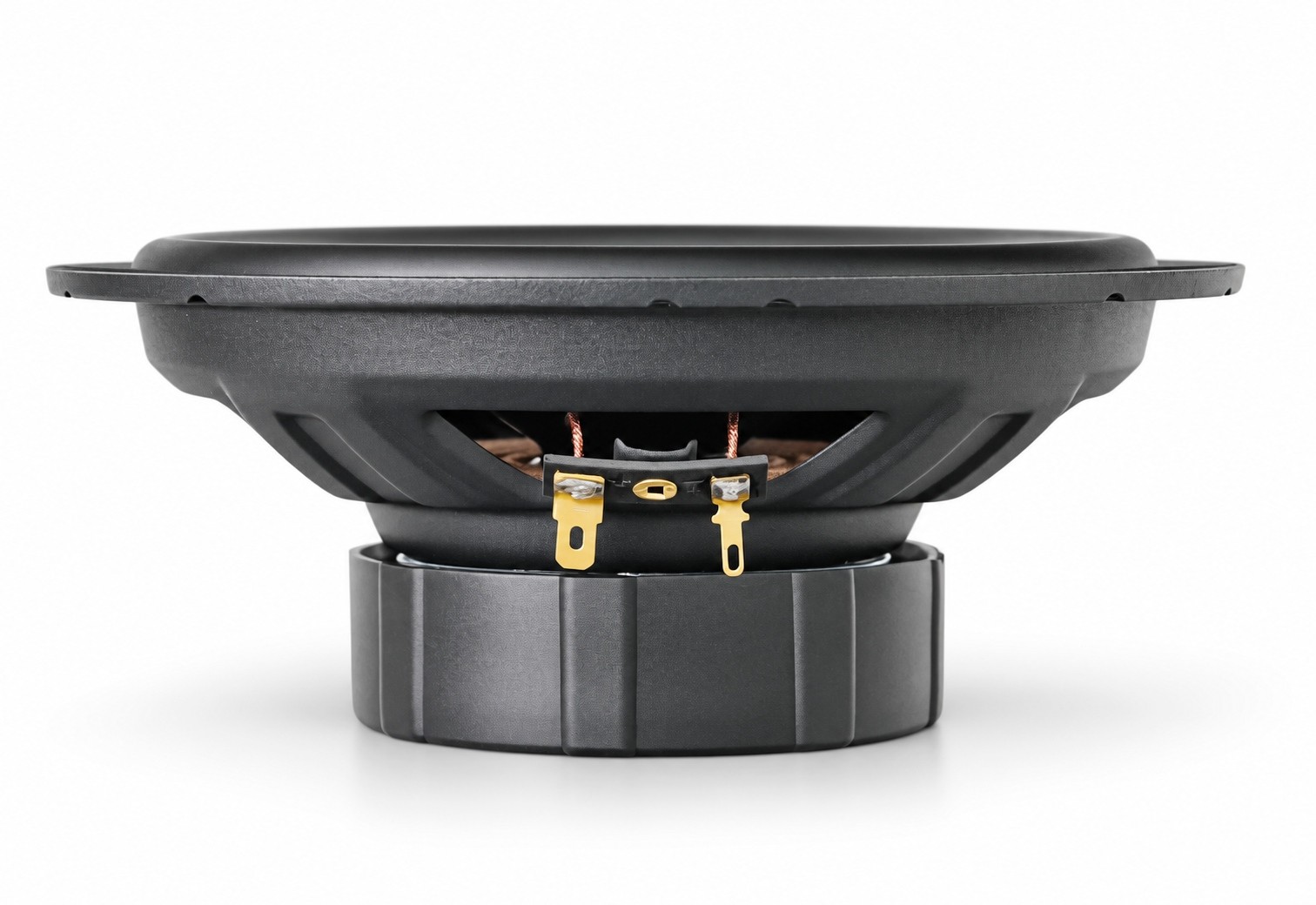
The midbass basket uses an open, aerodynamically efficient design that supports free airflow behind the cone and limits the formation of unwanted back pressure. The shape of the individual spokes is engineered to have minimal impact on the moving parts of the driver while providing sufficient mechanical stiffness even at larger cone excursions. The open design also improves ventilation of the moving assembly and helps effectively dissipate heat generated under higher loads. The result is more stable driver behavior, better control of the cone and higher long-term reliability.
Magnetický systém
ESB’s many years of experience in designing magnetic motors is reflected in the Harmony Hard Rock series. The magnetic system is engineered to use the energy produced by the motor as efficiently as possible, providing the right balance between magnet size, weight and resulting magnetic flux. Thanks to careful optimization of electromagnetic properties, the driver achieves good sensitivity, precise cone control and stable behavior even at higher power levels. The magnetic circuit also creates suitable conditions for the linear movement of the voice coil across the entire operating range.
Kmitací cívka
The voice coil is one of the key elements of the midbass driver, and ESB devoted extra attention to its design. The used aluminum former contributes to effective heat dissipation and allows the speaker to better handle long-term loads. The low mass of the moving parts also supports fast cone response and helps extend its usable range toward the mid and higher frequencies. The result is a more open, natural and pleasantly musical character of reproduction, which is typical even for ESB’s higher model ranges.
Vystředění membrány
ESB’s development team also devoted considerable effort to the design of the spider, i.e. the centering suspension. It must ensure perfectly precise and linear cone movement at both low and high power levels, while also preventing the driver from exceeding its safe mechanical excursion. Its construction supports ventilation of the voice coil and helps remove heat from the lower part of the driver. At the same time, it reduces back pressure caused by cone movement, which contributes to better dynamics and more precise control of the entire moving system.
Výškový reproduktor
The separate tweeter in the Harmony Hard Rock series is designed with an emphasis on high power handling, low distortion and a pleasant reproduction character. The fine dome used has very low mass and low susceptibility to mechanical deformation, resulting in a smooth, linear and well-extended frequency response. The outcome is clean and detailed highs without unnecessary harshness, matching well with the midbass. The neodymium magnet has been optimized for high efficiency and precise control of cone movement, allowing the tweeter to operate with ample headroom and a wide usable bandwidth.
Frekvenční výhybka
The system includes compact filters intended for correct division of the frequency band between the midbass and tweeter. The crossover design accounts for a higher power reserve than the drivers themselves require and uses high-quality components to minimize their saturation at higher volumes. This reduces distortion and allows the tweeter to operate in its optimal frequency range. The entire system can thus use its potential even during dynamic listening and maintains clarity and balance across a wide range of volume levels.
Modelová řada Harmony
The Italian brand Harmony was born in the 1980s along with the first home speakers produced by the Italian hi-end manufacturer ESB Audio. Production of car speakers began in the 1990s with a wide range of products that combined high sound quality and a significantly lower price compared to ESB Audio’s home products. That was the main mission of the Harmony brand — to provide a high standard of sound quality with faithful reproduction of the entire audio spectrum, superior workmanship and all at a more accessible price. The same applies today, when ESB Audio decided to create the new product lines Harmony Blue Note and Hard Rock. And why Blue Note? With this term ESB Audio recalls the Blue Note Jazz era of 1930 to 1950. It’s a way to connect the product names with important moments in modern musical history. Products labeled "Blue Note" are characterized by high-quality, uncolored sound for undisturbed listening across all music genres. Within the Harmony range you will also find "Hard Rock" products with a different tuning, richer and deeper bass and higher power. The Harmony series will gradually offer a wide array of products aimed at providing a complete range of audio devices to meet the needs of the broadest group of music enthusiasts.
O značce ESB Audio
The history of ESB Audio goes back to 1972, when this Italian brand was officially founded. ESB Audio is among the most renowned loudspeaker manufacturers of the second half of the 20th century and over its rich history introduced many innovative technologies and numerous high-end home audio products that achieved huge worldwide success. Based on these experiences, ESB engineers began research in 1984 focused on optimizing sound in the automotive environment, and two years later they started producing the first car speakers. Due to great success, ESB increasingly focused on the automotive industry and its demanding challenges. Car audio became a phenomenon of the time and in 2005 a school dedicated exclusively to vehicle sound systems was established in Aprilia, where ESB is based. At that time a definitive decision was made to leave the world of home audio and concentrate solely on vehicle audio. Today ESB, together with the American maker of audiophile amplifiers and DSP processors Zapco, is part of the Italian Apex Group. The lineup includes several speaker model ranges led by the high-end three-way system Novemila, which represents some of the most acoustically and aesthetically advanced speakers on today’s market. And this is ESB audio’s main mission: to manufacture speakers of the highest quality focused on faithful sound that allows the user to hear reproduction as the performer intended. Exactly according to the company slogan "Just like live".
| Catalog number | HR 6K2X |
| Brand | ESB Audio |
| Links | Official web presentation (English) |
| Speaker typeCoaxial speakers: Coaxial speakers are characterized by a so-called all-in-one design. The tweeter and mid-bass speaker are in one basket. The advantage is simpler assembly, but thanks to the connection or proximity of the bands in one speaker, the sound quality will usually be reduced. As a rule, in the middle of the mid-bass speaker, there is a tweeter whose voice coil works in the second air gap of the common magnetic circuit. The three-way coaxial speaker consists of a mid-bass speaker, a center speaker and a separate tweeter in the front on a special beam. Component Speakers: Component speakers are characterized by a division into individual frequency bands, treble + mid-bass + or. bass band. The individual speakers can be placed completely separately, which results in a better sound and acoustic performance. In the vast majority of cases of component speakers, an external crossover is also supplied, which divides the treble, middle / mid-bass, and into the three-band the bass band or allows setting the decibel level of the tweeter (e.g. +2 dB, 0 dB, -2 dB), steepness (e.g. 6dB/Oct. 12dB/Oct.) or active or bi-amp connection. | Component 2-band |
| RMS powerRMS speaker power is the constant power of the entire system, not just one speaker or one side. This is also the performance of continuous use of the speakers. If the RMS power is exceeded for a long time, the speakers may be irreversibly damaged! | 65 W |
| Max. (maximum performancePeak performance , which the speaker can play for a moment (approx. 0.5 s), for example when hitting drums in a song. If the max power is exceeded, the speakers will usually be damaged! | 130 W |
| Sensitivity (SPL 2.83V/1m)Sensitivity, sensitivity or efficiency of the speaker. Speaker sensitivity is given in decibels (dB) and simply put, the higher the value, the lower the demands on the amplifier's power. This is a defacto rating of how a speaker converts watts to sound. Sensitivity ratings are in noise level measured at 1 meter from the speaker using 1 W (watt of power) or using 2.83 volts at the source at 1 meter. A higher decibel level means the speaker is louder with less power. For every 3 dB increase in sensitivity, the speaker requires half the power to reproduce the same volume. For example, if an 88 dB speaker needs 100 Watts to produce a certain volume, then a speaker with a sensitivity of 91 dB needs only 50 Watts to reach the same volume. | 92 |
| Sensitivity (SPL 1W/1m)Sensitivity, sensitivity or efficiency of the speaker. Speaker sensitivity is given in decibels (dB) and simply put, the higher the value, the lower the demands on the amplifier's power. This is a defacto rating of how a speaker converts watts to sound. Sensitivity ratings are in noise level measured at 1 meter from the speaker using 1 W (watt of power) or using 2.83 volts at the source at 1 meter. A higher decibel level means the speaker is louder with less power. For every 3 dB increase in sensitivity, the speaker requires half the power to reproduce the same volume. For example, if an 88 dB speaker needs 100 Watts to produce a certain volume, then a speaker with a sensitivity of 91 dB needs only 50 Watts to reach the same volume. | 89 dB |
| ImpedanceImpedance - measurement of electrical resistance. When buying speakers, it is important to make sure that the impedance matches the amplifier or car stereo you are using. Example: A 2 Ohm speaker cannot be connected to an amplifier that is only stable up to 4 Ohms! A 4 Ohm speaker can easily be used with an amplifier that is stable up to 2 Ohms. The most common speaker impedance today is 3 - 4 Ohm. | 4 Ω |
| Frequency rangeThe ability of the speakers to play a signal from the lowest frequency to the highest, or the speaker's ability to faithfully reproduce sound in a specific frequency band. Professionally: In the frequency range from 40 to 16,000 Hz, the vast majority of fundamental and overtones (harmonics) of all musical instruments are found. We are interested in the course of the radiated sound pressure in this range of frequencies when the loudspeaker system is supplied with constant power. We call this course the frequency characteristic, which tells us the level of radiated sound pressure in decibels (dB) depending on the frequency. The frequency characteristic of a speaker or speaker system can be expressed most succinctly with a graph. Mostly, however, the frequency characteristic is indicated by indicating the maximum tolerance of the sound pressure in the given frequency range, e.g. 50 to 15,000 Hz -+ 6 dB. Since the frequency characteristics of loudspeakers and systems in general are quite uneven, some manufacturers do not even specify this maximum tolerance of sound pressure in decibels in their catalogs for reasons of prestige. Data impoverished in this way is unfortunately worthless. What is valid is that the manufacturer offers a speaker system with a frequency range of 30 to 20,000 Hz, if he is worried about stating the maximum unevenness of the sound pressure in this range, because he can have a tolerance of, for example, +- 20 dB. The unevenness or undulation of the frequency curve in good speaker systems for high-quality music performance should not exceed +-3 dB in the 80 to 12,000 Hz band and +-6 dB in the 40 to 16,000 Hz band. Greater unevenness already depletes or emphasizes certain tonal areas, which can cause audible or even disturbing distortion. The proportion between fundamental tones and higher harmonics also changes, thereby changing the color of the sound, and individual musical instruments as well as the entire musical image sound unnatural. | 65 - 20000 Hz |
| The diameter of the mid-bass speakerWe state the diameter of the speaker as the diameter of the entire speaker, not including the mounts, when smaller speakers (87, 100, 130 mm) have extra mounts. Some speakers are oval and there the dimension is given in inches, always the shortest side to the longest side. One inch is approx. 2.5 cm. | 165 mm |
| Installation depth of the mid-bass speakerThe installation depth of the speaker is measured from the bottom edge of the magnet to the bottom edge of the tin, plastic or cast speaker basket, or speaker bearing surfaces. | 58 mm |
| Mid-woofer diaphragm materialThe material that was used for the speaker diaphragm. Don't be afraid of the paper, it surprisingly has a very natural and high-quality sound and, thanks to the surface treatment, it can withstand moisture without any problems. | Pressed paper |
| Voice coil diameter of the mid-bass speaker | 25 mm (1\") |
| Magnet | 9.1 Oz Ferrite |
| Overall tweeter diameterThe total diameter of the tweeter is given as the diameter of the individual tweeter without the installation houses. | 25 mm |
| Tweeter dome diameterThe net diameter of the dome (diaphragm) of the tweeter. | 20 mm |
| The overall depth of the tweeterThe total depth of the tweeter itself without the installation houses. | 16 mm |
| Tweeter dome materialThe shell material that was used in the manufacture of the tweeter. | Silk |
| Frequency crossover included in the packageThe crossover is an important part of defacto all loudspeakers. A crossover usually contains different resistor values, coil sizes, and capacitor types that fundamentally modify the sound. We describe below what the turnouts are for. Component Speakers: A crossover is part of every quality component speaker system. Its task is to ensure the distribution of frequencies that the amplifier produces in the entire acoustic spectrum of frequencies so that each of the speakers receives only that part of the band that it can optimally play in terms of efficiency and minimal distortion. Coaxial speakers: In most cases, coaxial loudspeakers have a simple crossover (6dB/Oct.) formed by a capacitor at the tweeter. | Yes |
| Cover grids included in the packageOriginal cover grilles in speaker packaging. | No |
| Price forIf the price is for a pair, the package always includes 2 pieces of everything, e.g. 2x mid-bass, 2x tweeter and 2x crossover. | Few |
Evaluation
You might also be interested
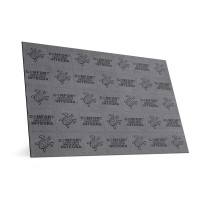
 TipQuick previewanti-vibration material, 700 x 500 mm, thickness 2 mm, MLF 0.26, weight 3.23 kg/m²7,96 EURIn stockComfortmat Integra Gen2
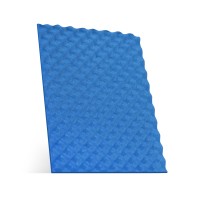
 TipQuick previewsound insulation material, 700 x 500 mm, thickness 6 mm, insulation 32 dB, weight 3,57 kg/m²14,49 EURIn stockComfortmat Tsunami
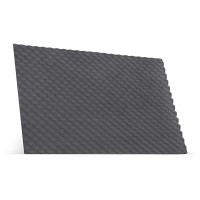
 TipQuick previewacoustic sound-absorbing material, 500 x 350 mm, thickness 18 mm, weight 1.22 kg/m²12,49 EURIn stockComfortmat Soft Wave 15 XL
 TipQuick previewsound absorbing material, 1000 x 700 mm, thickness 15 mm, weight 0.51 kg/m²23,96 EURIn stockHarmony HB 10 US Free transport
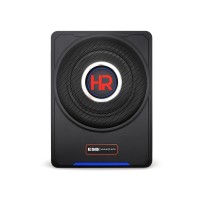 TipQuick previewactive subwoofer under the seat, 10", 130 W RMS239,00 EURIn stock
Recently viewed products
 Quick preview9-3 (06->), 9-5 (06->)17,16 EURWe usually stock in 1 - 3 daysSpeakers for Alfa Romeo MiTo set no. 2 Free transport
 -5 %Quick previewGladen speakers for Alfa Romeo MiTo front and rear doors226,36 EUR
 Quick previewOEM box for 10" subwoofer for BMW 3 (E91 Touring) (04-13)145,90 EURWe usually stock in 1 - 3 daysRigum car mats for Fiat Talento / Nissan NV300 / Opel Vivaro / Renault Trafic
 UpdatedQuick previewrubber car mats for Fiat Talento 3rd series (16->) / Nissan NV300 3rd series (14->) / Renault Trafic 3rd series (14->), Trafic 3rd series (21->)25,90 EURIn stockPlastic ISO connector cover 4carmedia 331322
 Quick previewISO plastic connector - speaker section1,16 EURIn stockSinus Live bassPUMP III 4 Ω
 Quick previewbass pump62,99 EURIn stockSound system for BMW 2 (F45, F46) Free transport
 -3 %Quick previewAudison sound system for BMW 2 (F45, F46) with basic BMW sound system791,60 EUR
 Quick previewCAN-BUS interface for Seat, Škoda, VW119,99 EURRestocking within 1 week