
Ground Zero GZCA 13000.M1 Amplifier
More about the product
- You can return the goods to us within 14 days
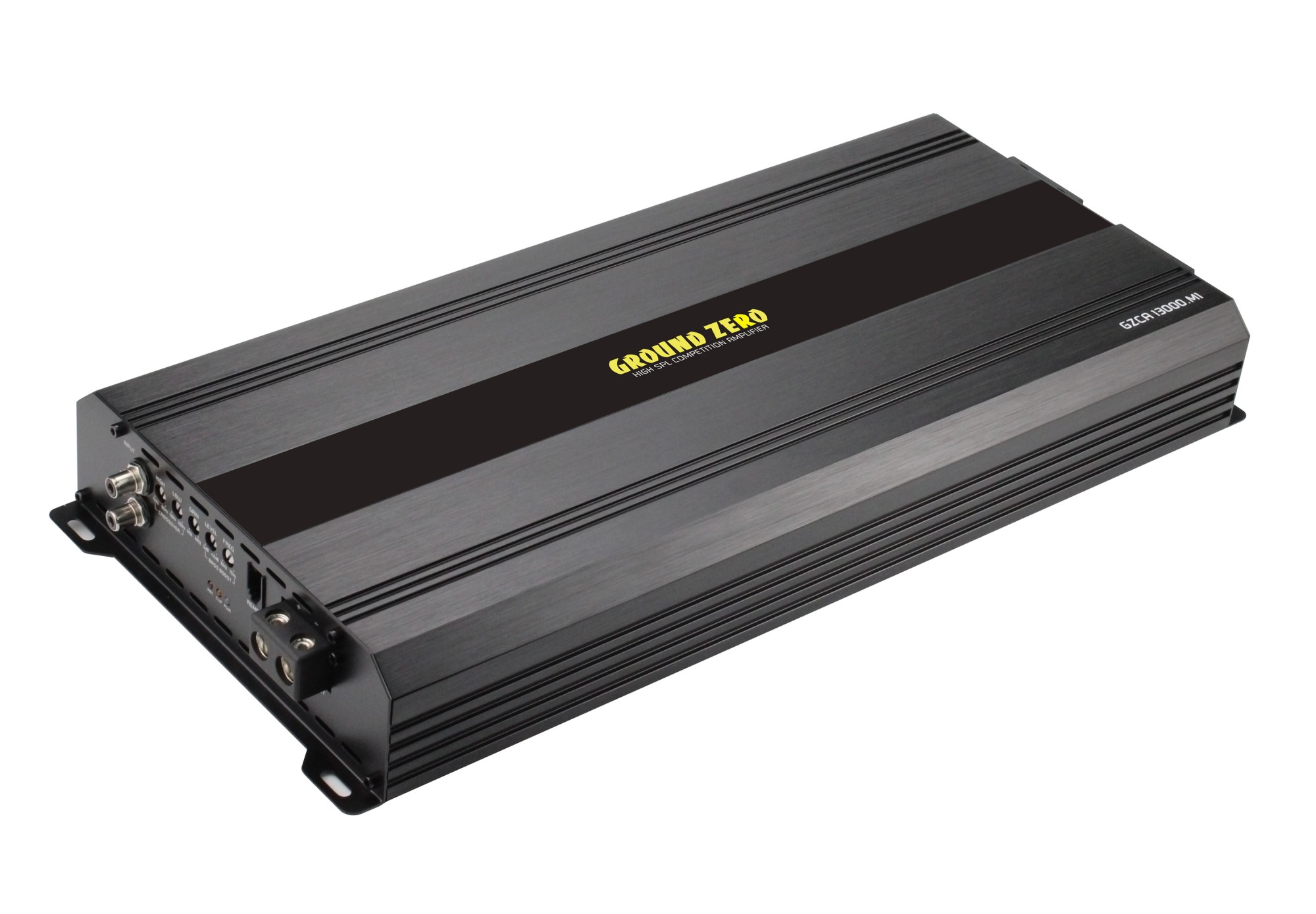
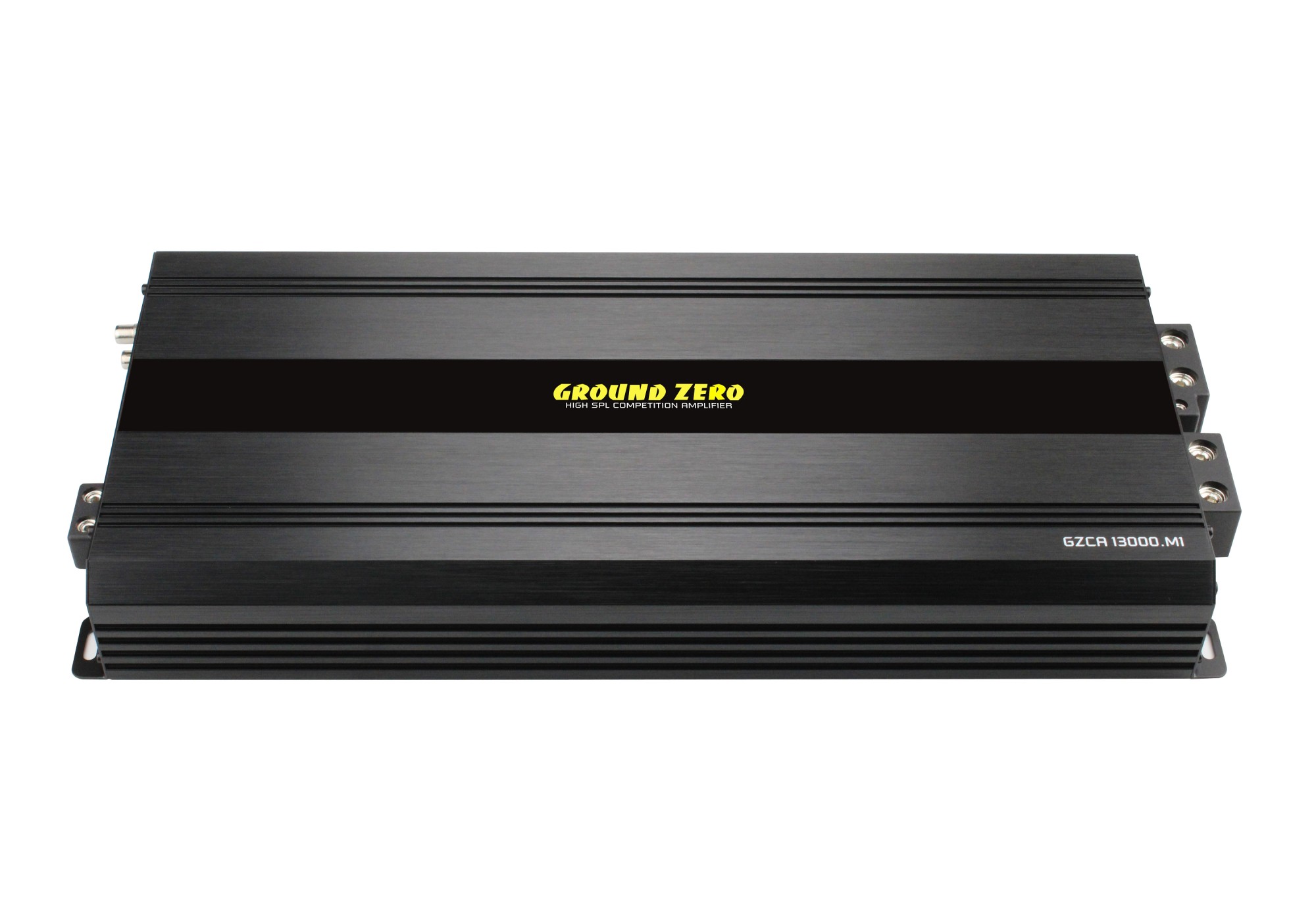
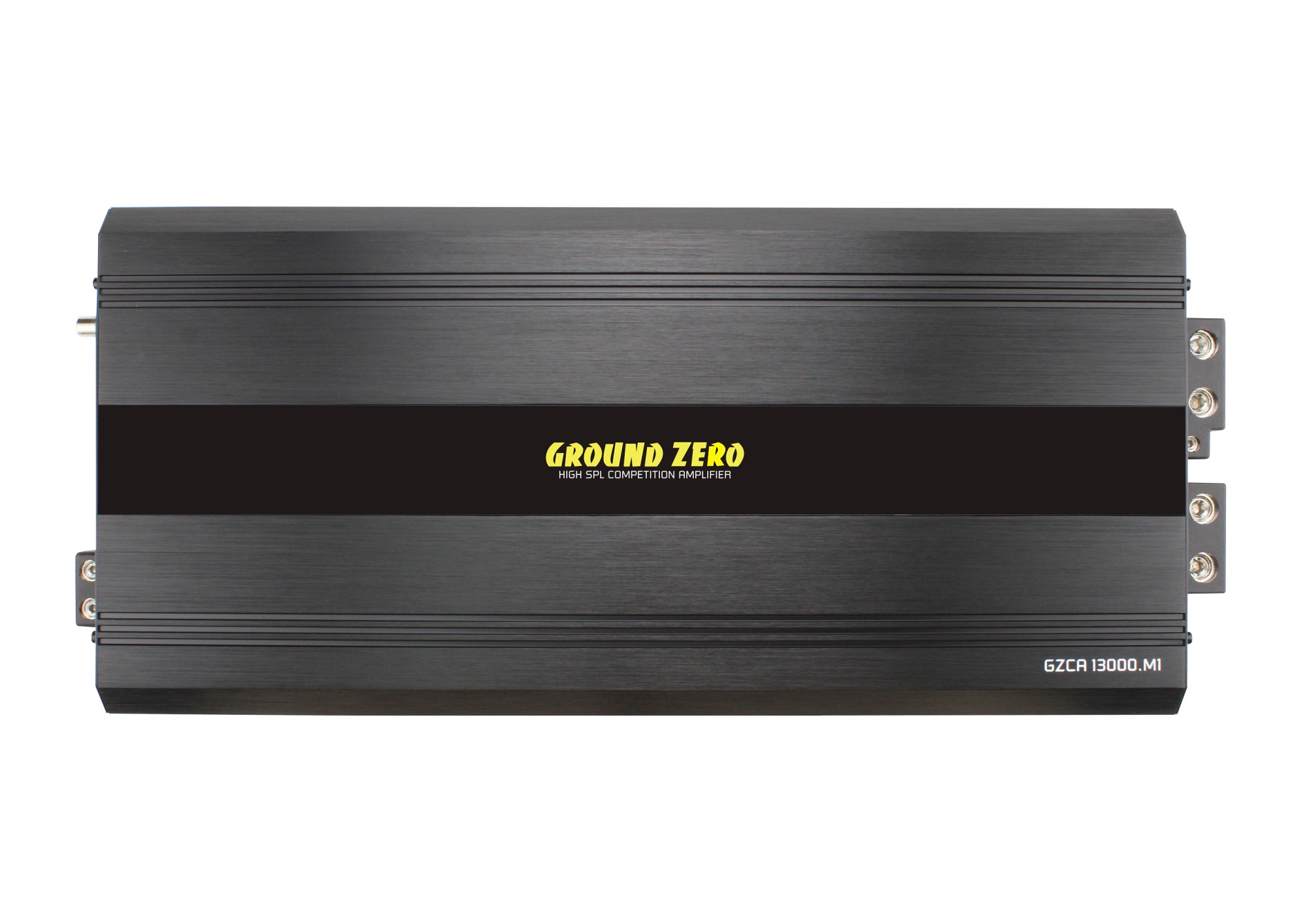
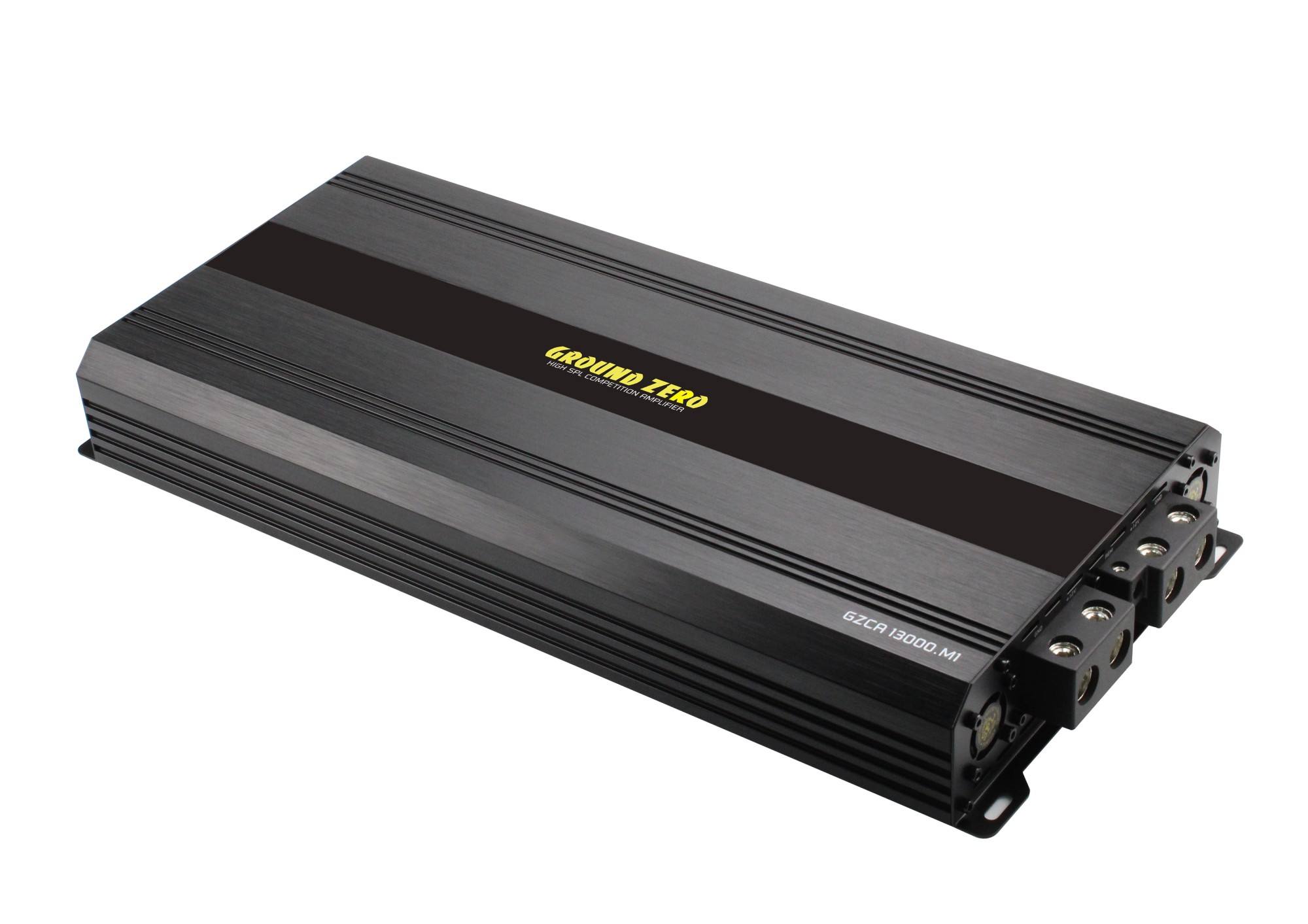
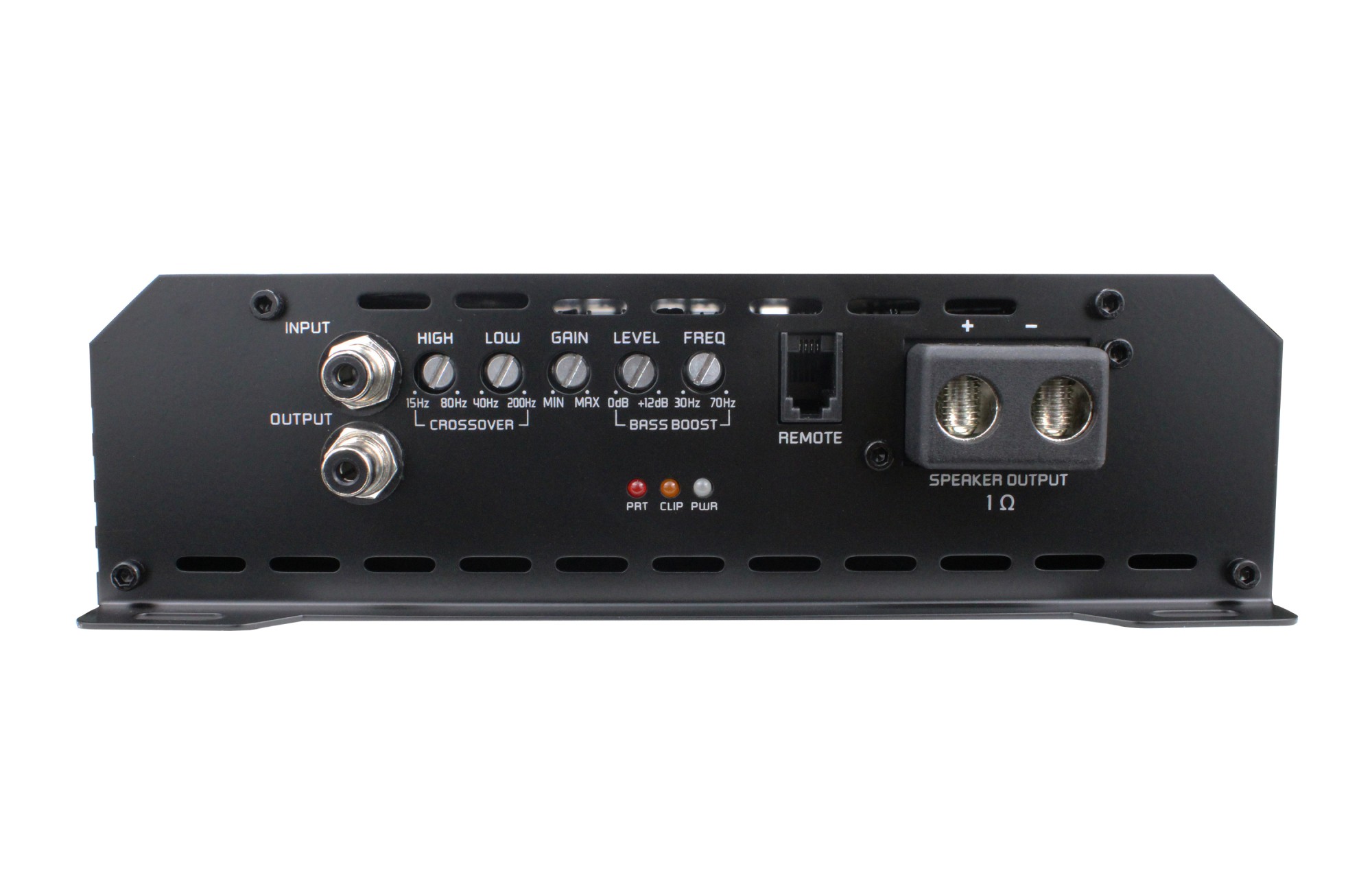
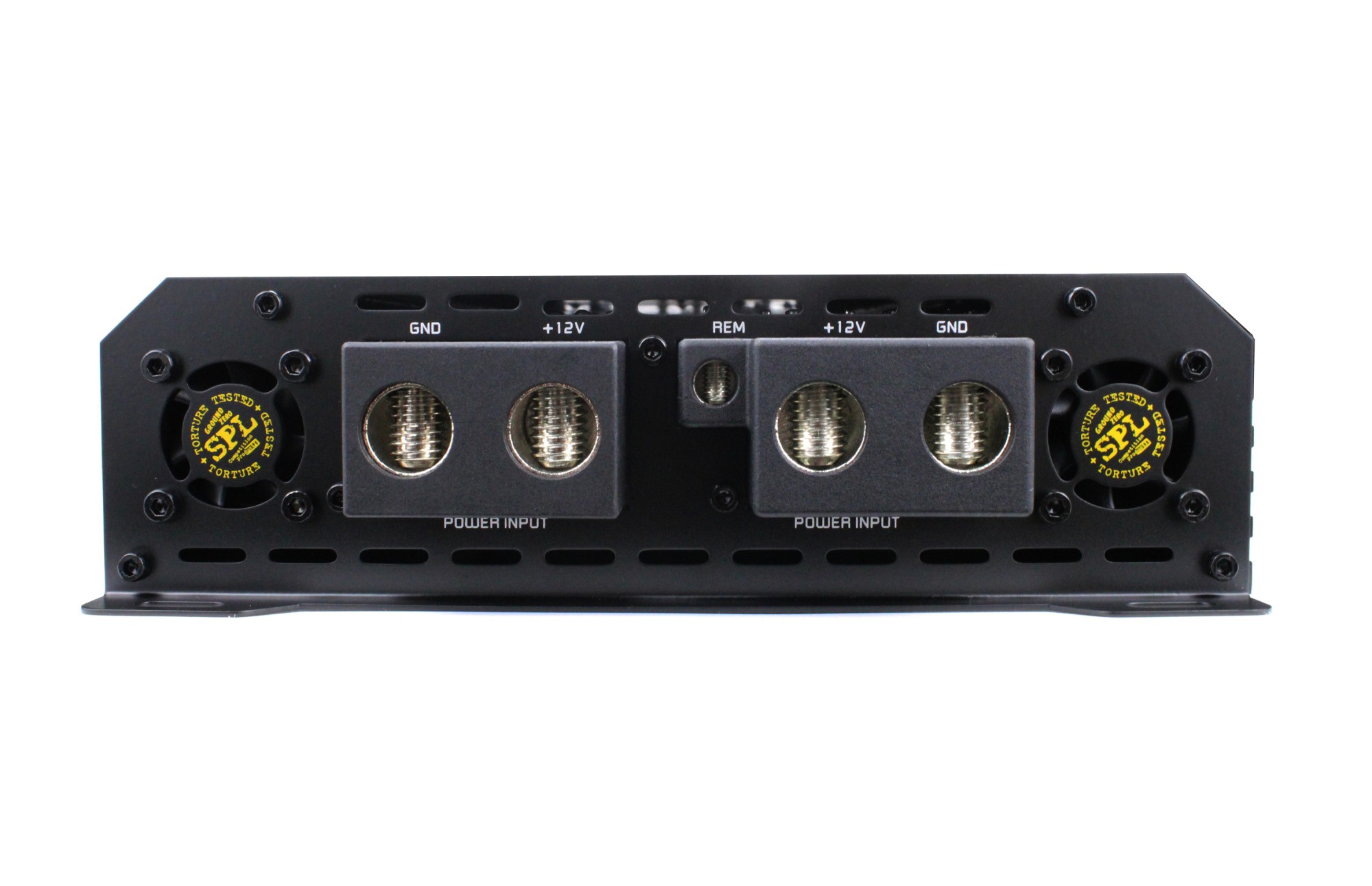
Ground Zero GZCA 13000.M1 Amplifier
The Ground Zero GZCA 13000.M1 is a powerful class D monoblock designed for competition SPL and SQL systems where maximum efficiency, stability and reliability are crucial. This 1-channel amplifier supports stable operation at 1 ohm and delivers up to 12,560 W RMS. The amplifier uses highly efficient class D technology with an optimized power circuit that provides high voltage and stable output even under extreme loads. With a variable active crossover and Bass Boost function, the sound can be precisely tuned to the system configuration. Massive power and speaker terminals ensure reliable connections even at high currents. The compact aluminum heatsink in classic Ground Zero style provides efficient heat dissipation even during prolonged use. A remote bass level control is included, allowing convenient adjustment from the driver's seat.
Ground Zero Competition Series
The Ground Zero Competition series was designed for those who want to experience a true concert atmosphere and extreme power without compromise. These amplifiers and speakers were created with a single goal – to reach maximum sound pressure levels and deliver realistic sound reproduction even at extreme volumes. Every model in the Competition series uses top-tier class D circuitry with high efficiency, able to deliver enormous power while maintaining stability and precise signal control. The design and components meet professional standards and are tailored for competition SPL and SQL applications, open-show installations, and extreme audio systems where power is key. At the top of the range are extreme monoblocks reaching up to 35,000 W RMS, ranking among the most powerful amplifiers in the world. The Ground Zero Competition series is thus the choice for true enthusiasts and professionals seeking absolute power, precise craftsmanship and sound that pushes the limits of possibility.
Main features
- Class D monoblock with high efficiency.
- Stable at 1 ohm load.
- Power: 3200 W RMS at 4 ohms, 6400 W RMS at 2 ohms, 12560 W RMS at 1 ohm.
- Variable active crossover and Bass Boost for precise sound tuning.
- Wide frequency range 10 Hz – 200 kHz.
- Massive power terminals for secure and stable connections.
- Compact aluminum heatsink in classic Ground Zero design.
- Remote bass level control included.
- Intended for competition SPL and SQL applications.
About the brand
Ground Zero Audio is a globally recognized brand in car audio founded in 1995 in Germany. Since its inception it has built a strong market position thanks to cutting-edge technologies, precise engineering and a focus on sound quality. Ground Zero specializes in complete car audio solutions, from high-end car speakers and powerful subwoofers to amplifiers designed for SPL or SQ. Ground Zero products are known for their durability, high power and faithful music reproduction, as evidenced by numerous awards from prestigious international competitions in Sound Quality (SQ) and Sound Pressure Level (SPL) categories. The manufacturer uses the latest technologies in development, such as the KLIPPEL® measurement system and CEA 2006-A standards, to ensure maximum accuracy and reliability of each component. With the slogan "Respect The Music" Ground Zero Audio emphasizes its philosophy – to offer listeners an authentic musical experience that captures the emotion of every track. If you are looking for top-tier car audio solutions, speakers or subwoofers that excel not only in power but also in build quality, Ground Zero Audio is the right choice for demanding customers worldwide. Ahifi is the sole exclusive importer of the Ground Zero brand for the Czech and Slovak Republics.| Catalog number | GZCA 13000.M1 |
| Brand | Ground Zero |
| Links | Official web presentation |
| Energy class of the amplifierAmplifiers are divided into two basic classes: analog and digital . Analog amplifiers (A/B) have higher consumption requirements, but usually have a more natural sound. Digital amplifiers (D) have significantly lower consumption and higher efficiency, but the sound may not be as faithful as with classic analog amplifiers. | D |
| Number of amplifier channelsAmplifiers are divided into: - Monoblocks - 2-channel - 3-channel - 4-channel - 5-channel - 6-channel - multi-channel Each channel is used to power one speaker for the coaxial type, or one side if they are component speakers. Monoblock type amplifiers are mainly used for subwoofers. 2-channel are suitable for both subwoofers and, for example, the front pair of speakers in a car. 3-channel is used for front or rear speakers + subwoofer. 4-channel are used for front + rear speakers or 1 pair of speakers + subwoofer. 6 or 5-channel are used for 2 pairs of speakers + subwoofer, most often. Bridging means connecting the amplifier to a bridge, using the + pole from one channel and the - pole from the other channel. In most cases this is shown as "BRIDGED" on the amplifier. | 1 |
| RMS power into 4 ΩRMS power when loading speakers or subwoofer at 4 Ω. RMS power is the constant power of the amplifier and is one of the most important parameters when choosing an amplifier. | 1 x 3200 W |
| RMS power into 2 ΩRMS power when loading speakers or subwoofer at 2 Ω. RMS power is the constant power of the amplifier and is one of the most important parameters when choosing an amplifier. | 1 x 6400 W |
| RMS power into 1 ΩRMS power when the subwoofer is loaded at 1 Ω. RMS power is the constant power of the amplifier and is one of the most important parameters when choosing an amplifier. When connected to 1 Ω, significant heating of the amplifier may occur. | 1 x 12560 W |
| Frequency rangeThe ability of the amplifier to reproduce the signal from the lowest frequency to the highest = faithfully reproduce the sound in a specific frequency band. Professionally: In the frequency range from 40 to 16,000 Hz, the vast majority of fundamental and overtones (harmonics) of all musical instruments are found. We are interested in the course of the radiated sound pressure in this range of frequencies when the loudspeaker system is supplied with constant power. We call this course the frequency characteristic, which tells us the level of radiated sound pressure in decibels (dB) depending on the frequency. The frequency characteristic of a speaker or speaker system can be expressed most succinctly with a graph. Mostly, however, the frequency characteristic is indicated by indicating the maximum tolerance of the sound pressure in the given frequency range, e.g. 50 to 15,000 Hz -+ 6 dB. Since the frequency characteristics of loudspeakers and systems in general are quite uneven, some manufacturers do not even specify this maximum tolerance of sound pressure in decibels in their catalogs for reasons of prestige. Data impoverished in this way is unfortunately worthless. What is valid is that the manufacturer offers a speaker system with a frequency range of 30 to 20,000 Hz, if he is worried about stating the maximum unevenness of the sound pressure in this range, because he can have a tolerance of, for example, +- 20 dB. The unevenness or undulation of the frequency curve in good speaker systems for high-quality music performance should not exceed +-3 dB in the 80 to 12,000 Hz band and +-6 dB in the 40 to 16,000 Hz band. Greater unevenness already depletes or emphasizes certain tonal areas, which can cause audible or even disturbing distortion. The proportion between fundamental tones and higher harmonics also changes, thereby changing the color of the sound, and individual musical instruments as well as the entire musical image sound unnatural. | 15 - 200 Hz |
| Harmonic Distortion (THD)Total harmonic distortion indicates how much the input signal is distorted in the amplifier. Distortions appear as overtones contained in the output signal. The proportion of originally absent parts of the signal is given as a percentage, typical values are between 0.001% and 0.5%. Distortion is measured in their power band. If it exceeds the limit of 0.7% from a certain power, it is the value of the output power of the given amplifier, from which it no longer plays without distortion and from which the distortion usually increases steeply, so that no further increase in power can be counted on. The lower the value, the better. | < 0.1% |
| Signal-to-noise ratioThe signal-to-noise ratio means that the output signal always contains noise. The signal-to-noise ratio expresses how much of this noise is compared to the useful signal. The so-called A value is given, which does not take deep and very high frequencies into account. This corresponds to the characteristic of human hearing, which is not so sensitive to deep frequencies, especially below 1 kHz. The higher the value, the better the amplifier is. | > 90 dB |
| Input sensitivityIn order for the amplifier to perform its function correctly, it requires an input signal of a certain level, which is different for car radios. It is measured in "Volts" (e.g. 2 V, 4 V, etc.) The higher the value at the output of the pre-amplifier, or car radio, the less demands are placed on the power of the amplifier. However, the amplifier must allow this input sensitivity, and for that reason this value is also given for the amplifier. | 400 mV to 6 V |
| High pass filter (HPF)HPF / HP or The "hi pass filter" offers the option of setting the amplifier using a potentiometer so that medium, possibly mid-bass and treble frequencies play upwards from a certain frequency. Example: Amplifiers most often have an HPF from 40 to 300 Hz. If we set the potentiometer to a value of approx. 150 Hz, the sound will be clipped so that it plays frequencies from 150 Hz up to the maximum upper limit of the entire frequency range of the amplifier, perhaps up to 20,000 Hz. We recommend setting this potentiometer in the range of 80-160 Hz. Thanks to this setting option, the speakers can handle a higher performance, as you will not overload them with bass in the lower frequency range. | 15 Hz – 80 Hz |
| Low-pass filter (LPF)LPF / LP or "low pass filter" offers the possibility to adjust the amplifier using a potentiometer so that the lower band plays only the frequencies in a certain band that you need. This filter is used to adjust the frequency range for the subwoofer, so that it does not overload or distort the sound. Example: Amplifiers most often have an LPF from 20 to 300 Hz. We recommend setting this potentiometer in the range of 45-80 Hz. | 40 Hz – 200 Hz |
| Damping factorDF - Damping Factor . It is the ratio of the load (repro + cables, crossover, etc.) to the internal resistance of the amplifier. The bigger the DF, the more controlled the bass. Amplifiers with a lower DF tend to hum. Subwoofers with a higher Q in the bass reflex and sometimes in the enclosure will also cause humming. | > 200 |
| Remote control included in the packageSome models of amplifiers also come with wired remote controls in the package, which on one side plug into the amplifier and on the other side you have a potentiometer that you can place anywhere in the cabin. A common place to place the remote control is under the steering wheel. The advantage is the regulation of power, and therefore volume, depending on driving conditions and the mood of the crew in the car. | Yes |
| Dimensions of the amplifier | 200 x 57 x 455 mm |
Evaluation
You might also be interested
 Quick preview1-channel amplifier, 1 x 900 W RMS (4 Ω) / 1350 W RMS (2 Ω)349,00 EURIn stockGround Zero GZCA 300.Q1-24V Free transport
 Quick preview4-channel amplifier, 4 x 10⁵ W RMS (4 Ω) / 4 x 195 W RMS (2 Ω) / 4 x 345 W RMS (1 Ω), Class D399,00 EUR1 to 4 weeksGround Zero GZCA 500.Q1 Free transport
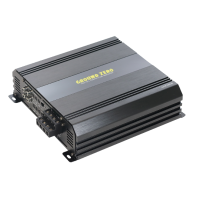 Quick preview4-channel amplifier, 4 x 185 W RMS (4 Ω) / 4 x 315 W RMS (2 Ω) ú 4 x 450 W RMS (1 Ω)599,00 EURIn stockGround Zero GZCA 6000.M1 Free transport
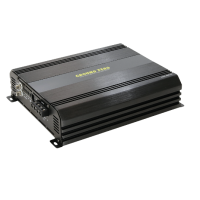 Quick preview1-channel amplifier, 1 x 1850 W RMS (4 Ω) / 1 x 3250 W RMS (2 Ω) / 1 x 5000 W RMS (1 Ω)799,00 EURIn stockGround Zero GZCA 8000.M1 Free transport
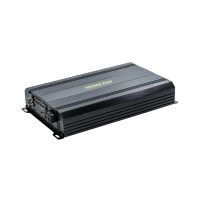 Quick preview1-channel amplifier, 1 x 2400 / 4500 / 8100 W RMS (4 / 2 / 1 Ω), class D799,00 EURIn stock