
ESB Audio 4.6C speakers
More about the product
- You can return the goods to us within 14 days
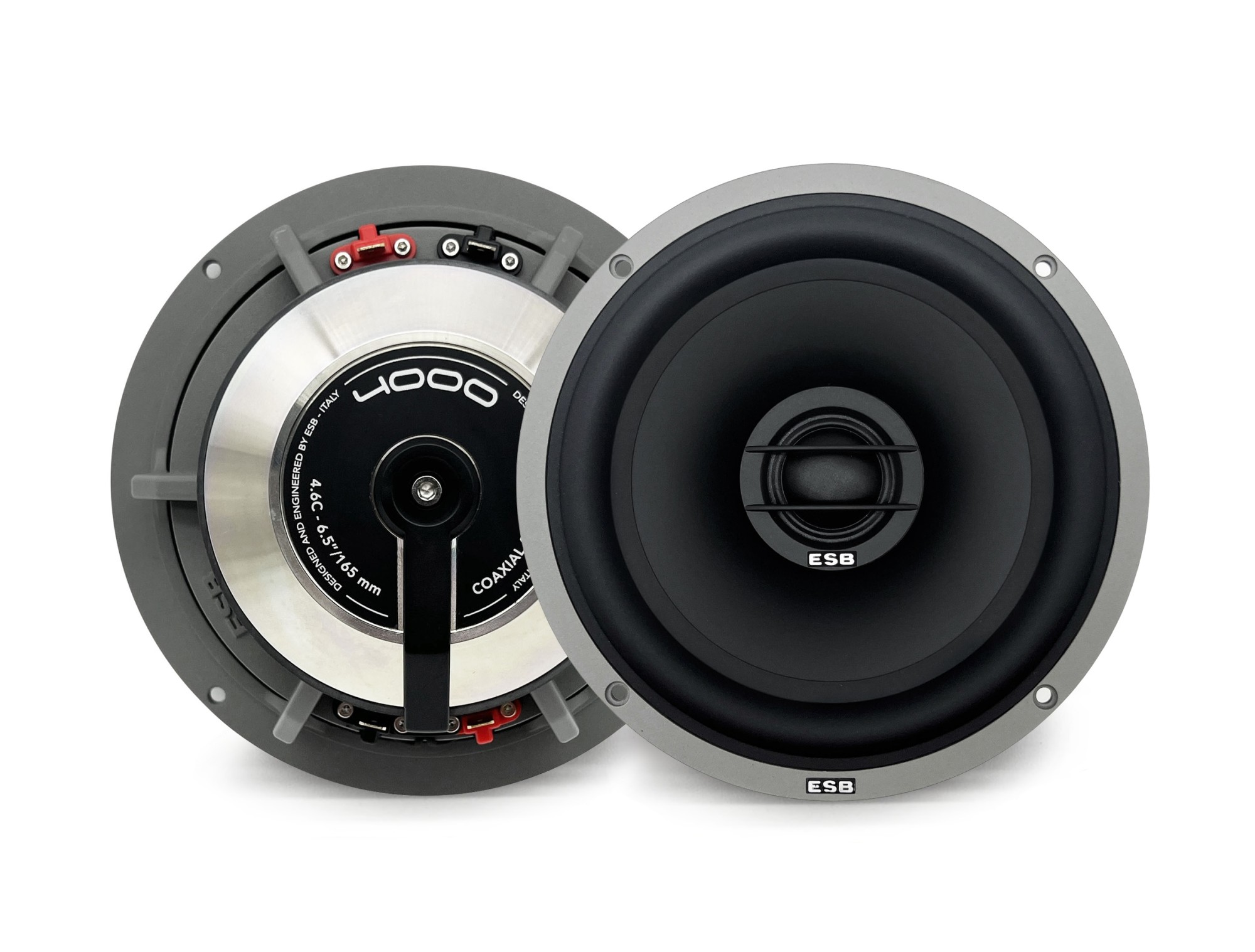
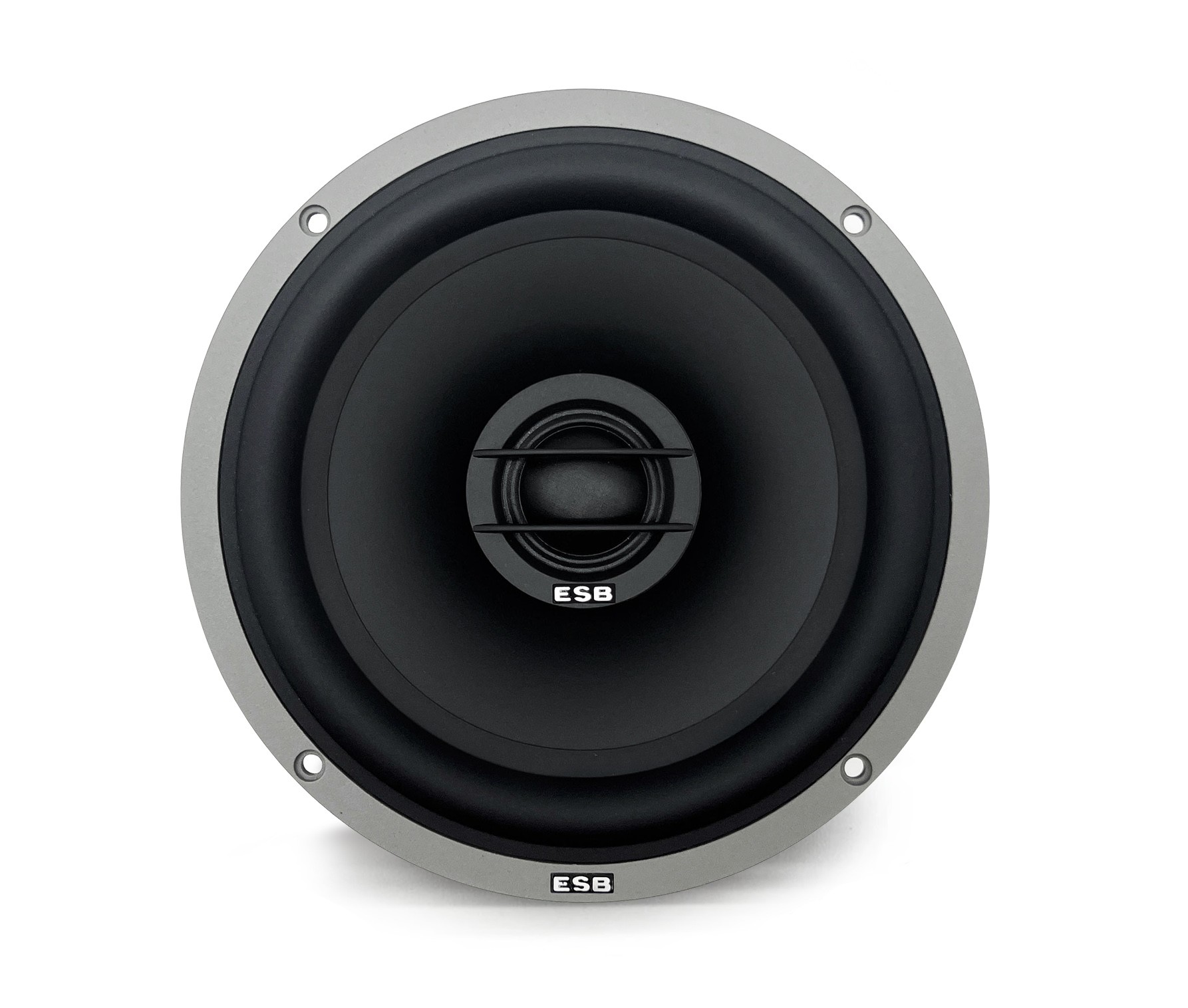
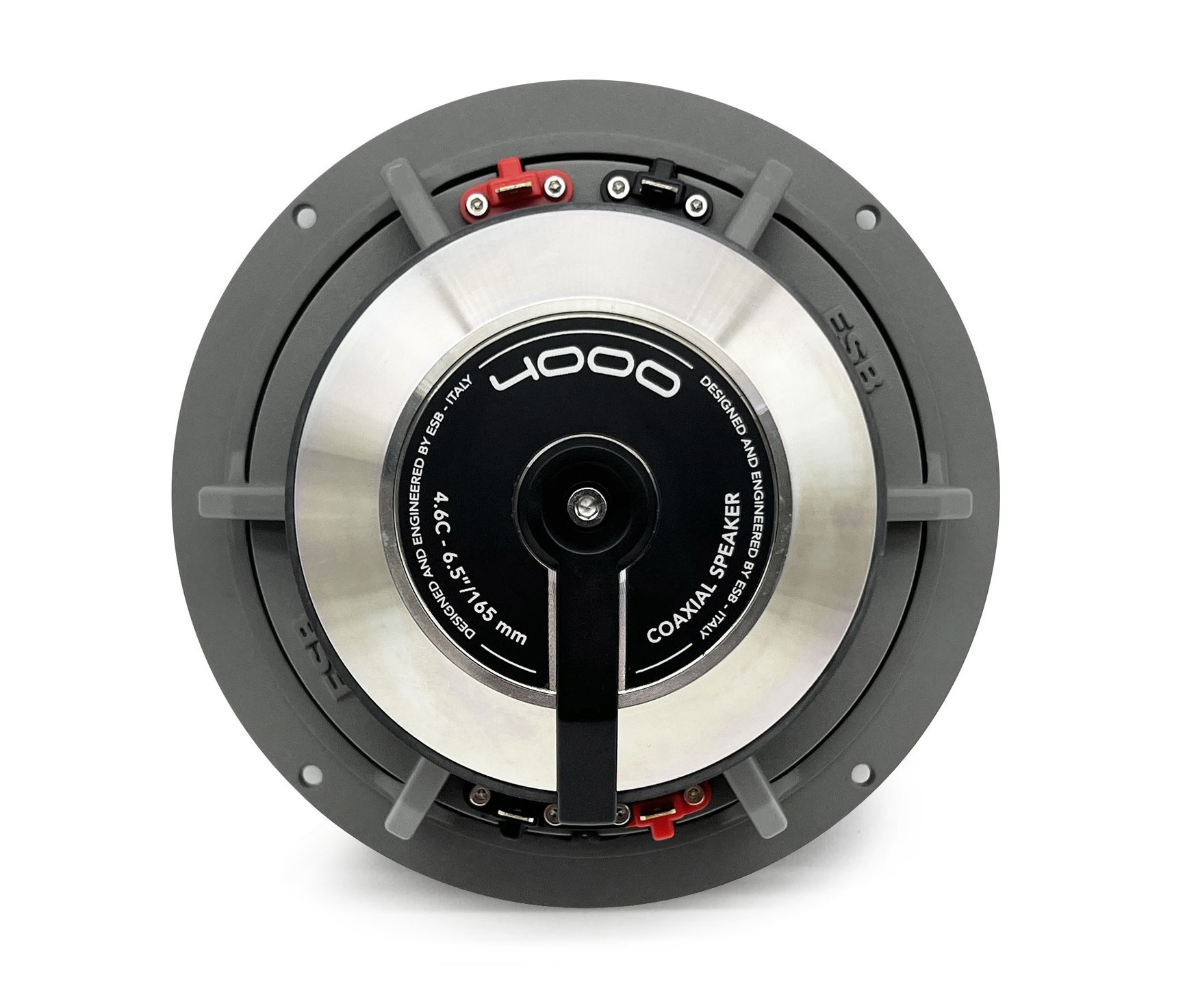
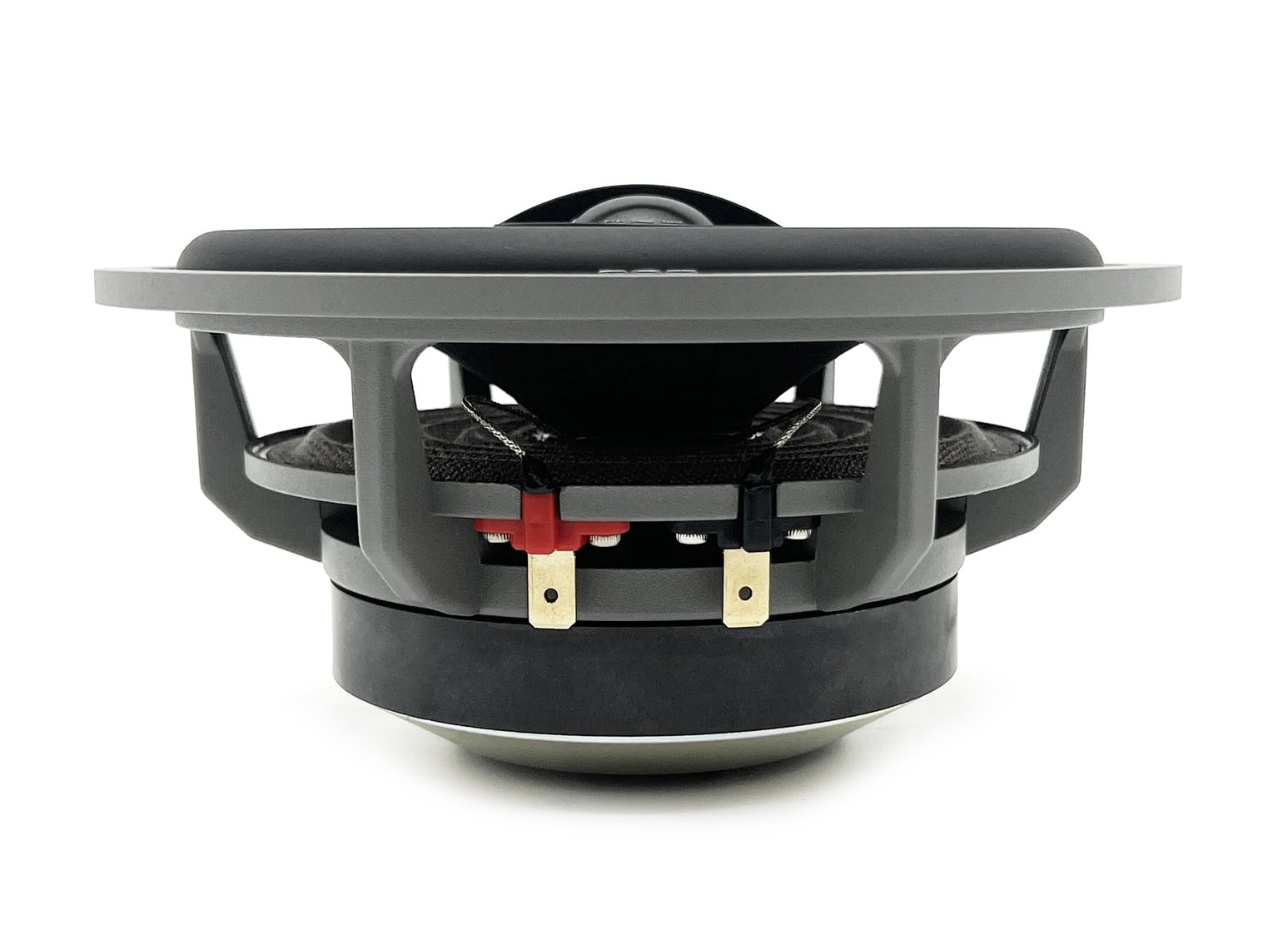
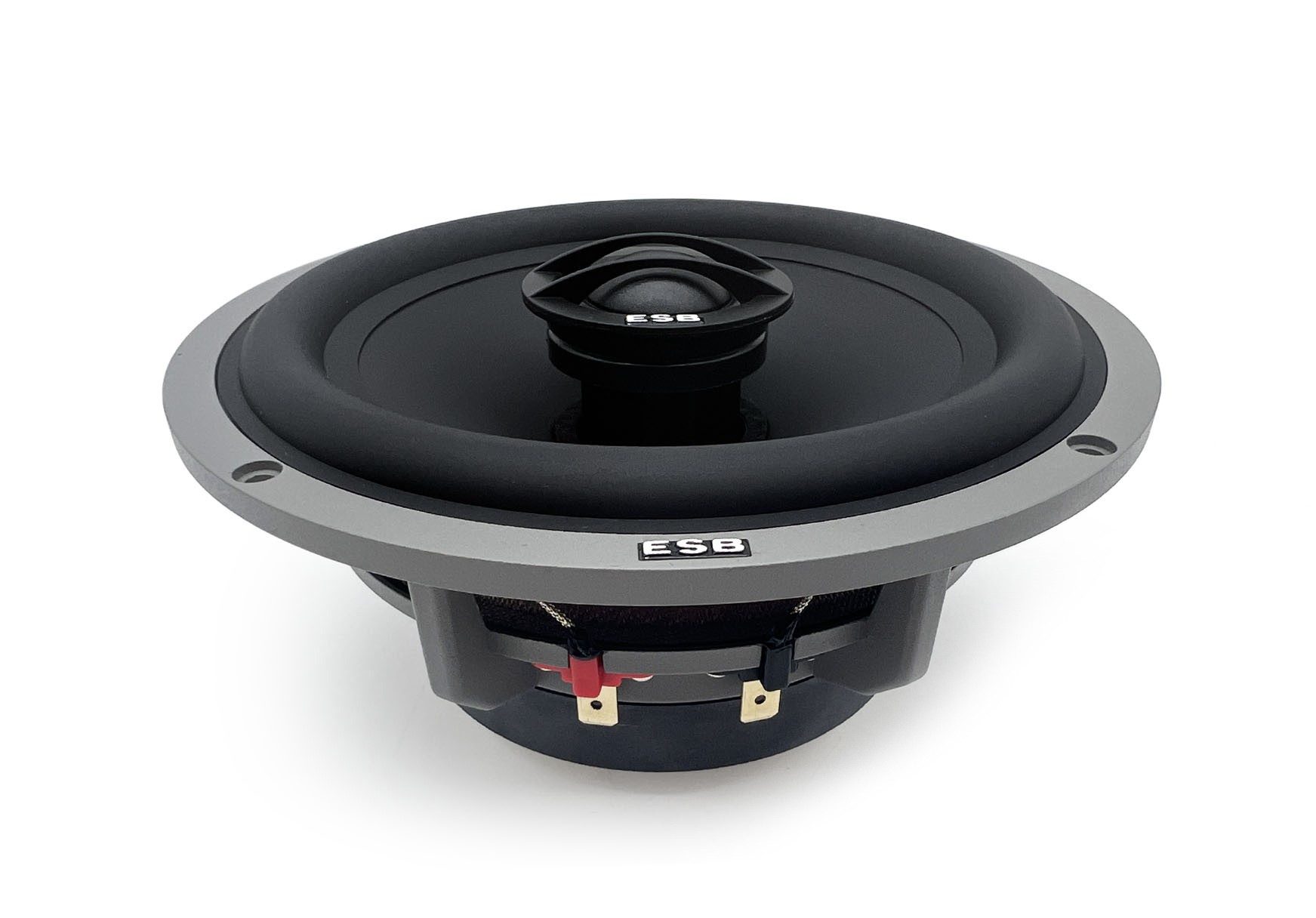
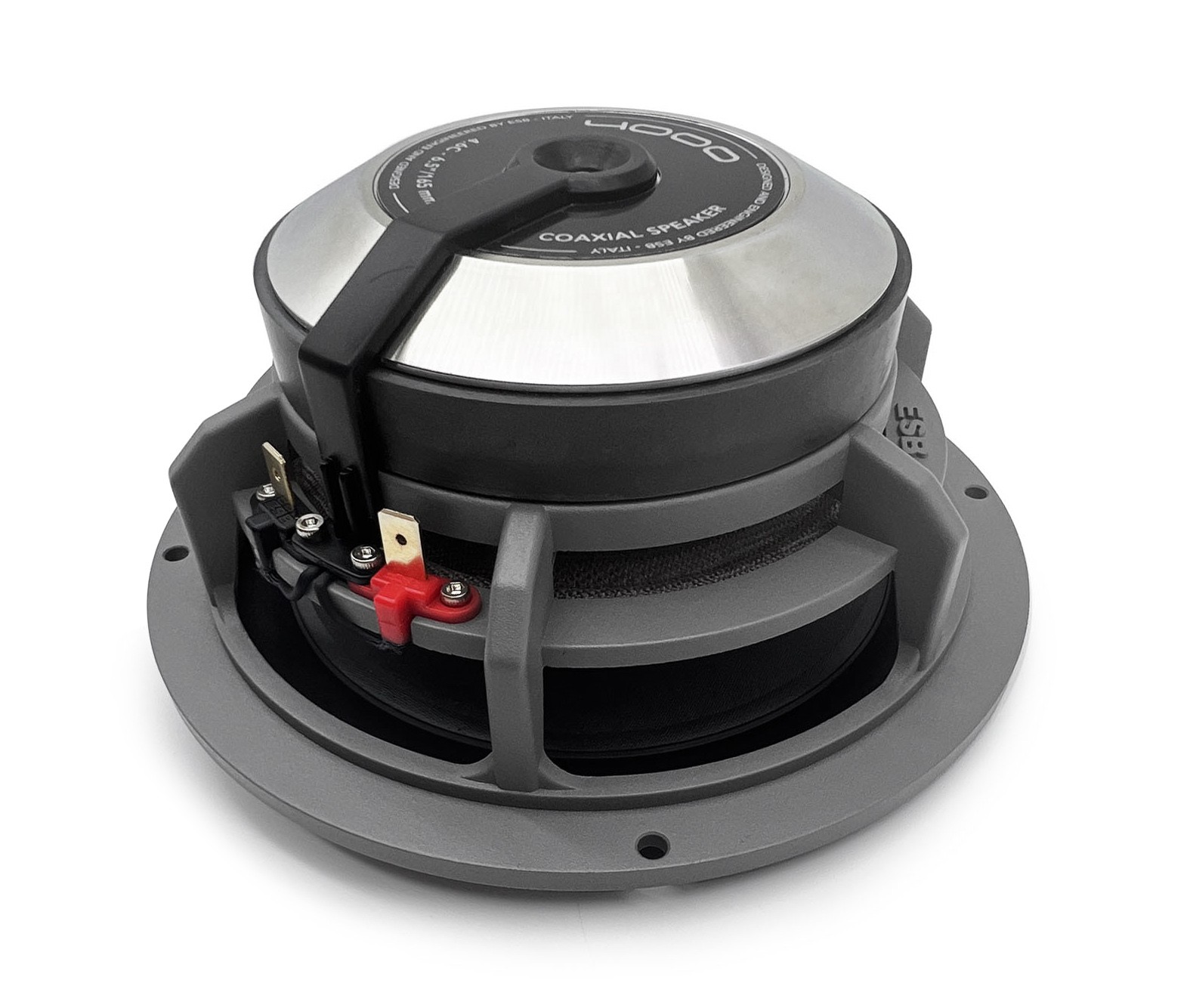
ESB Audio 4000 series speakers
The latest model series 4000 (Quattromila), born in 2024, benefits from extensive technical research that has enabled the use of new materials, previously reserved only for much more expensive loudspeakers. This was also achieved thanks to the parallel development with the highest model series 9000 (Novemila), with which the Quattromila series shares several common elements. The main goal of ESB engineers was to achieve a much cheaper product, while maintaining high quality sound and exclusive design. It is the design that catches the eye at first glance, led by the luxurious grills of all speakers in a matte black finish, which expresses the aesthetic similarity with the top model series. In all speakers of the Quattromila series, you will also notice powerful neodymium magnets, which guarantee superior efficiency and the ability to achieve high sound pressure levels even when using low-power amplifiers. The other noble materials used, such as aluminum or steel, also command respect, but the main advantage of Quattromila speakers is above all the sound. This can be defined as "classical", in other words, genre-neutral and without sound coloring. This fundamentally differentiates it from the higher 5000 series, which almost competes in price and whose sound, on the other hand, is more suitable for so-called "light music" (often referred to as music that is easy to listen to), but also jazz or rock. Emphasis was also placed on easy installation in today's modern vehicles - all speakers have high sensitivity, they are also designed for off-axis sound reproduction and, for example, with tweeters, you can choose between three installation design options. The 4000 series includes a total of five individual components for the variable construction of two-band and three-band systems, which, thanks to their sound quality, will impress even the most demanding listeners.
ESB 4.6C coaxial speakers
Coaxial loudspeakers of the Quattromila series are characterized by almost identical parameters and sound characteristics as the component system of this series, and thus rightfully occupy a position among the best quality coaxial loudspeakers on the current market. The speakers immediately impress with their robust design, which hints at the performance potential of these speakers. These are dominated by a high-quality magnet (Y-35) of oversized dimensions, which guarantees an excess of energy and easily reproducible excursion peaks, during which the coil works very quietly in the magnetic field. The ultra-low carbon steel pole plate is cold forged in one piece and CNC machined using FEM technology to achieve perfect geometry. This creates an additional concentration of magnetic force just before the voice coil, which concentrates the magnetic force where it is needed. This type of manufacturing process ensures perfect flatness so the board sits flush with the magnet without reducing the critical magnetic flux. The speaker basket is made of die-cast aluminum alloy. This construction offers perfect rigidity and minimal resistance to air flow movement without changing the sound quality. Casting of this aluminum basket follows strict procedures that ensure compliance with regulatory specifications and help maintain consistent casting quality. The robust copper-clad aluminum voice coil can handle very high performance while reproducing music with extreme realism and high dynamics. The copper clad aluminum wire voice coil is very light and with excellent heat dissipation. The membrane made of long-fiber pulp with a special external treatment represents the perfect combination of lightness, stiffness and internal damping. The peripheral suspension made of soft nitrile rubber is resistant to UV radiation and unaffected by temperature changes, thanks to which the excellent acoustic properties of this speaker are preserved for a long time. The special construction of the edges ensures perfect and free movement forward and backward. Part of the mid-bass is a 25 mm tweeter of the Quattromila series with a silk dome ensuring faithful presentation of high frequencies. Optional matte black steel speaker grilles are also available.
About the ESB Audio brand
The history of ESB Audio dates back to 1972, when this Italian brand was officially founded. ESB audio is one of the most famous speaker system manufacturers of the second half of the 20th century, and during their rich history they have launched many innovative technologies and many high-end home audio products that have achieved huge worldwide success. Based on the experience gained, in 1984, ESB engineers began to engage in research aimed at optimizing sound in the automotive environment, and two years later began the production of the first car speakers. Thanks to the great success, ESB began to focus more and more on the automotive industry and its demanding challenges. Car Audio is starting to be a phenomenon of the time, and in 2005 a school focused exclusively on vehicle sound was founded in the city of Aprilia, where ESB is based. It was then that the final decision was made to leave the world of home audio and focus exclusively on vehicle sound systems. Currently, ESB belongs to the Italian company Apex Group together with the American manufacturer of audiophile amplifiers and DSP processors Zapco. In the offer you will find several model lines of speakers, led by the super high-end Diecimila three-way system, which represents probably the best quality and most expensive car speakers on the market today. And that is the main mission of ESB audio. To produce speakers of the highest quality, focused on faithful sound, which will allow the user to reproduce as the interpreter intended. Exactly according to the company's slogan "Just like live".
| Catalog number | ESB 4.6C |
| Brand | ESB Audio |
| Links | Official web presentation (English) |
| Speaker typeCoaxial speakers: Coaxial speakers are characterized by a so-called all-in-one design. The tweeter and mid-bass speaker are in one basket. The advantage is simpler assembly, but thanks to the connection or proximity of the bands in one speaker, the sound quality will usually be reduced. As a rule, in the middle of the mid-bass speaker, there is a tweeter whose voice coil works in the second air gap of the common magnetic circuit. The three-way coaxial speaker consists of a mid-bass speaker, a center speaker and a separate tweeter in the front on a special beam. Component Speakers: Component speakers are characterized by a division into individual frequency bands, treble + mid-bass + or. bass band. The individual speakers can be placed completely separately, which results in a better sound and acoustic performance. In the vast majority of cases of component speakers, an external crossover is also supplied, which divides the treble, middle / mid-bass, and into the three-band the bass band or allows setting the decibel level of the tweeter (e.g. +2 dB, 0 dB, -2 dB), steepness (e.g. 6dB/Oct. 12dB/Oct.) or active or bi-amp connection. | 2-way coaxial |
| RMS powerRMS speaker power is the constant power of the entire system, not just one speaker or one side. This is also the performance of continuous use of the speakers. If the RMS power is exceeded for a long time, the speakers may be irreversibly damaged! | 100 W |
| Max. (maximum performancePeak performance , which the speaker can play for a moment (approx. 0.5 s), for example when hitting drums in a song. If the max power is exceeded, the speakers will usually be damaged! | 200 W |
| Sensitivity (SPL 2.83V/1m)Sensitivity, sensitivity or efficiency of the speaker. Speaker sensitivity is given in decibels (dB) and simply put, the higher the value, the lower the demands on the amplifier's power. This is a defacto rating of how a speaker converts watts to sound. Sensitivity ratings are in noise level measured at 1 meter from the speaker using 1 W (watt of power) or using 2.83 volts at the source at 1 meter. A higher decibel level means the speaker is louder with less power. For every 3 dB increase in sensitivity, the speaker requires half the power to reproduce the same volume. For example, if an 88 dB speaker needs 100 Watts to produce a certain volume, then a speaker with a sensitivity of 91 dB needs only 50 Watts to reach the same volume. | 92.5 dB |
| Sensitivity (SPL 1W/1m)Sensitivity, sensitivity or efficiency of the speaker. Speaker sensitivity is given in decibels (dB) and simply put, the higher the value, the lower the demands on the amplifier's power. This is a defacto rating of how a speaker converts watts to sound. Sensitivity ratings are in noise level measured at 1 meter from the speaker using 1 W (watt of power) or using 2.83 volts at the source at 1 meter. A higher decibel level means the speaker is louder with less power. For every 3 dB increase in sensitivity, the speaker requires half the power to reproduce the same volume. For example, if an 88 dB speaker needs 100 Watts to produce a certain volume, then a speaker with a sensitivity of 91 dB needs only 50 Watts to reach the same volume. | 89.5 dB |
| ImpedanceImpedance - measurement of electrical resistance. When buying speakers, it is important to make sure that the impedance matches the amplifier or car stereo you are using. Example: A 2 Ohm speaker cannot be connected to an amplifier that is only stable up to 4 Ohms! A 4 Ohm speaker can easily be used with an amplifier that is stable up to 2 Ohms. The most common speaker impedance today is 3 - 4 Ohm. | 4 Ω |
| Frequency rangeThe ability of the speakers to play a signal from the lowest frequency to the highest, or the speaker's ability to faithfully reproduce sound in a specific frequency band. Professionally: In the frequency range from 40 to 16,000 Hz, the vast majority of fundamental and overtones (harmonics) of all musical instruments are found. We are interested in the course of the radiated sound pressure in this range of frequencies when the loudspeaker system is supplied with constant power. We call this course the frequency characteristic, which tells us the level of radiated sound pressure in decibels (dB) depending on the frequency. The frequency characteristic of a speaker or speaker system can be expressed most succinctly with a graph. Mostly, however, the frequency characteristic is indicated by indicating the maximum tolerance of the sound pressure in the given frequency range, e.g. 50 to 15,000 Hz -+ 6 dB. Since the frequency characteristics of loudspeakers and systems in general are quite uneven, some manufacturers do not even specify this maximum tolerance of sound pressure in decibels in their catalogs for reasons of prestige. Data impoverished in this way is unfortunately worthless. What is valid is that the manufacturer offers a speaker system with a frequency range of 30 to 20,000 Hz, if he is worried about stating the maximum unevenness of the sound pressure in this range, because he can have a tolerance of, for example, +- 20 dB. The unevenness or undulation of the frequency curve in good speaker systems for high-quality music performance should not exceed +-3 dB in the 80 to 12,000 Hz band and +-6 dB in the 40 to 16,000 Hz band. Greater unevenness already depletes or emphasizes certain tonal areas, which can cause audible or even disturbing distortion. The proportion between fundamental tones and higher harmonics also changes, thereby changing the color of the sound, and individual musical instruments as well as the entire musical image sound unnatural. | 55 - 22000 Hz |
| The diameter of the mid-bass speakerWe state the diameter of the speaker as the diameter of the entire speaker, not including the mounts, when smaller speakers (87, 100, 130 mm) have extra mounts. Some speakers are oval and there the dimension is given in inches, always the shortest side to the longest side. One inch is approx. 2.5 cm. | 165 mm |
| Installation depth of the mid-bass speakerThe installation depth of the speaker is measured from the bottom edge of the magnet to the bottom edge of the tin, plastic or cast speaker basket, or speaker bearing surfaces. | 70 mm |
| Mid-woofer diaphragm materialThe material that was used for the speaker diaphragm. Don't be afraid of the paper, it surprisingly has a very natural and high-quality sound and, thanks to the surface treatment, it can withstand moisture without any problems. | Long-fiber pulp with a special outer treatment |
| Resonant frequency of the mid-bass speaker | 57.3 Hz |
| Tweeter dome diameterThe net diameter of the dome (diaphragm) of the tweeter. | 25 mm |
| Tweeter dome materialThe shell material that was used in the manufacture of the tweeter. | Silk with polymer lamination (Sonatex™) |
| Cover grids included in the packageOriginal cover grilles in speaker packaging. | No |
| Price forIf the price is for a pair, the package always includes 2 pieces of everything, e.g. 2x mid-bass, 2x tweeter and 2x crossover. | Pair |