
Audible Physics 3DEV 2-Way Speakers
More about the product
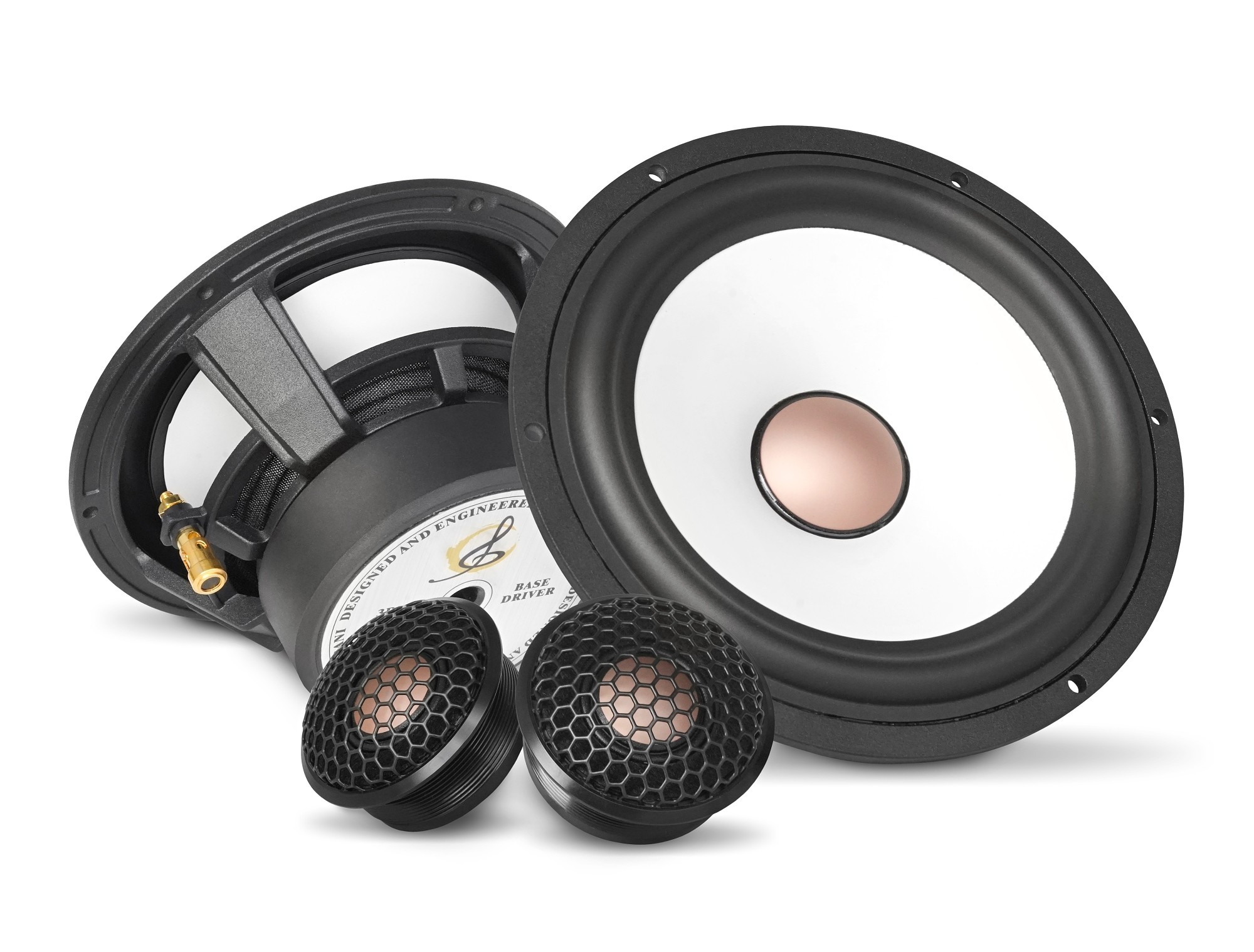
Audible Physics 3DEV 2-Way Speakers
Audible Physics presents its flagship 3DEV speaker system in its third generation. 3DEV (Tridev) embodies the Trinity - the three main Hindu Gods called Brahma, Shiva and Vishnu, whose otherworldly qualities they have transformed in Audible Physics into a superior sound solution that provides unrivaled sound quality and clarity. Audible Physics 3DEV 2-Way is based on the 3-way 3DEV system, but does not include center speakers due to wider installation options in most vehicles. The high quality and exceptional reproduction capabilities of the 3DEV tweeters and mid-bass speakers with a wide range are able to create a unique 2-way system, which therefore includes a 165 mm mid-bass driver and a 20 mm tweeter with high resolution and an extremely low resonance frequency of 960 Hz. Everything is expertly and with maximum precision designed so that the individual components work together in perfect harmony. 3DEV loudspeakers make full use of all the experience of the Audible Physics development department with the use of many proprietary materials and technological solutions. Components for production are assembled literally from all over the world to guarantee the highest quality materials. One of the key features of the 3DEV speaker system is the mid-bass membrane made of the unique MSP (Magnesium Silicate Polymer) material, which was developed and manufactured in the USA. This advanced material is known for its excellent stiffness, very light weight and minimal vibration, allowing accurate and natural sound reproduction. It is also worth noting the high-quality copper imported from Japan and Russia for the production of the coil and other components, and above all the proprietary patented Matrix Alloy Dome tweeter diaphragm made of magnesium and aluminum alloy, which enables the traditional Audible Physics sound experience. The linear curve of the frequency response of the entire system is also admirable, which allows you to do without an equalizer if installed correctly. The package also includes compact crossovers for passive connection, hexagon grilles for the middle bass, and you can count on high-quality hand-made production. Whether you're a music enthusiast, audiophile or professional sound engineer, the Audible Physics 3DEV 3-way speaker system is sure to impress. With its advanced technology, top-notch components and unrivaled performance, 3DEV is the perfect choice for anyone looking for the ultimate listening experience.
Audible Physics BD 635 mid-bass speakers
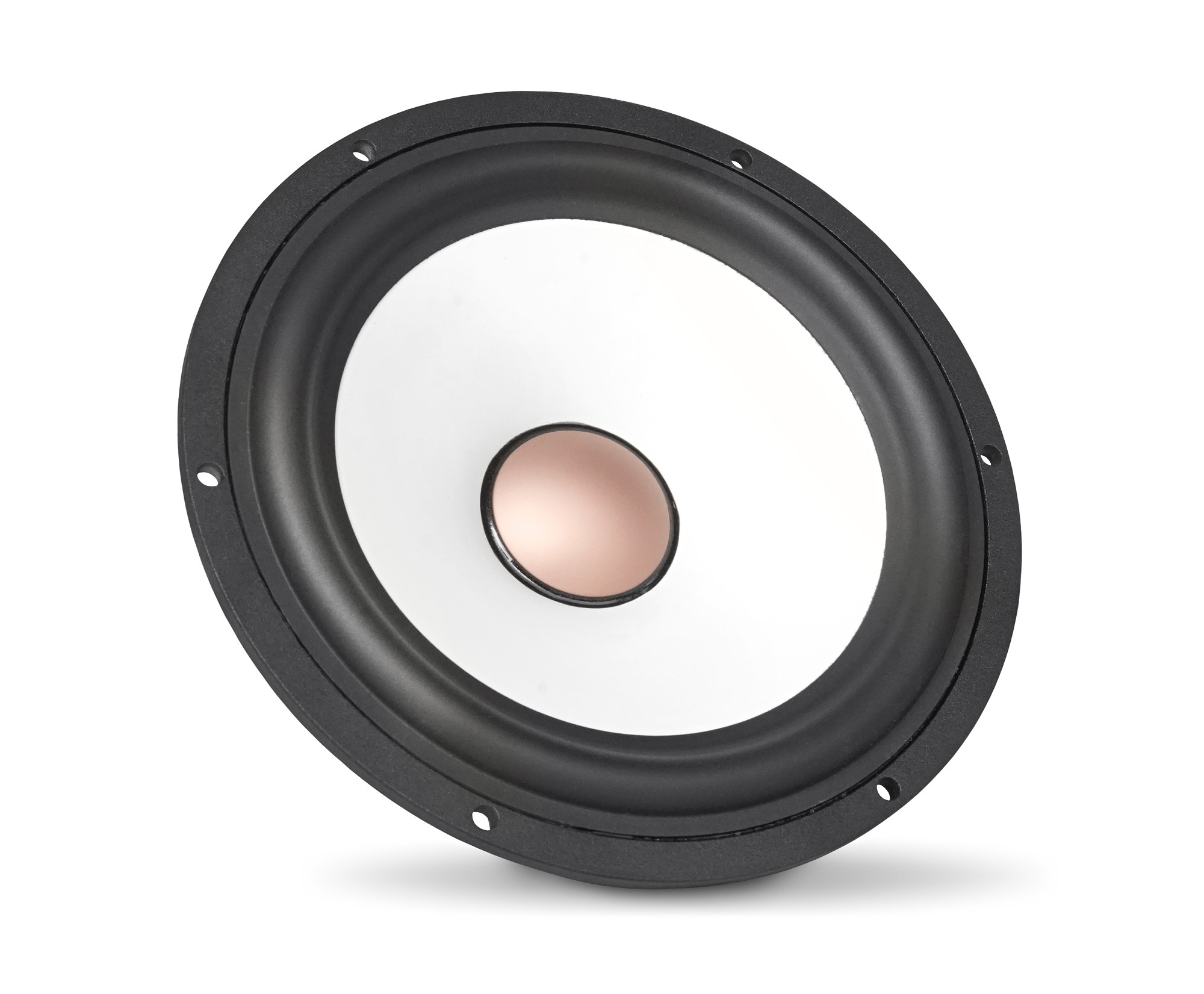
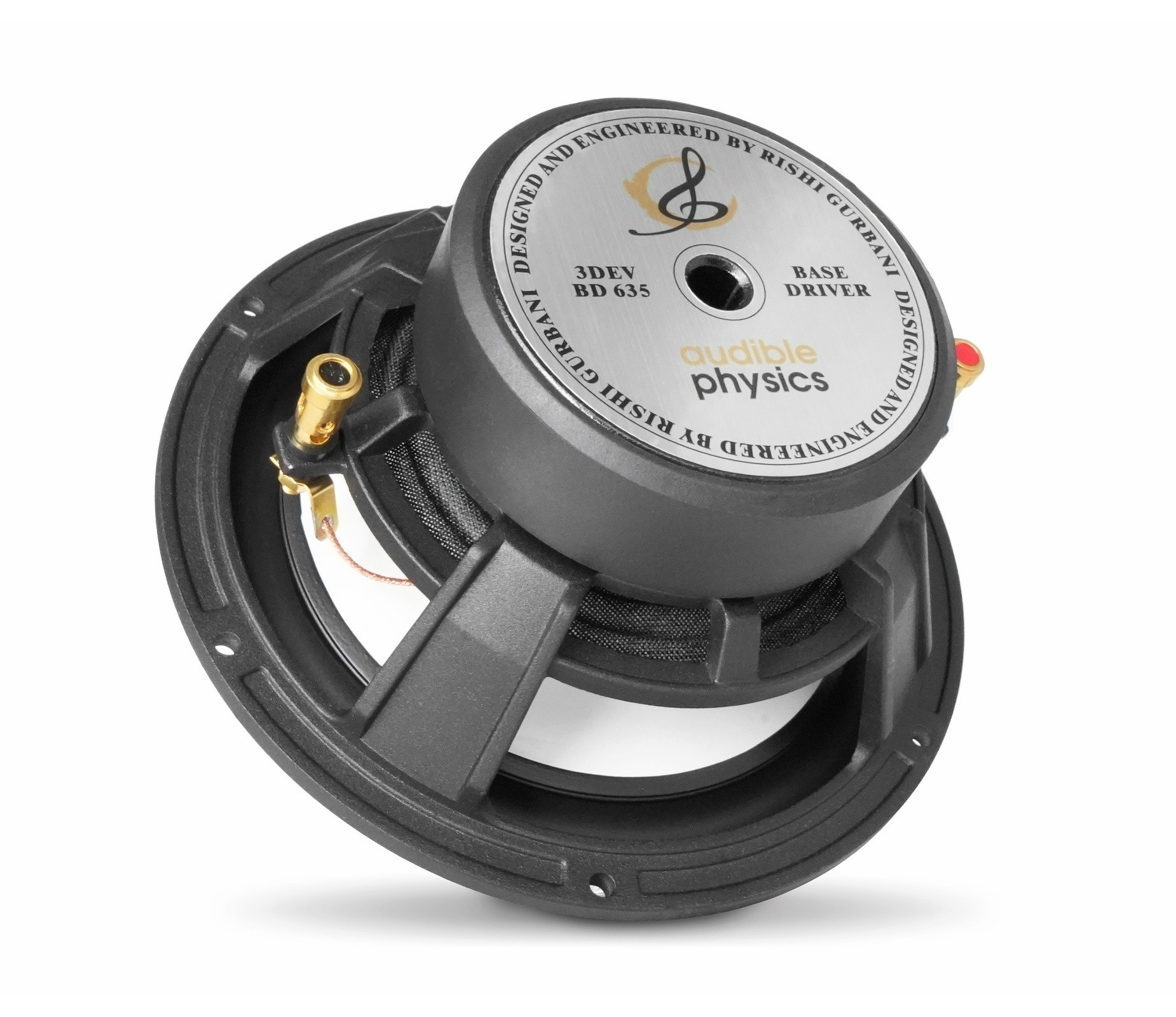
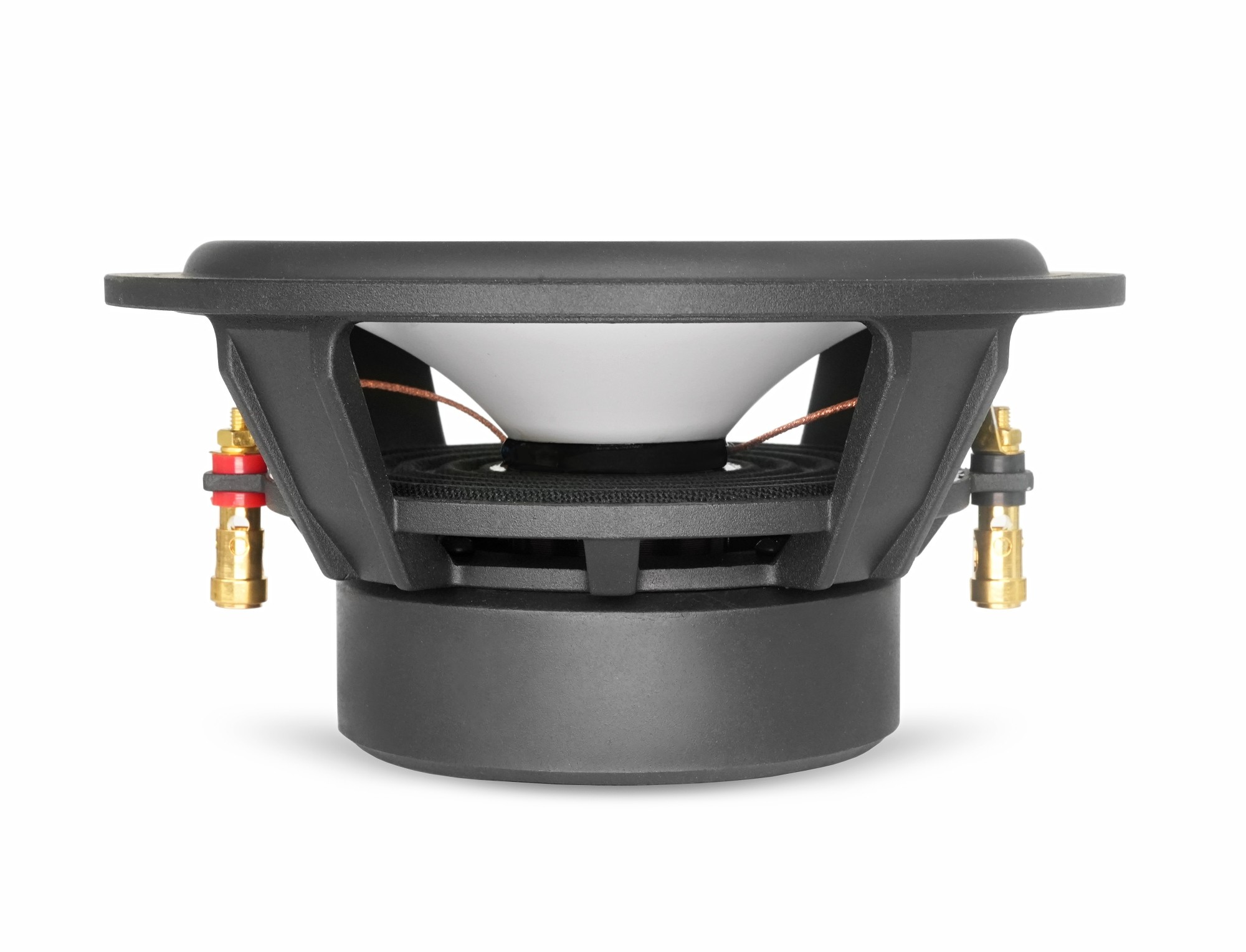
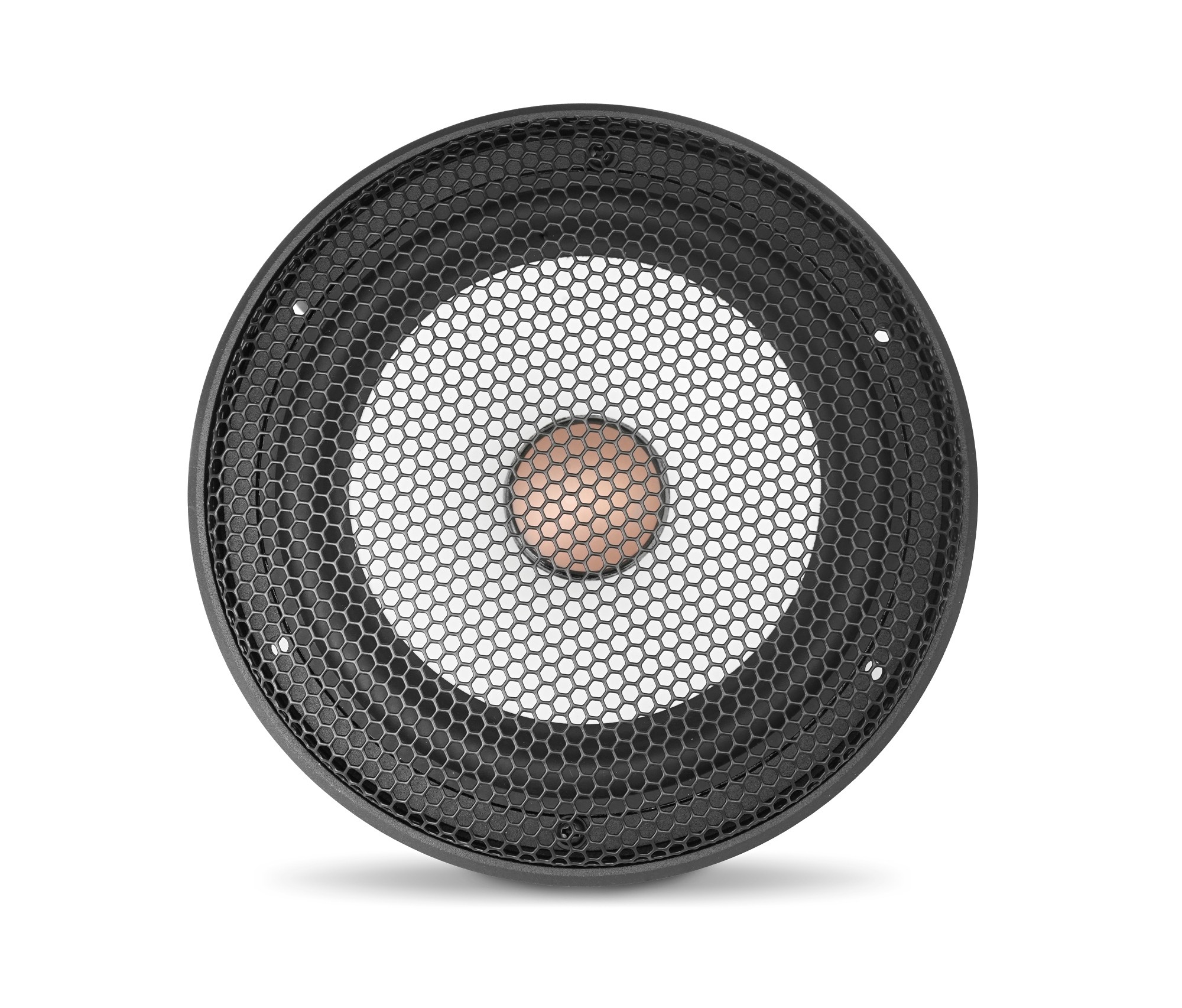
The Audible Physics BD 635 Mid-Bass Speakers feature a classic Audible Physics design with a traditional white diaphragm and copper colored canopy. The membrane is made of MSP (Magnesium Silicate Polymer) material, which was developed and manufactured in the USA. This advanced material is known for its excellent stiffness, very light weight and minimal vibration, allowing accurate and natural sound reproduction. Other advantages include practically zero vibrations arising from the movement of the membrane, which is also contributed by a durable rubber suspension ensuring optimal damping and lateral stability. The suspension also eliminates movements that could cause contact with the 25 mm voice coil and robust 90 x 20 mm ceramic magnet. The coil and other copper components are made of the highest quality copper imported from Japan and Russia, which is known for its exceptional conductivity and durability. A specially designed cast speaker basket has several advantages. It is exceptionally rigid, eliminates vibrations and does not deform as much when the membrane moves, as is the case with classic steel baskets. At the same time, it does not reduce the magnetic field and dissipates heat from the oscillating coil significantly more effectively. The massive cable terminals, which we are more used to seeing on classic subwoofers, also attract attention.
Audible Physics TW 120 tweeters
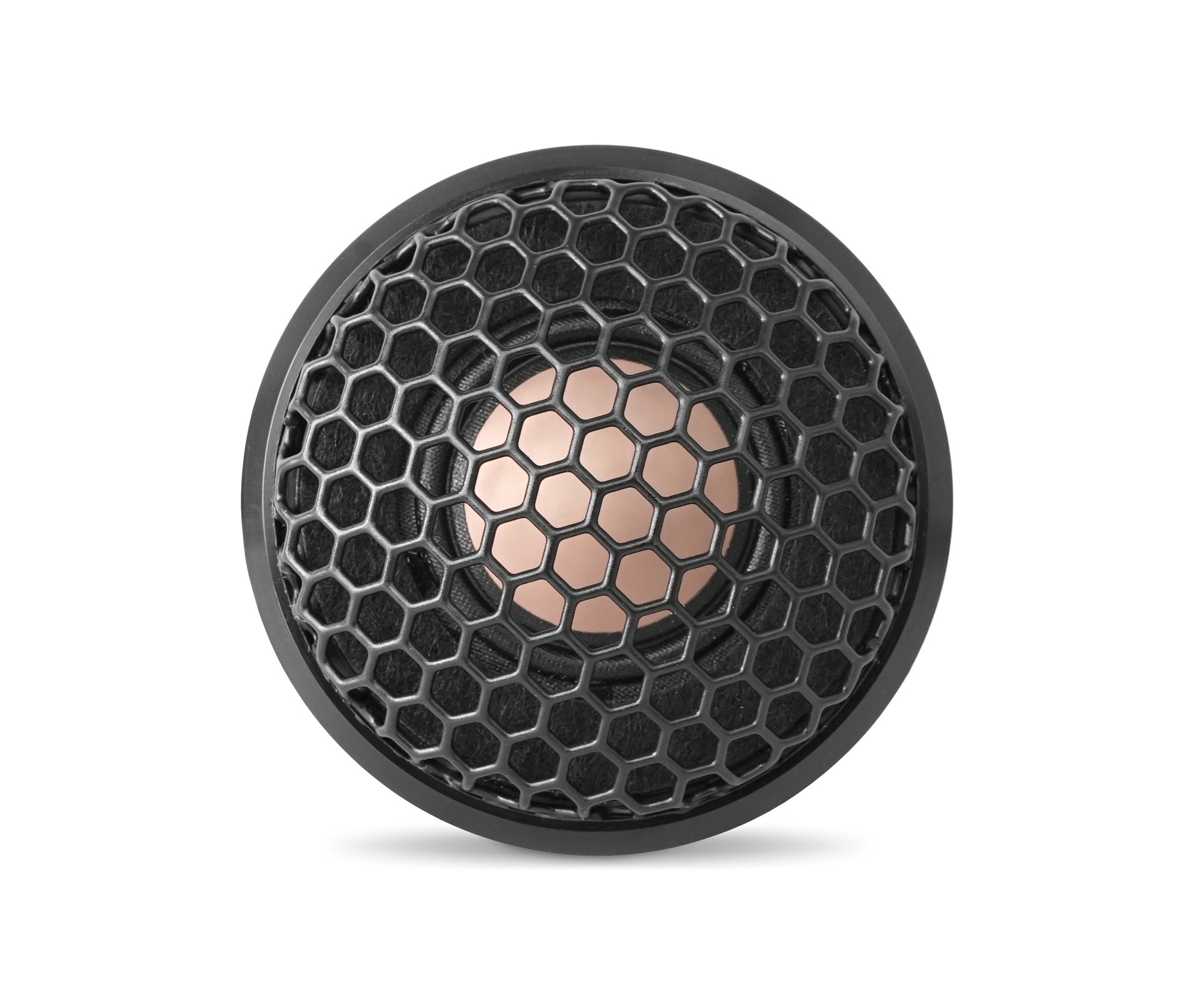
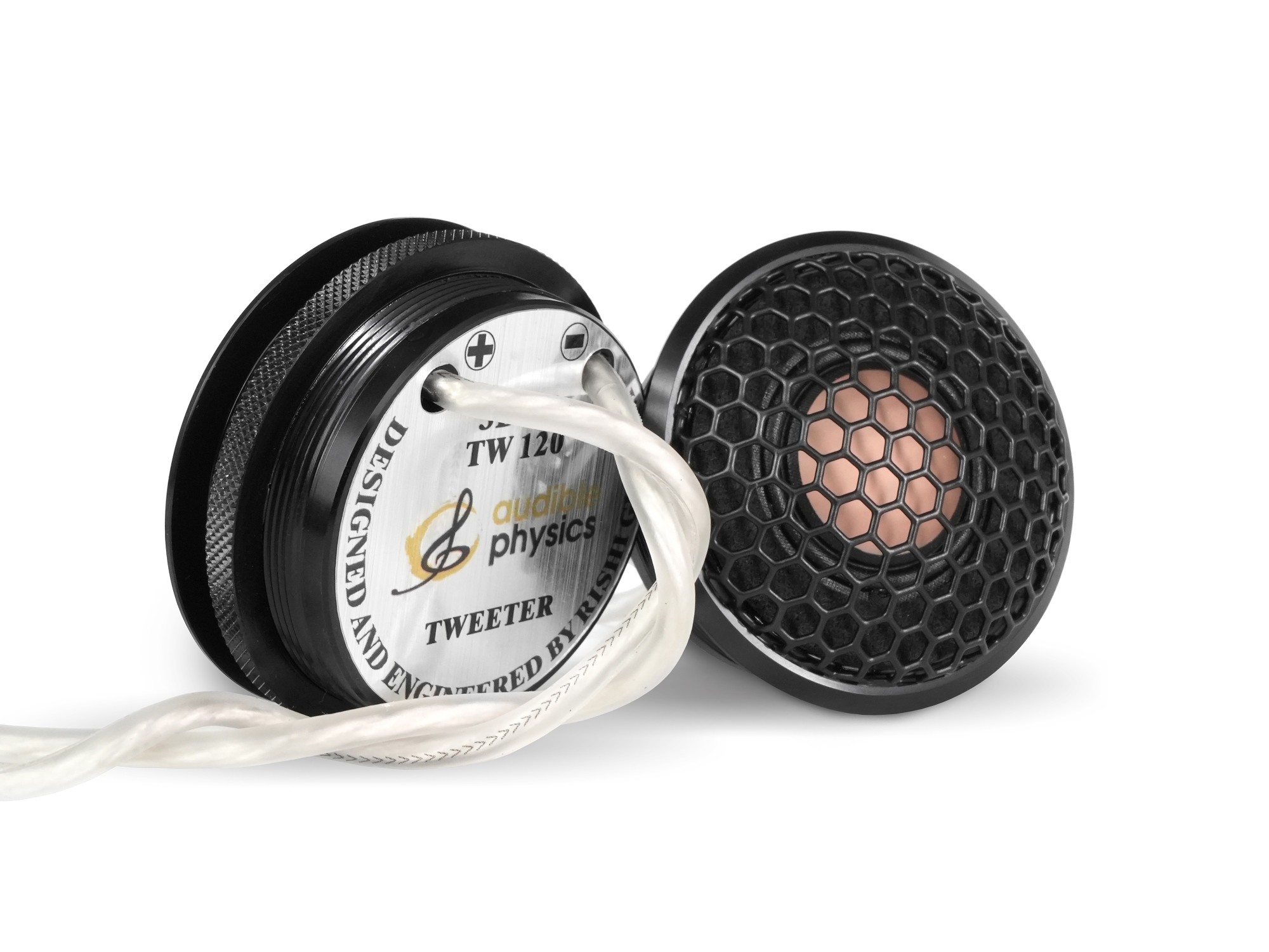
The tweeter membrane of the Audible Physics TW 120 is made of our own patented Matrix Alloy Dome material. It is a magnesium and aluminum alloy that offers several advantages, led by exceptional high-frequency details, analytically accurate sound and an extremely deep soundstage. This alloy dome impresses with its perfect linearity of the frequency response curve and almost perfect neutrality. In addition, magnesium has excellent damping properties and, together with the very stiff aluminum in the alloy, significantly reduces distortion and mechanical deformation. The high quality 19mm neodymium magnet is optimized for better efficiency and improved linearity to ensure perfect power management and increase bandwidth and efficiency. We must not forget the extremely low resonant frequency of 960 Hz, which will enable the ability to reproduce even lower frequencies than is common with most competing tweeters. The design of the copper-colored calota follows the mid-bass diaphragm and optically forms a perfectly coordinated system. Also worth mentioning are the beautiful steel tweeter housings designed for flush mounting. They also include rings for quick and reliable fastening.
| Catalog number | AP 3DEV 2-WAY |
| Brand | Audible Physics |
| Links | Official web presentation (English) |
| Speaker typeCoaxial speakers: Coaxial speakers are characterized by a so-called all-in-one design. The tweeter and mid-bass speaker are in one basket. The advantage is simpler assembly, but thanks to the connection or proximity of the bands in one speaker, the sound quality will usually be reduced. As a rule, in the middle of the mid-bass speaker, there is a tweeter whose voice coil works in the second air gap of the common magnetic circuit. The three-way coaxial speaker consists of a mid-bass speaker, a center speaker and a separate tweeter in the front on a special beam. Component Speakers: Component speakers are characterized by a division into individual frequency bands, treble + mid-bass + or. bass band. The individual speakers can be placed completely separately, which results in a better sound and acoustic performance. In the vast majority of cases of component speakers, an external crossover is also supplied, which divides the treble, middle / mid-bass, and into the three-band the bass band or allows setting the decibel level of the tweeter (e.g. +2 dB, 0 dB, -2 dB), steepness (e.g. 6dB/Oct. 12dB/Oct.) or active or bi-amp connection. | Component 2-way |
| RMS powerRMS speaker power is the constant power of the entire system, not just one speaker or one side. This is also the performance of continuous use of the speakers. If the RMS power is exceeded for a long time, the speakers may be irreversibly damaged! | 160 W |
| Max. (maximum performancePeak performance , which the speaker can play for a moment (approx. 0.5 s), for example when hitting drums in a song. If the max power is exceeded, the speakers will usually be damaged! | 320 W |
| Sensitivity (SPL 2.83V/1m)Sensitivity, sensitivity or efficiency of the speaker. Speaker sensitivity is given in decibels (dB) and simply put, the higher the value, the lower the demands on the amplifier's power. This is a defacto rating of how a speaker converts watts to sound. Sensitivity ratings are in noise level measured at 1 meter from the speaker using 1 W (watt of power) or using 2.83 volts at the source at 1 meter. A higher decibel level means the speaker is louder with less power. For every 3 dB increase in sensitivity, the speaker requires half the power to reproduce the same volume. For example, if an 88 dB speaker needs 100 Watts to produce a certain volume, then a speaker with a sensitivity of 91 dB needs only 50 Watts to reach the same volume. | 89 dB |
| Sensitivity (SPL 1W/1m)Sensitivity, sensitivity or efficiency of the speaker. Speaker sensitivity is given in decibels (dB) and simply put, the higher the value, the lower the demands on the amplifier's power. This is a defacto rating of how a speaker converts watts to sound. Sensitivity ratings are in noise level measured at 1 meter from the speaker using 1 W (watt of power) or using 2.83 volts at the source at 1 meter. A higher decibel level means the speaker is louder with less power. For every 3 dB increase in sensitivity, the speaker requires half the power to reproduce the same volume. For example, if an 88 dB speaker needs 100 Watts to produce a certain volume, then a speaker with a sensitivity of 91 dB needs only 50 Watts to reach the same volume. | 86 dB |
| ImpedanceImpedance - measurement of electrical resistance. When buying speakers, it is important to make sure that the impedance matches the amplifier or car stereo you are using. Example: A 2 Ohm speaker cannot be connected to an amplifier that is only stable up to 4 Ohms! A 4 Ohm speaker can easily be used with an amplifier that is stable up to 2 Ohms. The most common speaker impedance today is 3 - 4 Ohm. | 4 Ω |
| Frequency rangeThe ability of the speakers to play a signal from the lowest frequency to the highest, or the speaker's ability to faithfully reproduce sound in a specific frequency band. Professionally: In the frequency range from 40 to 16,000 Hz, the vast majority of fundamental and overtones (harmonics) of all musical instruments are found. We are interested in the course of the radiated sound pressure in this range of frequencies when the loudspeaker system is supplied with constant power. We call this course the frequency characteristic, which tells us the level of radiated sound pressure in decibels (dB) depending on the frequency. The frequency characteristic of a speaker or speaker system can be expressed most succinctly with a graph. Mostly, however, the frequency characteristic is indicated by indicating the maximum tolerance of the sound pressure in the given frequency range, e.g. 50 to 15,000 Hz -+ 6 dB. Since the frequency characteristics of loudspeakers and systems in general are quite uneven, some manufacturers do not even specify this maximum tolerance of sound pressure in decibels in their catalogs for reasons of prestige. Data impoverished in this way is unfortunately worthless. What is valid is that the manufacturer offers a speaker system with a frequency range of 30 to 20,000 Hz, if he is worried about stating the maximum unevenness of the sound pressure in this range, because he can have a tolerance of, for example, +- 20 dB. The unevenness or undulation of the frequency curve in good speaker systems for high-quality music performance should not exceed +-3 dB in the 80 to 12,000 Hz band and +-6 dB in the 40 to 16,000 Hz band. Greater unevenness already depletes or emphasizes certain tonal areas, which can cause audible or even disturbing distortion. The proportion between fundamental tones and higher harmonics also changes, thereby changing the color of the sound, and individual musical instruments as well as the entire musical image sound unnatural. | 50 - 20000 Hz |
| The diameter of the mid-bass speakerWe state the diameter of the speaker as the diameter of the entire speaker, not including the mounts, when smaller speakers (87, 100, 130 mm) have extra mounts. Some speakers are oval and there the dimension is given in inches, always the shortest side to the longest side. One inch is approx. 2.5 cm. | 165 mm |
| Installation depth of the mid-bass speakerThe installation depth of the speaker is measured from the bottom edge of the magnet to the bottom edge of the tin, plastic or cast speaker basket, or speaker bearing surfaces. | 73.6 mm |
| Mid-woofer diaphragm materialThe material that was used for the speaker diaphragm. Don't be afraid of the paper, it surprisingly has a very natural and high-quality sound and, thanks to the surface treatment, it can withstand moisture without any problems. | MSP (Magnesium Silicate Polymer) |
| Resonant frequency of the mid-bass speaker | 49 Hz |
| Overall tweeter diameterThe total diameter of the tweeter is given as the diameter of the individual tweeter without the installation houses. | 50 mm |
| Tweeter dome diameterThe net diameter of the dome (diaphragm) of the tweeter. | 20 mm |
| Tweeter dome materialThe shell material that was used in the manufacture of the tweeter. | Matrix Alloy Dome (magnesium and aluminum alloy) |
| Frequency crossover included in the packageThe crossover is an important part of defacto all loudspeakers. A crossover usually contains different resistor values, coil sizes, and capacitor types that fundamentally modify the sound. We describe below what the turnouts are for. Component Speakers: A crossover is part of every quality component speaker system. Its task is to ensure the distribution of frequencies that the amplifier produces in the entire acoustic spectrum of frequencies so that each of the speakers receives only that part of the band that it can optimally play in terms of efficiency and minimal distortion. Coaxial speakers: In most cases, coaxial loudspeakers have a simple crossover (6dB/Oct.) formed by a capacitor at the tweeter. | Yes |
| Cover grids included in the packageOriginal cover grilles in speaker packaging. | Yes |
| Price forIf the price is for a pair, the package always includes 2 pieces of everything, e.g. 2x mid-bass, 2x tweeter and 2x crossover. | Pair |
Evaluation
You might also be interested
 TipQuick previewanti-vibration material, 700 x 500 mm, thickness 2 mm, MLF 0.26, weight 3.23 kg/m²7,96 EURTemporarily unavailableComfortmat Integra Gen2
 TipQuick previewsound insulation material, 700 x 500 mm, thickness 6 mm, insulation 32 dB, weight 3,57 kg/m²14,49 EURIn stockComfortmat Tsunami
 TipQuick previewacoustic sound-absorbing material, 500 x 350 mm, thickness 18 mm, weight 1.22 kg/m²12,49 EURIn stockComfortmat Soft Wave 15 XL
 TipQuick previewsound absorbing material, 1000 x 700 mm, thickness 15 mm, weight 0.51 kg/m²23,96 EURIn stock