What to look for when choosing ceramic protection
Let's start with a little theory in simple terms. Ceramic paint protection is a thin, chemically resistant layer based on silicon dioxide, which bonds to the paint surface after application and creates a protective shield against external influences. This does not make the paintwork immortal, but it significantly increases its resistance to chemicals, insects, bird droppings, UV radiation, and common dirt. Compared to waxes or sealants, ceramics offer higher chemical resistance, longer durability, a stronger hydrophobic effect, and, as a rule, a more pronounced shine. It is precisely this combination of protection and visual effect that makes ceramics the pinnacle of paint surface protection.There are many ceramic coatings on the market today, and the differences between them are not always directly proportional to their price. When choosing, it is good to consider not only the declared service life, but also chemical resistance, hardness, and application difficulty. It is not true that cheaper ceramics are automatically easier to apply. Modern, higher-end coatings tend to be more stable, have a longer open time for polishing, and are less sensitive to minor application errors. You pay extra for this certainty, and for a beginner, a higher-quality product may paradoxically be the safer choice.
In general, ceramic coatings can be divided into user-friendly one-year variants, two- to three-year protection, and semi-professional and certified systems designed for detailing studios. However, each product may behave slightly differently, so we recommend following user reviews, choosing specialized manufacturers, and not being afraid to ask questions—we are happy to advise you on your selection.
The preparation of the paint determines the result
Choosing the right type of ceramic protection is certainly important, but the most important thing is preparing the paintwork. Ceramic coating is not a solution that lasts for a few months. For it to work on the paint for several years and offer adequate chemical resistance, a strong hydrophobic effect, and high gloss, the surface must be properly prepared. And given the results that high-quality ceramic coating can offer, it is only fair to create conditions in which it can work to its full potential.Ideal preparation before applying ceramic protection should include the following procedure:
- Thorough washing of the car body with shampoo.
- Chemical decontamination and subsequent washing.
- Mechanical decontamination using clay.
- Polishing to remove defects and unify the surface (depending on the overall condition of the paintwork).
- Final degreasing before application.
Washing and decontamination as the absolute foundation
The whole process begins with a thorough hand wash with shampoo. Neutral shampoos without added wax or ceramics are ideal, such as Gyeon Q²M Bathe or the popular Lusso from Carbon Collective. If the car is significantly dirty, a stronger decontamination shampoo is not a bad idea. However, even with a more aggressive alkaline formula active foam, alone is not enough – the paint must be really clean.This is followed by chemical decontamination. During operation, the paint traps metal particles and asphalt dots that cannot be removed by normal washing. For loose rust, use products such as Gyeon Q²M Iron or any other similar product you like. For asphalt, we recommend the proven Gyeon Q²M Tar. After chemical decontamination, we recommend washing the car again to remove any chemical residues.
If the surface is still slightly rough, even if only locally, mechanical decontamination using clay is the next step. This will remove the most stubborn contamination from the paintwork. After claying, it is advisable to wash the car again and dry it thoroughly. We have described the correct procedure for chemical and mechanical decontamination in detail in a separate article, where you will find the entire process step by step. Therefore, we will skip to the next topic.
Paint polishing: necessary or not?
Polishing seems complicated, and many people prefer to avoid it. In addition to the extra work, it also means an additional investment. So is it necessary? The answer is simple – it depends. For one-year protections and paint without significant defects, it is not always necessary. However, if you are preparing your car for multi-year ceramic coating, it makes sense to have the surface in perfect condition.We tested this in practice on our 2023 BMW 3 Series. It was a relatively new car, and at first glance, the paintwork appeared to be in good condition – without any significant scratches or holograms and still with a partially functional layer of the original ceramic protection. However, this was precisely the stumbling block. Even after thorough decontamination, water marks and deposits remained on the paintwork that could not be removed by normal washing or chemicals. So it was not a preparation error, but the condition of the surface and the remains of the previous protection that had to be removed mechanically. Barely noticeable in daylight, but under artificial light it was not a pretty sight.
It is also important to mention that the old protective layer must be completely removed before application. Wax or sealant in the final stage of its life can be easily removed by the previous steps, but ceramics cannot be removed without machine polishing. The good news is that you don't need extremely expensive equipment. We worked with a Liquid Elements polisher costing around 5,000 CZK, which is perfectly adequate for hobby use and less busy professionals.
The choice of paste, disc, and number of steps always depends on the specific condition of the paintwork and experience. In our case, our colleague David chose a two-step polishing process – first, a medium-strength Gyeon Q²M Compound paste in combination with a medium-hard red disc, followed by Q²M Finish paste and a softer blue disc. After completing both steps, the paint looked almost perfect, and the best was yet to come.
Of course, this procedure and selection of products is not the only correct way to go about it and may vary depending on the condition of the paint and personal preferences. The important thing is to understand the principle: before applying multi-year ceramics, high-quality paint correction simply makes sense. We are preparing an article on paint polishing, where you will find all the details.
Degreasing: the last step before application
Before applying the ceramic protection itself, the paint must be clean and degreased so that the ceramic coating can adhere perfectly. It is ideal to use a specialized degreaser or classic isopropyl alcohol (IPA). Most car care product manufacturers have their own version – we have had good long-term experience with Gyeon Q²M Prep, which does the job perfectly. The application itself is simple: we recommend spraying the product onto the paintwork, leaving it to work for a short time, and then wiping it off with a clean microfiber cloth. Prep evaporates immediately, leaving the surface degreased and streak-free.The specific procedure varies mainly depending on whether you plan to polish:
If you are not polishing:
After decontamination, wash the car, dry it thoroughly, and then degrease the entire paintwork.
You can then proceed to apply the ceramic protection.
If you polished:
Degreasing is an absolute necessity. Polishing pastes contain oils that would prevent the coating from bonding properly.
Therefore, degrease the paint thoroughly, even in two steps, and check it under high-quality light.
Application of Gyeon Q² Pure EVO ceramic protection
For our BMW and this article, we chose Gyeon Q² Pure EVO. This ceramic coating offers excellent chemical resistance and hydrophobic properties, superior gloss, and is also one of the most user-friendly ceramic coatings in terms of application. Compared to a whole range of competing products and higher-end Gyeon variants, it has a longer open time for polishing, so you don't have to panic while working and can proceed calmly. To be on the safe side, we chose a 50 ml volume for our BMW, which was more than enough for the whole car and still had some left over.We have decontaminated, polished, and degreased – all that's left is the application itself. Of course, it is ideal to work in a garage with a stable temperature of approximately 15–25 °C and in a dry and dust-free environment. Modern Gyeon ceramic coatings labeled EVO can be applied outdoors, but even in such cases, it is necessary to monitor the temperature of the car body, avoid direct sunlight, and plan the work according to the current weather forecast. Just as important as the application itself is the first few hours after application, when the layer hardens.
The package contains the coating, an application cube, and suede cloths. We recommend preparing 3 to 4 new microfiber cloths with closed loops, ideal for polishing ceramic protection – for example, Purestar Speed Polish Towel. And a simple rule of thumb: if your cloth falls on the floor, take it out of the game without mercy. Don't forget about good lighting. A strong work lamp or headlamp will help you spot any missed spots in time.
Step-by-step application procedure
- Always wear protective gloves.
- The paint must be completely dry. There should be no water droplets or moisture in the folds of the car body. If you are unsure, it is better to wait.
- Shake the bottle with the ceramic coating thoroughly.
- Drip the coating onto the enclosed applicator, which has a suede cloth attached to it.
- Apply in crosswise movements to only one part of the car body at a time (e.g., half of the hood, door, fender).
- Wipe off the coating with a microfiber cloth within approximately 10 minutes (depending on temperature and conditions).
- At higher temperatures, shorten the time between application and wiping.
- Continue panel by panel until finished.
What happens in the following hours and days
After application and thorough polishing, the physical work on the paint is finished, but the equally important curing process begins. In the first few hours, the ceramic layer initially bonds to the paint. During this phase, it is very important that the car remains dry and, ideally, at a stable temperature. We recommend leaving the car in a garage or covered area for at least 12 hours, away from water, dust, or morning dew. If you are applying the coating outdoors, it is essential to check the weather forecast – heavy rain shortly after application can damage the fresh coating.The coating is most sensitive during the first 24 hours. If it comes into contact with water, it is advisable to gently dry the drops as soon as possible. At this stage, chemical curing is still ongoing and dried water can create mineral marks that are more difficult to remove than on fully cured ceramics.
The ceramic layer takes approximately 7 to 14 days to fully cure. During this time, we recommend not washing the car and avoiding aggressive car care products. Normal rain does not affect the coating, but active washing with shampoo or other chemicals could disrupt the curing process. Only after this time can the ceramic protection be expected to achieve its full chemical resistance, maximum hydrophobic effect, and final hardness.
Even ceramics are not immortal – how to care for them?
One thing needs to be said loud and clear – ceramic protection is not maintenance-free! Yes, it makes washing much easier, reduces dirt adhesion, and increases chemical resistance, but if you don't take care of it, it will gradually degrade and lose its properties.The basis is regular washing. Ideally, at least once a month with a classic, clean shampoo without added waxes or protective ingredients. Ceramic itself provides protection – there is no need to "cover" it with other products every time you wash.
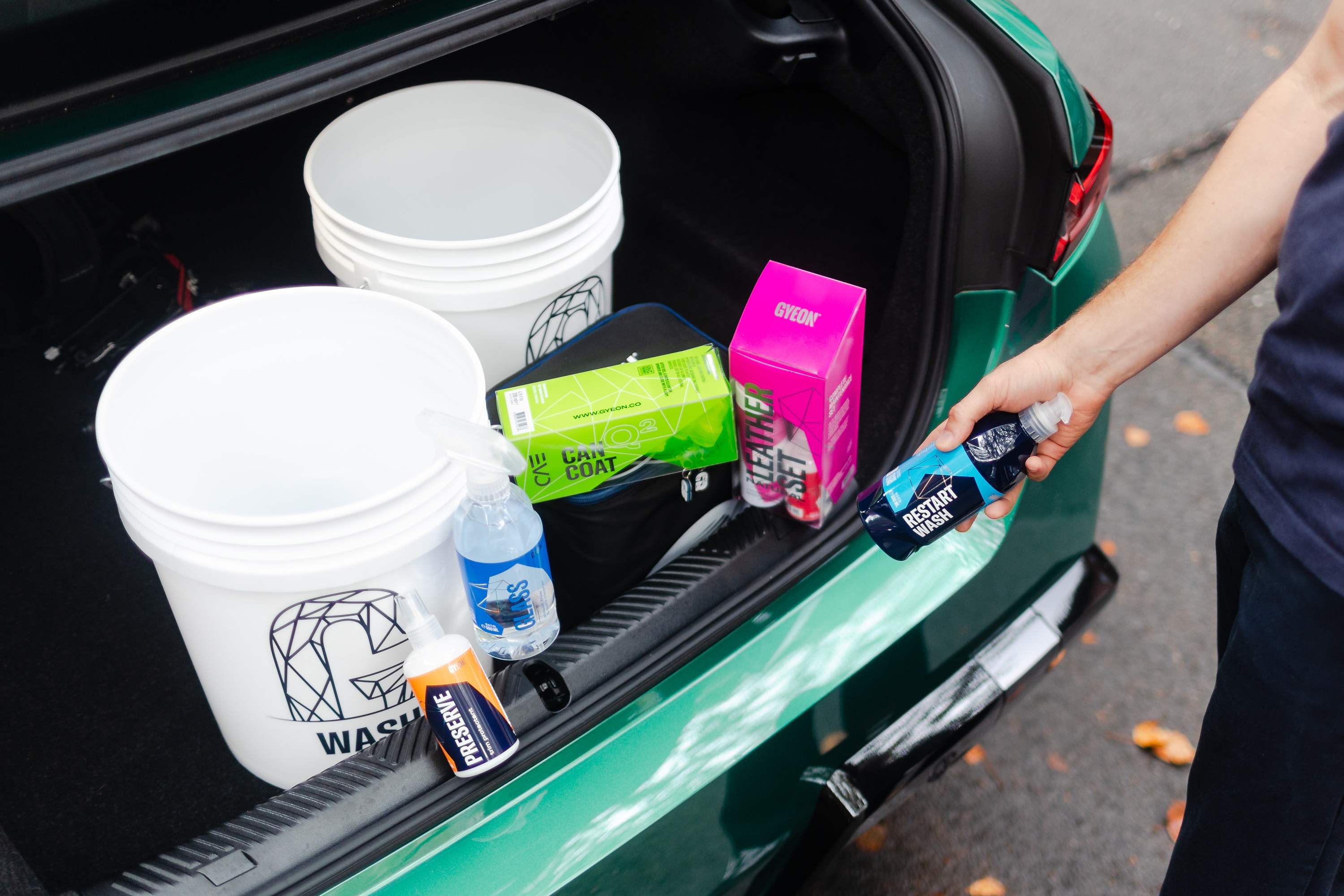
Occasional application of Gyeon Gyeon Q²M Cure ceramic sealant will gently revive the coating layer and help maintain its performance over time. You can also purchase the sealant directly in a set with Pure EVO ceramic. Gyeon also recommends using RestartWash decontamination shampoo from time to time. It contains iron-like ingredients and helps remove accumulated dirt and rust without damaging the ceramic protection. It is a very effective way to "deep clean" the coating and restore its maximum performance.
If you take care of the ceramic coating, you can enjoy all its benefits for the declared period without any problems – in the case of Pure EVO, up to 3 years or approximately 40,000 km. And that's worth it.
Finally, insights from daily operations
We applied ceramic protection to the BMW in October last year. It is now the end of February, and the car has been through autumn and most of winter, so we can now share our first real-world findings. So how does Pure EVO perform in practice?Personally, I have countless applications of various types of protection under my belt – from natural, hybrid, and synthetic waxes to sealants and ceramic protection from other manufacturers. But what Pure EVO excels at first glance is shine. In addition, the Dravit Grey shade from the BMW Individual range highlighted the golden metallic grains and gave the paint a depth that conventional protection simply cannot offer. This effect is most noticeable in the sun and is a joy to behold.
The beading and water drainage are also unmissable. You will simply love these droplets and look forward to every rain shower. What's more, water runs off the paint extremely quickly. After rain or washing, a short drive at higher speed is often enough to remove most of the water. Classic towel drying is also more effective, as there is almost no water left on the paint after rinsing.
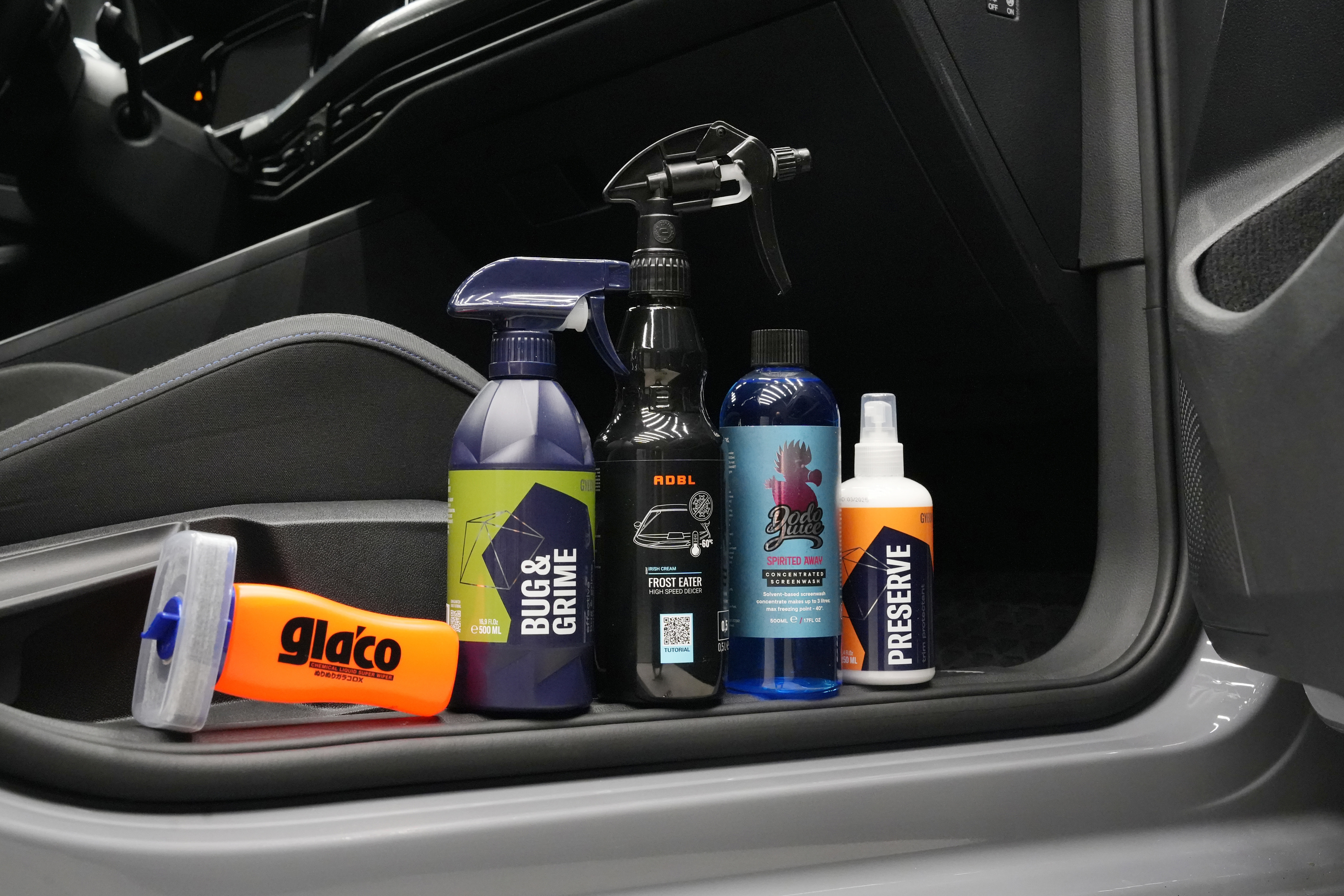
And winter operation? Ceramics can handle that without any problems so far. Thorough washing in this year's frosts is out of the question, but a quick solution in the form of Gyeon Q²M Bug & Grime and subsequent rinsing with water does the job perfectly. This is enough to keep the paint clean and maintain all its properties. The paint will receive regular care again with the arrival of spring.
Ceramic protection definitely makes sense – and if done correctly, it will repay your investment in the form of long-lasting and effective results.