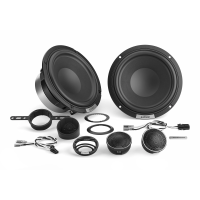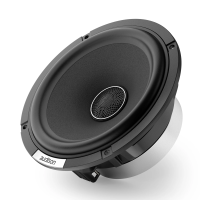
Audison recently unveiled the long-awaited model range Voce II, which represents a major generational overhaul of the key loudspeaker series from this traditional Italian manufacturer. The new range was developed with a clear goal – to offer a solution that follows the philosophy of the flagship Thesis range, but in a more affordable form, without compromises in build quality and fidelity of reproduction. In the following review we will therefore look not only at the construction solutions of individual drivers, but also at their sound performance and the overall potential of this new platform. Voce II is one of those systems that deserves a detailed introduction.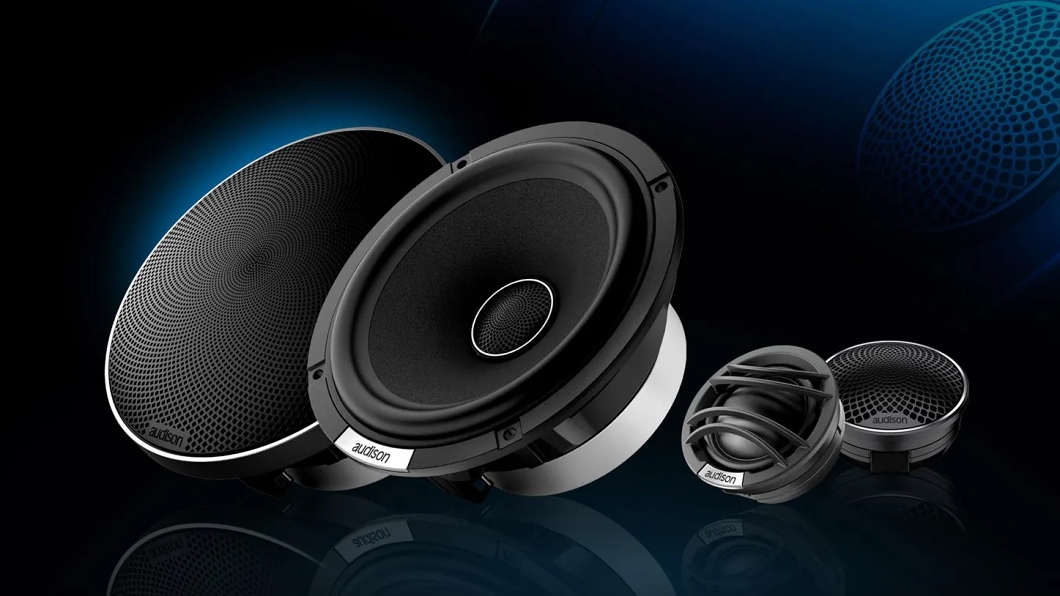
Development and design philosophy of the Voce II range
A little theory and some marketing statements to start. The second generation of the Voce range was not created as an evolutionary facelift of the original series, but as an entirely new design platform developed literally from a "green field". Every component was designed using the same methodological principles that underpinned the worldwide success of the Thesis range – namely a combination of advanced acoustic simulations (FEM), laboratory measurements and extensive listening tests in real environments. The FEM (Finite Element Method) played a crucial role in the design of all key acoustic parts, especially the tweeter, where it enabled fine-tuning of the dome geometry and the magnetic system. The result is Hi-Res Audio certification and an extended frequency range up to 40 kHz with an optimized directivity pattern.
Development took place in close cooperation between Audison's engineering team and leading European installation specialists, and had a single goal from the start: to deliver an audio system without compromises, yet flexible in real installation conditions. Every part was designed with an emphasis on optimizing sound transmission and dispersion, minimizing distortion and preserving the most natural tonality possible. The construction of the individual drivers combines top materials – from sandwich cones made of semi-pressed paper and cellulose, through domes made of Tetolon (a blend of silk and cotton), to metal bodies and machined logos. Every detail, whether technical or aesthetic, was handled with emphasis on quality, functionality and consistency of the resulting sound.
Voce II thus provides a platform for demanding listeners seeking transparent, dynamic and emotionally rich sound, while also requiring compatibility with DSP processors or, conversely, high-quality passive crossovers. And that is exactly what the second-generation Voce offers at first listen. Exactly in the spirit of the Audison brand.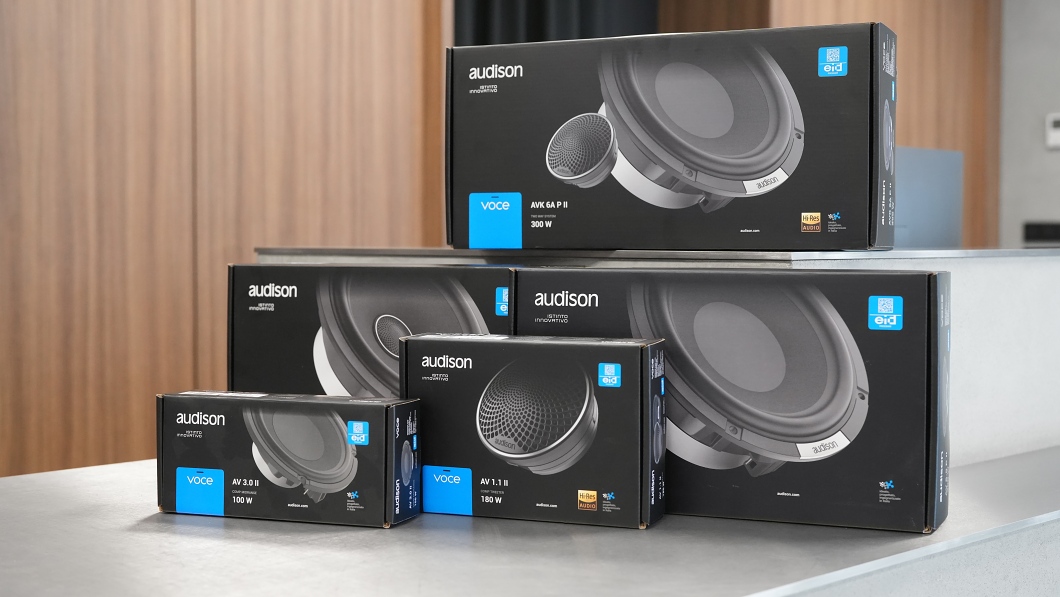
Overview of models and concept of the Voce II range
The Voce II range was designed as a complete system of components for two-way and three-way configurations, with an emphasis on maximum flexibility in both active and passive setups. Audison targets not only pure SQ applications with DSP processors, but also more demanding factory integrations or simpler system solutions. All components share common design traits, an identical design language and tuning philosophy. At the time of publishing our review the Voce II range includes the following components:
- Audison AV 1.1 II - a tweeter with a 28 mm Tetolon dome and generous mounting accessories.
- Audison AV 3.0 II - a midrange driver with a 70 mm paper cone.
- Audison AV 6.5 II - a mid-woofer with a 165 mm paper cone.
- Audison AVX 6.5 II - a coaxial driver with a 165 mm cone and an integrated 25 mm tweeter.
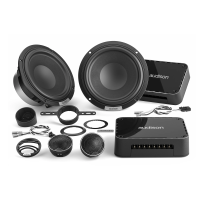
- Audison AVK 6A P II - a component set for active configuration containing AV 1.1 II and AV 6.5 II.
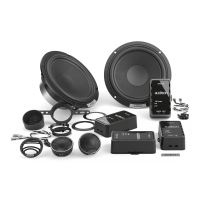
- Audison AVK 6 P II - a component set for passive configuration containing AV 1.1 II, AV 6.5 II and audiophile crossovers.
- Audison AVK 6 S II - a component set for passive configuration and easy integration - smaller 25 mm tweeters, mid-woofers with reduced mounting depth and compact crossovers.
The manufacturer has already officially announced an expansion of the range with a 100 mm midrange driver and new Voce II subwoofers that will complete the series into a full high-end system. I am personally very much looking forward to these planned components – midranges of this diameter are rare on the market and the same goes for subwoofers in the intended price range.
First acquaintance – design and construction features
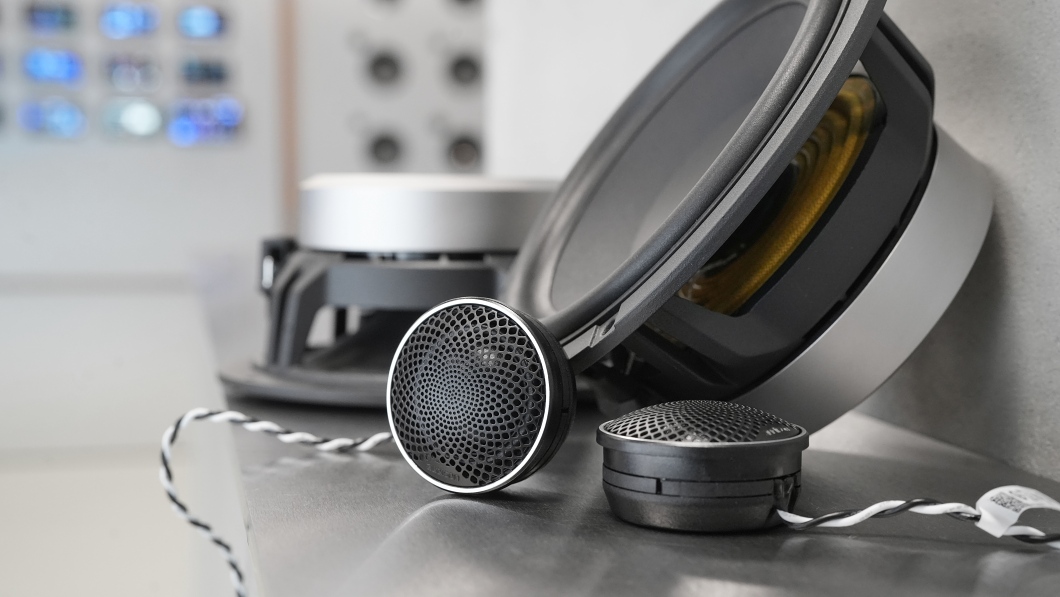
The first glance at the speakers of the new Audison Voce II range already suggests they are not ordinary pieces. On the contrary – the construction of each driver has been redesigned from the ground up with the aim of harmonizing technology, functionality and a premium appearance. And it must be said, very convincingly. From my perspective this is the most comprehensive and ingenious speaker range I have ever had the opportunity to see. It combines what I would expect from Italians – luxurious design, exceptional workmanship, noble materials and practical installation features. Audison opted for an elegant industrial design with a prominent metal logo, brushed aluminum accents and a currently fashionable matte finish. Everything feels like a whole conceived down to the last detail – from the sophisticated mechanical construction, through the materials used, to effective connectivity and mounting solutions. So great praise to the Italian Elettromedie.
A benefit of this range can also be the dual connection system – the presence of both classic Faston connectors and OEM automotive connectors directly on the woofer baskets, coaxial drivers and tweeters. This allows flexibility during installation, facilitates connection to factory wiring and at the same time leaves the possibility for fully individualized solutions. The installer is thus not forced into compromises and can decide according to the specific project – with emphasis on speed, precision and flawless connection.
The packaging was not left to chance either – the new graphic design in a black-and-blue color combination looks elegant, modern and premium. The internal layout is maximally purposeful – the individual components are precisely seated in the foam and protected against damage. The overall packaging therefore corresponds to Audison's philosophy – the pursuit of perfection in every detail. From the moment you open the box it is clear you are dealing with a product that sets high goals not only in sound but also in overall presentation and user impression.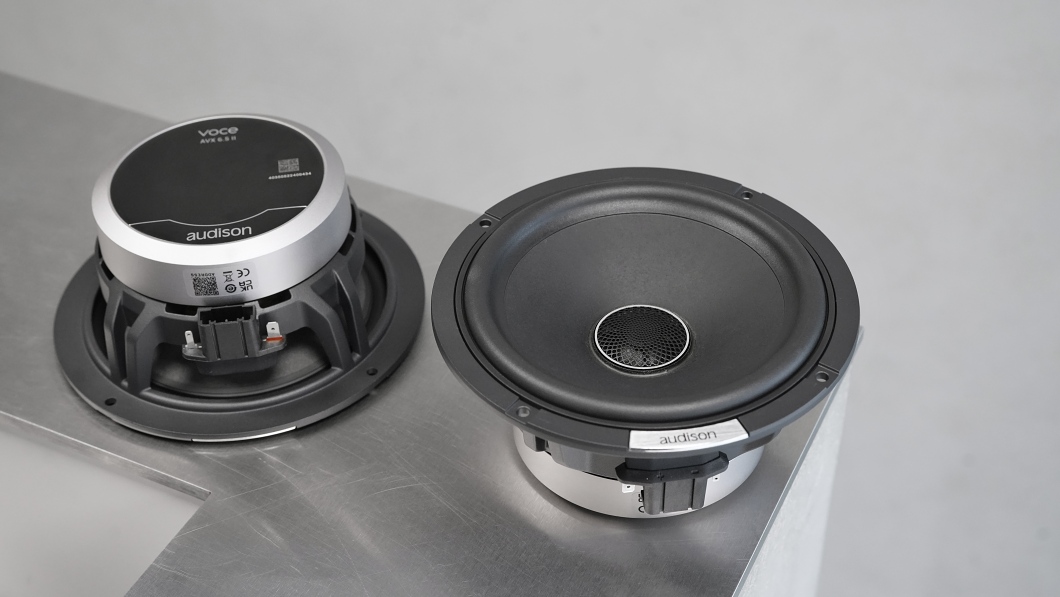
AV 1.1 II – tweeter
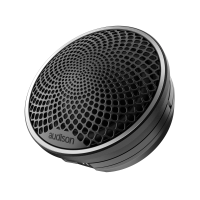
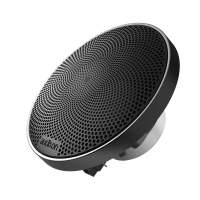
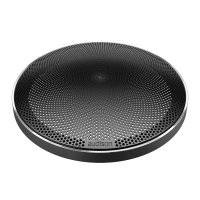
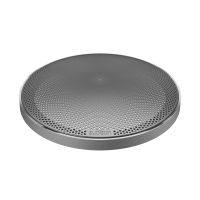
Right when unboxing the AV 1.1 II tweeter I was struck by its elegant and premium appearance. The most noticeable feature is the well-executed steel grille in the style of the top Thesis series and the aluminum decorative frame with a finely machined edge that surrounds the delicate steel grille protecting the dome. At first glance it is clear that you do not want to hide this tweeter under upholstery or a grille – it is an aesthetically successful piece that can become a design element of almost any interior.
From a construction point of view it is a 28 mm tweeter with a soft Tetolon dome, i.e. a blend of silk and cotton. Audison has significantly revised this proven diaphragm in the new generation. The frequency range up to 40 kHz indicates that this is not a standard textile tweeter – such an extension is more typical for domes made of aluminum, magnesium (or their alloys) or beryllium. Nevertheless, one cannot help but wonder whether this is all just marketing, because most people perceive the limit of human hearing at roughly 20 kHz. According to Audison, however, this extended range has a positive effect on the linear behavior of the driver in the commonly audible band. My knowledge does not go so far as to judge that, yet acoustics simply does not adhere to the rule that what is outside the audible range has no influence on what we hear. We verified this in our showcar Škoda Kodiaq, that even inaudible frequencies below 10 Hz can be perceived by the human body.
In my view a more important parameter is the resonance frequency around 900 Hz. That is an excellent value for a tweeter, which significantly expands the possibilities of its use – whether in active three-way systems, but especially in two-way setups without a midrange driver, where the tweeter is also responsible for the upper midrange. And that is often decisive – either the tweeter handles it or it doesn't. In this case it is the former, which we have already confirmed in several installations. But more on that in the next part of this review.
It is worth mentioning the generous mounting accessories. The package contains two variants of protective grilles, elegant housings for surface mounting, screw-on mounting rings and even OEM connectors that simplify installation in modern vehicles. Audison simply thinks of all ways of use and in various designs. 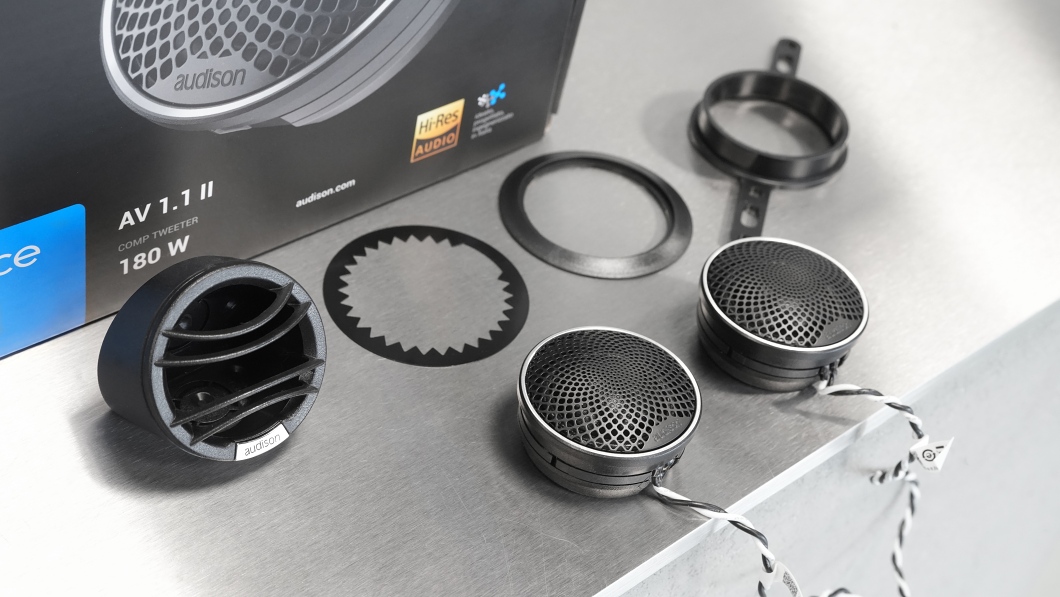
AV 3.0 II – midrange driver
Unlike the tweeter or mid-woofer, which are often presented as the main components, the midrange driver tends to be a bit in the background. Yet the midrange is crucial in terms of musical content – it is the band where most vocals, strings, wind instruments and spatial nuances take place. A quality midrange driver can give listening depth, emotional tension and a naturalness that no tweeter or woofer alone can achieve.
Audison AV 3.0 II has a 3" (70 mm) size, which is a compromise ensuring dimensional universality and easy installation. The cone is made from a combination of pressed paper and natural fibers, partially impregnated for higher stiffness and moisture resistance. It sounds simple, but the result is excellent – very low weight, optimal internal damping and a character that is calm and natural. The rear of the driver houses a compact but powerful neodymium magnet. The geometry of the magnetic assembly was optimized using FEM simulation software, which allows concentration of the magnetic field in the voice coil, thereby improving efficiency and accuracy of the acoustic response. A significant part of the research was focused on the motor to achieve linear frequency response and reduction of voice coil inductance modulation. This should result in improved accuracy, clarity and dynamic sound without distortion.
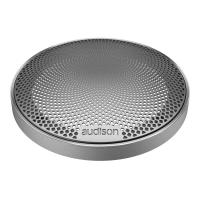
One of the main benefits of the AV 3.0 II appears to be its extended working range – it plays from approximately 200 Hz and ends above 7 kHz, so it can theoretically be used as a full-range driver in the absence of a traditional tweeter. The main advantage, however, is ensuring a natural transition between the mid-woofer and the tweeter in a full three-way system. Despite its small size this driver has a sensitivity of 90 dB (2,83V/1m) and therefore works great even in systems with limited power reserves. The package also includes comprehensive accessories, notably a beautiful steel grille that ensures a designer finish to the installation. 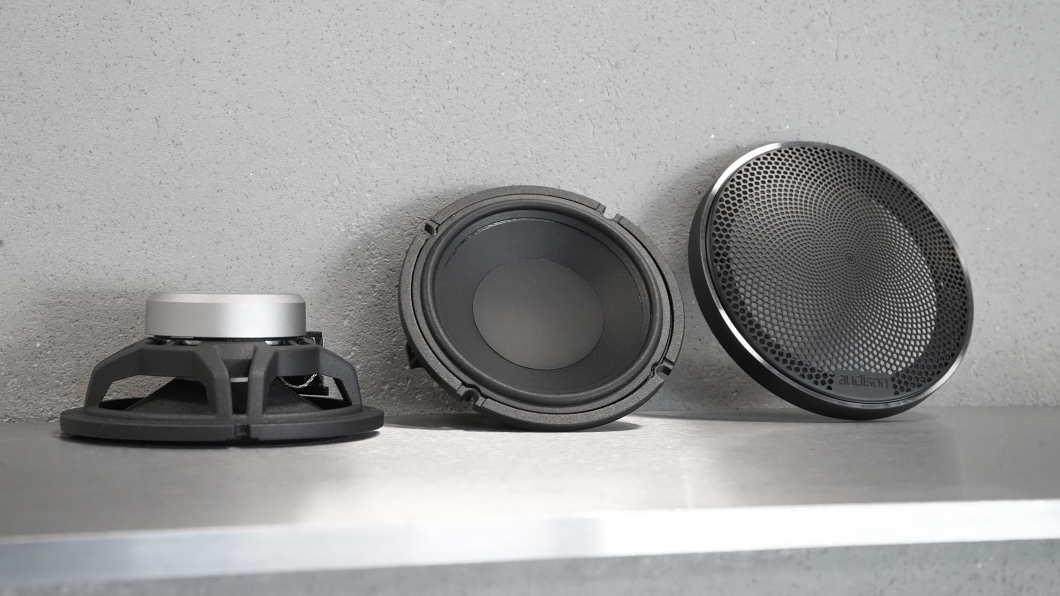
AV 6.5 P II – mid-woofer
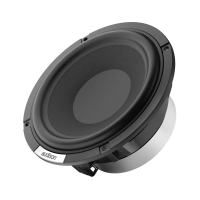
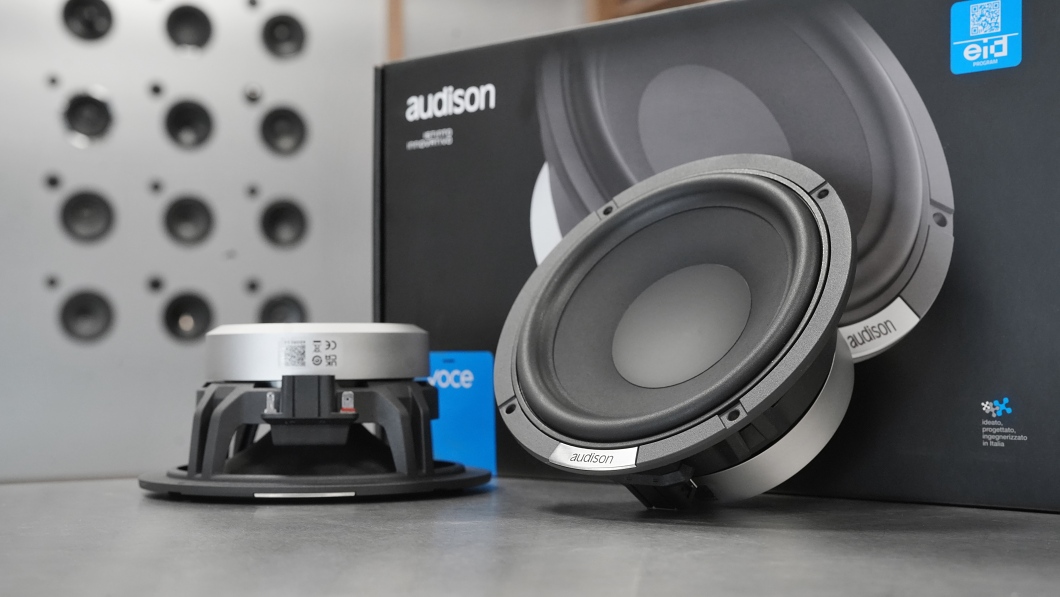
The AV 6.5 II mid-woofer belongs to those drivers that do not look extravagant at first glance, but a closer look shows this is a speaker built with respect for sound. The mid-woofer is heavy, massive, perfectly finished. When you take it in your hand you get the feeling of truly excellent workmanship. Dominating the mid-woofer is a cone made of semi-gloss cellulose with a blend of cotton fibers. The surface structure of the cone appears restrained yet elegant, without unnecessary flourishes. According to Audison this material was selected by the development team for its excellent acoustic and mechanical properties. Low density and high internal damping of the material contribute to an exceptionally balanced frequency response in all listening positions and ensure natural and detailed sound reproduction. This construction allows pushing the vibrational modes of the cone (frequencies at which deformation and irregularities in response occur) into higher regions of the spectrum, leaving the entire midrange free from distortion and irregularities.A newly designed die-cast aluminum basket plays an important role here. The very open design with four pairs of spokes was designed to provide maximum structural rigidity while minimizing airflow resistance around the cone. This ensures free cone movement, which improves response and reduces unwanted resonances in the midrange. More holes beneath the spider prevent air compression, thereby eliminating harmful resonances and further improving midrange clarity. In addition, these holes allow optimal decompression of the air column inside the coil.
The mid-woofer is further equipped with a robust and powerful magnetic motor capable of releasing large amounts of energy while maintaining exceptional thermal stability. The motor design reveals a T-shaped pole piece into which an aluminum shorting ring is integrated. According to Audison this innovative element minimizes distortion at large excursions and linearizes the frequency response, contributing to higher purity and accuracy of reproduction. The voice coil is 40 mm in diameter and wound with CCA copper, while the former is made of aluminum – for faster heat dissipation and limiting eddy currents in the magnetic system. The entire magnetic circuit was tuned using FEM simulations and operates extremely linearly – the driver preserves mechanical and acoustic purity even at higher excursions.
I will again mention the unusual pair of connectors - the standard OEM connector and the classic Faston. So there is a choice, which could speed up installation, but practice will show that. In any case an interesting solution, that must be acknowledged.
And how does the Voce II range sound?
The first representative of the range that immediately asserts itself on listening is the AV 1.1 II tweeter. And after just a few minutes of listening it is clear we are dealing with a very high-quality tweeter. What immediately stands out is the transparent character without any exaggerated harshness. The Tetolon dome offers a delicate and natural presentation, one might even call it a "warm" performance. The tweeter's frequency response is convincing even in measurements – a linear response from approximately 2.5 kHz up to 18–19 kHz, where there is a slight rise and then a gentle fall up to the 40 kHz limit. Overall it is an exceptionally smooth response without dips or disturbing resonances, which corresponds to the listening impression. The directivity results are also very above average. Off-axis (30°) the curve remains surprisingly similar – it falls smoothly without dips or deformations. This is excellent news for anyone planning OEM installation into factory positions where tweeters often do not point directly at the listener's ears. When installed without a midrange driver you will also appreciate the low resonance frequency of 900 Hz, which ensures a trouble-free link to larger mid-woofers.
If I had to pick the component that brings the biggest surprise in the final sound of the entire Voce II set, it would probably be the AV 3.0 II midrange. Immediately after integrating it into a system it impresses with an unusually open and articulated performance, which is not a given in this price range and especially in a relatively small size. It shows the ability to capture fine vocal nuances, natural presentation of acoustic instruments, and the capability to create a convincing impression of space. From the frequency response measurements one can see an even characteristic from roughly 200 Hz to 7 kHz, the area where most musical content occurs. Off-axis the midrange maintains very good parameters – at 15° and 30° deviation the level falls smoothly, without sudden swings or dips, which is very important for spatial reproduction. A big asset is also the very low intrinsic resonance around 160 Hz, which facilitates the transition to the mid-woofer without disturbing phenomena and allows the system to be tuned from a very low crossover point. On the upper end of the band the cone remains calm and free of obvious resonances up to beyond 8–9 kHz, where the tweeter naturally takes over. In terms of listening the AV 3.0 II can be described as musical and natural, exactly as we at Ahifi like. We already look forward to the planned 100 mm size, which will likely be a big hit.
The closing link of the chain is the AV 6.5 II mid-woofer, which plays a key role in the whole Voce II set. It is responsible for the body of the sound, its physical presence and rhythm. And it must be said that Audison has made a huge step forward here compared to the previous generation. The sound of the AV 6.5 II is extraordinarily fast, precise and energetic. This is a driver designed for truly accurate reproduction of musical recordings, with excellent intelligibility. Subjectively it feels very controlled, has excellent dynamics and, thanks to reasonable tuning, does not get unsettled even in more demanding installations with limited door volume. Importantly, it handles both live music with acoustic instruments and modern productions with dense beats and demanding rhythmics.
We focused most of our testing on the two-way set Audison AVK 6A P II. We had the opportunity to compare it in our demo panel, in reference installations and in acoustically controlled studio listening rooms – and the results were consistently convincing. The combination of the AV 1.1 II tweeter and the AV 6.5 P II mid-woofer forms an exceptionally well-matched unit that can offer an unexpected level of finesse, space and musicality. Optimally with the use of a DSP processor, although a set with crossovers is also available. The sound character is neutral and balanced, with excellent presentation of vocals and details even at lower volumes. Nevertheless the system retains enough energy and punch to cope with more dynamic genres or higher listening levels..JPG)
Final evaluation
Audison Voce II represents a significant step forward not only compared to the original generation, but also in the context of the entire mid and upper segment of speaker systems for demanding users. The manufacturer did not go the route of cosmetic changes, but chose an expensive and technically demanding approach by developing an entirely new range – from materials and acoustic design to mounting accessories and packaging. The result is a comprehensive platform that excels not only sonically, but also aesthetically and in terms of installation.
From a listening perspective Voce II belongs to the best you can get in this class. Based on listening experiences from our installations I dare to say that in the price category around 17 thousand Czech Koruna the two-way Audison AVK 6A P II system is the highest quality option in our entire offer. Whether it is the delicate yet transparent tweeter, the very natural midrange, or the dynamic mid-woofer, everything feels extraordinarily balanced. The sound is simply very pleasing, with a musical tint and entirely in line with the brand's philosophy.
The range also offers wide variability – from individual drivers to complete two- and three-way sets, which allows optimization for different types of installations. Combined with first-class workmanship and attention to detail, this is a system that will satisfy not only measurements or paper specifications, but above all the real listening experience. In conclusion, I would add that after the announcement of the new Voce range we hoped exactly for such a result. And reality even exceeded our expectations – which is why speakers from this successful range will often appear in our installations.
✅ Excellent sonic character – transparent, natural and dynamic presentation
✅ Exceptional workmanship – luxurious appearance, robust construction, attention to detail
✅ Modern technical solutions – FEM optimization, new materials, Hi-Res Audio
✅ Excellent directivity – ideal even for OEM installations
✅ Wide mounting accessories – OEM connectors, adapters, multiple grille types
✅ System flexibility – from standalone drivers to two-way sets
❌ Higher price – compared to the original Voce and competition this is a bigger investment