
Amplifier Zapco REF 150.4
More about the product
- You can return the goods to us within 14 days
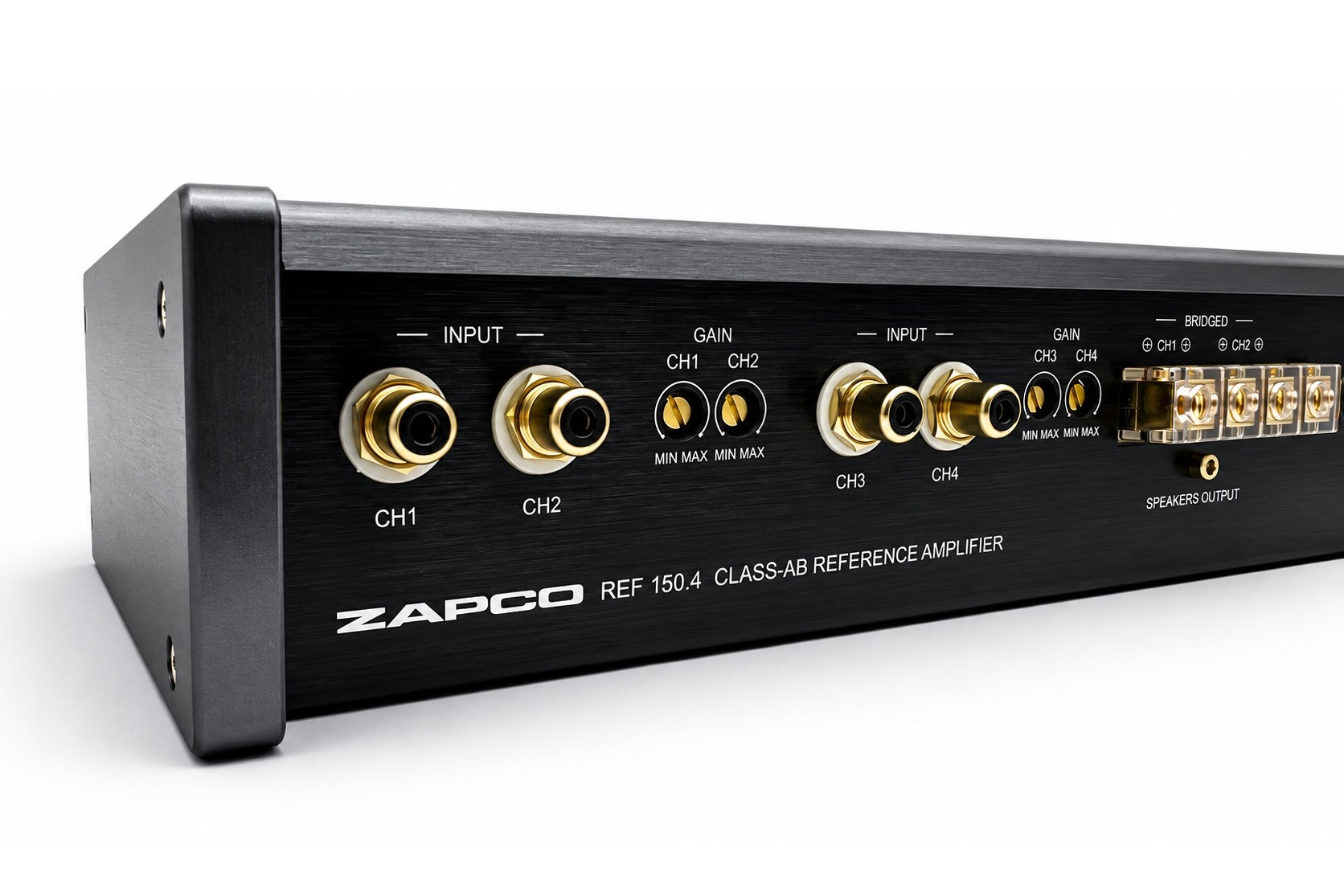
Amplifier Zapco REF 150.4
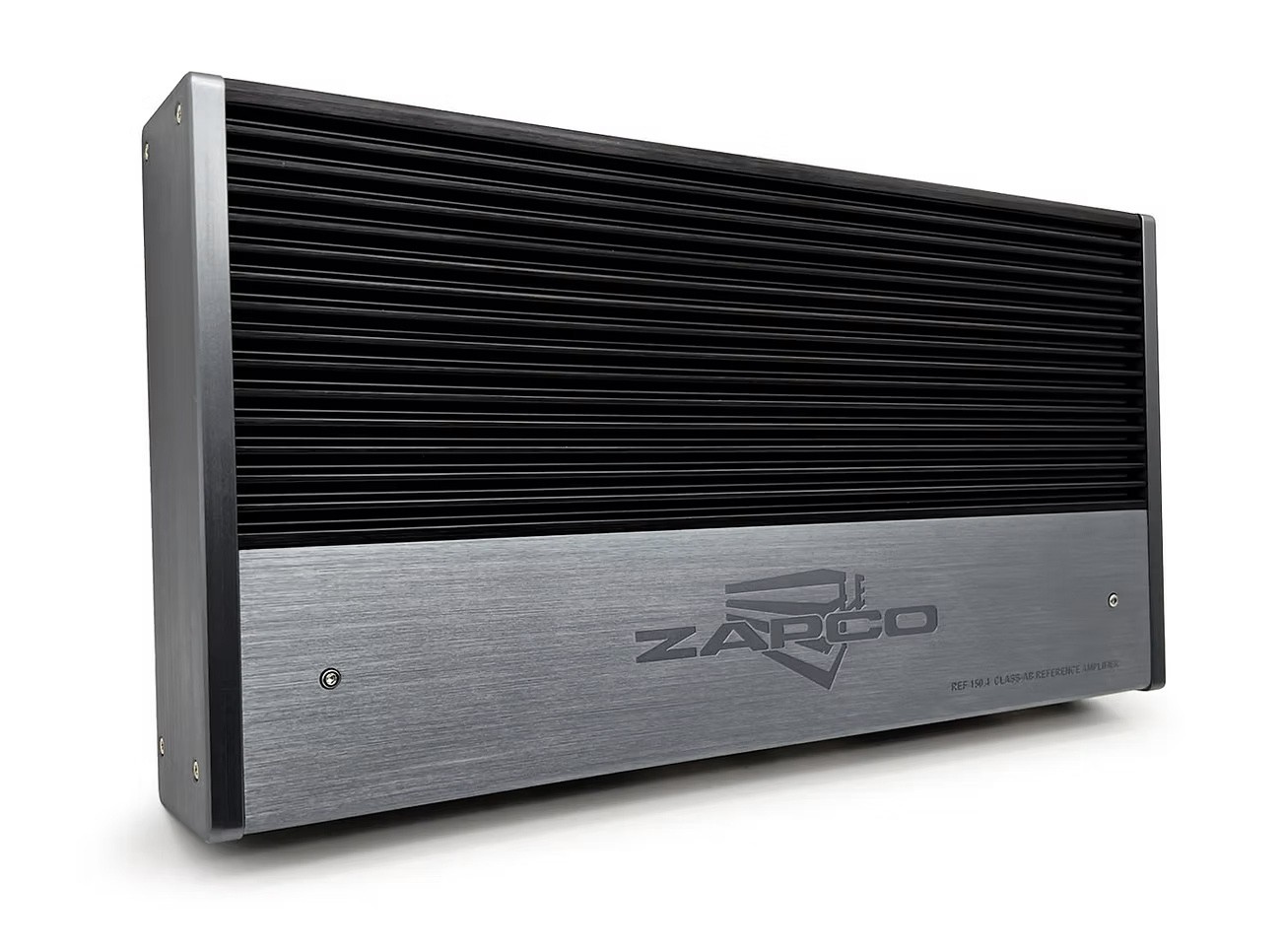
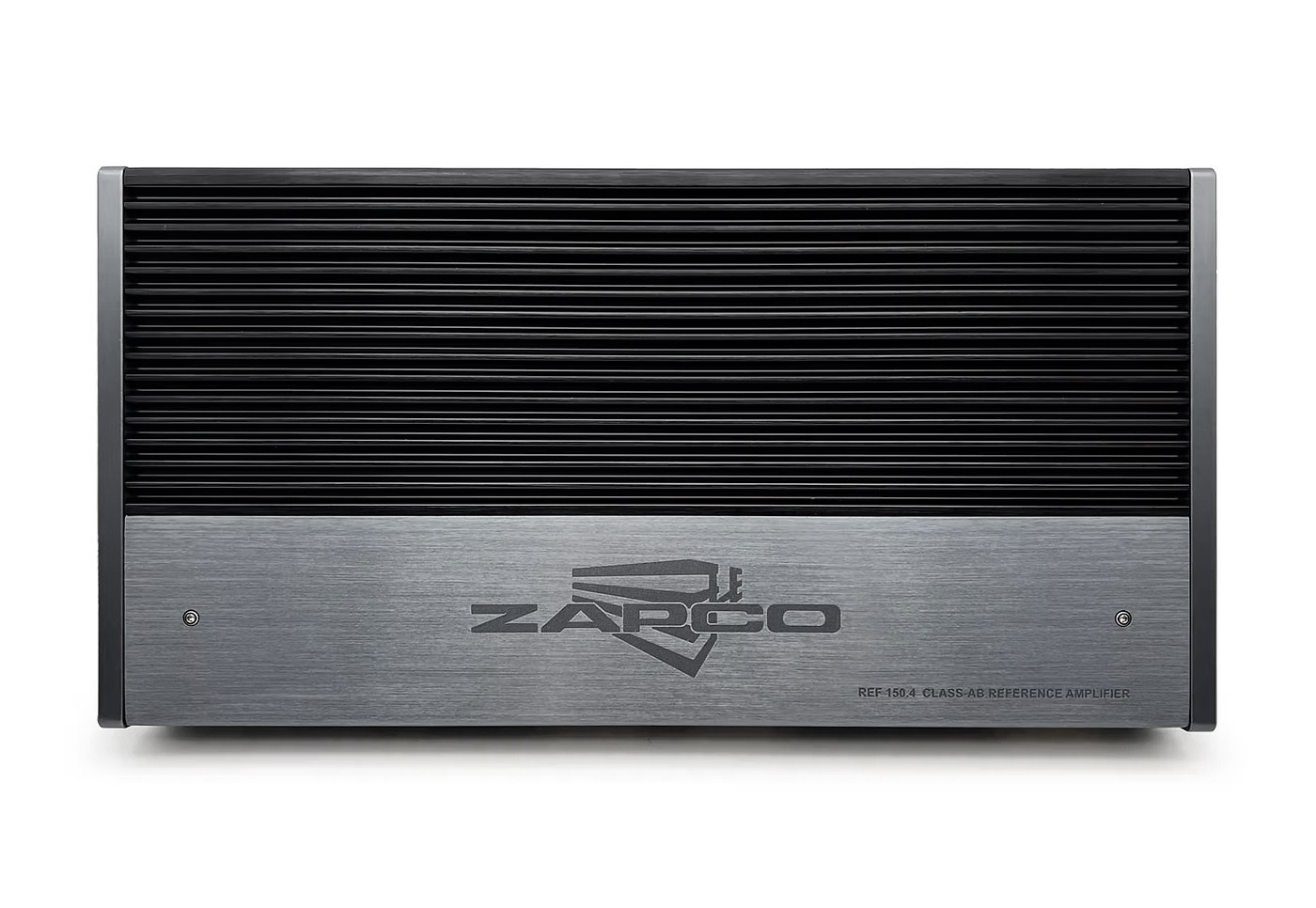
The Zapco REF 150.4 is a four-channel Class AB amplifier designed for those seeking the cleanest, most dynamic and natural sound. It builds on decades of Zapco’s experience developing top-tier amplifiers and uses only carefully selected components from reputable manufacturers. In line with the philosophy of a pure signal path, it contains no built-in active crossover filters or other circuits that modify the audio signal, so nothing affects the final reproduction other than the amplifier’s own quality. The highest sound quality always starts inside the amplifier, and Zapco pays extraordinary attention to every single component. All components are chosen not only for reliability and longevity but above all for their impact on the resulting sound quality. The equipment also includes top-tier MUSES8820 operational amplifiers, which can be easily swapped via sockets for other compatible models according to the desired sonic character. The REF 150.4 delivers 4 × 150 W RMS at 4 Ω, very low harmonic distortion below 0.02%, a signal-to-noise ratio above 102 dB and a wide frequency range from 10 Hz to 40 kHz. The result is an exceptionally musical presentation, high reproduction fidelity and sufficient power reserve even for the most demanding speaker systems.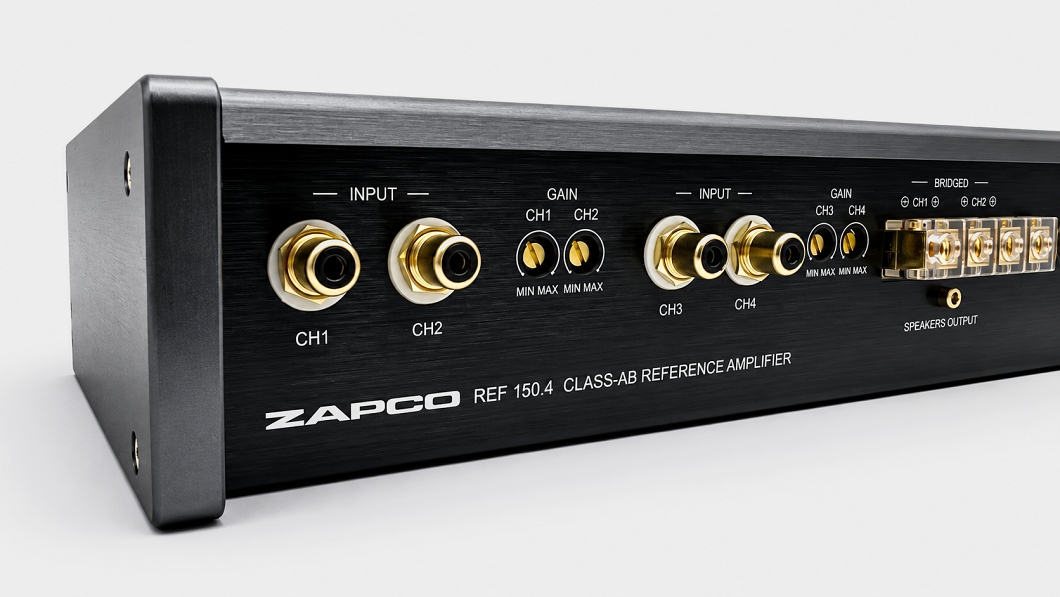
The return of the legendary Reference series
The Zapco Reference series is back and in better shape than ever. It follows in the footsteps of the legendary Studio Series while continuing the philosophy that gave rise to one of the most respected brands in high-end car audio. The first generation of the Reference Series, then labeled AG, was launched in 2001 with the aim of bringing Zapco’s characteristic sound to a wider audience. The result exceeded all expectations and the Reference series quickly became one of the brand’s most successful projects. The new generation of the Reference Series no longer aims to offer a top amplifier accessible to everyone; its goal is to offer the best amplifier in its price class. The four new models with one, two, four and six channels combine an elegant new design with carefully selected internal components chosen with a single aim—to achieve maximum reproduction quality. The result is a sound performance that confidently competes with, or even surpasses, much more expensive amplifiers from other manufacturers.
Custom transformers and Sanken power transistors
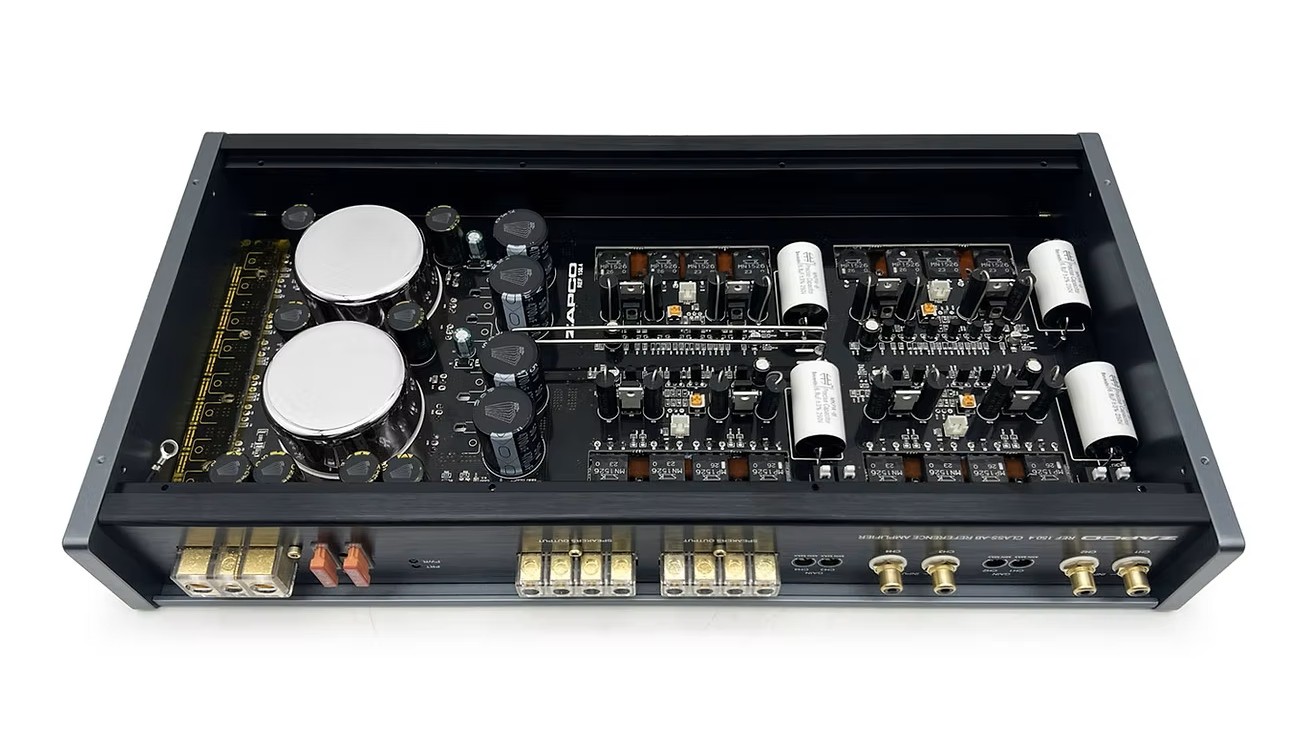
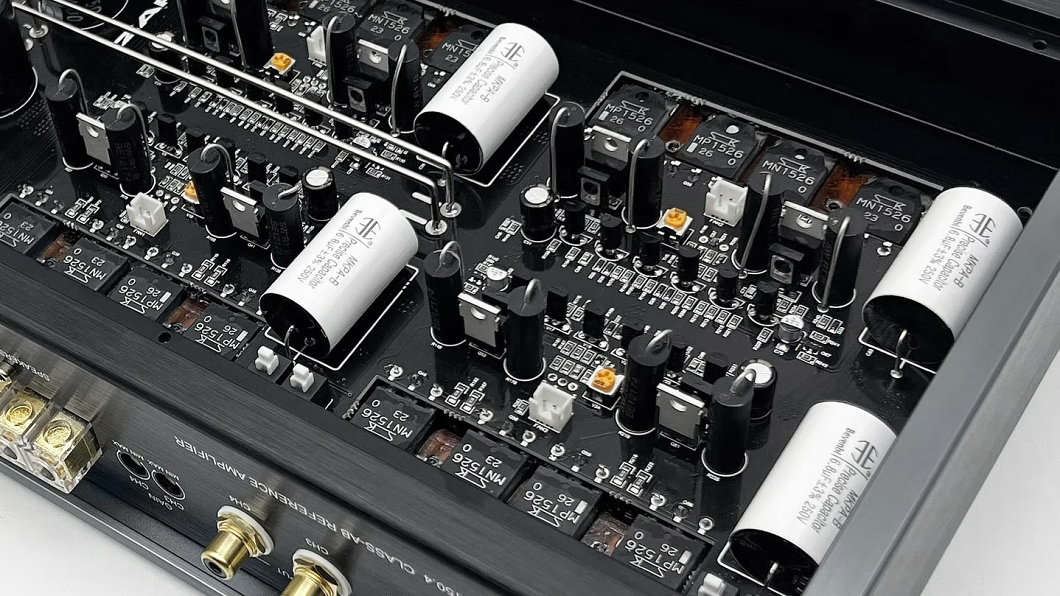
At the heart of the amplifier are powerful toroidal transformers, which in most cases are hand-wound directly at Zapco’s production facility. This ensures maximum current-handling capability, high efficiency and minimal electromagnetic interference. The transformers use copper windings, feature low internal resistance (Low ESR), high thermal resistance and are firmly mounted to the amplifier chassis to prevent vibration transfer to other components. Power is handled by proven complementary Sanken transistors MN1526 and MP1526, which can handle up to 260 V and 15 A. Their stable parameters across a wide operating current range contribute to exceptionally clean reproduction with minimal distortion.
Carefully designed signal path
The signal path and power section of the amplifier play an equally important role. In the signal path, Zapco uses high-quality ELNA RA3 and RFS capacitors, while custom power capacitors were developed in cooperation with SAMXON specifically to meet Zapco engineers’ requirements. During their development, the manufacturer’s name was less important than parameters such as leakage current, dissipation factor, resistance to vibration, high temperatures and tight manufacturing tolerances. Special attention was also paid to input capacitors, which have a critical impact on signal purity. For this reason, Zapco uses specially manufactured Revenbi MKPA-B polypropylene capacitors rated to 250 V with only 3% tolerance, designed specifically for professional Hi‑Fi audio applications.
Precision passive components
Top-tier sound is the result of the interplay of all used components. In addition to power transistors, transformers and capacitors, Zapco pays equal attention to passive components that affect amplifier stability and the accuracy of audio signal processing. Selected components are chosen with emphasis on long-term reliability, minimal electrical losses and consistent parameters. Power resistors Token BWL 5W R1 B feature very low inductance, high stability under long-term load, low temperature coefficient and effective heat dissipation. Thanks to in-house manufacturing technology, they achieve exceptionally low resistance values while maintaining high precision and reliability, contributing to stable amplifier operation even at high power.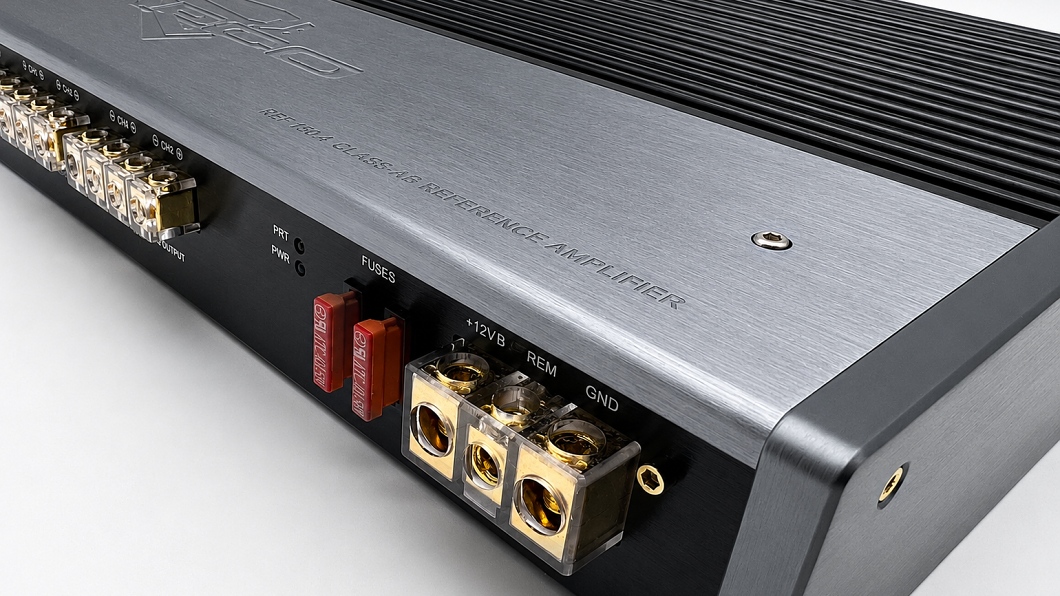
Balanced Input
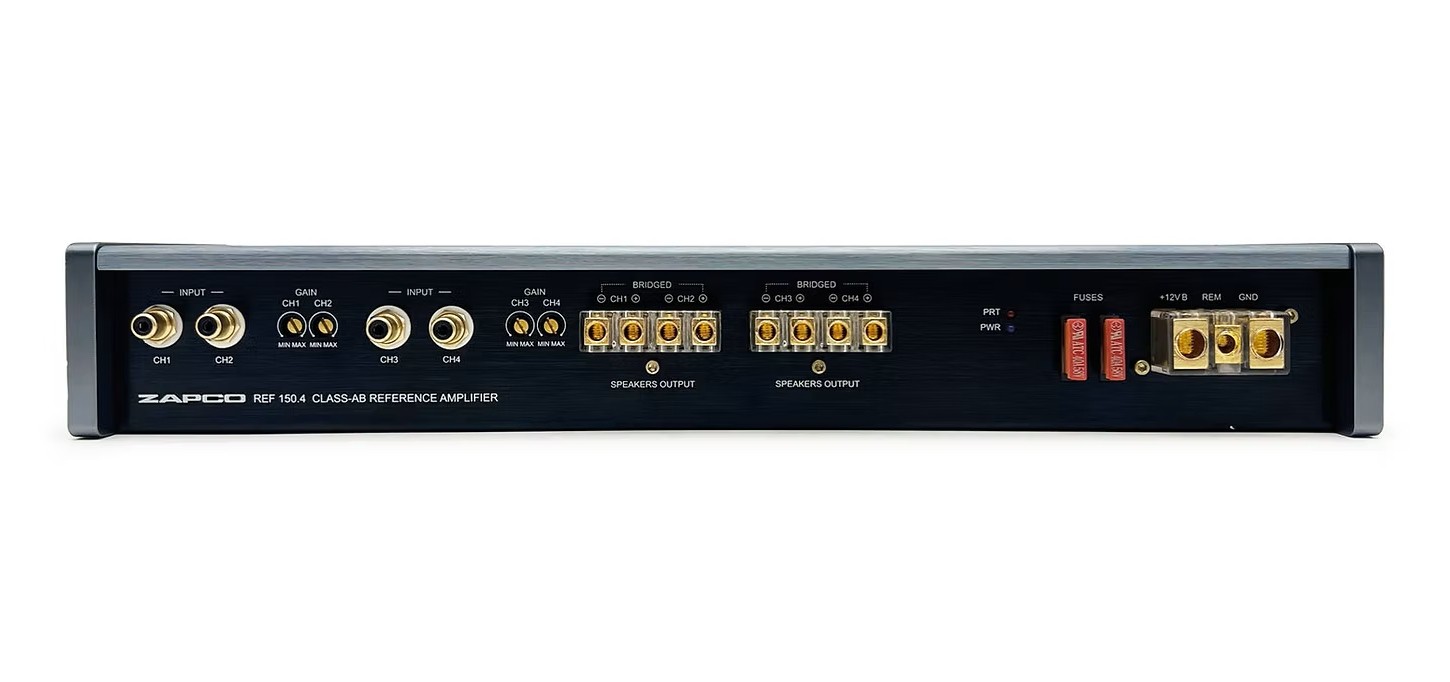
The automotive electrical environment is full of interference that can negatively affect the quality of the transmitted audio signal. Long cable runs, ground loops, the alternator and currents generated during amplifier operation are all sources of unwanted noise and distortion. For this reason, Zapco developed the SymbiLink technology many years ago, which converts an ordinary unbalanced signal into a fully balanced one, significantly increasing its immunity to interference. The new Reference series continues this philosophy with a switchable balanced RCA input that allows you to easily choose balanced or unbalanced mode depending on the installation and thus ensure maximum signal purity.
Replaceable operational amplifiers (OP)
One of the most interesting features of the Reference series amplifiers is the ability to replace the operational amplifiers (OP), which have a major influence on the character and quality of reproduction. In standard configuration they are fitted with top-tier MUSES8820 circuits, which Zapco states offer roughly two levels higher sound quality compared to commonly used LME49720 chips. The result is more natural reproduction with improved rendering of detail, space and subtle musical nuances—from concert hall reverbs to tiny details in live recordings. A major advantage is the easy swapability of the op-amps for the even higher-end MUSES02 or another compatible type according to listener preference. The op-amps are not soldered in place but sit in sockets, so replacement is quick and requires no soldering or modification of the amplifier electronics. The MUSES02 is said by Zapco to offer approximately two further levels of improvement over the MUSES8820, representing up to a four-step improvement compared to LME49720 chips.
Main features
- Four-channel Class AB amplifier with reference sound quality.
- Power 4 × 150 W RMS at 4 Ω or 2 × 470 W RMS bridged.
- Carefully designed construction focused on maximum reproduction quality.
- Hand-wound toroidal transformers with copper windings.
- Sanken power transistors MN1526 and MP1526.
- Top-tier MUSES8820 operational amplifiers with easy swap option to MUSES02 or other compatible OPs.
- Signal path using ELNA RA3 and RFS capacitors.
- Custom SAMXON power capacitors developed to Zapco specifications.
- Input polypropylene capacitors Revenbi MKPA-B designed for Hi‑Fi applications.
- Switchable balanced and unbalanced RCA input for maximum immunity to interference.
- High-quality bipolar input operational amplifiers.
- Output resistors with 0.1% tolerance.
- Ultra low On-Resistance MOSFETs with fast switching.
- Low-loss power capacitors and fuses.
- Harmonic distortion below 0.02%.
- Signal-to-noise ratio greater than 102 dB.
- Frequency range 10 Hz to 40 kHz (±1 dB).
- Elegant aluminum chassis with precise workmanship
About the brand
Zapco is the oldest high-end car audio brand in the world, specializing in top-tier amplifiers and DSP processors for cars. The company was founded in the USA in 1974 and has been collecting awards ever since—both from prestigious organizations that evaluate product quality and innovation and at global sound-quality competitions. Zapco amplifiers deliver audiophile quality without compromise, defining standards of quality and setting the criteria by which other products in the field are judged. For over 45 years Zapco has continuously sought innovative ways to bring better sound into the automotive environment, and this tireless pursuit of absolute sound quality keeps producing new technologies and high-end products. Why? Because nothing else can seize the soul and bring tears to the eyes like music. Of all the arts, music has the most immediate and powerful effect on body and mind. The reproduction of music in all its beauty and subtlety deserves nothing less than the greatest effort of all Zapco employees. And also because music matters!
| Catalog number | REF 150.4 |
| Brand | Zapco |
| Links | Official web presentation (English) |
| Energy class of the amplifierAmplifiers are divided into two basic classes: analog and digital . Analog amplifiers (A/B) have higher consumption requirements, but usually have a more natural sound. Digital amplifiers (D) have significantly lower consumption and higher efficiency, but the sound may not be as faithful as with classic analog amplifiers. | AB |
| Number of amplifier channelsAmplifiers are divided into: - Monoblocks - 2-channel - 3-channel - 4-channel - 5-channel - 6-channel - multi-channel Each channel is used to power one speaker for the coaxial type, or one side if they are component speakers. Monoblock type amplifiers are mainly used for subwoofers. 2-channel are suitable for both subwoofers and, for example, the front pair of speakers in a car. 3-channel is used for front or rear speakers + subwoofer. 4-channel are used for front + rear speakers or 1 pair of speakers + subwoofer. 6 or 5-channel are used for 2 pairs of speakers + subwoofer, most often. Bridging means connecting the amplifier to a bridge, using the + pole from one channel and the - pole from the other channel. In most cases this is shown as "BRIDGED" on the amplifier. | 4 |
| RMS power into 4 ΩRMS power when loading speakers or subwoofer at 4 Ω. RMS power is the constant power of the amplifier and is one of the most important parameters when choosing an amplifier. | 4 x 150 / 2 x 470 W |
| RMS power into 2 ΩRMS power when loading speakers or subwoofer at 2 Ω. RMS power is the constant power of the amplifier and is one of the most important parameters when choosing an amplifier. | 4 x 230 W |
| Frequency rangeThe ability of the amplifier to reproduce the signal from the lowest frequency to the highest = faithfully reproduce the sound in a specific frequency band. Professionally: In the frequency range from 40 to 16,000 Hz, the vast majority of fundamental and overtones (harmonics) of all musical instruments are found. We are interested in the course of the radiated sound pressure in this range of frequencies when the loudspeaker system is supplied with constant power. We call this course the frequency characteristic, which tells us the level of radiated sound pressure in decibels (dB) depending on the frequency. The frequency characteristic of a speaker or speaker system can be expressed most succinctly with a graph. Mostly, however, the frequency characteristic is indicated by indicating the maximum tolerance of the sound pressure in the given frequency range, e.g. 50 to 15,000 Hz -+ 6 dB. Since the frequency characteristics of loudspeakers and systems in general are quite uneven, some manufacturers do not even specify this maximum tolerance of sound pressure in decibels in their catalogs for reasons of prestige. Data impoverished in this way is unfortunately worthless. What is valid is that the manufacturer offers a speaker system with a frequency range of 30 to 20,000 Hz, if he is worried about stating the maximum unevenness of the sound pressure in this range, because he can have a tolerance of, for example, +- 20 dB. The unevenness or undulation of the frequency curve in good speaker systems for high-quality music performance should not exceed +-3 dB in the 80 to 12,000 Hz band and +-6 dB in the 40 to 16,000 Hz band. Greater unevenness already depletes or emphasizes certain tonal areas, which can cause audible or even disturbing distortion. The proportion between fundamental tones and higher harmonics also changes, thereby changing the color of the sound, and individual musical instruments as well as the entire musical image sound unnatural. | 10 – 40000 Hz |
| Harmonic Distortion (THD)Total harmonic distortion indicates how much the input signal is distorted in the amplifier. Distortions appear as overtones contained in the output signal. The proportion of originally absent parts of the signal is given as a percentage, typical values are between 0.001% and 0.5%. Distortion is measured in their power band. If it exceeds the limit of 0.7% from a certain power, it is the value of the output power of the given amplifier, from which it no longer plays without distortion and from which the distortion usually increases steeply, so that no further increase in power can be counted on. The lower the value, the better. | < 0.02 % |
| Signal-to-noise ratioThe signal-to-noise ratio means that the output signal always contains noise. The signal-to-noise ratio expresses how much of this noise is compared to the useful signal. The so-called A value is given, which does not take deep and very high frequencies into account. This corresponds to the characteristic of human hearing, which is not so sensitive to deep frequencies, especially below 1 kHz. The higher the value, the better the amplifier is. | > 102 dB |
| Input sensitivity (RCA) | 0.5 – 8 V |
| Input impedance | > 20 KΩ |
| On-board voltage rangeThe ability of the amplifier to operate at a specified voltage. As the voltage decreases, so does the power of the amplifier. The ideal voltage in a car is between 13.8 and 14.4 V. | 9 – 16 V |
| The value of the fuses on the amplifierFrom the value of the fuses on the amplifier, you can get a true picture of the real performance of the amplifier. | 2 x 40 A |
| High level inputsThe high-level input on the amplifier allows connection directly to the existing speakers in the car without additional purchase of an external high/low adapter. Important equipment in the case of installing an amplifier on an original car radio. | No |
| Socket input terminalsFerrule terminals allow better wiring contact to the amplifier. It is also a more secure form of terminals. If you are tightening the sleeve terminals, we recommend retightening them after 1 day, as the connected cable gradually compresses. | Yes |
| Input for wired remote controlIf the amplifier has a remote control input. | No |
| Dimensions of the amplifier | 416 x 210 x 62 mm |