
Amplifier with DSP processor Morel MDSP 8/4A
More about the product
- You can return the goods to us within 14 days
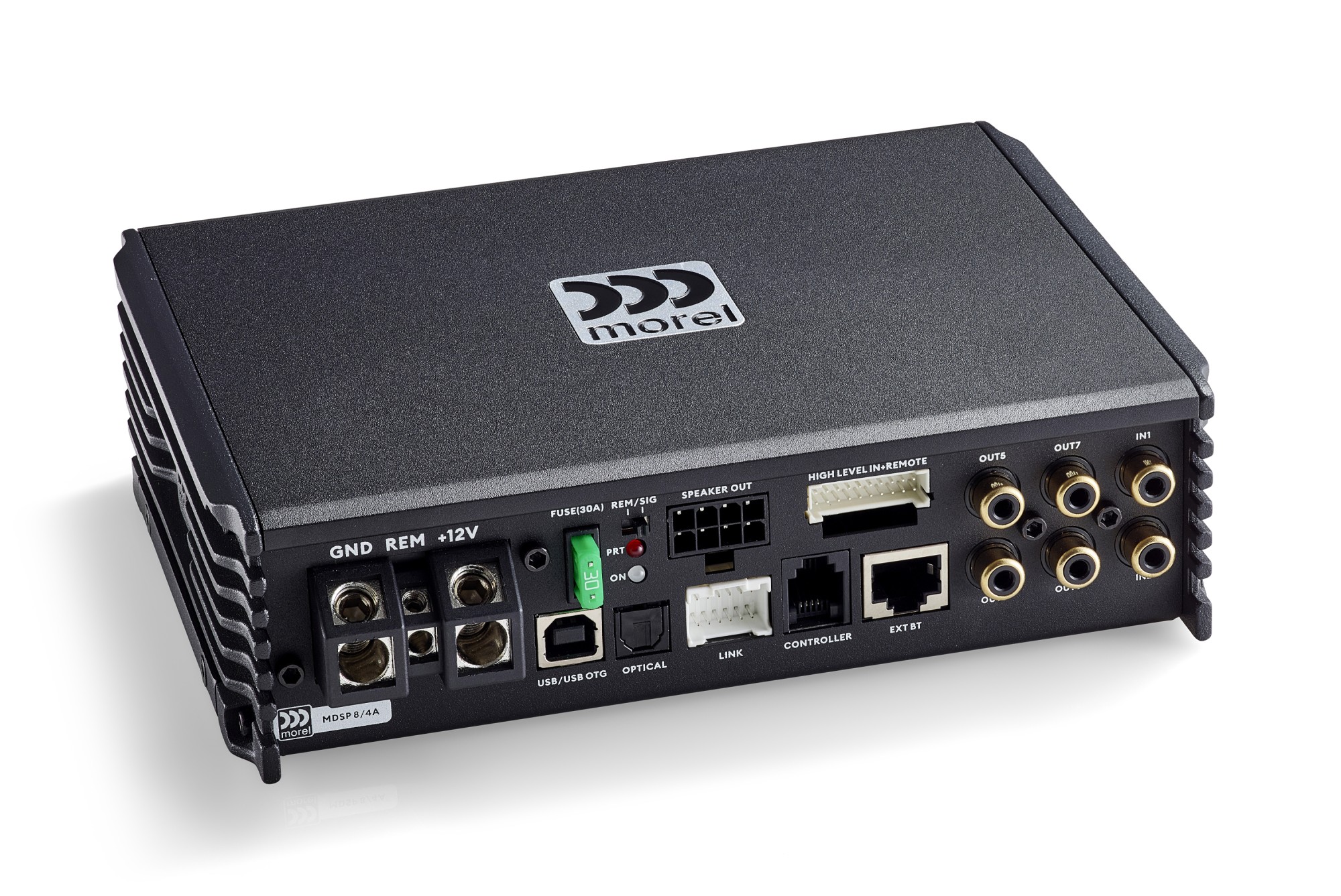
Morel MDSP 8/4A Amplifier with DSP Processor
The Morel MDSP amplifier series represents the next step in Morel's development in car audio. It was created in response to the reality of modern vehicles, where we increasingly encounter complex factory audio systems, data communication, start-stop systems and limited installation space. The MDSP 8/4A was designed to offer in one compact unit everything a quality integration requires today – ample power, top-tier sound quality, a full-featured DSP processor and maximum installation flexibility. The MDSP 8/4A targets both professional integrations into OEM systems and demanding installations that emphasize signal purity, precise tuning and long-term reliability. Thanks to a high power reserve, quality internal components and well-thought-out integration features, it forms a solid foundation for audio systems of virtually any scale. Despite all its capabilities, the MDSP 8/4A remains very compact. This makes it easy to install even in the space-restricted areas of modern vehicles. The amplifier therefore offers the ideal combination of power, functionality and installation flexibility.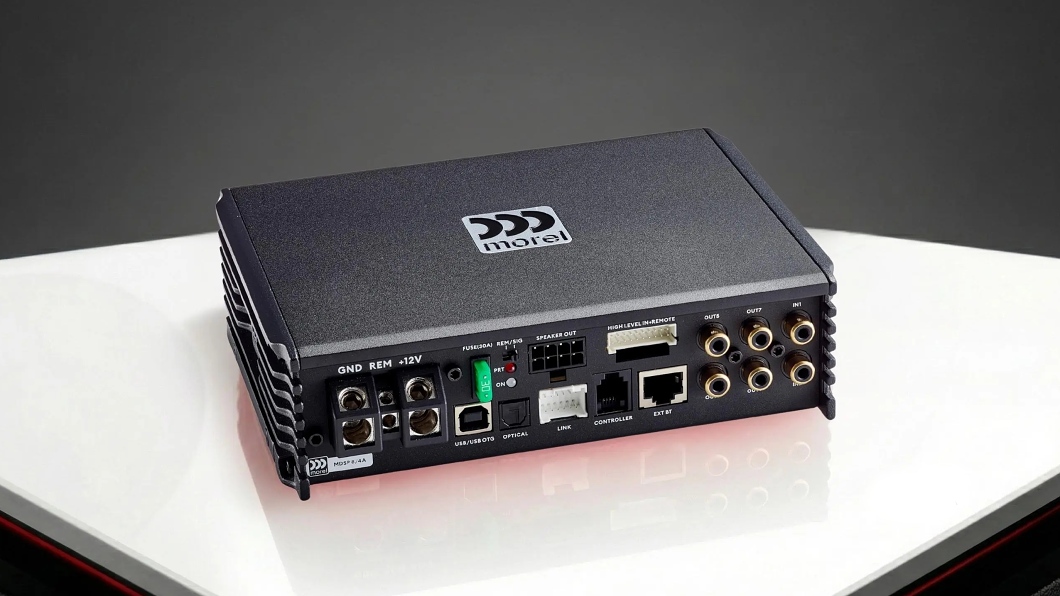
Sound and performance according to Morel's philosophy
At the core of the MDSP 8/4A is Morel's typical sonic philosophy – authentic, musical and natural presentation. Power here is not for show but for full control of the speakers and preserving dynamics even at higher volumes. The amplifier delivers a stable 80 W RMS per channel, enabling the MDSP 8/4A to effortlessly drive two-way and multi-way systems, active configurations or expanded setups with a subwoofer. The power reserve positively affects bass control, dynamics and midrange clarity, which is exactly what you expect from a quality amplifier during extended listening.
High-quality components and integrated DSP processor
The MDSP 8/4A is built with high-quality internal components. In the signal path you’ll find premium WIMA capacitors and other carefully selected passive components that ensure stable electrical characteristics, low distortion and long-term reliability. This attention to internal build quality is one of the main differences compared to common DSP amplifiers. The unit includes a built-in DSP processor that provides complete control over the entire audio system. Available features include input signal correction, global equalization, graphic and parametric EQ, fully configurable active crossovers and detailed tuning for each channel individually. This allows the system to be precisely adapted to the acoustics of a specific vehicle and the listener’s personal preferences.
Integration into OEM systems and expansion options
The MDSP 8/4A is designed with emphasis on seamless integration into modern factory audio systems. It supports up to 8 channels of speaker-level input with voltages up to 30 V, including signal summing capability. SLAM (Speaker Load Assurance Module) technology ensures proper operation of factory amplifiers and preserves full functionality of the original system without error reports or limitations. The amplifier provides 8 DSP-controlled output channels, including RCA outputs at 2 V. This makes it easy to expand the system with additional amplifiers or a subwoofer without compromising settings or sound quality. Everything remains under full DSP control.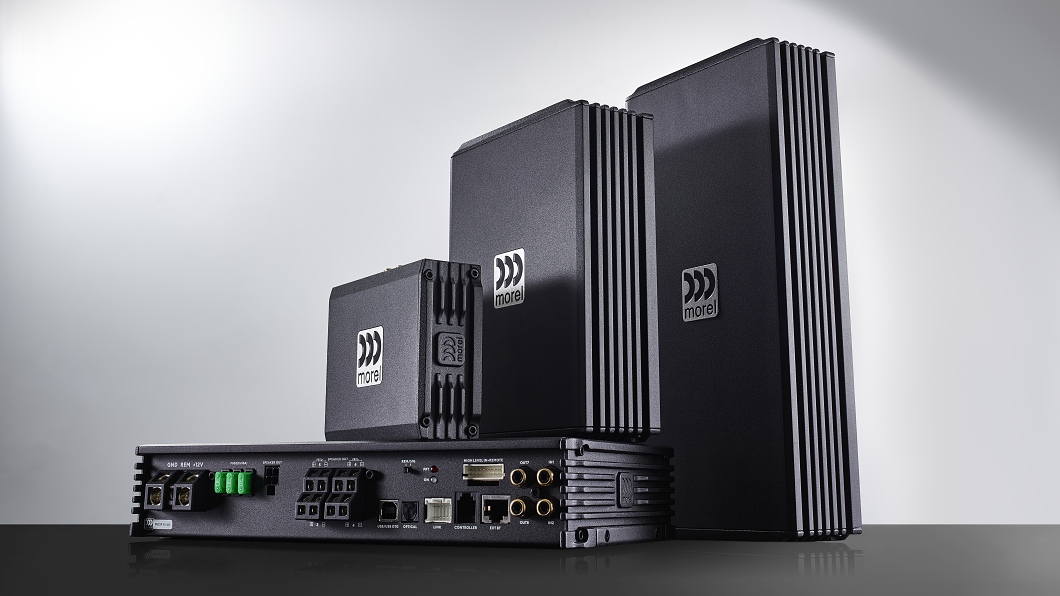
Broad connectivity and installation convenience
The MDSP 8/4A supports speaker-level inputs, RCA inputs, optical digital input, Bluetooth with music streaming and USB-DAC. Automatic source switching ensures smooth operation without manual intervention. Compatibility with start-stop systems and the option to connect an external DRC controller are standard. The TuneLink feature allows tuning two MDSP amplifiers simultaneously from one computer, without the need for splitters or external switches. This significantly simplifies work on more complex installations and saves time during tuning. The whole system is designed with a focus on maximum flexibility and efficiency for the installer.
Key features
- Powerful 4-channel amplifier with integrated DSP processor.
- High output 4 x 80 W RMS in a compact chassis suitable even for limited installation spaces.
- Premium internal components including WIMA capacitors for low distortion and long-term reliability.
- Built-in DSP with graphic and parametric EQ, global and input correction, and fully configurable active crossovers.
- Up to 8 channels of speaker-level input up to 30 V for trouble-free OEM system integration.
- SLAM (Speaker Load Assurance Module) technology to preserve correct operation of factory amplifiers.
- 8 DSP-controlled output channels including RCA outputs at 2 V for easy system expansion.
- Wide connectivity including speaker inputs, RCA, optical digital input, Bluetooth streaming and USB-DAC.
- Automatic source switching and compatibility with start-stop systems.
- TuneLink feature allowing simultaneous tuning of two MDSP amplifiers from one computer.
- Option to connect an external DRC controller for quick control of selected functions.
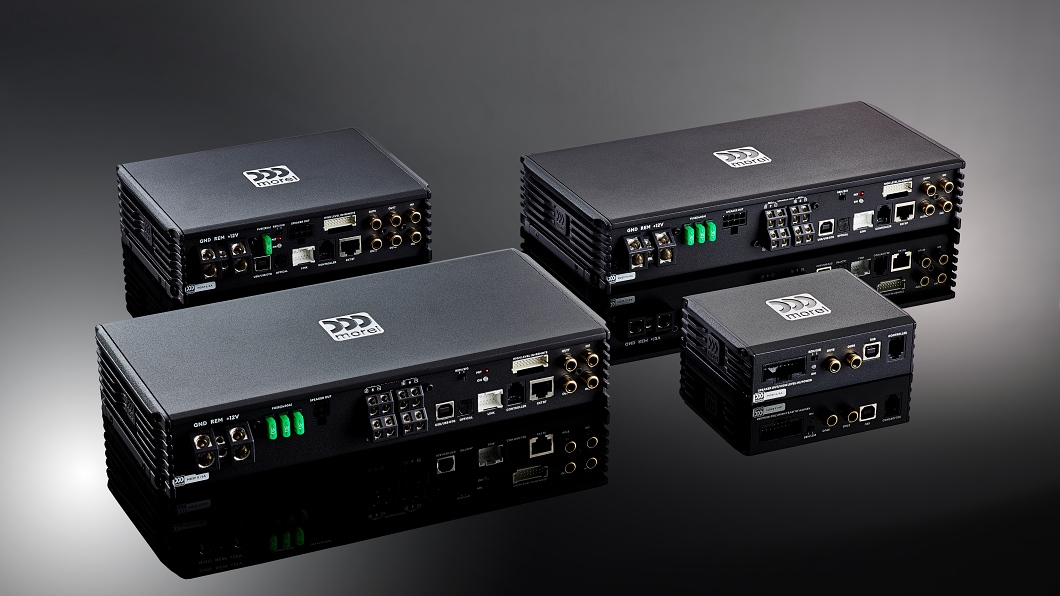
| Catalog number | MDSP 8/4A |
| Brand | Morel |
| Links | Official web presentation |
| Energy class of the amplifierAmplifiers are divided into two basic classes: analog and digital . Analog amplifiers (A/B) have higher consumption requirements, but usually have a more natural sound. Digital amplifiers (D) have significantly lower consumption and higher efficiency, but the sound may not be as faithful as with classic analog amplifiers. | D |
| Number of amplifier channelsAmplifiers are divided into: - Monoblocks - 2-channel - 3-channel - 4-channel - 5-channel - 6-channel - multi-channel Each channel is used to power one speaker for the coaxial type, or one side if they are component speakers. Monoblock type amplifiers are mainly used for subwoofers. 2-channel are suitable for both subwoofers and, for example, the front pair of speakers in a car. 3-channel is used for front or rear speakers + subwoofer. 4-channel are used for front + rear speakers or 1 pair of speakers + subwoofer. 6 or 5-channel are used for 2 pairs of speakers + subwoofer, most often. Bridging means connecting the amplifier to a bridge, using the + pole from one channel and the - pole from the other channel. In most cases this is shown as "BRIDGED" on the amplifier. | 4 |
| RMS power into 4 ΩRMS power when loading speakers or subwoofer at 4 Ω. RMS power is the constant power of the amplifier and is one of the most important parameters when choosing an amplifier. | 4 x 80 / 2 x 160 W |
| Frequency rangeThe ability of the amplifier to reproduce the signal from the lowest frequency to the highest = faithfully reproduce the sound in a specific frequency band. Professionally: In the frequency range from 40 to 16,000 Hz, the vast majority of fundamental and overtones (harmonics) of all musical instruments are found. We are interested in the course of the radiated sound pressure in this range of frequencies when the loudspeaker system is supplied with constant power. We call this course the frequency characteristic, which tells us the level of radiated sound pressure in decibels (dB) depending on the frequency. The frequency characteristic of a speaker or speaker system can be expressed most succinctly with a graph. Mostly, however, the frequency characteristic is indicated by indicating the maximum tolerance of the sound pressure in the given frequency range, e.g. 50 to 15,000 Hz -+ 6 dB. Since the frequency characteristics of loudspeakers and systems in general are quite uneven, some manufacturers do not even specify this maximum tolerance of sound pressure in decibels in their catalogs for reasons of prestige. Data impoverished in this way is unfortunately worthless. What is valid is that the manufacturer offers a speaker system with a frequency range of 30 to 20,000 Hz, if he is worried about stating the maximum unevenness of the sound pressure in this range, because he can have a tolerance of, for example, +- 20 dB. The unevenness or undulation of the frequency curve in good speaker systems for high-quality music performance should not exceed +-3 dB in the 80 to 12,000 Hz band and +-6 dB in the 40 to 16,000 Hz band. Greater unevenness already depletes or emphasizes certain tonal areas, which can cause audible or even disturbing distortion. The proportion between fundamental tones and higher harmonics also changes, thereby changing the color of the sound, and individual musical instruments as well as the entire musical image sound unnatural. | 20 - 20000 Hz |
| Harmonic Distortion (THD)Total harmonic distortion indicates how much the input signal is distorted in the amplifier. Distortions appear as overtones contained in the output signal. The proportion of originally absent parts of the signal is given as a percentage, typical values are between 0.001% and 0.5%. Distortion is measured in their power band. If it exceeds the limit of 0.7% from a certain power, it is the value of the output power of the given amplifier, from which it no longer plays without distortion and from which the distortion usually increases steeply, so that no further increase in power can be counted on. The lower the value, the better. | < 0.03 % |
| Signal-to-noise ratioThe signal-to-noise ratio means that the output signal always contains noise. The signal-to-noise ratio expresses how much of this noise is compared to the useful signal. The so-called A value is given, which does not take deep and very high frequencies into account. This corresponds to the characteristic of human hearing, which is not so sensitive to deep frequencies, especially below 1 kHz. The higher the value, the better the amplifier is. | > 98 dB |
| Inputs | 8 x high, 2 x RCA, optical, USB OTG, Bluetooth |
| Outputs | 4 x RCA |
| Input sensitivityIn order for the amplifier to perform its function correctly, it requires an input signal of a certain level, which is different for car radios. It is measured in "Volts" (e.g. 2 V, 4 V, etc.) The higher the value at the output of the pre-amplifier, or car radio, the less demands are placed on the power of the amplifier. However, the amplifier must allow this input sensitivity, and for that reason this value is also given for the amplifier. | 5 - 9.9 V RMS |
| Input impedance | 4.7 Ω |
| On-board voltage rangeThe ability of the amplifier to operate at a specified voltage. As the voltage decreases, so does the power of the amplifier. The ideal voltage in a car is between 13.8 and 14.4 V. | 9 - 17 V |
| High level inputsThe high-level input on the amplifier allows connection directly to the existing speakers in the car without additional purchase of an external high/low adapter. Important equipment in the case of installing an amplifier on an original car radio. | Yes |
| Automatic on and offThis function allows you to automatically switch on the amplifier. | Yes |
| Integrated DSP processor | Yes |
| Number of DSP processor channels | 8 |
| Socket input terminalsFerrule terminals allow better wiring contact to the amplifier. It is also a more secure form of terminals. If you are tightening the sleeve terminals, we recommend retightening them after 1 day, as the connected cable gradually compresses. | Yes |
| Input for wired remote controlIf the amplifier has a remote control input. | Yes |
| Dimensions of the amplifier | 180 x 136 x 51 mm |
Evaluation
You might also be interested
 Quick preview8-channel amplifier with DSP processor, 4 x 80 + 4 x 160 / 2 x 320 W RMS (4 Ω), 10-channel DSP, USB OTG, SPDIF, Class D1.099,00 EURIn stockMorel MDSP 8/6A Free transport
 Quick preview6-channel amplifier with DSP processor, 2 x 80 + 4 x 160 / 2 x 320 W RMS (4 Ω), 8-channel DSP, USB OTG, SPDIF, Class D899,00 EURIn stockMorel MPD 1,500 Free transport
 TipQuick preview1-channel amplifier, 1 x 350 / 550 W RMS (4 / 2 Ω), class D239,00 EURIn stockMorel MPD 4.100 Free transport
 TipQuick preview4-channel amplifier, 4 x 115 / 2 x 330 (4 Ω), 4 x 165 W RMS (2 Ω), class D279,00 EURIn stockMorel MPD 4.70 Free transport
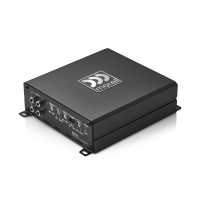 TipQuick preview4-channel amplifier, 4 x 70 / 2 x 200 (4 Ω), 4 x 100 W RMS (2 Ω), class D219,00 EURIn stockMorel Tempo Ultra 602 MKII Free transport
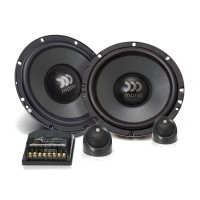 TipQuick previewcomponent speakers, Ø 165 mm, 120 W RMS, 4 Ω, 90 dB (2.83V/1m), installation depth 64 mm339,00 EURIn stockMorel Maximo Ultra 602 MKII Free transport
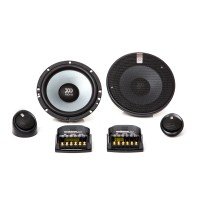 TipQuick previewcomponent speakers, Ø 165 mm, 90 W RMS, 4 Ω, 90.5 dB (2.83V/1m), mounting depth 63 mm279,00 EUR1 to 4 weeks