
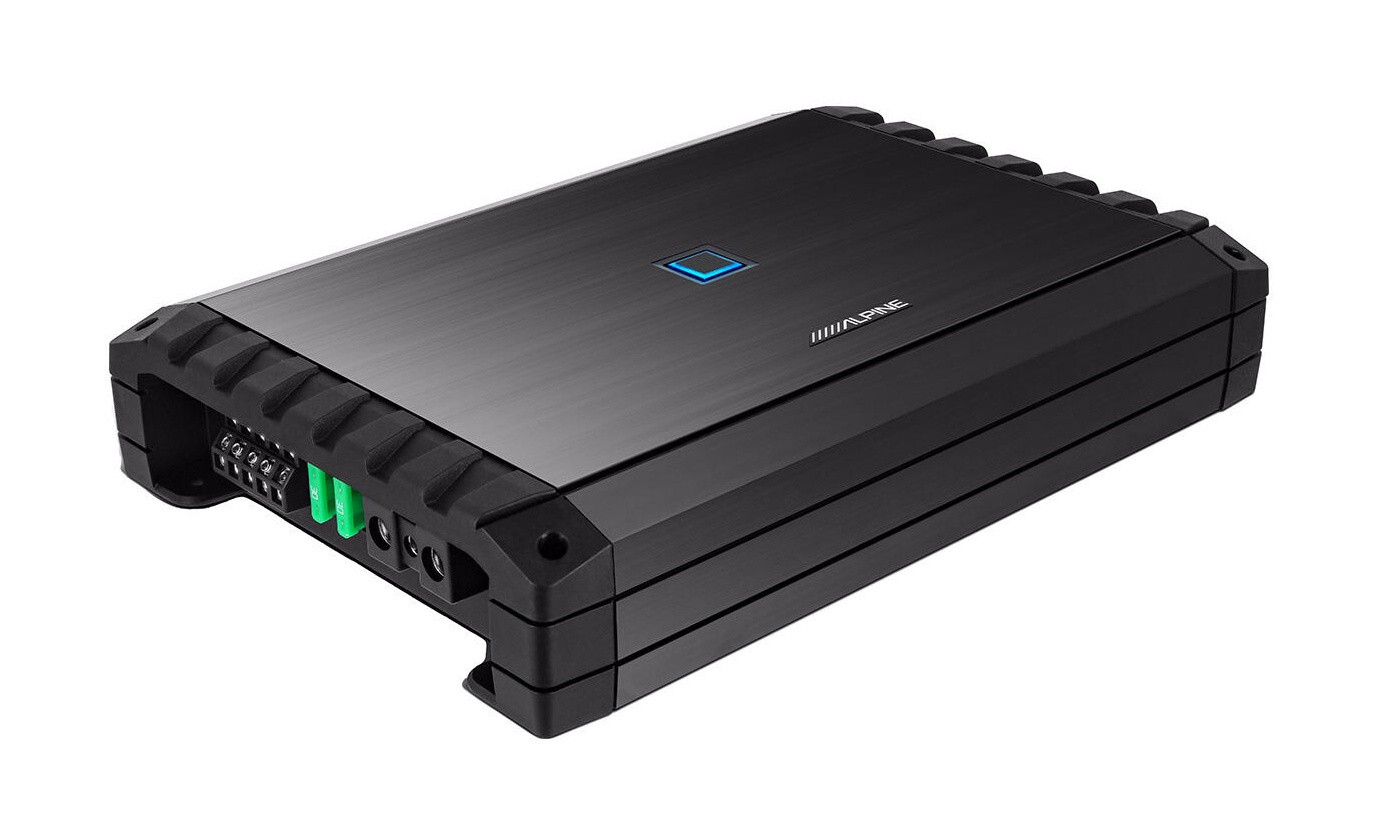
Amplifier Alpine S2-A55V
5-channel amplifier, 4 x 40 + 1 x 200 / 2 x 120 into 4 Ω / 4 x 60 + 1 x 300 RMS into 2 Ω, class D
More about the product
More about the product
We will help you with your purchase
- You can return the goods to us within 14 days
Amplifier Alpine S2-A55V
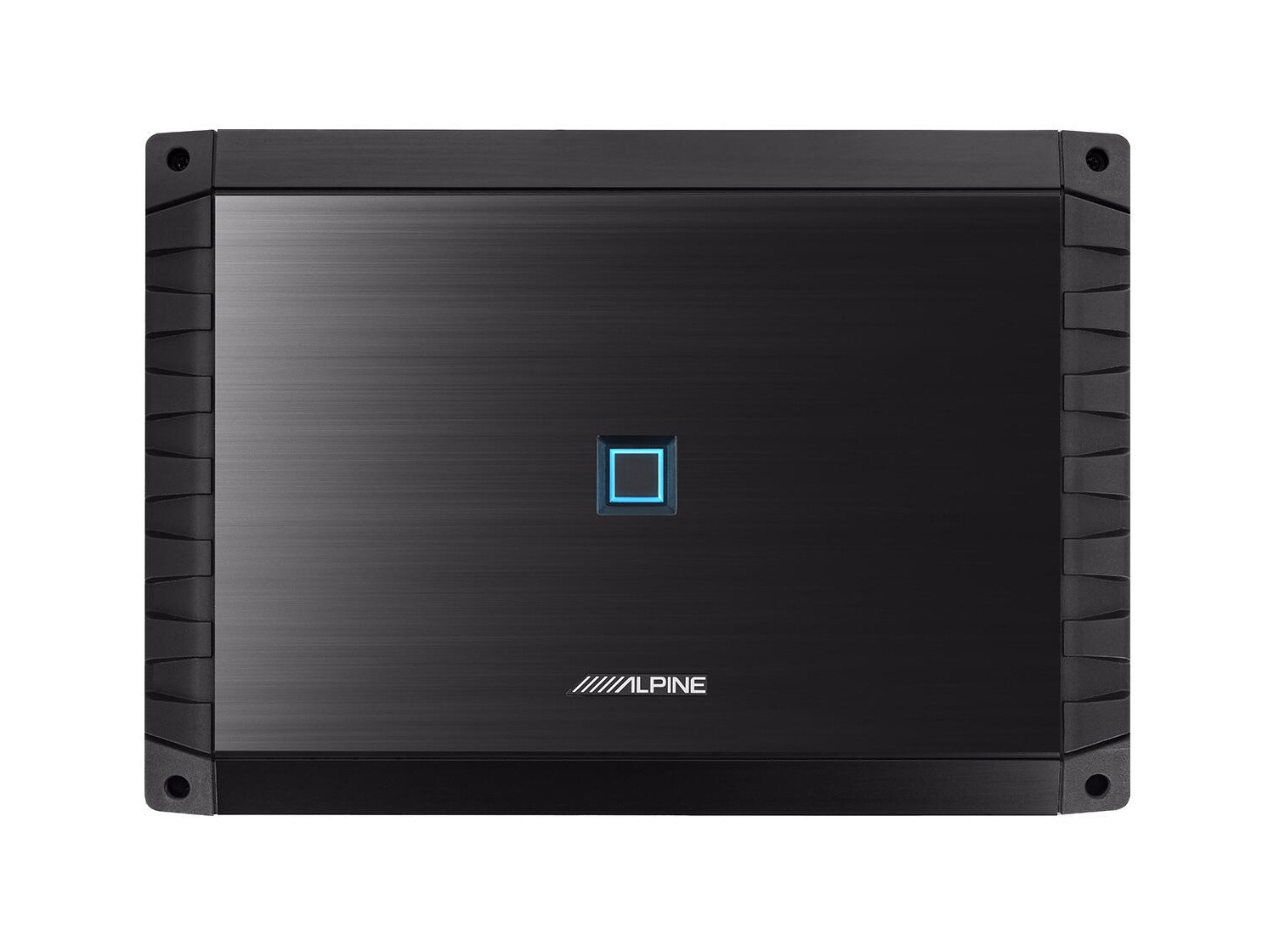
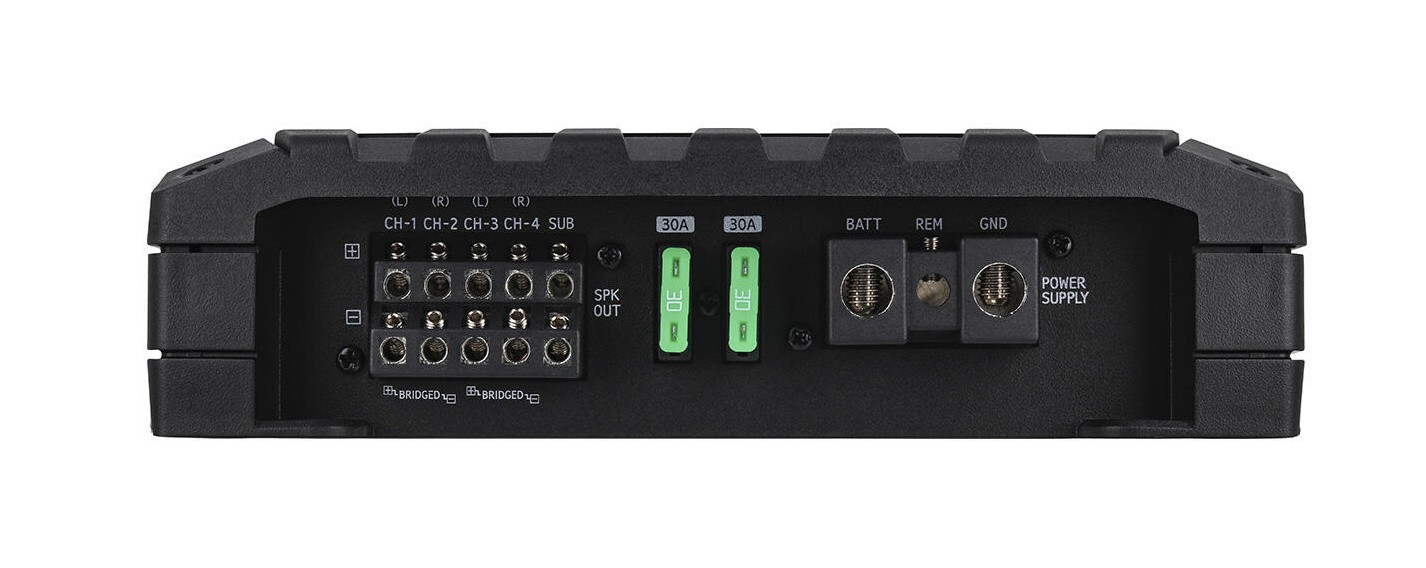
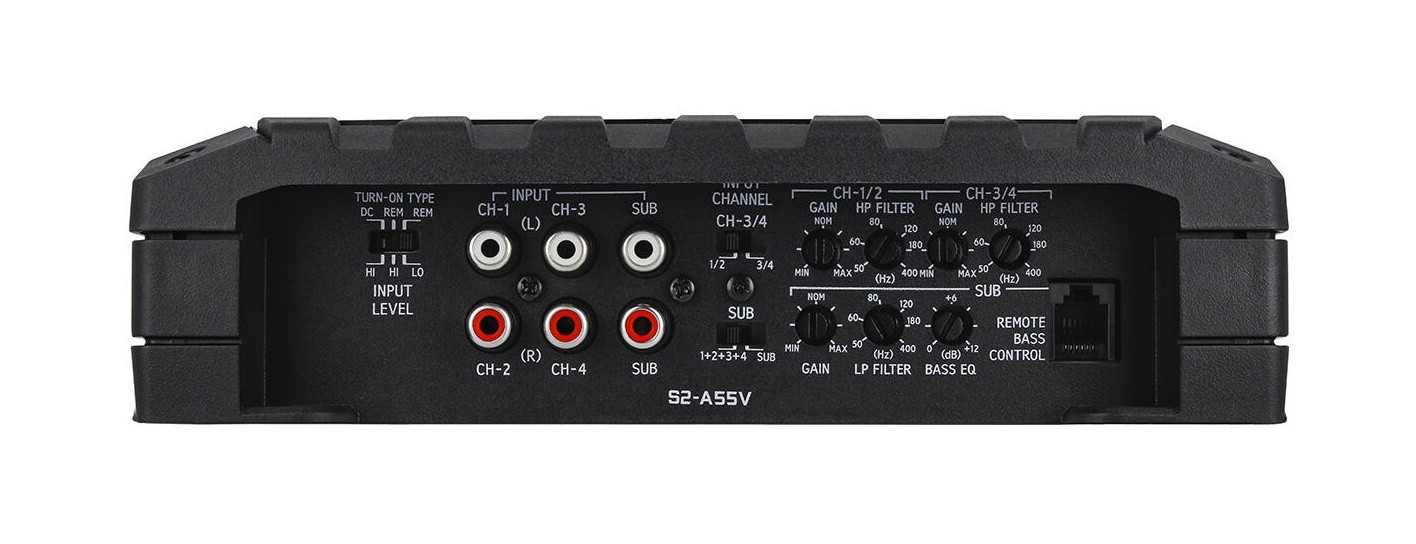
The new generation of Alpine S Series amplifiers are designed to take your car audio experience to the next level without breaking the bank. With a sleek new design and improved features over their predecessors, these amps offer exceptional performance and power at an affordable price. The S2-A55V five-channel amplifier delivers 60W RMS at 2 ohms of pristine high-fidelity signal to each of your car's front and rear speakers, while simultaneously powering a subwoofer with up to 300W RMS. The combination of Hi-Res Audio amplifier capabilities in its 4-channel section and additional bass power from the sub channel brings your music to life, with all the precise details, booming beats and emotional power coming through clearly. In the case of a 3-channel 2-way system, you can also use the amplifier to power a pair of front high-power speakers with 120W RMS power each, while simultaneously powering a 300W subwoofer. The variable bass boost on the sub channel allows you to dial up the extra punch and punch of your system's low-frequency sound. You can even add an optional wired remote and control the bass level from the front seat. High-pass and low-pass filters allow you to control the frequency spectrum that reaches the speakers and subwoofers. The amp includes preamp and speaker level inputs, so you can install it in almost any vehicle, even one with a factory radio. When using speaker-level inputs, the amplifier can detect the incoming signal and turn itself on, eliminating the need to route a separate power-on wire to the receiver or fuse box.The main features of the Alpine S2-A55V amplifier
- Hi-Res Audio certification.
- Channel design: 5/4/3 channels.
- Side panel controls.
- Thermal management control.
- LED power/status indicator located on top.
- Speaker input level.
- 3 power-on modes (DC HI, Remote HI, Remote LO).
- Subwoofer input channel switch.
- Crossover: Variable Low Pass Filter (LPF) and High Pass Filter (HPF).
- Adjustable gain control.
- Bass EQ.
- Compatibility with the RUX-KNOB2 bass remote (only for channel 5).
| Catalog number | S2-A55V |
| Brand | Alpine |
| Links | Official web presentation |
| Energy class of the amplifierAmplifiers are divided into two basic classes: analog and digital . Analog amplifiers (A/B) have higher consumption requirements, but usually have a more natural sound. Digital amplifiers (D) have significantly lower consumption and higher efficiency, but the sound may not be as faithful as with classic analog amplifiers. | D |
| Number of amplifier channelsAmplifiers are divided into: - Monoblocks - 2-channel - 3-channel - 4-channel - 5-channel - 6-channel - multi-channel Each channel is used to power one speaker for the coaxial type, or one side if they are component speakers. Monoblock type amplifiers are mainly used for subwoofers. 2-channel are suitable for both subwoofers and, for example, the front pair of speakers in a car. 3-channel is used for front or rear speakers + subwoofer. 4-channel are used for front + rear speakers or 1 pair of speakers + subwoofer. 6 or 5-channel are used for 2 pairs of speakers + subwoofer, most often. Bridging means connecting the amplifier to a bridge, using the + pole from one channel and the - pole from the other channel. In most cases this is shown as "BRIDGED" on the amplifier. | 5 |
| RMS power into 4 ΩRMS power when loading speakers or subwoofer at 4 Ω. RMS power is the constant power of the amplifier and is one of the most important parameters when choosing an amplifier. | 4 x 40 + 1 x 200 / 2 x 120 W |
| RMS power into 2 ΩRMS power when loading speakers or subwoofer at 2 Ω. RMS power is the constant power of the amplifier and is one of the most important parameters when choosing an amplifier. | 4 x 60 + 1 x 300 W |
| Frequency rangeThe ability of the amplifier to reproduce the signal from the lowest frequency to the highest = faithfully reproduce the sound in a specific frequency band. Professionally: In the frequency range from 40 to 16,000 Hz, the vast majority of fundamental and overtones (harmonics) of all musical instruments are found. We are interested in the course of the radiated sound pressure in this range of frequencies when the loudspeaker system is supplied with constant power. We call this course the frequency characteristic, which tells us the level of radiated sound pressure in decibels (dB) depending on the frequency. The frequency characteristic of a speaker or speaker system can be expressed most succinctly with a graph. Mostly, however, the frequency characteristic is indicated by indicating the maximum tolerance of the sound pressure in the given frequency range, e.g. 50 to 15,000 Hz -+ 6 dB. Since the frequency characteristics of loudspeakers and systems in general are quite uneven, some manufacturers do not even specify this maximum tolerance of sound pressure in decibels in their catalogs for reasons of prestige. Data impoverished in this way is unfortunately worthless. What is valid is that the manufacturer offers a speaker system with a frequency range of 30 to 20,000 Hz, if he is worried about stating the maximum unevenness of the sound pressure in this range, because he can have a tolerance of, for example, +- 20 dB. The unevenness or undulation of the frequency curve in good speaker systems for high-quality music performance should not exceed +-3 dB in the 80 to 12,000 Hz band and +-6 dB in the 40 to 16,000 Hz band. Greater unevenness already depletes or emphasizes certain tonal areas, which can cause audible or even disturbing distortion. The proportion between fundamental tones and higher harmonics also changes, thereby changing the color of the sound, and individual musical instruments as well as the entire musical image sound unnatural. | 10 - 40000 Hz |
| Harmonic Distortion (THD)Total harmonic distortion indicates how much the input signal is distorted in the amplifier. Distortions appear as overtones contained in the output signal. The proportion of originally absent parts of the signal is given as a percentage, typical values are between 0.001% and 0.5%. Distortion is measured in their power band. If it exceeds the limit of 0.7% from a certain power, it is the value of the output power of the given amplifier, from which it no longer plays without distortion and from which the distortion usually increases steeply, so that no further increase in power can be counted on. The lower the value, the better. | < 0.03 % |
| Signal-to-noise ratioThe signal-to-noise ratio means that the output signal always contains noise. The signal-to-noise ratio expresses how much of this noise is compared to the useful signal. The so-called A value is given, which does not take deep and very high frequencies into account. This corresponds to the characteristic of human hearing, which is not so sensitive to deep frequencies, especially below 1 kHz. The higher the value, the better the amplifier is. | > 98 dB |
| Input sensitivityIn order for the amplifier to perform its function correctly, it requires an input signal of a certain level, which is different for car radios. It is measured in "Volts" (e.g. 2 V, 4 V, etc.) The higher the value at the output of the pre-amplifier, or car radio, the less demands are placed on the power of the amplifier. However, the amplifier must allow this input sensitivity, and for that reason this value is also given for the amplifier. | 0.2 - 4.0 V |
| High pass filter (HPF)HPF / HP or The "hi pass filter" offers the option of setting the amplifier using a potentiometer so that medium, possibly mid-bass and treble frequencies play upwards from a certain frequency. Example: Amplifiers most often have an HPF from 40 to 300 Hz. If we set the potentiometer to a value of approx. 150 Hz, the sound will be clipped so that it plays frequencies from 150 Hz up to the maximum upper limit of the entire frequency range of the amplifier, perhaps up to 20,000 Hz. We recommend setting this potentiometer in the range of 80-160 Hz. Thanks to this setting option, the speakers can handle a higher performance, as you will not overload them with bass in the lower frequency range. | 50 - 400 Hz (-12dB/oct ) |
| Low-pass filter (LPF)LPF / LP or "low pass filter" offers the possibility to adjust the amplifier using a potentiometer so that the lower band plays only the frequencies in a certain band that you need. This filter is used to adjust the frequency range for the subwoofer, so that it does not overload or distort the sound. Example: Amplifiers most often have an LPF from 20 to 300 Hz. We recommend setting this potentiometer in the range of 45-80 Hz. | 50 - 400 Hz (-12dB/oct ) |
| Damping factorDF - Damping Factor . It is the ratio of the load (repro + cables, crossover, etc.) to the internal resistance of the amplifier. The bigger the DF, the more controlled the bass. Amplifiers with a lower DF tend to hum. Subwoofers with a higher Q in the bass reflex and sometimes in the enclosure will also cause humming. | > 100 |
| Remote control included in the packageSome models of amplifiers also come with wired remote controls in the package, which on one side plug into the amplifier and on the other side you have a potentiometer that you can place anywhere in the cabin. A common place to place the remote control is under the steering wheel. The advantage is the regulation of power, and therefore volume, depending on driving conditions and the mood of the crew in the car. | No (optional RUX-KNOB2) |
| Dimensions of the amplifier | 302 x 57 x 210 mm |
| Mass | 3.18 kg |
Evaluation
You might also be interested
Alpine RUX-KNOB2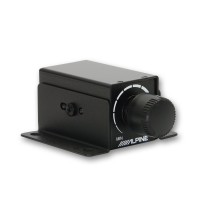 Quick previewbass remote control35,60 EURRestocking within 1 weekAlpine S2-A120M Free transport
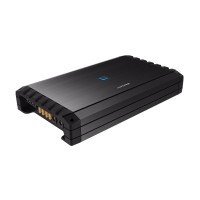 Quick preview1-channel digital amplifier, 1 x 500 / 800 W RMS (4 / 2 Ω), class D531,60 EURRestocking within 1 weekAlpine S2-A60M Free transport
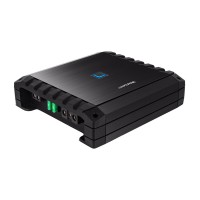 Quick preview1-channel amplifier, 1 x 330 W into 4 Ω / 1 x 600 W into 2 Ω / 1 x 600 W RMS into 1 Ω, class D359,60 EURRestocking within 1 weekAlpine S2-S40 Free transport
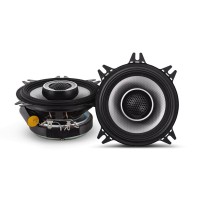 Quick previewcoaxial speakers, Ø 100 mm, 45 W RMS, 4 Ω, 86 dB (1W/1m), mounting depth 43 mm127,60 EURIn stockAlpine S2-S40C Free transport
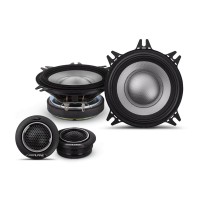 Quick previewcomponent speakers, Ø 100 mm, 45 W RMS, 4 Ω, 86 dB (1W/1m), mounting depth 43 mm159,60 EURIn stockAlpine S2-S50 Free transport
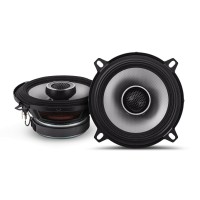 Quick previewcoaxial speakers, Ø 130 mm, 55 W RMS, 4 Ω, 87 dB (1W/1m), mounting depth 50 mm159,60 EURIn stockAlpine S2-S65 Free transport
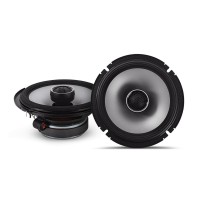 Quick previewcoaxial speakers, Ø 165 mm, 80 W RMS, 4 Ω, 88 dB (1W/1m), mounting depth 58 mm167,60 EURIn stockAlpine S2-S65C Free transport
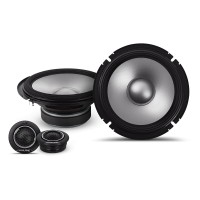 Quick previewcomponent speakers, Ø 165 mm, 80 W RMS, 4 Ω, 88 dB (1W/1m), installation depth 58 mm199,60 EURRestocking within 1 weekAlpine S2-S68 Free transport
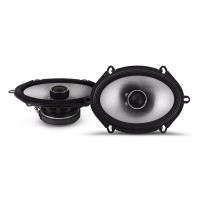 Quick previewcoaxial speakers, 6 x 8", 75 W, 4 Ω, 88 dB (1W/1m), installation depth 60 mm139,60 EURRestocking within 1 weekAlpine S2-S69 Free transport
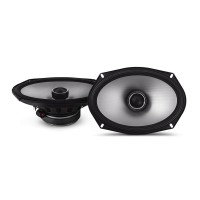 Quick previewcoaxial speakers, 6 x 9", 85 W, 4 Ω, 90 dB (1W/1m), installation depth 75 mm199,60 EURIn stockAlpine S2-S69C Free transport
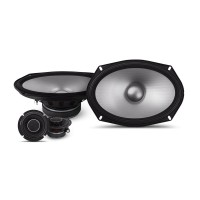 Quick previewcomponent speakers, 6 x 9", 85 W, 4 Ω, 90 dB (1W/1m), installation depth 75 mm239,60 EURRestocking within 1 weekAlpine S2-S80C Free transport
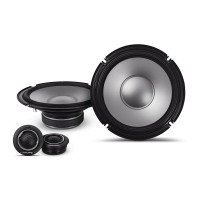 Quick previewcomponent speakers, Ø 200 mm, 85 W RMS, 4 Ω, 90 dB (1W/1m), installation depth 66.4 mm219,60 EURRestocking within 1 week
Quick previewbass remote control35,60 EURRestocking within 1 weekAlpine S2-A120M Free transportQuick preview1-channel digital amplifier, 1 x 500 / 800 W RMS (4 / 2 Ω), class D531,60 EURRestocking within 1 weekAlpine S2-A60M Free transportQuick preview1-channel amplifier, 1 x 330 W into 4 Ω / 1 x 600 W into 2 Ω / 1 x 600 W RMS into 1 Ω, class D359,60 EURRestocking within 1 weekAlpine S2-S40 Free transportQuick previewcoaxial speakers, Ø 100 mm, 45 W RMS, 4 Ω, 86 dB (1W/1m), mounting depth 43 mm127,60 EURIn stockAlpine S2-S40C Free transportQuick previewcomponent speakers, Ø 100 mm, 45 W RMS, 4 Ω, 86 dB (1W/1m), mounting depth 43 mm159,60 EURIn stockAlpine S2-S50 Free transportQuick previewcoaxial speakers, Ø 130 mm, 55 W RMS, 4 Ω, 87 dB (1W/1m), mounting depth 50 mm159,60 EURIn stockAlpine S2-S65 Free transportQuick previewcoaxial speakers, Ø 165 mm, 80 W RMS, 4 Ω, 88 dB (1W/1m), mounting depth 58 mm167,60 EURIn stockAlpine S2-S65C Free transportQuick previewcomponent speakers, Ø 165 mm, 80 W RMS, 4 Ω, 88 dB (1W/1m), installation depth 58 mm199,60 EURRestocking within 1 weekAlpine S2-S68 Free transportQuick previewcoaxial speakers, 6 x 8", 75 W, 4 Ω, 88 dB (1W/1m), installation depth 60 mm139,60 EURRestocking within 1 weekAlpine S2-S69 Free transportQuick previewcoaxial speakers, 6 x 9", 85 W, 4 Ω, 90 dB (1W/1m), installation depth 75 mm199,60 EURIn stockAlpine S2-S69C Free transportQuick previewcomponent speakers, 6 x 9", 85 W, 4 Ω, 90 dB (1W/1m), installation depth 75 mm239,60 EURRestocking within 1 weekAlpine S2-S80C Free transportQuick previewcomponent speakers, Ø 200 mm, 85 W RMS, 4 Ω, 90 dB (1W/1m), installation depth 66.4 mm219,60 EURRestocking within 1 weekask us
Recently viewed products
Comfortmat Soundtrap TipQuick previewnoise absorbing block, 495 x 195 x 95 mm24,99 EURIn stockConnection cable 42C-3414101
 Quick previewconnection cable for steering wheel control adapters Pioneer, Blaupunkt 2010 ->, Kenwood 2017 -> car radios11,16 EUR1 to 4 weeksConnection cable 42ARC101
 Quick previewconnection cable for steering wheel control adapters Alpine5,16 EUR1 to 4 weeks
TipQuick previewnoise absorbing block, 495 x 195 x 95 mm24,99 EURIn stockConnection cable 42C-3414101Quick previewconnection cable for steering wheel control adapters Pioneer, Blaupunkt 2010 ->, Kenwood 2017 -> car radios11,16 EUR1 to 4 weeksConnection cable 42ARC101Quick previewconnection cable for steering wheel control adapters Alpine5,16 EUR1 to 4 weeks