
Amplifier Alpine HDP-D90
12-channel amplifier, 8 x 50 W + 4 x 80 W at 4 Ω
More about the product
More about the product
We will help you with your purchase
- You can return the goods to us within 14 days
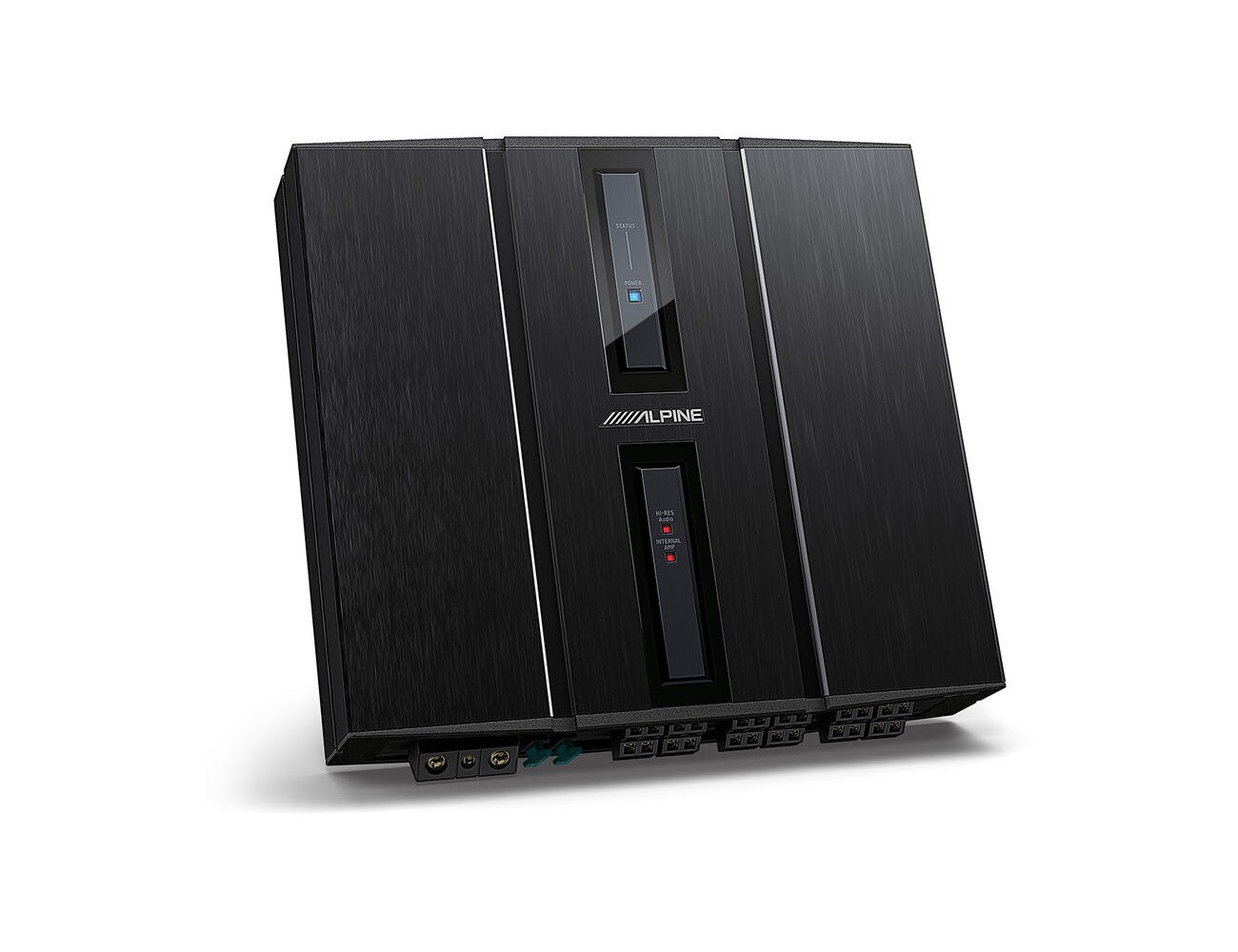
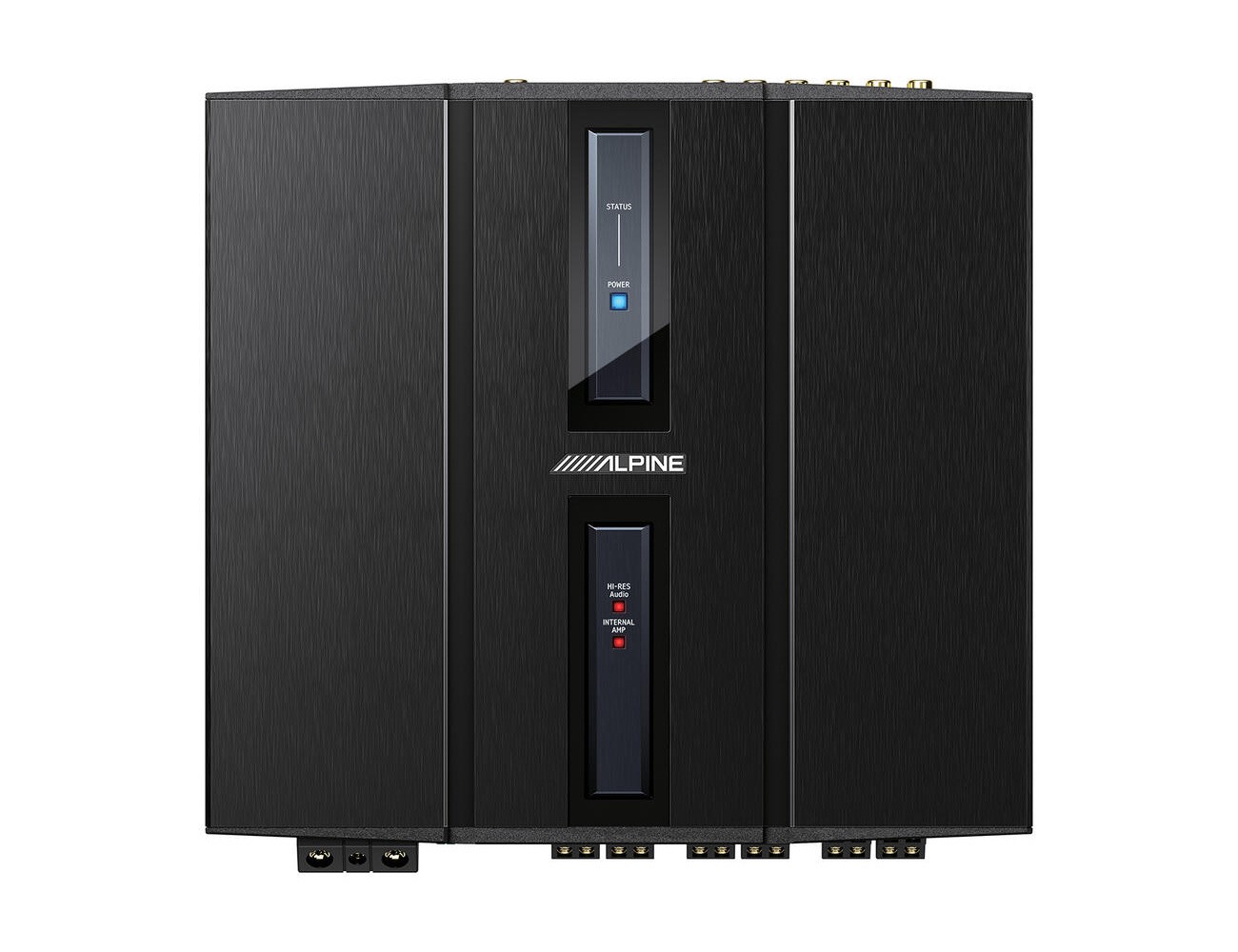
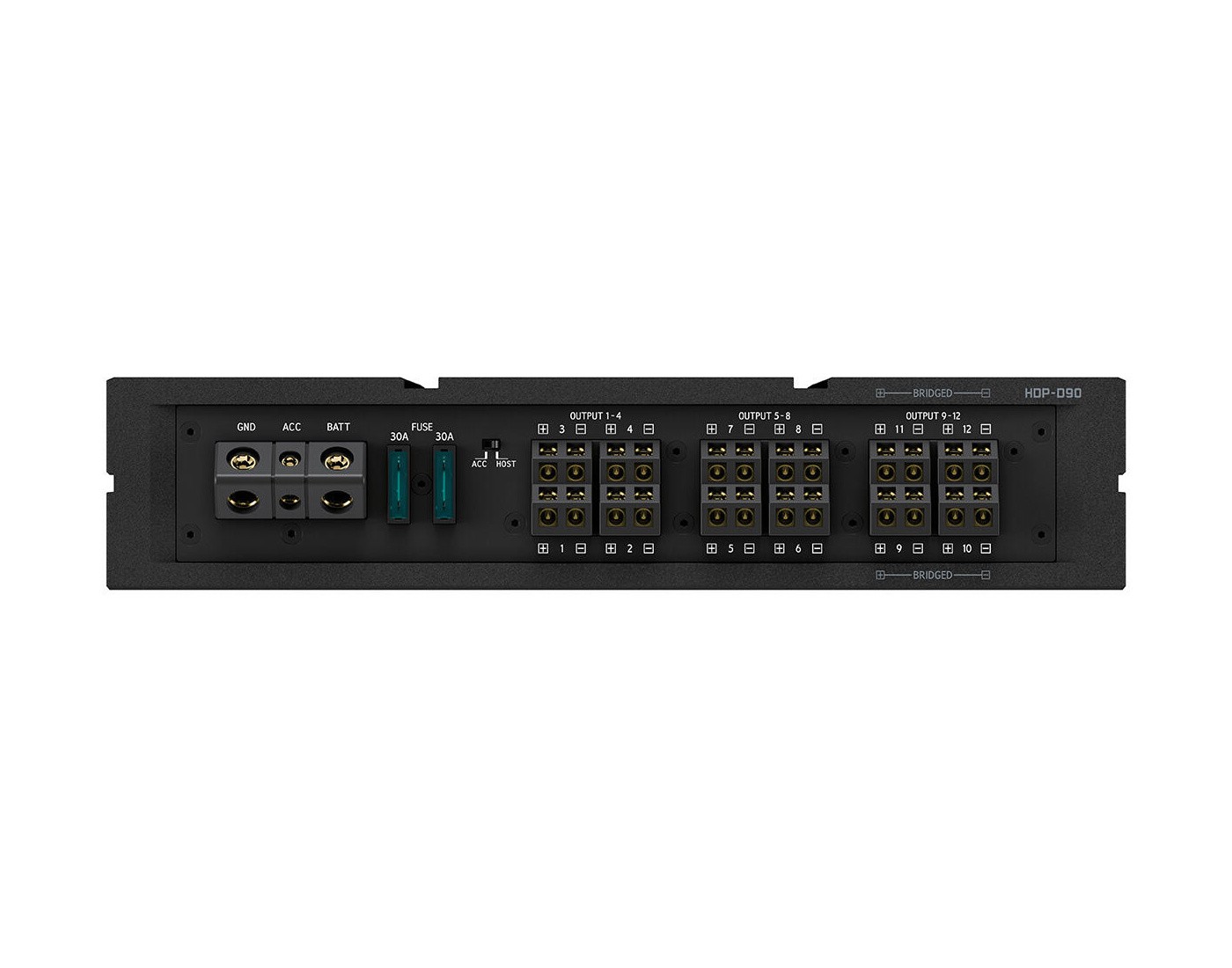
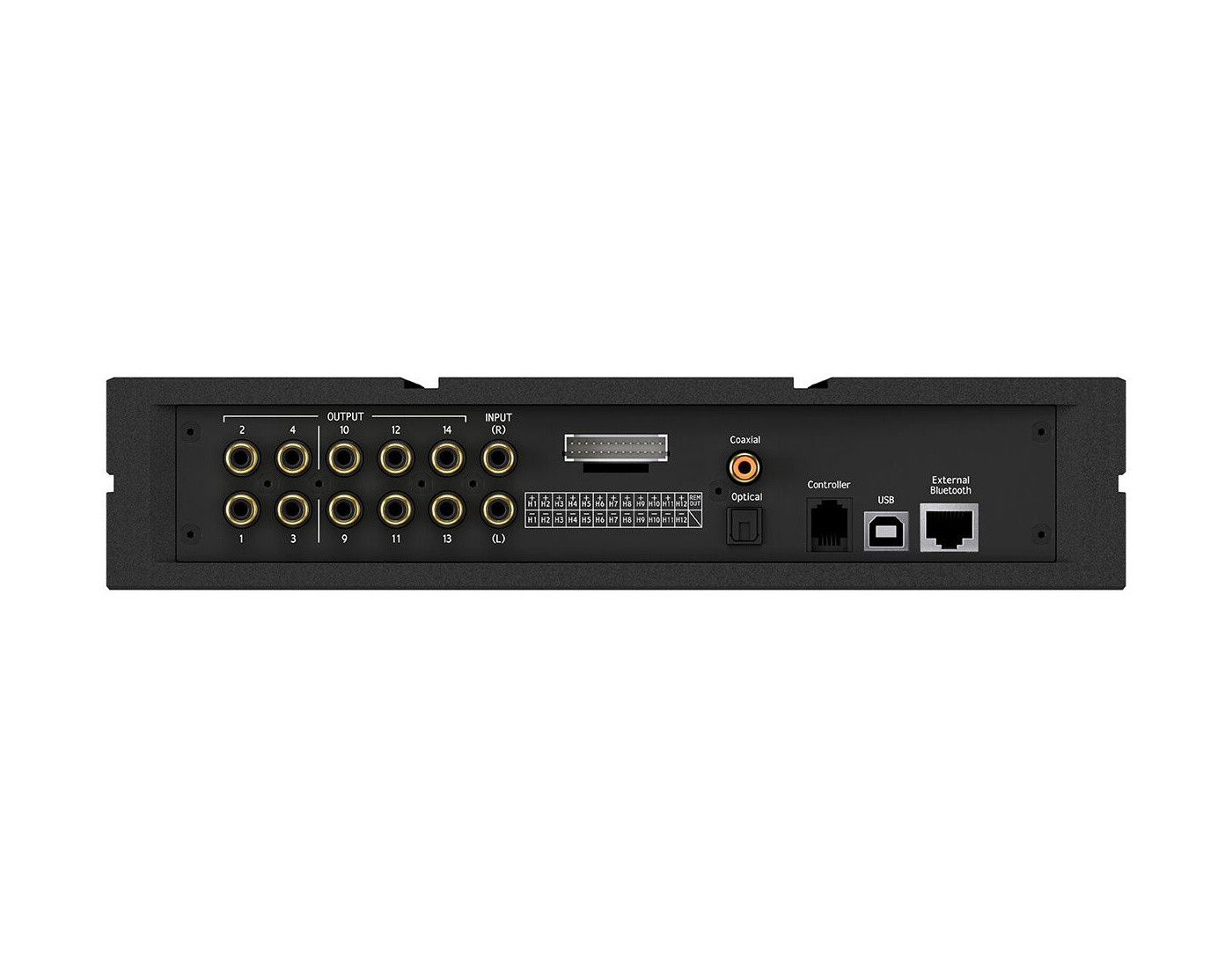
Amplifier Alpine HDP-D90
Alpine has created an all-new "Alpine Status" sound system using the same technical and design concepts used in the third generation AlpineF#1Status Ultra High Definition system to achieve high definition sound at a more affordable price. The Alpine Status system is also very flexible: all components can be purchased and used in a "stand-alone" configuration. The HDP-D90 DSP amplifier has an internal sampling rate of 192kHz/32bit and an ultra-wide audio bandwidth of 10Hz-110kHz to reproduce sound in the intended high definition specification. Deliberate designs such as a copper-clad chassis deliver a signal-to-noise ratio of >110dB and minimize playback noise and distortion. Inspired by the AlpineF#1Status DSP's internal Master Clock Management system, the HDP-D90 features a crystal oscillator clock generator at the core of the unit that tracks and balances digital information to eliminate jitter (timing errors) and accurately reproduce sound. DSP has multiple input options for flexible system build. For vehicles that cannot replace the factory head unit, the DSP has 12 channels of high-level inputs that allow the factory head unit to be retained. The DSP amplifier also has an optical input for adding the Alpine Status HDS-990 media player or analog inputs for another retrofitted head unit. The HDP-D90 player (when used in stand-alone mode) can also receive music sent directly from a smartphone via Bluetooth wireless streaming. While the HDP-D90 has 12 channels of amplification (8x 50W x 4x 80W) and can be used to power an entire system, the 10 channels of RCA output can be used to add Alpine Status amplifiers to boost performance or build a system.Main features
- High-Resolution Audio Access - The Alpine Status features many of the technologies, components and materials of the AlpineF#1Status to achieve ultra-accurate music reproduction - at an affordable price. It is designed to play 192 kHz / 24-bit music tracks that are widely available in many online stores and streaming platforms. High-resolution 192 kHz / 24-bit audio playback enables Alpine Status to create an elevated in-vehicle listening experience that mimics the feel of an intimate recording studio session.
- Hi-Res Audio DSP Amplifier - The HDP-D90 12-channel DSP amplifier is Hi-Res Audio certified and sounds simply fantastic. It can be used in conjunction with the HDS-990 Alpine Status Media Player or in standalone operation with any original or aftermarket radio. With multiple input and output options, this DSP amplifier has countless passive and active configuration options.
- 12-channel high-performance inputs - the most interesting feature of the HDP-90 is the 12-channel speaker-level inputs with input matrix addition. This allows the HDP-D90 to be connected to most existing OEM audio systems (even large multi-channel OEM systems), replacing all components downstream of the head unit in the audio chain. This allows you to create the sound system you want while keeping your vehicle's original radio/navigation system. It also features 2-channel RCA inputs, optical TOSLINK and coaxial inputs, as well as Bluetooth Audio (with the supplied Bluetooth dongle).
- Professional Audio Tuning Software - The included audio tuning software makes setting up and tuning the Alpine Status system very easy. You can choose from pre-configured systems to make adding inputs and configuring outputs as easy as possible. Tune each channel with 31-band parametric EQ, 3-Way X-over and digital time correction with an all-new software interface that lets you see all the settings at a glance.
- Alpine Status Full System - contains many components that are optimized for power and performance as a complete system for playback in the intended high definition specification for excellent audiophile sound quality. However, each component can be purchased separately to build your own system.
- High Quality Analog Circuitry - The operational amplifier is a key device for the performance and sound quality of analog audio circuits. These integrated circuits are used throughout the circuit to process analog signals and ensure uncompromising sound. Alpine's audio tuning experts chose the MUSES8820, the industry's best operational amplifier.
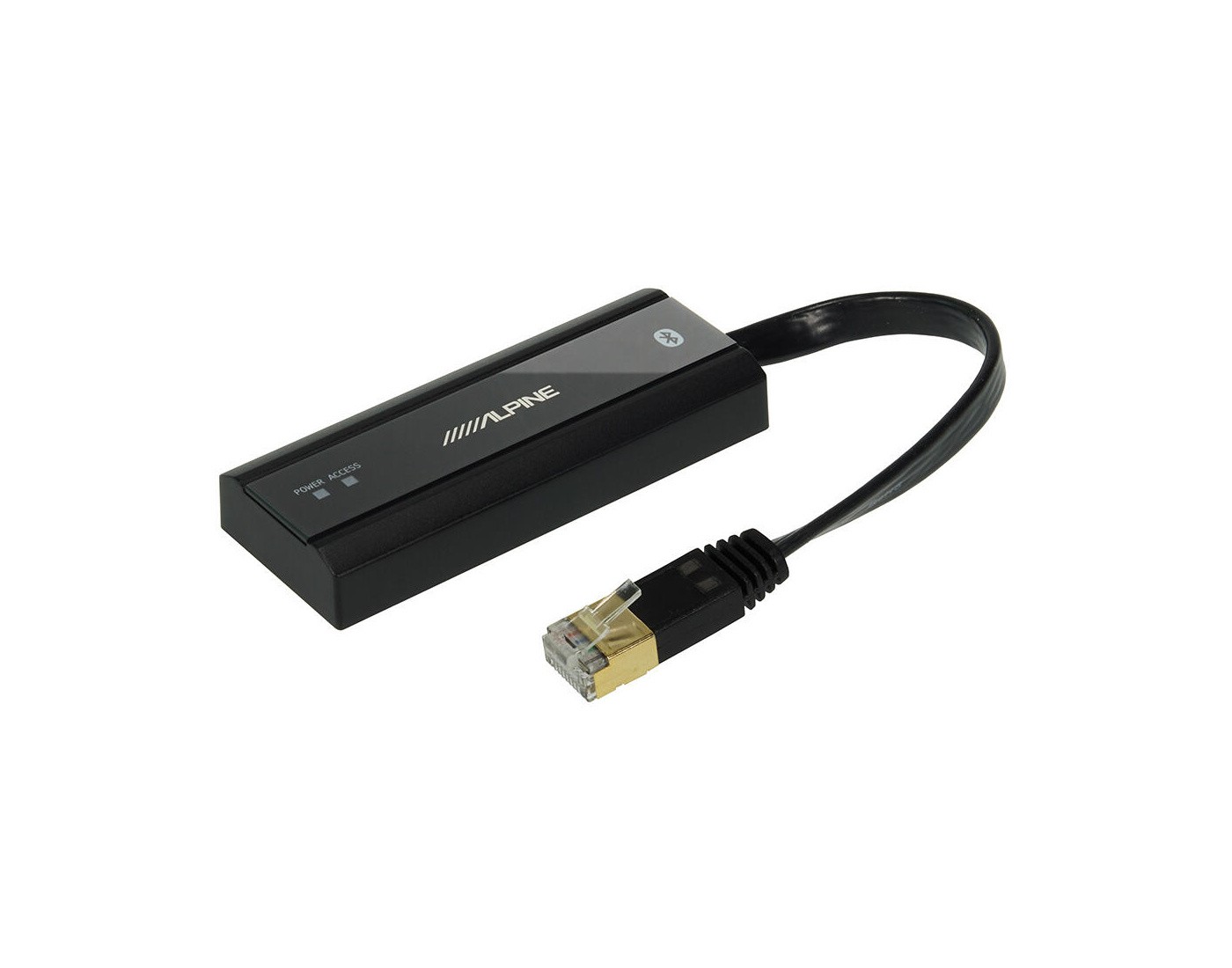
- Included Bluetooth Dongle - if you use the HDP-D90 as a standalone DSP amplifier (without the HDS-990) and want to stream audio files via Bluetooth, you can simply connect the included Bluetooth dongle. It's a simple plug-and-play connection and gives you a range of 10 meters to connect to your Bluetooth-enabled smartphone or audio player.
Technical characteristics
- MUSES 8820 operational amplifier.
- Highly flexible system configuration.
- Matrix addition of inputs.
- High Class XO (1/1000) Crystal Oscillator Clock Generator.
- 31-band/channel parametric/graphic equalizer.
- Digital time correction.
- External Bluetooth dongle included.
- High performance software for PC.
- Optional controller available ( RUX-C810 ).
About the brand
Alpine is a traditional Japanese manufacturer of car sound systems, which is characterized by the highest quality on the market. In the offer of this brand, you will find Alpine car radios, Alpine subwoofers, Alpine speakers, Alpine amplifiers and many other accessories for integrating multimedia systems into the most modern cars. Alpine's extensive range includes premium multimedia systems with Android Auto and Apple CarPlay for car models such as the Fiat Ducato, Mercedes-Benz Vito, Ford Transit and some other models.
| Catalog number | HDP-D90 |
| Brand | Alpine |
| Links | Official web presentation |
| Number of amplifier channelsAmplifiers are divided into: - Monoblocks - 2-channel - 3-channel - 4-channel - 5-channel - 6-channel - multi-channel Each channel is used to power one speaker for the coaxial type, or one side if they are component speakers. Monoblock type amplifiers are mainly used for subwoofers. 2-channel are suitable for both subwoofers and, for example, the front pair of speakers in a car. 3-channel is used for front or rear speakers + subwoofer. 4-channel are used for front + rear speakers or 1 pair of speakers + subwoofer. 6 or 5-channel are used for 2 pairs of speakers + subwoofer, most often. Bridging means connecting the amplifier to a bridge, using the + pole from one channel and the - pole from the other channel. In most cases this is shown as "BRIDGED" on the amplifier. | 12 |
| Energy class of the amplifierAmplifiers are divided into two basic classes: analog and digital . Analog amplifiers (A/B) have higher consumption requirements, but usually have a more natural sound. Digital amplifiers (D) have significantly lower consumption and higher efficiency, but the sound may not be as faithful as with classic analog amplifiers. | D |
| RMS power into 4 ΩRMS power when loading speakers or subwoofer at 4 Ω. RMS power is the constant power of the amplifier and is one of the most important parameters when choosing an amplifier. | 8x 50 W + 4 x 80 W |
| RMS power into 2 ΩRMS power when loading speakers or subwoofer at 2 Ω. RMS power is the constant power of the amplifier and is one of the most important parameters when choosing an amplifier. | 4 x 100 W + 1 x 500 W |
| Frequency rangeThe ability of the amplifier to reproduce the signal from the lowest frequency to the highest = faithfully reproduce the sound in a specific frequency band. Professionally: In the frequency range from 40 to 16,000 Hz, the vast majority of fundamental and overtones (harmonics) of all musical instruments are found. We are interested in the course of the radiated sound pressure in this range of frequencies when the loudspeaker system is supplied with constant power. We call this course the frequency characteristic, which tells us the level of radiated sound pressure in decibels (dB) depending on the frequency. The frequency characteristic of a speaker or speaker system can be expressed most succinctly with a graph. Mostly, however, the frequency characteristic is indicated by indicating the maximum tolerance of the sound pressure in the given frequency range, e.g. 50 to 15,000 Hz -+ 6 dB. Since the frequency characteristics of loudspeakers and systems in general are quite uneven, some manufacturers do not even specify this maximum tolerance of sound pressure in decibels in their catalogs for reasons of prestige. Data impoverished in this way is unfortunately worthless. What is valid is that the manufacturer offers a speaker system with a frequency range of 30 to 20,000 Hz, if he is worried about stating the maximum unevenness of the sound pressure in this range, because he can have a tolerance of, for example, +- 20 dB. The unevenness or undulation of the frequency curve in good speaker systems for high-quality music performance should not exceed +-3 dB in the 80 to 12,000 Hz band and +-6 dB in the 40 to 16,000 Hz band. Greater unevenness already depletes or emphasizes certain tonal areas, which can cause audible or even disturbing distortion. The proportion between fundamental tones and higher harmonics also changes, thereby changing the color of the sound, and individual musical instruments as well as the entire musical image sound unnatural. | 20 - 40000 Hz |
| High pass filter (HPF)HPF / HP or The "hi pass filter" offers the option of setting the amplifier using a potentiometer so that medium, possibly mid-bass and treble frequencies play upwards from a certain frequency. Example: Amplifiers most often have an HPF from 40 to 300 Hz. If we set the potentiometer to a value of approx. 150 Hz, the sound will be clipped so that it plays frequencies from 150 Hz up to the maximum upper limit of the entire frequency range of the amplifier, perhaps up to 20,000 Hz. We recommend setting this potentiometer in the range of 80-160 Hz. Thanks to this setting option, the speakers can handle a higher performance, as you will not overload them with bass in the lower frequency range. | 50 - 400 Hz (12 dB/Oct.) |
| Low-pass filter (LPF)LPF / LP or "low pass filter" offers the possibility to adjust the amplifier using a potentiometer so that the lower band plays only the frequencies in a certain band that you need. This filter is used to adjust the frequency range for the subwoofer, so that it does not overload or distort the sound. Example: Amplifiers most often have an LPF from 20 to 300 Hz. We recommend setting this potentiometer in the range of 45-80 Hz. | 50 - 400 Hz (12 dB/Oct.) |
| Dimensions of the amplifier | 278 x 256 x 58 mm |
| Mass | 4.5 kg |
| Number of DSP processor channels | 14 |
| Input sensitivity | 26 V / RCA up to 8 V |
| Harmonic Distortion (THD) (analog input) | ≥100 dB |
| Harmonic Distortion (THD) (Digital Input) | ≥110 dB |
Evaluation
ask us