
Alpine SWC-W84SCRA2 boxed subwoofer
More about the product
- You can return the goods to us within 14 days
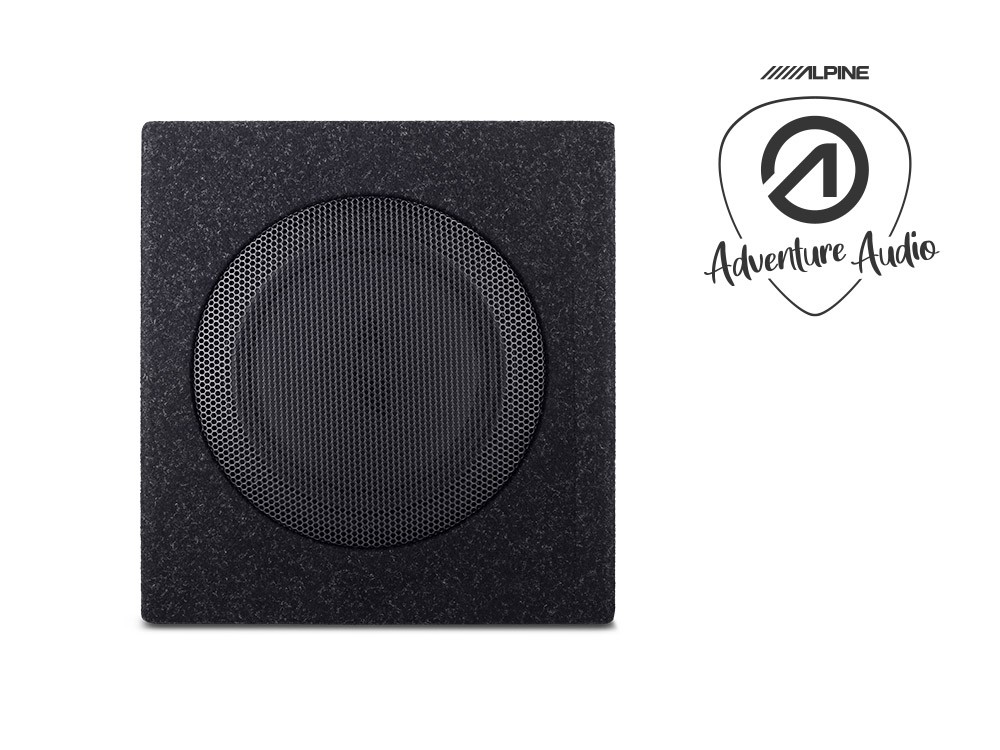
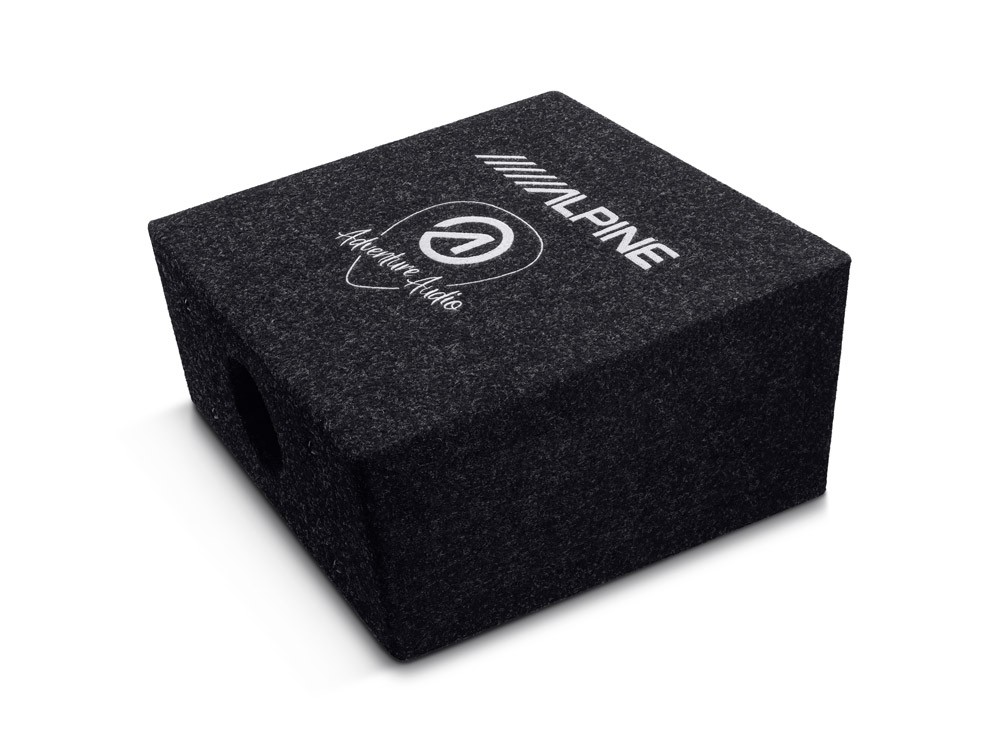
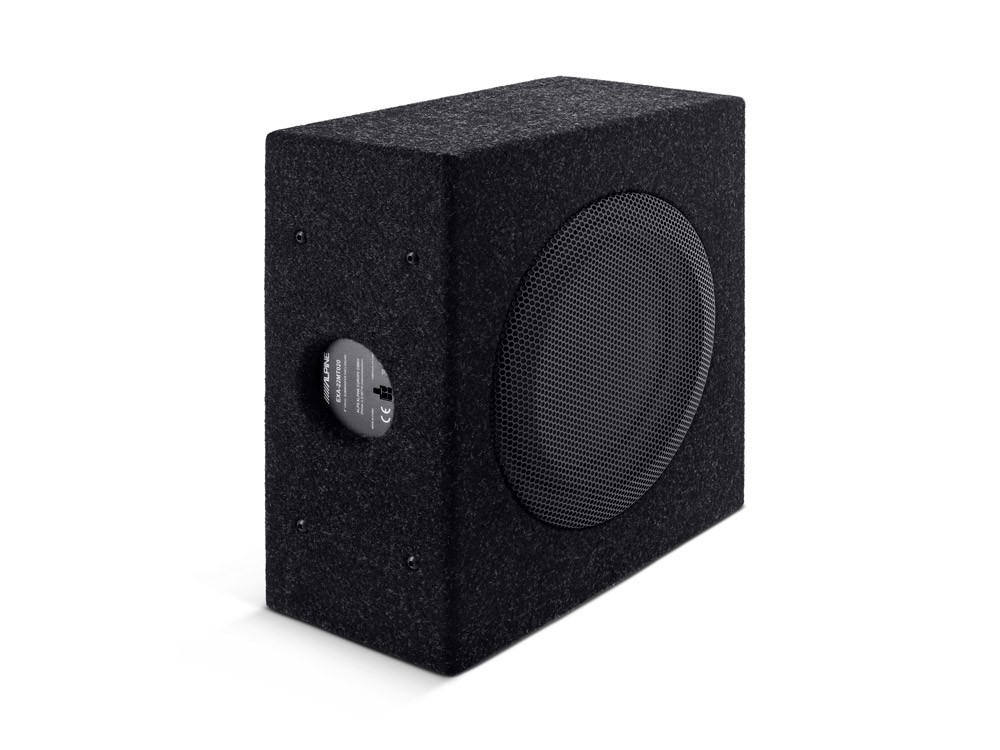
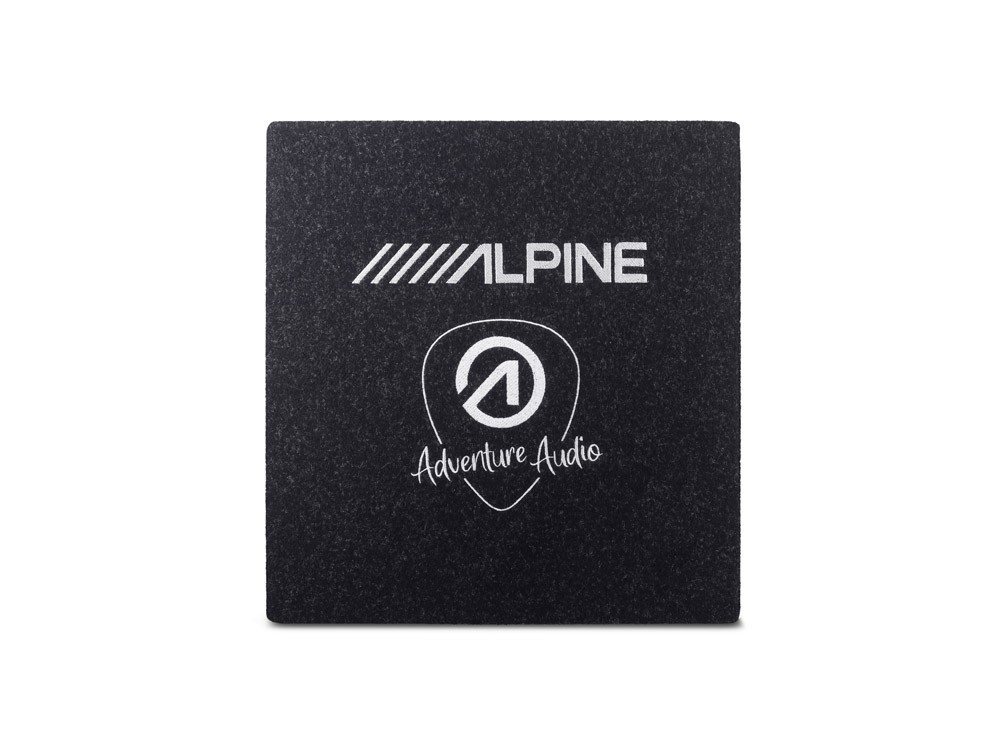
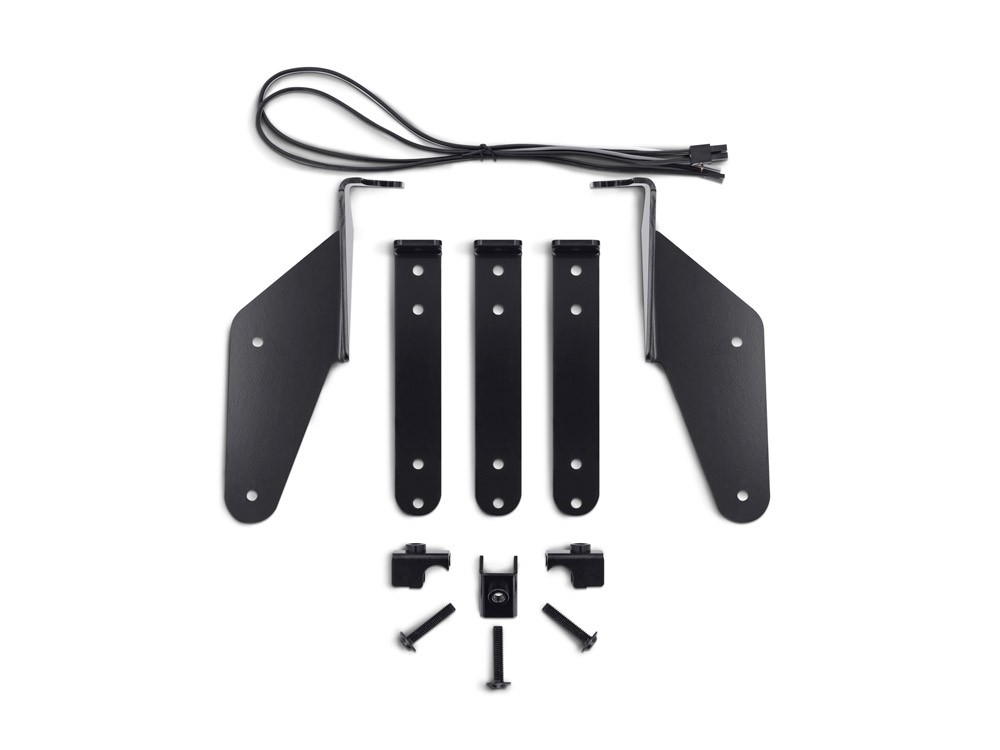
Subwoofer for Volkswagen Crafter 2 in Alpine SWC-W84SCRA2 Box
Bring exciting bass to your vehicle with the SWC-W84SCRA2 subwoofer designed for the Volkswagen Crafter 2. This subwoofer, adding powerful bass to your existing 180 W sound system, is pre-installed in a custom-sealed wooden enclosure for installation under the passenger seat.
Main Features
- Alpine Adventure Sound Experience - The Alpine Adventure Audio range for Volkswagen Crafter 2 is designed with the listening styles and mobility enthusiasts of camper vans and camping vans in mind. Specifically designed for the demanding and often harsh environments of these camping and utility vehicles, these systems guarantee unparalleled sound perfection for your audio on long journeys to your destination. They are not only a pleasure to listen to but also easy to install, with a distinctive design that enhances any cockpit without disrupting the original cabin appearance.
- Powerful Bass Upgrade - Enjoy strong and powerful bass in your Volkswagen Crafter 2 with this 180W subwoofer, making all your soundtracks even more thrilling. The dual coil subwoofer is pre-installed in a sealed wooden enclosure and is designed for installation under the passenger seat of your vehicle. It is also compatible with California swivel seats and the Caravelle bench (installation position for the Caravelle with a 2-person bench is under the driver’s seat).
- Includes Custom Installation Brackets - The SWC-W84SCRA2 includes all necessary installation brackets for perfect installation of the subwoofer under the passenger seat of your Volkswagen Crafter 2. A separate amplifier suitable for a dual 2 Ω subwoofer with a voice coil and a peak power of 180 W is required to use this subwoofer.
Technical Features
- 20cm (8”) subwoofer with dual voice coil (2Ω + 2Ω).
- Peak power handling 180 W / 60 W RMS.
- Includes mounting brackets for Volkswagen Crafter 2 under-seat installation.
- Dimensions: 310 mm x 315 mm x 170 mm.
- Includes subwoofer grille and mounting brackets.
A separate amplifier is required to power this subwoofer.
About the Brand
Alpine is a traditional Japanese manufacturer of car audio systems, known for the highest quality on the market. The brand's offerings include Alpine car radios, Alpine subwoofers, Alpine speakers, Alpine amplifiers, and a variety of accessories for integrating multimedia systems into the most modern cars. Alpine's extensive range includes premium multimedia systems with Android Auto and Apple CarPlay for car models such as Fiat Ducato, Mercedes-Benz Vito, Ford Transit, and several other models.
| Catalog number | SWC-W84SCRA2 |
| Brand | Alpine |
| Links | Official web presentation |
| RMS powerThe RMS power of the subwoofer is constant power. This is also the performance of continuous use of the subwoofer. If you exceed the power for a longer period of time, irreversible damage or subwoofer voice coil burning! You can tell if the subwoofer is overloaded by the vibration of the subwoofer membrane. | 60 W |
| Max. (maximum performancePeak performance , which the subwoofer can play momentarily (approx. 0.5 s), for example when hitting drums in a song. If the maximum power is exceeded, damage can quickly occur or subwoofer voice coil burning! | 180 W |
| The diameter of the subwoofer in the box | 200 mm (8\") |
| Sensitivity (SPL 1W/1m)Subwoofer sensitivity or efficiency. The sensitivity of the subwoofer is given in decibels (dB) and, in simple terms, means that the higher the value, the lower the demands on the power of the amplifier. This is a de facto rating of how a subwoofer converts watts to sound. Sensitivity ratings are in noise level measured at 1 meter from the subwoofer using 1 W (watt of power) or using 2.83 volts at the source at 1 meter. A higher decibel level means the subwoofer is louder with less power. For every 3 dB increase in sensitivity, the subwoofer requires half the power to reproduce the same volume. For example, if an 88dB subwoofer needs 300 Watts to produce a certain volume, then a subwoofer with a sensitivity of 91dB needs only 150 Watts to reach the same volume. | 91 dB |
| ImpedanceImpedance - measurement of electrical resistance. When buying a subwoofer, it is very important that everyone make sure that the impedance is compatible with the amplifier that you are connecting to it. For subwoofers with a double voice coil, we recommend following the information in the advice center! Example: A 2 Ohm subwoofer cannot be connected to an amplifier that is only stable up to 4 Ohms. A 4 Ohm subwoofer can easily be used with an amplifier that is stable up to 2 Ohms. Connecting a 4 Ohm subwoofer to an amplifier that is stable up to 4 Ohms also without problems. The most common subwoofer impedance is 4 Ohm. Example: A 2 Ohm subwoofer cannot be connected to an amplifier that is only stable up to 4 Ohms! A 4 Ohm subwoofer can easily be used with an amplifier that is stable up to 2 Ohms. The most common impedance of subwoofers is 1 x 4 Ohm. | 2Ω + 2Ω |
| Frequency rangeThe ability of the subwoofer to play a signal from the lowest frequency to the highest, or the ability of a subwoofer to faithfully reproduce sound in a specific frequency band. Subwoofers ideally play from 20 - 150 Hz. Professionally: In the frequency range from 40 to 16,000 Hz, the vast majority of fundamental and overtones (harmonics) of all musical instruments are found. We are interested in the course of the radiated sound pressure in this range of frequencies when the loudspeaker system is supplied with constant power. We call this course the frequency characteristic, which tells us the level of radiated sound pressure in decibels (dB) depending on the frequency. The frequency characteristic of a speaker or speaker system can be expressed most succinctly with a graph. Mostly, however, the frequency characteristic is indicated by indicating the maximum tolerance of the sound pressure in the given frequency range, e.g. 50 to 15,000 Hz -+ 6 dB. Since the frequency characteristics of loudspeakers and systems in general are quite uneven, some manufacturers do not even specify this maximum tolerance of sound pressure in decibels in their catalogs for reasons of prestige. Data impoverished in this way is unfortunately worthless. What is valid is that the manufacturer offers a speaker system with a frequency range of 30 to 20,000 Hz, if he is worried about stating the maximum unevenness of the sound pressure in this range, because he can have a tolerance of, for example, +- 20 dB. The unevenness or undulation of the frequency curve in good speaker systems for high-quality music performance should not exceed +-3 dB in the 80 to 12,000 Hz band and +-6 dB in the 40 to 16,000 Hz band. Greater unevenness already depletes or emphasizes certain tonal areas, which can cause audible or even disturbing distortion. The proportion between fundamental tones and higher harmonics also changes, thereby changing the color of the sound, and individual musical instruments as well as the entire musical image sound unnatural. | 34 - 1500 Hz |
| Loudspeaker typeThe closed enclosure is characterized by a simple construction. Closed enclosures are usually smaller than bass-reflex enclosures, and a special damping fleece is used for their damping. A closed baffle has the advantage of preventing an acoustic short between the front and back radiation of the subwoofer diaphragm. The disadvantage is that the closed enclosure raises the natural resonance frequency of the used subwoofer and thereby also increases the lower limit frequency. This is because the back side of the diaphragm is forced to compress and dilute the air inside the enclosure when the subwoofer is radiating in a closed enclosure. This adds to the inherent stiffness of the subwoofer's oscillation system the stiffness of the air in the closed enclosure. This causes an increase in the stiffness of the oscillating system and thus an increase in the resonant frequency of the entire system: subwoofer -> loudspeaker. The increase in resonant frequency for a given subwoofer is greater, the smaller the volume of air in the closed enclosure. The relatively small volume of air in the closed enclosure acts on the subwoofer as an acoustic spring when radiating the back side of the membrane into the enclosed enclosure. USE: Mainly for quality bass listening in the entire band with an emphasis on detail and accurate reproduction in the lower band. Pros and cons: + pure reproduction + small closets + easier tuning - low level of efficiency in deep bass - loudness only at the cost of enormous deflection of the diaphragm - a significant acoustic pressure cannot be expected The bass reflex enclosure is designed in the same way as a closed enclosure, but it also has a so-called bass reflex mouthpiece, or "bass reflex". Needle foam is used to dampen bass reflex enclosures. USE: The ideal use is in cases where the listener wants to achieve a high volume and a good sound pressure level. It is the best compromise between sound quality and performance and is also the most commonly used Pros and cons: + good efficiency in deep bass + a small deflection of the membrane is enough for a large volume - reproduction less accurate than with closed enclosures | Sealed |
| What is the baffle made of?Subwoofer enclosures are usually made of 18-22 mm MDF board or pressed chipboard. Due to its higher strength, MDF board is a better material than ordinary chipboard. | MDF |
| Dimensions of the boxEnclosure dimensions are given as height, width and depth, which is often longer at the bottom edge than at the top, due to the bevel of the rear wall. | 310 x 315 x 170 mm |
Evaluation
Recently viewed products
 Quick previewA-Class (W176) (09/12->), CLA (W117) (4/13->04/19), E-Class (W212) (09->16)21,16 EUR1 to 4 weeksUniversal plastic speaker pads 165 mm
 Quick previewuniversal plastic rings, 165 mm5,16 EURIn stockCalearo MON-7010Q AHD Free transport
 Quick preview7" AHD monitor with quadrature + DVR recording279,60 EURWe usually stock in 1 - 3 daysImpulse switch with LED backlight, green, 19mm SW IMP
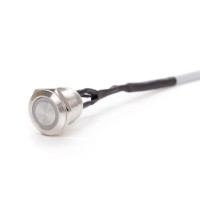 Quick previewswitch with LED lighting19,60 EURWe usually stock in 1 - 3 daysWireless headphones HP-IR2
 Quick previewIR stereo headphones for multimedia monitors (with IR support), 2 channels enable simultaneous connection of two headphones to another monitor, black-gray design11,60 EURIn stockKamera CAM3HD
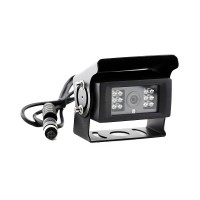 Quick previewAHD vehicle camera, 720p resolution, automatic IR illumination115,60 EURWe usually stock in 1 - 3 daysHollywood HCT 0
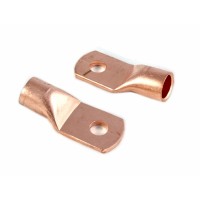 Quick previewcopper terminal with eyelet (price for 2 pieces) - 53 mm²5,16 EURIn stock