
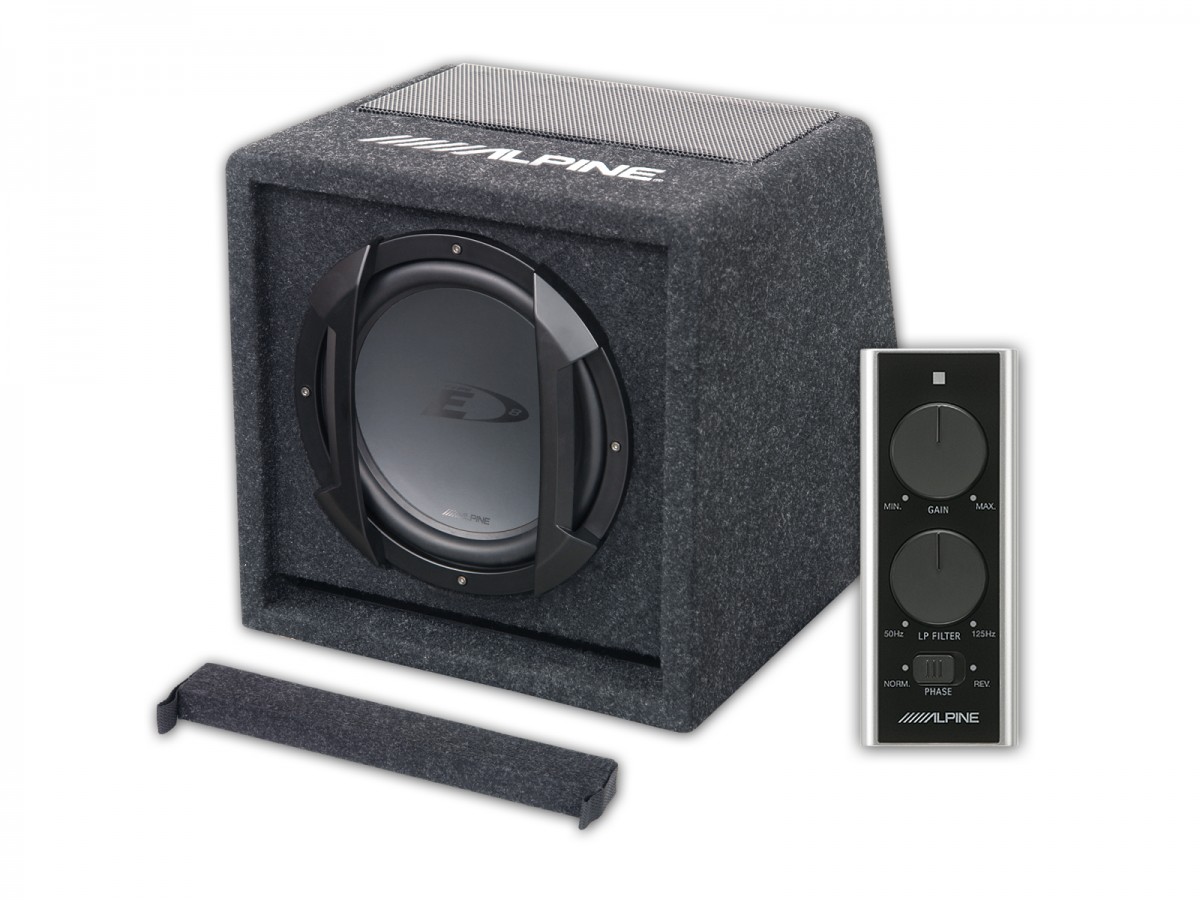
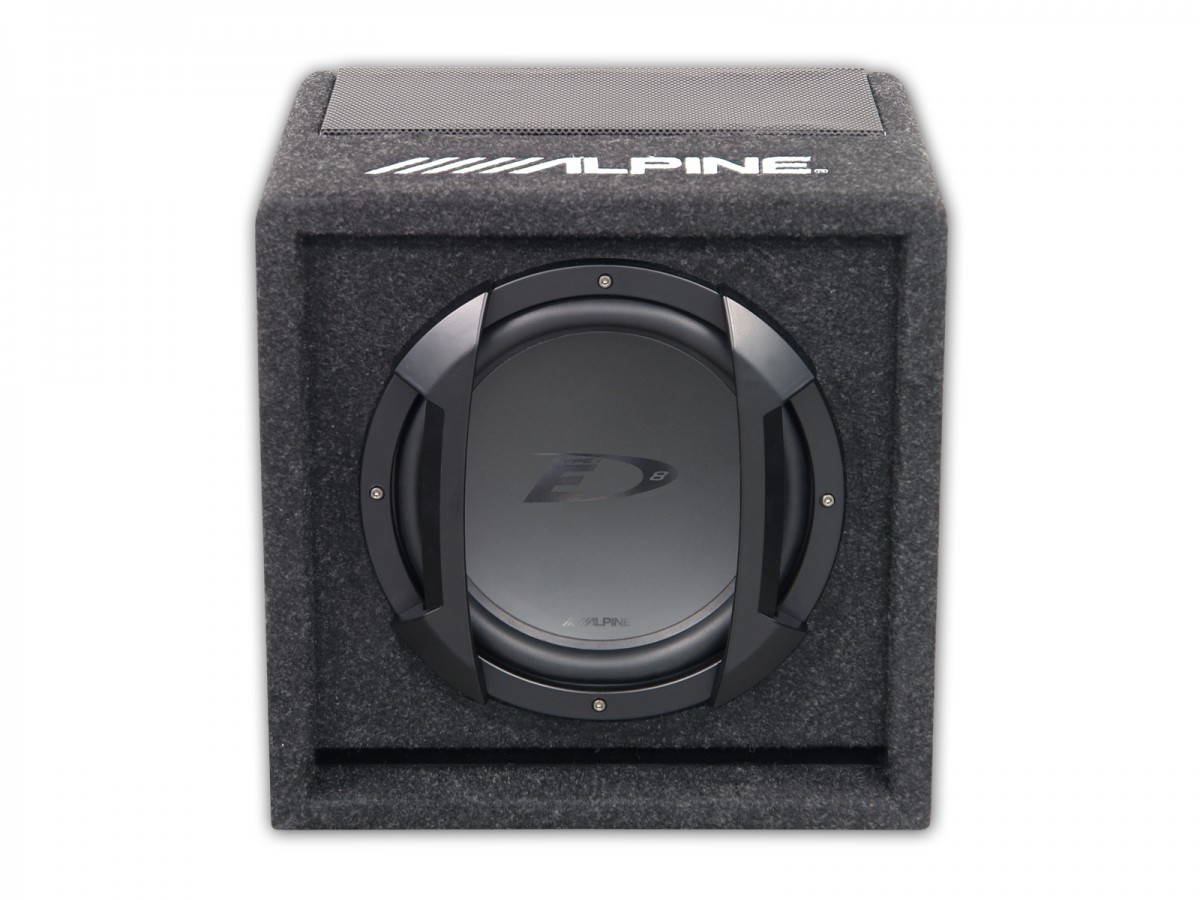
Active subwoofer Alpine SWE-815
active subwoofer, Ø 8" (200 mm), 100 W RMS, 91 dB (SPL 1W/1m), 2 + 2 Ω
More about the product
More about the product
We will help you with your purchase
- You can return the goods to us within 14 days
| Catalog number | SWE-815 |
| Brand | Alpine |
| Links | Official web presentation |
| The diameter of the subwoofer usedThe diameter of the subwoofer that is installed in the active box. | 200mm (8") |
| RMS power of the subwooferThe RMS power of an active subwoofer is the constant power that the active subwoofer can play over a long period of time. We recommend following this value. The RMS power of active subwoofers is taken as the RMS power of the integrated amplifier, which in most cases is slightly undersized, which guarantees protection against subwoofer burning. | 100W |
| Maximum subwoofer performancePeak performance or Max. power that an active subwoofer can play for a moment (approx. 0.5 s), for example when percussion instruments are struck in a recording. But it is not as important a parameter as the RMS power. | 300 W |
| Frequency rangeThe ability of the device to reproduce a signal from the lowest frequency to the highest, or the ability of an active subwoofer to faithfully reproduce sound in a specific frequency band. Professionally: In the frequency range from 40 to 16,000 Hz, the vast majority of fundamental and overtones (harmonics) of all musical instruments are found. We are interested in the course of the radiated sound pressure in this range of frequencies when the loudspeaker system is supplied with constant power. We call this course the frequency characteristic, which tells us the level of radiated sound pressure in decibels (dB) depending on the frequency. The frequency characteristic of a speaker or speaker system can be expressed most succinctly with a graph. Mostly, however, the frequency characteristic is indicated by indicating the maximum tolerance of the sound pressure in the given frequency range, e.g. 50 to 15,000 Hz -+ 6 dB. since the frequency characteristics of loudspeakers and systems in general are quite uneven, some manufacturers do not even specify this maximum tolerance of sound pressure in decibels for reasons of prestige. Data impoverished in this way is worthless. What is valid is that the manufacturer offers a speaker system with a frequency range of 30 to 20,000 Hz, if he is worried about stating the maximum unevenness of the sound pressure in this range, because he can have a tolerance of, for example, +- 20 dB. The unevenness, i.e. the undulation of the frequency course in good speaker systems for quality music performance should not exceed +-3 dB in the 80 to 12,000 Hz band and +-6 dB in the 40 to 16,000 Hz band. Greater unevenness already depletes or emphasizes certain tonal areas, which can cause audible or even disturbing distortion. The proportion between fundamental tones and higher harmonics also changes, thereby changing the color of the sound, and individual musical instruments as well as the entire musical image sound unnatural. | 34 - 1500 Hz |
| Remote control included in the packageSome models of active subwoofers also have wired remote controls in the package, which on the one hand connect to the active box, and on the other hand you have a potentiometer that you can place anywhere in the cabin. A common place to place the remote control is under the steering wheel. The advantage is the regulation of power, and therefore volume, depending on driving conditions and the mood of the crew in the car. | Yes |
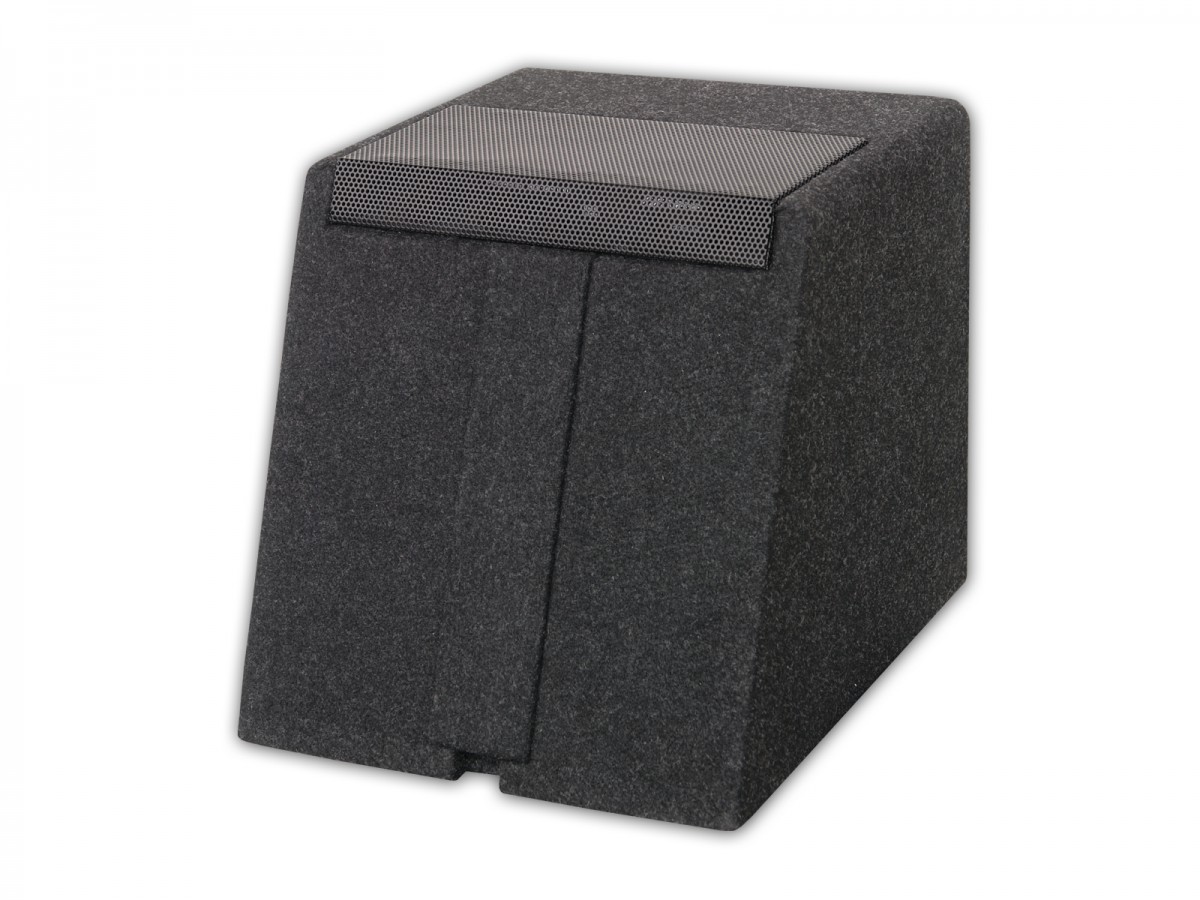
| Active subwoofer dimensions | 288 x 291 x 253 / 363 mm |
| Sensitivity (SPL 1W/1m)Sensitivity, sensitivity or efficiency of the speaker. Speaker sensitivity is given in decibels (dB) and simply put, the higher the value, the lower the demands on the amplifier's power. This is a defacto rating of how a speaker converts watts to sound. Sensitivity ratings are in noise level measured at 1 meter from the speaker using 1 W (watt of power) or using 2.83 volts at the source at 1 meter. A higher decibel level means the speaker is louder with less power. For every 3 dB increase in sensitivity, the speaker requires half the power to reproduce the same volume. For example, if an 88 dB speaker needs 100 Watts to produce a certain volume, then a speaker with a sensitivity of 91 dB needs only 50 Watts to reach the same volume. | 91 dB |
| ImpedanceImpedance - measurement of electrical resistance. When buying speakers, it is important to make sure that the impedance matches the amplifier or car stereo you are using. Example: A 2 Ohm speaker cannot be connected to an amplifier that is only stable up to 4 Ohms! A 4 Ohm speaker can easily be used with an amplifier that is stable up to 2 Ohms. The most common speaker impedance today is 3 - 4 Ohm. | 2 + 2 Ω |
Evaluation
ask us