
Subwoofer JBL CLUB 122
More about the product
- You can return the goods to us within 14 days
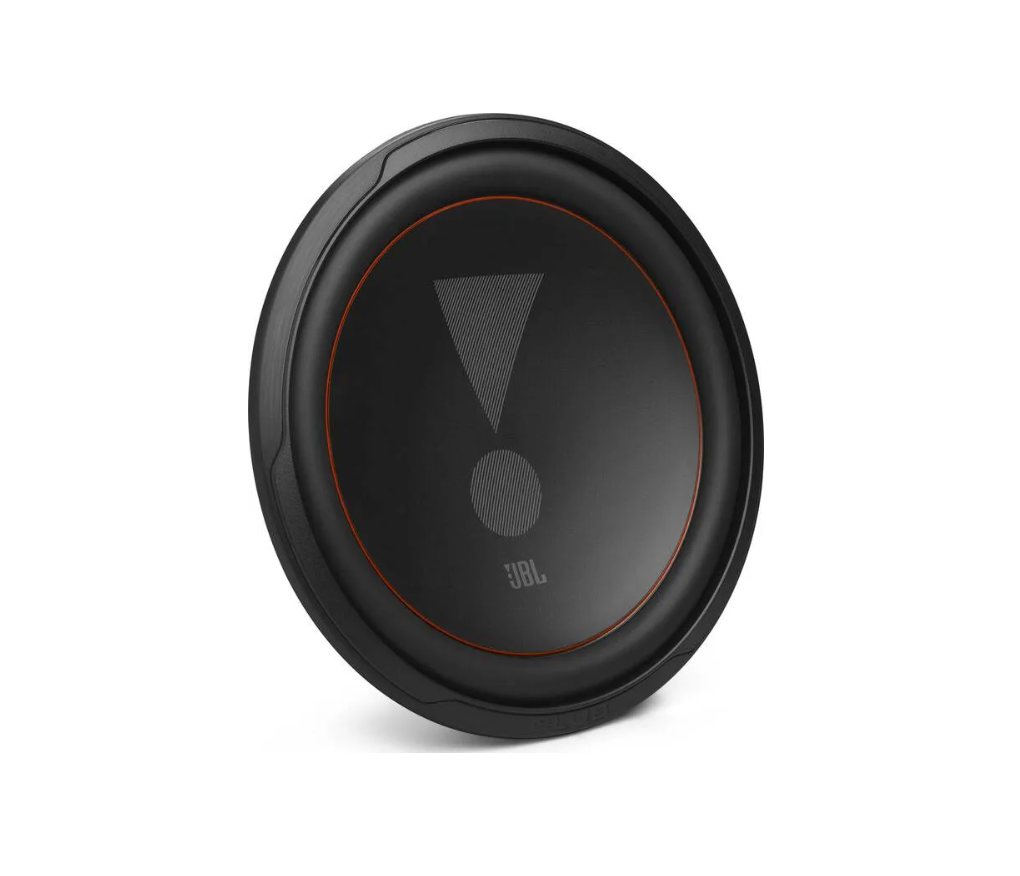
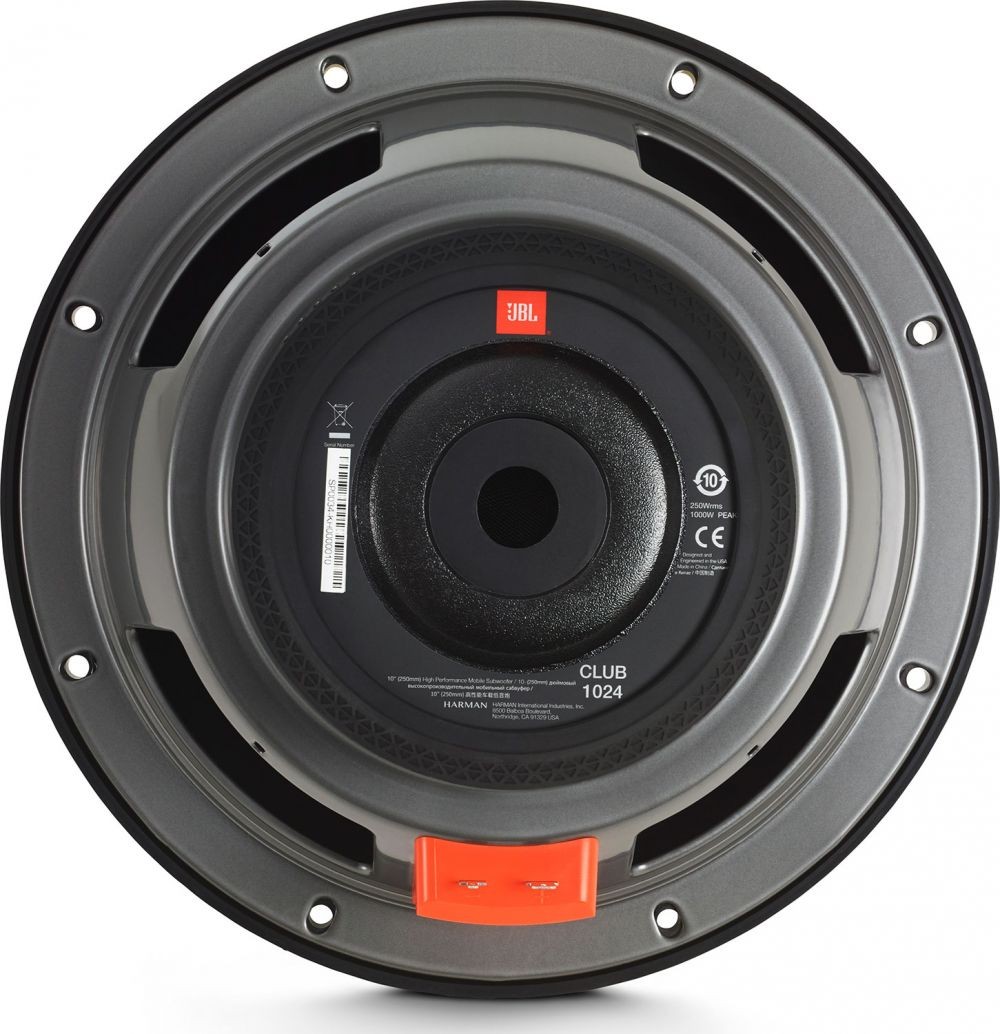
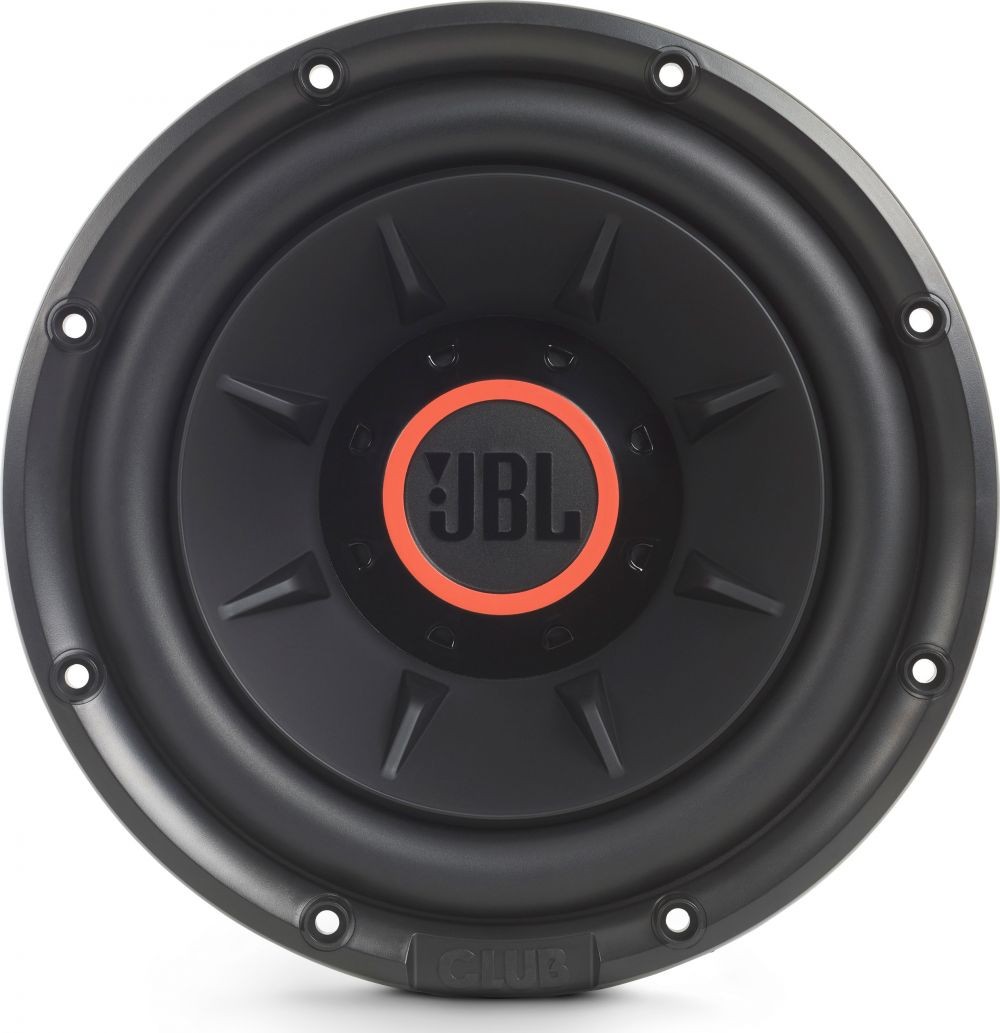
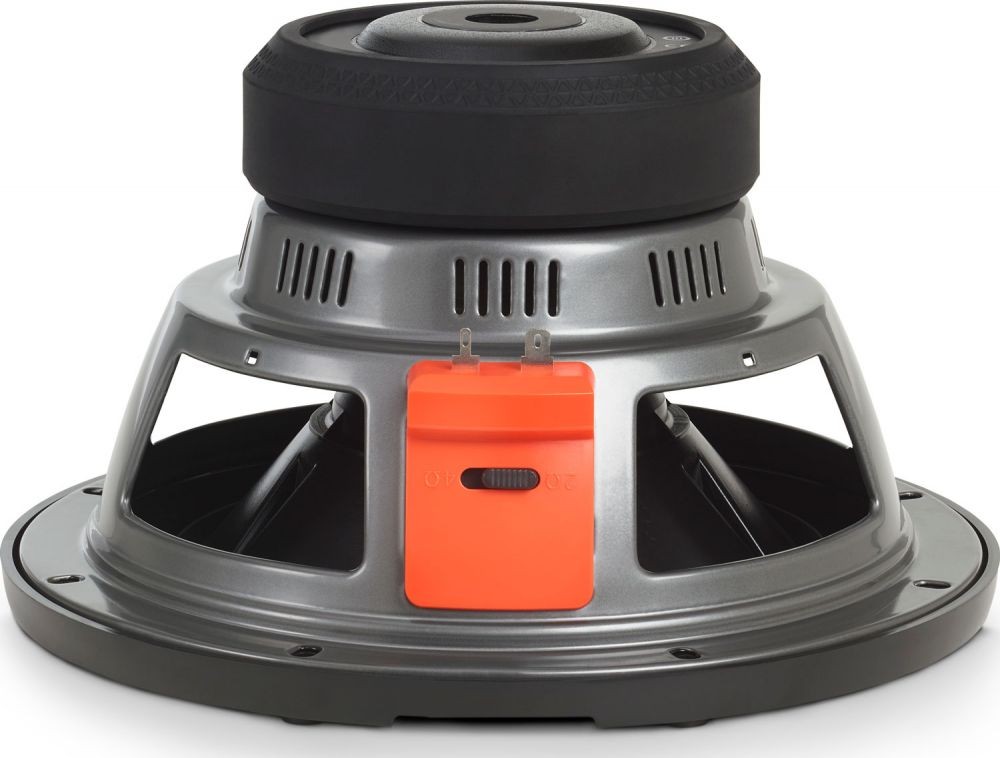
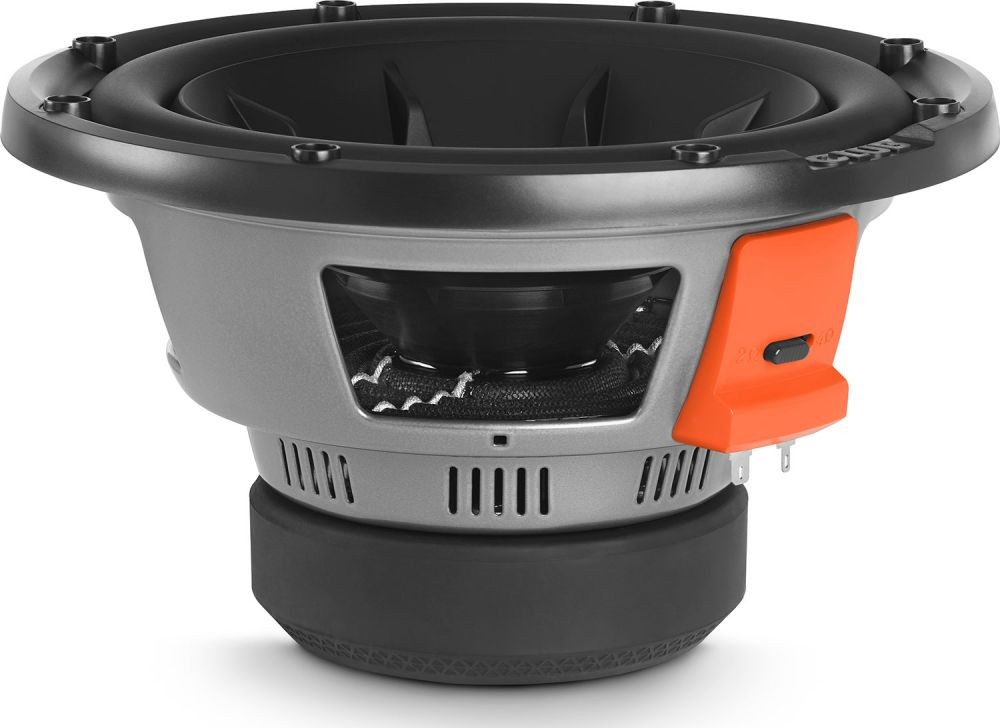
JBL CLUB 122
The JBL Club 122 is a powerful 12" (300 mm) component subwoofer designed for deep, dynamic and accurate bass in a car. Thanks to proven JBL technologies and a robust construction, it offers an ideal combination of power, flexibility and reliability, making it suitable for both basic upgrades and more powerful audio systems.
At its core is a polypropylene cone with a high-roll surround that allows greater cone excursion and therefore stronger bass output without distortion. The subwoofer is also equipped with a double magnet and a 2" voice coil, ensuring high power handling and stable performance even at higher volumes.
A major advantage is SSI™ (Selectable Smart Impedance) technology, which allows switching the impedance between 2 Ω and 4 Ω, so you can easily adapt the subwoofer to a specific amplifier and system configuration. This makes the JBL Club 122 a very versatile solution for various enclosure types – from sealed boxes to bass-reflex enclosures. The JBL Club 122 is an ideal choice for anyone who wants powerful, deep bass and flexibility when building an audio system.
Hlavní vlastnosti
- Component subwoofer from the JBL Club series for strong and deep bass.
- 12" (300 mm) size for pronounced bass output.
- Polypropylene cone with high-roll surround for greater excursion and higher output.
- Double magnet for better cone control and higher power handling.
- 2" voice coil for stable performance and efficient cooling.
- SSI™ technology allowing impedance switching 2 Ω / 4 Ω.
- High flexibility for different enclosure types (sealed and bass-reflex).
- Robust construction for long life in a car environment.
- Efficient cooling thanks to airflow around the voice coil.
- Ideal solution for building a powerful car audio system.
O značce
The JBL brand has long been one of the most prominent names in audio, and its products are synonymous with quality sound, reliability and modern technology. In the car audio segment it offers a wide portfolio of speakers, subwoofers and amplifiers that stand out for their dynamic performance, high sensitivity and the characteristic "JBL sound", making them an ideal factory sound upgrade for any driver. JBL also maintains a strong position in the portable Bluetooth speaker category, combining compact dimensions, durable constructions (often with IP67 certification) and long battery life with surprisingly powerful sound. Whether you're looking for a solution to improve your car audio or a reliable companion for travel, JBL offers products that combine innovation, quality and great listening in every situation.
| Catalog number | CLUB 122 |
| Brand | JBL |
| Links | Official web presentation |
| Subwoofer diameterThe diameter of the subwoofer is indicated on the screw holes. The overall outer diameter of the subwoofer is usually 1-2 cm wider, depending on the size category of the subwoofer. For a 30 cm subwoofer, the outer diameter incl. protective rubber 31.8 cm and in the 25 cm subwoofer it is 26.5 cm incl. protective rubbers. | 300mm (12") |
| RMS powerThe RMS power of the subwoofer is the constant power of continuous use of the subwoofer. If the power is exceeded for a longer period of time, irreversible damage may occur, or to burn out the voice coil of the subwoofer. | 275 W |
| Max. (maximum performancePeak performance , which the subwoofer can play momentarily (approx. 0.5 s), for example when hitting drums in a song. If the maximum power is exceeded, damage can quickly occur, or to burn out the voice coil of the subwoofer. | 1100 W |
| Sensitivity (SPL 2.83V/1m)Subwoofer sensitivity or efficiency. The sensitivity of the subwoofer is given in decibels (dB) and, in simple terms, means that the higher the value, the lower the demands on the power of the amplifier. This is a de facto rating of how a subwoofer converts watts to sound. Sensitivity ratings are in noise level measured at 1 meter from the subwoofer using 1 W (watt of power) or using 2.83 volts at the source at 1 meter. A higher decibel level means the subwoofer is louder with less power. For every 3 dB increase in sensitivity, the subwoofer requires half the power to reproduce the same volume. For example, if an 88 dB subwoofer needs 300 Watts to produce a certain volume, then a subwoofer with 91 dB sensitivity needs only 150 Watts to reach the same efficiency. | 93 dB |
| ImpedanceImpedance - measurement of electrical resistance. When buying a subwoofer, it is very important that everyone make sure that the impedance matches the amplifier that you are connecting to it. For subwoofers with a double voice coil, we recommend following the information in the advice center! Example: A 2 Ohm subwoofer cannot be connected to an amplifier that is only stable up to 4 Ohms. A 4 Ohm subwoofer can easily be used on an amplifier that is stable up to 2 Ohms. Connecting a 4 Ohm subwoofer to an amplifier that is stable up to 4 Ohms also without problems. The most common subwoofer impedance is 4 Ohm. | 2 or 4 Ω |
| Frequency rangeThe ability of the subwoofer to play a signal from the lowest frequency to the highest, or the ability of a subwoofer to faithfully reproduce sound in a specific frequency band. Subwoofers ideally play from 20 - 150 Hz. Professionally: In the frequency range from 40 to 16,000 Hz, the vast majority of fundamental and overtones (harmonics) of all musical instruments are found. We are interested in the course of the radiated sound pressure in this range of frequencies when the loudspeaker system is supplied with constant power. We call this course the frequency characteristic, which tells us the level of radiated sound pressure in decibels (dB) depending on the frequency. The frequency characteristic of a speaker or speaker system can be expressed most succinctly with a graph. Mostly, however, the frequency characteristic is indicated by indicating the maximum tolerance of the sound pressure in the given frequency range, e.g. 50 to 15,000 Hz -+ 6 dB. Since the frequency characteristics of loudspeakers and systems in general are quite uneven, some manufacturers do not even indicate this maximum tolerance of sound pressure in decibels in their catalogs for tactical reasons. Data impoverished in this way is unfortunately worthless. What is valid is that the manufacturer offers a speaker system with a frequency range of 30 to 20,000 Hz, if he is worried about stating the maximum unevenness of the sound pressure in this range, because he can have a tolerance of, for example, +- 20 dB. The unevenness or undulation of the frequency curve in good speaker systems for high-quality music performance should not exceed +-3 dB in the 80 to 12,000 Hz band and +-6 dB in the 40 to 16,000 Hz band. Greater unevenness already depletes or emphasizes certain tonal areas, which can cause audible or even disturbing distortion. The proportion between fundamental tones and higher harmonics also changes, thereby changing the color of the sound, and individual musical instruments as well as the entire musical image sound unnatural. | 25 - 175 Hz |
| Subwoofer mounting depthThe mounting depth of the subwoofer is measured from the bottom edge of the magnet to the bottom edge of the subwoofer's metal or cast basket. | 165 mm |
| Subwoofer voice coil diameterThe larger the diameter of the voice coil, the more load capacity the subwoofer has, in layman's terms. | 50 mm |